
Iran Rejects Latest Ceasefire Proposal as Trump Deadline Approaches

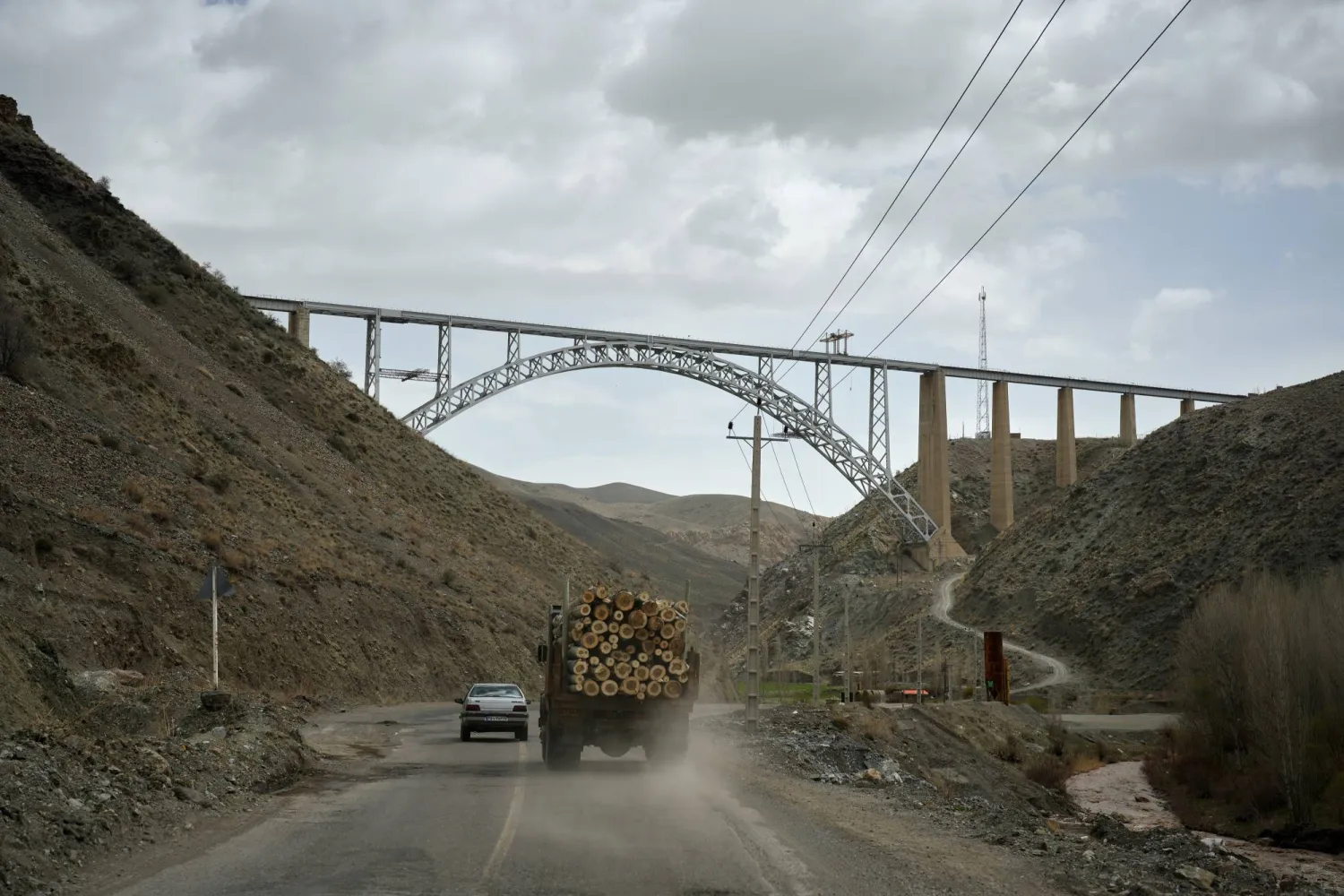
A truck loaded with logs and other vehicles drive along a road toward Tehran near the Turkish border on the outskirts of Razi, northwestern Iran, Saturday, April 4, 2026. (AP Photo/Francisco Seco)
TT

Iran Rejects Latest Ceasefire Proposal as Trump Deadline Approaches

A truck loaded with logs and other vehicles drive along a road toward Tehran near the Turkish border on the outskirts of Razi, northwestern Iran, Saturday, April 4, 2026. (AP Photo/Francisco Seco)

Iran on Monday rejected the latest ceasefire proposal and instead said it wants a permanent end to the war, even as US President Donald Trump’s ultimatum loomed for progress to avoid a major escalation in attacks against power plants and bridges. 

"We won’t merely accept a ceasefire," Mojtaba Ferdousi Pour, head of the Iranian diplomatic mission in Cairo, told The Associated Press. "We only accept an end of the war with guarantees that we won’t be attacked again." 

Iran’s state-run IRNA news agency said Tehran had conveyed its response through Pakistan, a key mediator. 

Trump's deadline centers on Tehran opening the Strait of Hormuz, through which a fifth of the world’s oil is shipped in peacetime. Ferdousi Pour said Iranian and Omani officials were working on a mechanism for administrating the shipping chokepoint. 

Iran’s grip on the strait has caused oil prices to surge and shaken the world economy. 

Iran's rejection came after Israel struck a key petrochemical plant in the massive South Pars natural gas field and killed two paramilitary Revolutionary Guard commanders. 

The gas field attack aimed at eliminating a major source of revenue for Iran, Israel said. The field is critical to electricity production, but the strike appeared to be separate from Trump’s threats.  

Under pressure at home as consumers worry, meanwhile, Trump has warned Iran that if no deal is reached to reopen the strait, the US would set the country "back to the stone ages." 

Trump has given multiple deadlines to Iran. The report of Iran's rejection came as he was making comments to journalists at an annual Easter event at the White House, ahead of more extensive comments Monday afternoon. 

It was not clear whether Trump was aware of the news. He called Iran a "strong" enemy but "not so strong like they were about a month ago." 

Asked if Tuesday at 8 p.m. Washington time was his final deadline, Trump replied simply, "Yeah." 

Israel threatens Iranian officials as mediators try to buy time  

Egyptian, Pakistani and Turkish mediators had sent Iranian Foreign Minister Abbas Araghchi and US Mideast envoy Steve Witkoff a proposal calling for a 45-day ceasefire and the reopening of the strait, two Mideast officials told The Associated Press. The officials spoke on condition of anonymity to discuss the private negotiations. 

Iran’s foreign ministry spokesman Esmail Baghaei earlier told journalists that messages were being exchanged with mediators but "negotiations are entirely incompatible with ultimatums, crimes and threats of war crimes." 

In Islamabad, two senior officials said Pakistan’s ceasefire efforts are at an advanced stage but "several spoilers and detractors" are trying to sow confusion. The officials spoke on condition of anonymity because they were not authorized to speak publicly about the talks. 

Meanwhile, explosions boomed in Tehran and low-flying jets could be heard for hours. 

Among those killed was the head of intelligence for Iran’s Revolutionary Guard, Maj. Gen. Majid Khademi, according to Iranian state media and Israel’s defense minister. Israel said it also killed the leader of the Revolutionary Guard’s undercover unit in its expeditionary Quds Force, Asghar Bakeri. 

Israel’s defense minister vowed to keep targeting top-ranking officials. "We will continue to hunt them down one by one," Israel Katz said. 

Israel’s military later said it struck three Tehran airports overnight — Bahram, Mehrabad and Azmayesh — hitting dozens of helicopters and aircraft it said belonged to the Iranian Air Force. 

A Tehran resident said "constantly there is the sound of bombs, air defenses, drones," speaking on condition of anonymity for her safety. At least one recent attack hit near her home, waking her, she said. 

Separately, Kuwait, the United Arab Emirates and Saudi Arabia activated air defenses to intercept Iranian missiles and drones. Tehran has kept up pressure on Gulf neighbors, which has included strikes against infrastructure like oil fields. In Israel, Iranian missiles hit the northern city of Haifa, where four people from one family were found dead in the rubble of a residential building. 

Oil prices unsettled as pressure grows  

Iran’s attacks on regional energy infrastructure and its hold on the Strait of Hormuz have sent global energy prices soaring. 

Brent crude oil, the international standard, rose to $109 in early Monday spot trading, about 50% higher than when the war started, then wavered. US stocks were mostly holding steady. 

Iran has let some vessels through Hormuz since the war began with US and Israeli attacks on Feb. 28. Some have paid Iran for passage but the flow of traffic is down more than 90% over the same period last year. 

Airstrikes kill more than 25 across Iran  

Thick smoke rose near Tehran’s Azadi Square after an airstrike hit the grounds of the Sharif University of Technology. Multiple countries have sanctioned the university for its work with the military, particularly on Iran’s ballistic missile program. 

Araghchi called university "the MIT of Iran," posting on social media that "Aggressors will see our might." 

Iranian media reported damage to buildings and a natural gas distribution site next to campus. The university is empty as the war has forced all schools into online classes. 

A strike near Eslamshar, southwest of Tehran, killed at least 15 people, authorities said. Five were killed in a residential area in Qom, and six were killed in strikes on other cities, the state-run IRAN daily newspaper reported. Three people were killed at a home in Tehran, state television reported. 

In Lebanon, where Israel has launched air attacks and a ground invasion that it says target the Iran-linked Hezbollah, an airstrike hit an apartment in Ain Saadeh, a predominately Christian town east of Beirut. It killed an official in the Lebanese Forces, a political party strongly opposed to Hezbollah, his wife and another woman. 

"We had always felt safe here," family friend Nadine Naameh said. 

More than 1,900 people have been killed in Iran since the war began, but the government has not updated the toll for days. 

More than 1,400 people have been killed in Lebanon and more than 1 million people have been displaced. Eleven Israeli soldiers have died there. 


Ukrainian Strikes Kill 3 in Russian Border Region

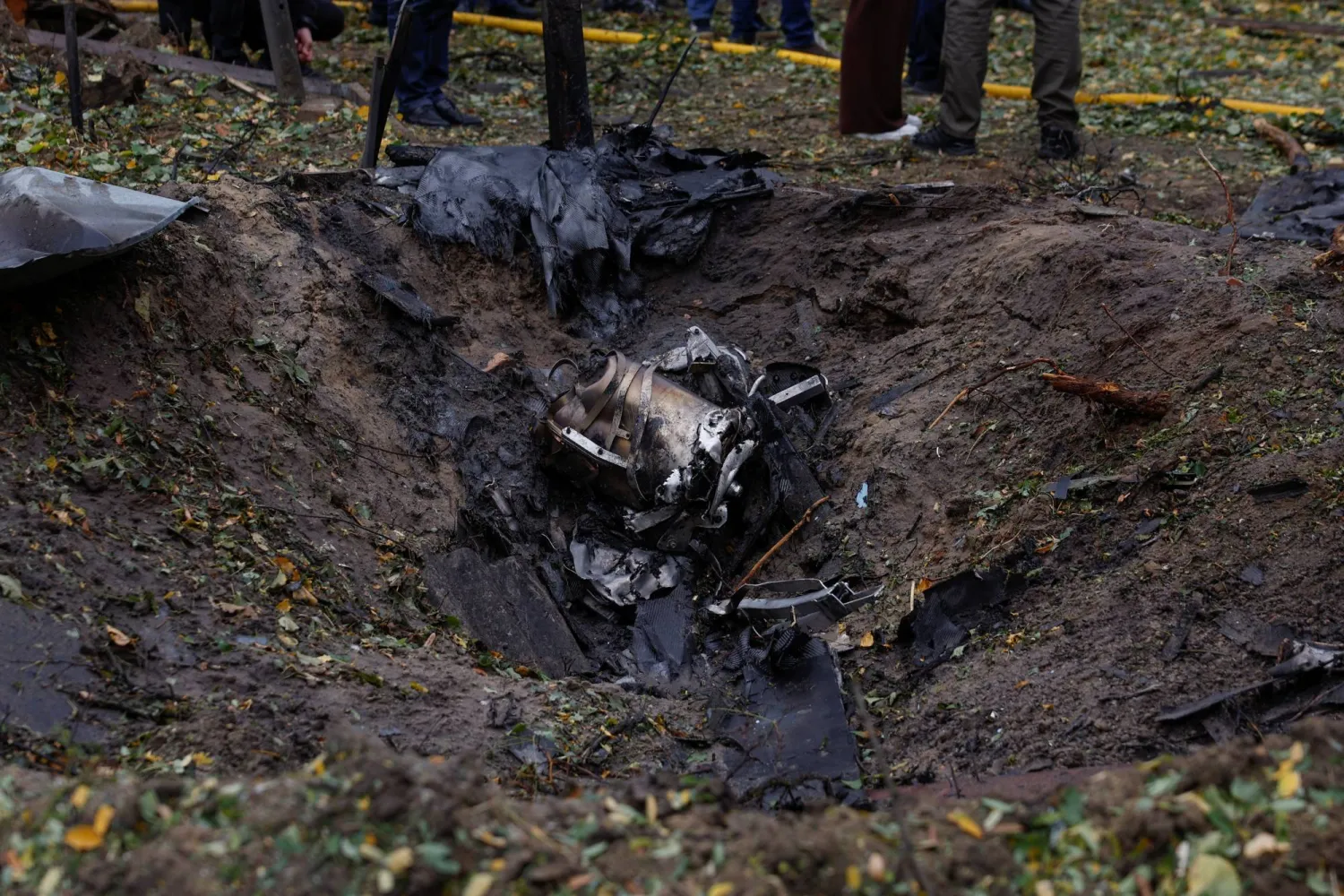
A crater is seen at the site of the Russian strike on a residential area in Odesa, Ukraine, 27 April 2026. (EPA)
TT

Ukrainian Strikes Kill 3 in Russian Border Region

A crater is seen at the site of the Russian strike on a residential area in Odesa, Ukraine, 27 April 2026. (EPA)

A Ukrainian drone attack Tuesday killed three people in the Russian border region of Belgorod, regional governor Vyacheslav Gladkov said.

"Three civilians were killed following drone attacks by the Ukrainian armed forces," he wrote on Telegram, adding that three others were wounded.

The drones targeted a car, killing a man and a vehicle in another area where a man and a woman died, he said.

Since the start of its offensive in Ukraine in February 2022, Russia has been regularly bombing Ukraine, especially key infrastructure sites.

In response, Kyiv strikes targets in Russia, insisting it is aiming at military sites as well as energy facilities in order to reduce Moscow's ability to finance its war effort.

A fire broke out on Tuesday at an oil refinery in Tuapse, in southern Russia, after debris from a Ukrainian drone that had targeted the facility fell on it, according to local authorities.


Train Collision Kills 14, Injures Dozens Near Jakarta

 A drone view shows ambulances standing by at the station following a deadly collision between a commuter line train and a long-distance train, in Bekasi, on the outskirts of Jakarta, Indonesia, April 28, 2026. (Reuters)
A drone view shows ambulances standing by at the station following a deadly collision between a commuter line train and a long-distance train, in Bekasi, on the outskirts of Jakarta, Indonesia, April 28, 2026. (Reuters)
TT

Train Collision Kills 14, Injures Dozens Near Jakarta

 A drone view shows ambulances standing by at the station following a deadly collision between a commuter line train and a long-distance train, in Bekasi, on the outskirts of Jakarta, Indonesia, April 28, 2026. (Reuters)
A drone view shows ambulances standing by at the station following a deadly collision between a commuter line train and a long-distance train, in Bekasi, on the outskirts of Jakarta, Indonesia, April 28, 2026. (Reuters)

Indonesia's president ordered an investigation Tuesday after a long-distance train smashed into a stationary commuter train overnight, killing 14 people and injuring dozens.

Officials ended a nearly 12-hour rescue effort near Bekasi Timur station, east of the capital Jakarta, which saw crews prying open mangled carriages following the Monday night collision.

"And this morning... it is all finished," Mohammad Syafii, head of the National Search and Rescue Agency (Basarnas) told a news conference Tuesday. "I am certain there are no more victims to be found."

One survivor described the terror of being trapped inside a crushed carriage.

"I thought I was going to die," Sausan Sarifah, 29, said from her bed at the RSUD Bekasi hospital where she was admitted with a broken arm and a deep cut to one thigh.

She was on her way home from work on Monday night, she said, when her train stopped at the Bekasi Timur station some 25 kilometers (15 miles) from Jakarta.

"It all happened so fast, in a split second," Sausan recounted.

"There were two announcements from the commuter train. Everyone was ready to get off, and then suddenly there was the sound of the locomotive, really loud," she said.

"There was no time to get out, and everyone ended up piled up inside the train, crushed on top of one another. I don't know how the person underneath me is doing."

She said she had feared suffocating to death in the human pile-up, and worried that some pinned underneath didn't make it.

"Thank God I was on top, so I could be evacuated quickly," said Sausan.

State-owned rail operator KAI said on Tuesday morning that the death toll had risen to 14. Another 84 people required medical treatment, it said, without specifying how many remained hospitalized.

According to Franoto Wibowo, a KAI spokesman, a taxi appears to have clipped the commuter train on a level crossing, causing it to come to a standstill on the tracks, where it was hit.

At the station, chaotic scenes unfolded in the aftermath of the crash, with rescue workers shouting for oxygen tanks as ambulances stood by in a snaking queue, lights flashing.

An AFP reporter at the scene witnessed people being carried out of the wreckage on gurneys and loaded into waiting ambulances as hundreds of bystanders looked on, some seemingly in shock.

The military, fire brigade, the national search and rescue agency, and the Red Cross aided in the massive evacuation effort that followed.

President Prabowo Subianto on Tuesday visited hospital patients in Bekasi, offered his condolences to relatives of the deceased, and said he had ordered an "immediate investigation."

He also ordered the construction of an overpass in Bekasi.

"In general, we do see that many railway crossings are not guarded," the president said.

"I have ordered that we immediately repair all these crossings, either by guard posts or by flyovers."

- Rescue efforts -

Jakarta police chief Asep Edi Suheri said the long-distance train had crashed into the last, women-only, carriage of the commuter train.

All the victims were in the commuter train, and all 240-odd passengers on the other train had been evacuated safely, according to Anne Purba, another KAI spokeswoman.

The agency said it would cover all medical expenses for the injured and funeral costs for the deceased.

The collision had caused "significant damage to several train carriages", the Jakarta search and rescue agency said in a statement.

Several people were trapped in the carriages "due to the force of the impact," it added.

The rescue agency would not say Tuesday whether all had been freed.

Eva Chairista, 39, told AFP she had rushed to the RSUD hospital after hearing that her sister-in-law, who she named only as 27-year-old Fira, had been injured in the crash.

She arrived to a frenetic scene of medical triage.

"The doctor told us to be patient, there are many whose condition is worse than my sister-in-law's," she said.

Transport accidents are not uncommon in Indonesia, a vast archipelago nation where buses, trains and even planes are often old and poorly maintained.

The previous major train crash in the Southeast Asian country killed four crew members and injured about two dozen people elsewhere in West Java province in January 2024.

Sixteen people were killed when a commuter train crashed into a minibus on a level crossing in Jakarta in 2015.


US Says Examining Latest Iran Proposal

A boat sails past a tanker anchored on the Strait of Hormuz off the coast Qeshm island, Iran, April 18, 2026. (AP)
TT

US Says Examining Latest Iran Proposal

A boat sails past a tanker anchored on the Strait of Hormuz off the coast Qeshm island, Iran, April 18, 2026. (AP)

The White House said on Monday that it was examining Iran's latest proposal to unblock the Strait of Hormuz, two months after a US and Israeli offensive sent shockwaves through the global economy.

Peace talks between the United States and Iran to end the Middle East war and fully reopen the vital strait have so far proven inconclusive since a ceasefire came into force.

Trump met with top security advisors on Monday to discuss an Iranian proposal after Tehran passed "written messages" to Washington via Pakistan, spelling out its red lines in negotiations, including on nuclear issues and the Strait of Hormuz, the Fars news agency reported.

The proposal was "being discussed," spokeswoman Karoline Leavitt told a White House briefing.

Asked about the terms of Iran's proposal, Secretary of State Marco Rubio told Fox News "it's better than what we thought they were going to submit," but questioned whether it was genuine.

"We have to ensure that any deal that is made, any agreement that is made, is one that definitively prevents them from sprinting towards a nuclear weapon at any point," he said.

Iran's top diplomat blamed Washington on Monday for the failure of peace talks during a visit to Russia, where President Vladimir Putin promised him Moscow's support in ending the war.

"The US approaches caused the previous round of negotiations, despite progress, to fail to reach its goals because of the excessive demands," Iranian Foreign Minister Abbas Araghchi said.

Araghchi was in Saint Petersburg after visiting Oman and Pakistan, the main mediator in the Middle East war.

Islamabad had hosted a first, unsuccessful round of US-Iran talks, and Araghchi's visit had raised hopes for more negotiations over the weekend.

But US President Donald Trump scrapped a planned trip by his envoys Steve Witkoff and Jared Kushner.

Trump told Fox News if Iran wanted talks, "they can call us" -- adding the cancellation does not signal a return to hostilities.

Tehran would first need guarantees Washington and Israel would not attack again if it was to offer security assurances in the Gulf, Iran's envoy to the UN said.

Meanwhile in Saint Petersburg, Putin and Araghchi both voiced their commitment to their countries' "strategic relationship" following their meeting.

Araghchi said the war, which began when the United States and Israel attacked Iran on February 28, showed "Iran's true power" and stability.

But back home in Tehran, the mood was more sober.

"Everything in the country is up in the air right now. I have not worked for a long time," small business owner Farshad told Paris-based AFP journalists.

"The country is in complete economic collapse."

- Feeling the pinch -

Though the US-Iranian ceasefire holds, the war's economic shock waves continue to reverberate.

Tehran resident Shervin, a photographer, said he was feeling the pinch.

"It is the first time that I have reached a point where I was late on my rent. I still don't have any projects," said Shervin, 42.

Iran has blockaded Hormuz, cutting off flows of oil, gas and fertilizer and sending prices soaring.

In response, the United States has imposed a blockade of Iranian ports.

Trump faces domestic pressure to find an off-ramp as fuel prices rise, with midterm elections due in November and polls showing the war is unpopular among Americans.

Iran's Revolutionary Guards say they have no intention of easing their market-rattling chokehold of the strategic waterway.

Ebrahim Azizi, head of the national security commission in Iran's parliament, said a proposed law for managing the strait would make the Islamic republic's armed forces the overseeing authority, with levies to be paid in Iranian rial.

The head of the UN's maritime agency, Arsenio Dominguez, said there was "no legal basis" for imposing transit fees.

Rubio also rejected the idea.

"They cannot normalize -- nor can we tolerate them trying to normalize -- a system in which the Iranians decide who gets to use an international waterway, and how much you have to pay them to use it," he told Fox News Channel's "America's Newsroom."

- 'Playing with fire' -

Violence has continued on the war's Lebanese front, despite a recently extended ceasefire between Israel and Iran-backed Hezbollah, with Beirut's health ministry reporting Israel killed four people in the south.

Fifty-one others were wounded, including three children, the ministry added.

Hezbollah drew Lebanon into the Middle East war by firing rockets at Israel, which responded with strikes and a ground invasion.

The group's leader Naim Qassem on Monday rejected planned direct negotiations between Lebanon and Israel as a "grave sin," vowing to "not back down."

Shortly afterwards, the Israeli military said it had begun hitting Hezbollah targets in Lebanon. Israel maintains that under the terms of the truce, it can act against imminent threats.

Israeli Prime Minister Benjamin Netanyahu said Hezbollah's rockets and drones remained a threat meriting military action.

Israeli Defense Minister Israel Katz warned that "Qassem is playing with fire."

Lebanese President Joseph Aoun, responding to Qassem, said his "goal is to reach an end to the state of war with Israel."

But Israeli army chief of staff Eyal Zamir said 2026 was "likely to be another year of fighting" for Israel on all fronts.