


SME Financing Moves to the Core of Saudi Arabia’s Non-Oil Economy

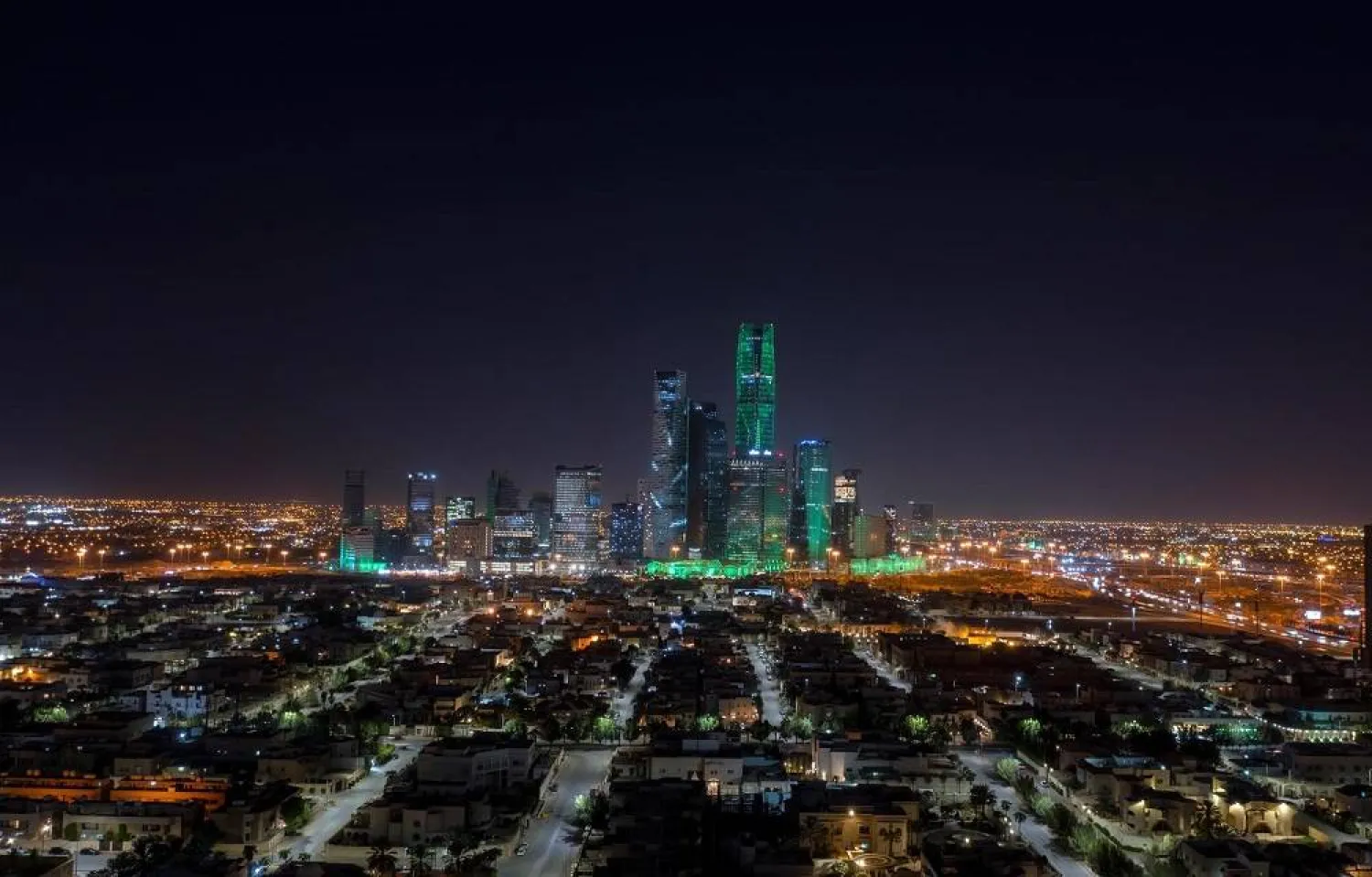
A night view of Riyadh, Saudi Arabia (SPA file)
TT

SME Financing Moves to the Core of Saudi Arabia’s Non-Oil Economy

A night view of Riyadh, Saudi Arabia (SPA file)

In a sign of a deep shift in the structure of financing within Saudi Arabia’s economy, and reflecting the goals of Vision 2030 to diversify the production base, credit facilities extended to micro, small and medium-sized enterprises reached a record high at the end of 2025.

Banks and finance companies injected around SAR 467.7 billion ($124.5 billion) into the sector last year, marking a 33 percent annual increase. The surge highlights the transition of these enterprises from the margins of economic activity to the center, positioning them as a key driver of non-oil growth and job creation.

On a yearly basis, total facilities rose 33 percent from about SAR 351.7 billion ($93.6 billion) in 2024, according to monthly bulletin data from the Saudi Central Bank (SAMA).

The banking sector accounted for the largest share, with facilities provided by banks reaching approximately SAR 446.6 billion, up 34 percent year on year. Finance companies contributed around SAR 21.1 billion, an annual increase of 15.4 percent.

By enterprise size, growth rates varied. Lending to medium-sized firms rose 18 percent year on year to SAR 220.9 billion. Small enterprises recorded stronger growth of 34 percent, reaching SAR 163.5 billion. Micro-enterprises saw the sharpest increase, with facilities surging 97 percent to SAR 83.3 billion, underscoring a notable expansion in financing to this segment.

Structural shift

The strong growth has been driven by several factors, most notably the clear strategic direction under Vision 2030, which places SMEs at the heart of economic diversification, along with the expanding role of institutions supporting the sector.

Among these is Monsha’at, which has helped improve the business environment and connect enterprises with funding sources, according to economist Hussein Al-Attas.

“This level of facilities is not just a record figure. It reflects a structural shift in the philosophy of financing within the Saudi economy,” Al-Attas told Asharq Al-Awsat.

He identified four main drivers behind the growth: a clear economic vision, a stronger regulatory environment, the expansion of credit guarantee programs, and a shift in how banks view the SME sector.

The Kafalah program has been particularly important, helping reduce lending risks and enabling banks to increase exposure to SMEs. This has coincided with improvements in financial data quality and governance practices, which have strengthened lenders’ confidence in the sector.

Sustainable growth

Al-Attas said the current trend reflects not a temporary expansion in credit but a redefinition of the role of SMEs in the economy, with growth expected to continue over the medium term.

However, he pointed to several challenges that could affect the pace of expansion. These include limited managerial expertise in some firms, the risk of defaults if financing is poorly managed, concentration of lending in specific sectors, and the potential impact of future interest rate increases.

Authorities are aware of these risks. This is reflected in a growing focus on improving governance, strengthening management efficiency, and linking financing more closely to actual operating performance to ensure funds are directed toward sustainable and productive activities.

The importance of this expansion extends beyond the headline figures. It supports a higher contribution of SMEs to non-oil GDP and plays a central role in job creation, given the sector’s labor-intensive nature.

According to Al-Attas, the growth also strengthens economic diversification by supporting the entry of new firms into promising sectors such as technology, industry, and services. It also increases local value added and reduces reliance on imports and large corporations.

Looking ahead, he expects financing growth to continue at a healthy pace over the next three to five years. This outlook is supported by the expansion of digital financing solutions, continued integration between government and banking sectors, and improving market maturity and enterprise quality. Large-scale projects and non-oil expansion are also expected to create new financing opportunities, gradually shifting the focus from the volume of funding to the quality of its economic impact.

Digital transformation

Mohammed Al-Farraj, senior head of asset management at Arbah Capital, said the development reflects alignment between ambitious government policies aimed at raising SMEs’ contribution to GDP to 35 percent and a responsive banking sector that has led the growth and captured the largest share of financing.

He noted that guarantee and incentive programs, as well as the SME Bank, have played a key role in reducing credit risks and boosting banks’ willingness to lend.

Digital transformation and the rise of fintech companies have also marked a turning point by improving access to financing and lowering operating costs. This has created a more flexible and attractive environment for business growth beyond traditional constraints.

Despite these positive indicators, Al-Farraj cautioned that rapid expansion requires strategic vigilance, particularly regarding credit risks and potential defaults amid interest rate volatility and increased competition in sectors such as retail.

He continued that the next phase will require a shift from quantitative growth, focused on expanding financing volumes, to qualitative growth that emphasizes credit quality, project sustainability, and resilience to economic changes.

Alternative financing tools such as venture capital are expected to play a growing role. These tools can ease pressure on bank balance sheets while directing funding toward strategic sectors including technology, tourism, and industry to ensure meaningful value creation in the national economy.

Developments seen in 2026 suggest early returns from this expansion. These include the emergence of a new generation of high-growth firms, increased SME contribution to non-oil exports, and greater use of instruments such as sukuk tailored for SMEs as a cost-effective long-term financing option.

Al-Faraj said SMEs are no longer a peripheral segment but a central driver of innovation and growth in Saudi Arabia’s economy. Sustaining this momentum will require continued regulatory development and more flexible repayment mechanisms to ensure durable growth aligned with long-term economic development goals.


Foreign Investors Consolidate their Bets on Saudi Arabia as Economic Reforms Gather Pace

The King Abdullah Financial District in Riyadh. (SPA)
TT

Foreign Investors Consolidate their Bets on Saudi Arabia as Economic Reforms Gather Pace

The King Abdullah Financial District in Riyadh. (SPA)

Saudi Arabia is no longer just an oil-price bet for global investors. It is becoming a core emerging-market play. That is the view of Emmanuel Laurina, head of Middle East, Africa, and official institutions at State Street, one of the world’s major financial services and asset management firms.

Speaking to Asharq Al-Awsat, Laurina said a structural shift is reshaping how global institutions view the Kingdom, and why State Street is placing a major bet on its market.

Laurina explained that Saudi Arabia has moved from an oil-linked allocation to a central component of emerging-market portfolios.

The shift is being driven by a broader range of investable sectors, particularly finance, energy, and raw materials, giving investors real diversification in a world where many emerging markets are dominated by technology, he stressed.

Saudi Arabia’s inclusion in major global equity and bond indexes has helped anchor foreign inflows and strengthen the market’s role in international allocations, he said. Vision 2030 reforms have also widened opportunities beyond oil.

What is drawing investors now?

Laurina said market liberalization and the opening of share trading to foreign investors through the development of the Saudi Exchange, Tadawul, have helped attract liquidity and deepen international participation.

He also pointed to Saudi Arabia’s push into artificial intelligence and digital infrastructure as the Kingdom seeks strategic partnerships with major global technology companies.

In fixed income, Laurina said Saudi government bonds carry a strong A+ credit rating and offer a positive yield spread over US Treasuries, making them attractive for investors seeking dollar-denominated diversification.

Access has also improved sharply, he said. The abolition of the qualified foreign investor regime and the shift toward direct ownership of listed securities mark a major step forward.

Still, some structural limits remain. These include foreign ownership caps at individual and aggregate levels, and the need to trade through local brokers. Laurina said the listing of foreign exchange-traded funds in the Kingdom remains only partly developed because Saudi Arabia’s domestic market-making ecosystem is still limited.

New fund targets Saudi equities

Laurina said State Street recently launched an exchange-traded fund in partnership with the Saudi Public Investment Fund, giving international investors access to Saudi equities through a systematic active strategy that seeks to beat the benchmark across full market cycles.

The launch reflects rising client demand and a clear shift in the Saudi market’s composition, away from oil stocks and toward sectors such as healthcare, utilities and technology, he went to say.

ETFs, he said, are only one part of a wider ecosystem that includes institutional mandates, strategic partnerships, index-driven flows and growing activity in private markets, especially in Vision 2030 priority sectors.

Laurina said the Middle East and Africa are central to State Street’s future growth strategy.

The strategy rests on three pillars: building institutional asset classes in the Middle East and North Africa, internationalizing Sharia-compliant portfolios, and meeting growing demand for regionally focused investment solutions.

Riyadh became State Street’s 11th global investment center in 2024, he said, as the company continues to expand its local investment and research team.

Laurina said Saudi Arabia is now a pivotal market and a key growth engine in State Street’s Middle East and Africa strategy.


Standard Chartered CEO Seeks to Reassure Staff over AI-linked Job Cuts

FILED - 11 January 2012, China, Hong Kong: FILE PHOTO - A general view of the facade of Standard Chartered Bank branch in Hong Kong. Photo: Jens Kalaene/dpa-Zentralbild/dpa
TT

Standard Chartered CEO Seeks to Reassure Staff over AI-linked Job Cuts

FILED - 11 January 2012, China, Hong Kong: FILE PHOTO - A general view of the facade of Standard Chartered Bank branch in Hong Kong. Photo: Jens Kalaene/dpa-Zentralbild/dpa

Standard Chartered CEO Bill Winters sought to assuage staff concerns on Wednesday, a day after saying that the bank will cut thousands of jobs over the next four years as it moves to replace "lower-value human capital" with technology.

"Many of you will have seen media coverage following the Investor Event in Hong Kong, particularly the reporting around automation, AI, and workforce changes," Winters said in a memo to the bank's ⁠staff reviewed by ⁠Reuters.

"I know this may be unsettling when reduced to simple headlines or a quote out of context," he said.

A spokesperson for the bank confirmed the memo's content.

StanChart said on Tuesday it would cut 15% of ⁠its corporate function roles by 2030, which, according to a Reuters calculation, would result in nearly 8,000 redundancies out of its more than 52,000 staff in such roles.

The bank cited AI as a driver to slim its operations in its quest to increase profitability and tackle competition.

"It's not cost-cutting. It's replacing in some cases lower-value human capital with the financial capital ⁠and ⁠the investment capital we're putting in," Winters said on Tuesday.

In his memo to staff on Wednesday, Winters said the bank had been open that its workforce will evolve.

"Some roles will reduce in number, some will change, and new opportunities will emerge. We will continue to prioritize investment in reskilling and redeployment wherever we can," he said.

"Where changes do happen, we will handle them with thought and care," he added.


Ukraine Ally Britain Eases Sanctions on Russian Oil as Fuel Prices Surge Over Iran Conflict

A seized suspected Russian oil taker by the French navy is photographed in the Mediterranean Sea in Fos-sur-Mer, southern France, on Jan. 26, 2026. (AP)
TT

Ukraine Ally Britain Eases Sanctions on Russian Oil as Fuel Prices Surge Over Iran Conflict

A seized suspected Russian oil taker by the French navy is photographed in the Mediterranean Sea in Fos-sur-Mer, southern France, on Jan. 26, 2026. (AP)

The UK government has quietly watered down sanctions on Russian oil in an effort to shelter Britons from the cost-of-living squeeze triggered by the closure of the Strait of Hormuz.

A trade license that came into effect Wednesday permits the import of Russian oil that has been refined into jet fuel and diesel in third countries, such as India and Türkiye.

The US-Israeli war on Iran and Iran's closure of the strait, through which about a fifth of the world's oil usually passes, has sent fuel prices soaring around the world and sparked concerns about a shortage of jet fuel.

UK Treasury minister Dan Tomlinson said the changes are “for a time limited period and on a very specific issue.”

Britain has been one of Ukraine's strongest allies since Russia's full-scale invasion in 2022, and the government insist its sanctions against Russia remain among the toughest in the world.

But lawmaker Emily Thornberry, who chairs Parliament’s Foreign Affairs Committee, said Ukrainians would “feel very let down” by the move. She said Ukraine’s allies should keep squeezing Russia’s oil industry, because it “is absolutely crippling their economy.”

The US has also eased Russian sanctions. Earlier this week, Treasury Secretary Scott Bessent extended a 30-day sanctions waiver allowing the purchase of Russian oil shipments already at sea.

On Tuesday, finance ministers from the US, Britain and the other Group of Seven wealthy nations issued a joint statement reaffirming “our unwavering commitment to continue to impose severe costs on Russia in response to its continued aggression against Ukraine.”
