American Journalist Shelly Kittleson Has Been Released, Says Iraqi Official

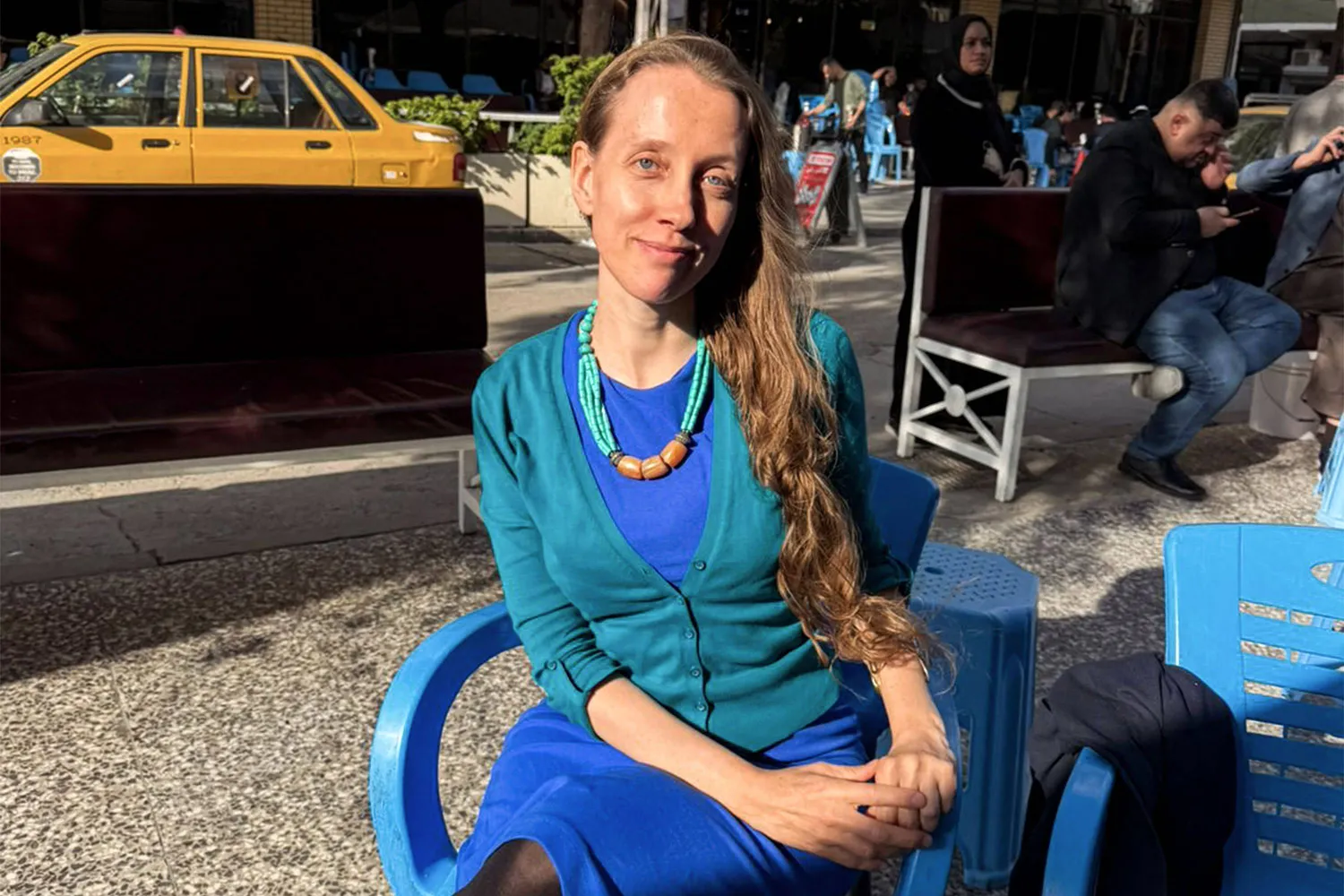
US journalist Shelly Kittleson poses for a picture in Baghdad on March 31, 2026. (AFP)
TT

American Journalist Shelly Kittleson Has Been Released, Says Iraqi Official

US journalist Shelly Kittleson poses for a picture in Baghdad on March 31, 2026. (AFP)

American journalist Shelly Kittleson, who was kidnapped from a Baghdad streetcorner last week, has been released, an Iraqi official with direct knowledge of the situation said on Tuesday. 

Kittleson was freed in the afternoon, said the official, who spoke to The Associated Press on condition of anonymity because he was not authorized to comment publicly. He did not share her current whereabouts but said that prior to her release, she had been held in Baghdad. 

The Iran-backed Iraqi Kataib Hezbollah faction said in a statement earlier in the day it had decided to free Kittleson, who was abducted on March 31. 

The group said its decision came “in appreciation of the patriotic stances of the outgoing prime minister," Mohammed Shia al-Sudani, without giving more details. It added that “this initiative will not be repeated in the future.” 

The statement added a condition — that Kittleson must “leave the country immediately” upon her release. 

The US State Department did not immediately respond to a request for comment. 

Kataib Hezbollah had not previously acknowledged that it was the one responsible for Kittleson’s abduction, although both US and Iraqi officials had pointed fingers at the group. 

Two officials within the faction, who spoke on condition of anonymity because they were not authorized to comment publicly, told the AP that in exchange for freeing Kittleson, several members of the group who had previously been detained by Iraqi authorities would be released. 

Kittleson, 49, a freelance journalist, had lived abroad for years before the kidnapping, using Rome as her base for a time and building a respected journalism career across the Middle East, particularly in Iraq and Syria. Like many freelancers, she often worked on a shoestring budget and without the protections afforded by large news organizations to staff. 

She had entered Iraq again shortly before her abduction. US officials have said that they warned her multiple times of threats against her, but that she did not want to leave. 

Iraqi officials have said that two cars were involved in the kidnapping, one of which crashed while being pursued near the town of al-Haswa in Babil province, southwest of Baghdad. The journalist was then transferred to a second car that fled the scene. 

Three Iraqi officials said earlier Tuesday that attempts to negotiate her release had run into obstacles. 

The two Iraqi security officials and one official from the pro-Iran Coordination Framework political bloc spoke to the AP on condition of anonymity because they were not authorized to speak about the sensitive case publicly. 

One of the security officials said that an official with the Popular Mobilization Forces had been tasked with communicating with the abductors to secure Kittleson’s release but had run into difficulties in communicating with the Kataib Hezbollah leadership. 

“The primary challenge is that the leaders of the Kataib — specifically, the commanders of the battalions — are nowhere to be found. No one knows their whereabouts, and the process of establishing contact with them is extremely complex,” they said. “These leaders have gone underground, maintaining no active lines of communication, out of fear of being targeted.” 

The political official said a message had been sent to the Kataib leadership to determine their demands in exchange for releasing the kidnapped journalist. Iraqi authorities were willing to release six Kataib Hezbollah members who are currently detained, most of them in connection with attacks on a US base in Syria, they said. 

Kataib Hezbollah has previously been accused of kidnapping foreigners. 

Elizabeth Tsurkov, a Princeton graduate student with Israeli and Russian citizenship, disappeared in Baghdad in 2023. After she was freed and handed over to US authorities in September 2025, she said that she had been held by Kataib Hezbollah. 

The group never officially claimed responsibility for kidnapping her. 

Iran-backed factions in Iraq have also launched regular attacks on US facilities in the country since the beginning of the US-Israeli war on Iran. 


US Asks Iraq to Shut Most Iran Border Crossings, Iraqi Foreign Minister Says

Iraqi Foreign Minister Fuad Hussein speaks as he attends a joint press conference with Syrian Foreign Minister Faisal Mekdad (not pictured), in Baghdad, Iraq June 4, 2023. (Reuters)
TT

US Asks Iraq to Shut Most Iran Border Crossings, Iraqi Foreign Minister Says

Iraqi Foreign Minister Fuad Hussein speaks as he attends a joint press conference with Syrian Foreign Minister Faisal Mekdad (not pictured), in Baghdad, Iraq June 4, 2023. (Reuters)

The US Treasury has asked Iraq to close all border crossings with Iran except for two as part of Washington's policy of ‌increasing economic ‌pressure on Tehran, Iraqi ‌Foreign ⁠Minister Fuad Hussein ⁠said in an interview with Al Jazeera.

One of the exceptions is in the Kurdistan region.

"There ⁠are many official ‌and ‌unofficial border crossings with Iran, ‌and closing all ‌of them would be difficult and would affect our economy. The Americans ‌are still demanding the closure of the crossings, ⁠and ⁠we are currently in discussions with them," Hussein said.

Last month, Iraq closed the busy Sheeb border crossing with Iran to review security and install detection equipment to stop smuggling.


Yemen Army Makes New Gains on Battlefronts

A Yemeni soldier in battle in Taiz. (AFP)
TT

Yemen Army Makes New Gains on Battlefronts

A Yemeni soldier in battle in Taiz. (AFP)

The Yemeni arena has witnessed a coordinated military escalation across multiple fronts over the past few hours, stretching from the southwestern governorates of Lahj and Taiz to Marib and Al-Jawf in the north.

The flare-up coincided with a wave of Houthi missile and drone strikes targeting Saudi Arabia, including the capital, Riyadh, alongside the Eastern and Southern Regions, as ongoing Yemeni government military operations point toward a broadening confrontation.

Yemeni military sources said that the air force executed a precision airstrike targeting a meeting of prominent Houthi field commanders in the Al-Maqatirah district of northern Lahj. The strike was launched after intelligence assets tracked the commanders' movements and pinpointed the meeting location.

The final toll of human casualties resulting from the strike, as well as the identities of the commanders present at the targeted site, remain unclear.

The strike took place amidst escalating military operations across the Lahj fronts, particularly in areas intersecting the Al-Maqatirah, Al-Mudharabah, and Tur Al-Baha districts.

Over recent days, these zones have witnessed intense clashes and retaliatory attacks, driven by Houthi attempts to advance toward strategic positions and supply routes linking the Lahj and Taiz governorates.

Government forces had previously announced the recapture of strategic positions on the Al-Mudharabah front following fierce clashes with the Houthis. The fighting involved intensive attacks launched by members of the militia against military sites before government forces managed to repel them and force the attackers to retreat.

On Saturday, the Yemeni army carried out 875 military operations against the Houthis, encompassing artillery strikes, ambushes, and targeted attacks on positions, gatherings, and reinforcements.

The campaign resulted in the neutralization of 130 Houthi members and the destruction or damage of some 50 military vehicles and equipment, including rocket launchers.

The attacks were executed across multiple fronts, focusing on the group's positions, reinforcements, and combat capabilities with the participation of ground units supported by air and artillery assets.

Meanwhile, government forces continued their maneuvers in Al-Jawf and other areas as part of ongoing confrontations to recapture military sites and secure liberated zones.

The escalation extended to the Marib fronts, where government forces announced the downing of a Houthi reconnaissance drone, coinciding with the thwarting of simultaneous ground attacks launched by the group against military positions in the Taiz and Lahj governorates.

Yemeni army artillery targeted Houthi military vehicles and barracks on the northern front of Marib following the downing of a drone on the Mas front. Military sources stated the operations are intended to curb the group's surveillance, reconnaissance, and troop-monitoring capabilities.


Al-Zaidi Intensifies Confrontation with Armed Factions

Iraqi PM Ali Al-Zaidi in Sadr City on Saturday. (INA)
TT

Al-Zaidi Intensifies Confrontation with Armed Factions

Iraqi PM Ali Al-Zaidi in Sadr City on Saturday. (INA)

The Iraqi Kataib Hezbollah, one of the armed factions that still refuses to disarm, responded to Prime Minister Ali Al-Zaidi's announcement regarding its possession of investments worth billions of dinars and millions of dollars.

The premier has launched what political observers in Baghdad view as an "open battle" against the armed factions, vowing that he "will not let them remain."

Over recent days, Al-Zaidi canceled multi-million dollar contracts across various locations, ranging from Baghdad Airport and the Ministry of Transport to Mosul Airport. Websites close to the government circulated the names of the armed factions that had control of those contracts.

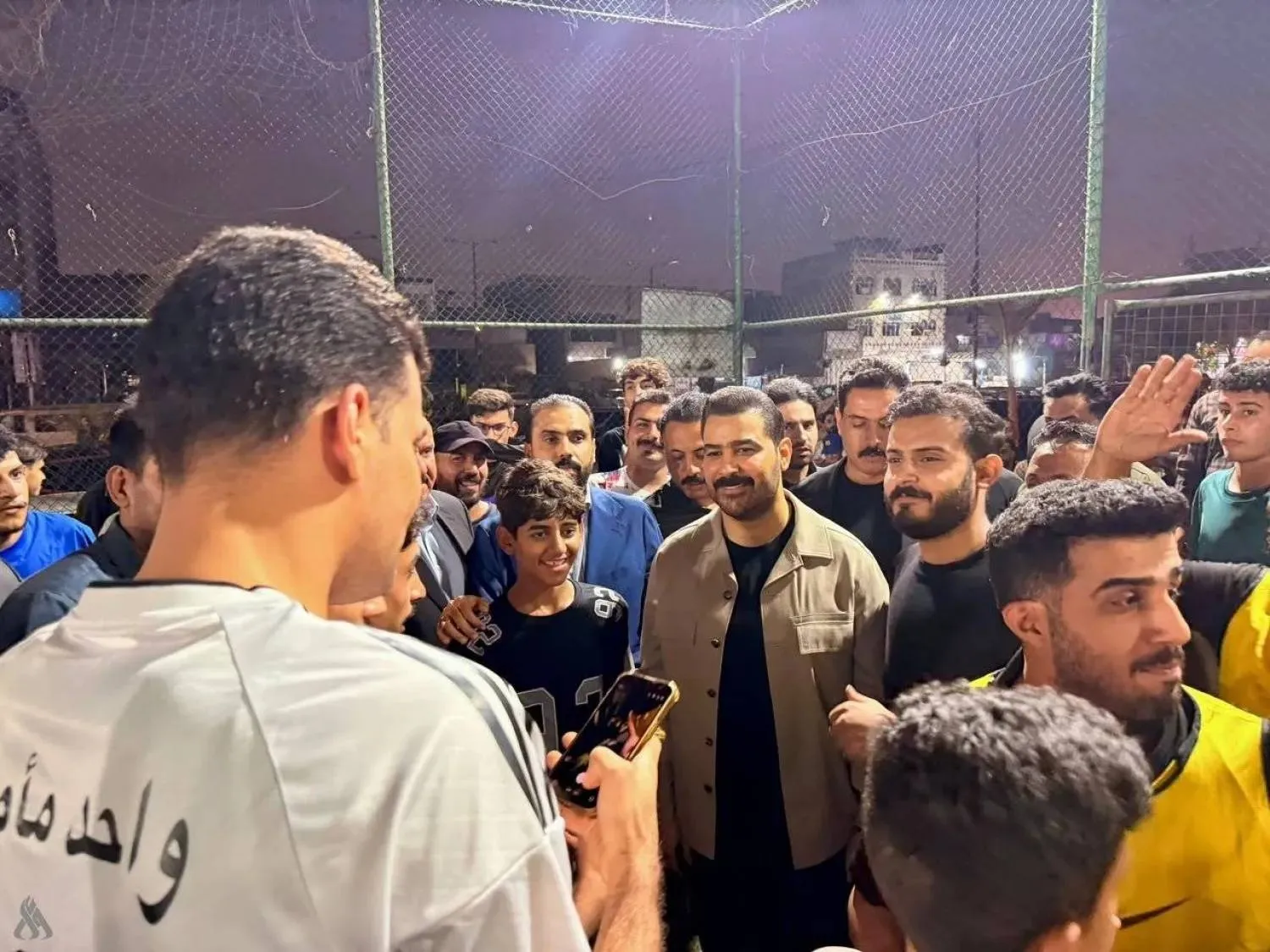
Al-Zaidi dismissed statements issued against him and his associates, including his own brother, by Kataib Hezbollah, choosing Sadr City in eastern Baghdad to assert his firm stance.

Visiting the popular district late Saturday night, he met directly with citizens at a local restaurant and delivered a clear message to armed factions, signaling the start of an open and uncompromising confrontation.

In his most critical message directed at the factions, he declared: "I will absolutely not let weapon holders remain," adding, "If others allowed them to remain, it was because they were benefiting from them."

Al-Zaidi's response to the armed factions came a day after accusations were leveled against his brother by Kataib Hezbollah, which said in a statement: "We address our remarks directly and explicitly to Hassan Al-Zaidi, the media and security official in the Prime Minister's office. All your allegations regarding investments, companies, and the like - whether accurate or completely fabricated slanders - we consider entirely, along with all their dependencies, a 'gift' to you from the Brigades, to be added to your assets."

On Saturday, Al-Zaidi directed the cancellation of contracts for three companies at Mosul Airport due to their links to armed groups, ordering their referral to international firms.

It has become clear that the initiative to restrict weapons to state control is facing growing setbacks, following announcements by armed factions such as Kataib Hezbollah, Al-Nujaba, and Kataib Sayyid al-Shuhada of their refusal to surrender their arms.

This contrasts with other factions, most notably Asaib Ahl al-Haq and Kataib Imam Ali, which complied and secured ministries, agencies, and embassies in exchange for their stance.

The current truce remains tied to the potential military confrontation between the US and Iran, amid leaks that the Americans delivered a warning to Al-Zaidi regarding potential strikes on those factions should they move against neighboring countries or US bases in the region.

Meanwhile, political forces, particularly certain factions represented by the Coordination Framework, have kicked off efforts to prevent the confrontation between the government and the factions from widening because it has started to impact upon "one of the most critical areas that everyone was keen to avoid over the past years: economic committees and investments," said a well-informed Iraqi politician and lawmaker close to both sides.

Speaking on condition of anonymity to Asharq Al-Awsat, the Iraqi lawmaker and politician noted that "certain forces within the Coordination Framework, during talks between some of its factions and the armed groups, have begun leaning toward the factions' refusal to disarm under Al-Zaidi's vision.”

“This shift follows Al-Zaidi's understandings with the US and President Donald Trump, whom he met twice - first during a visit to Washington last July, and second in New York during the UN General Assembly meetings last September - as it became clear to some Framework leaders that the Al-Zaidi-Trump agreement might not stop at the weapon, but could extend to other factions within the Shiite political structure,” he added.