


Israel Backs Trump's 2-week Pause on Iran Strikes, Says Lebanon Excluded

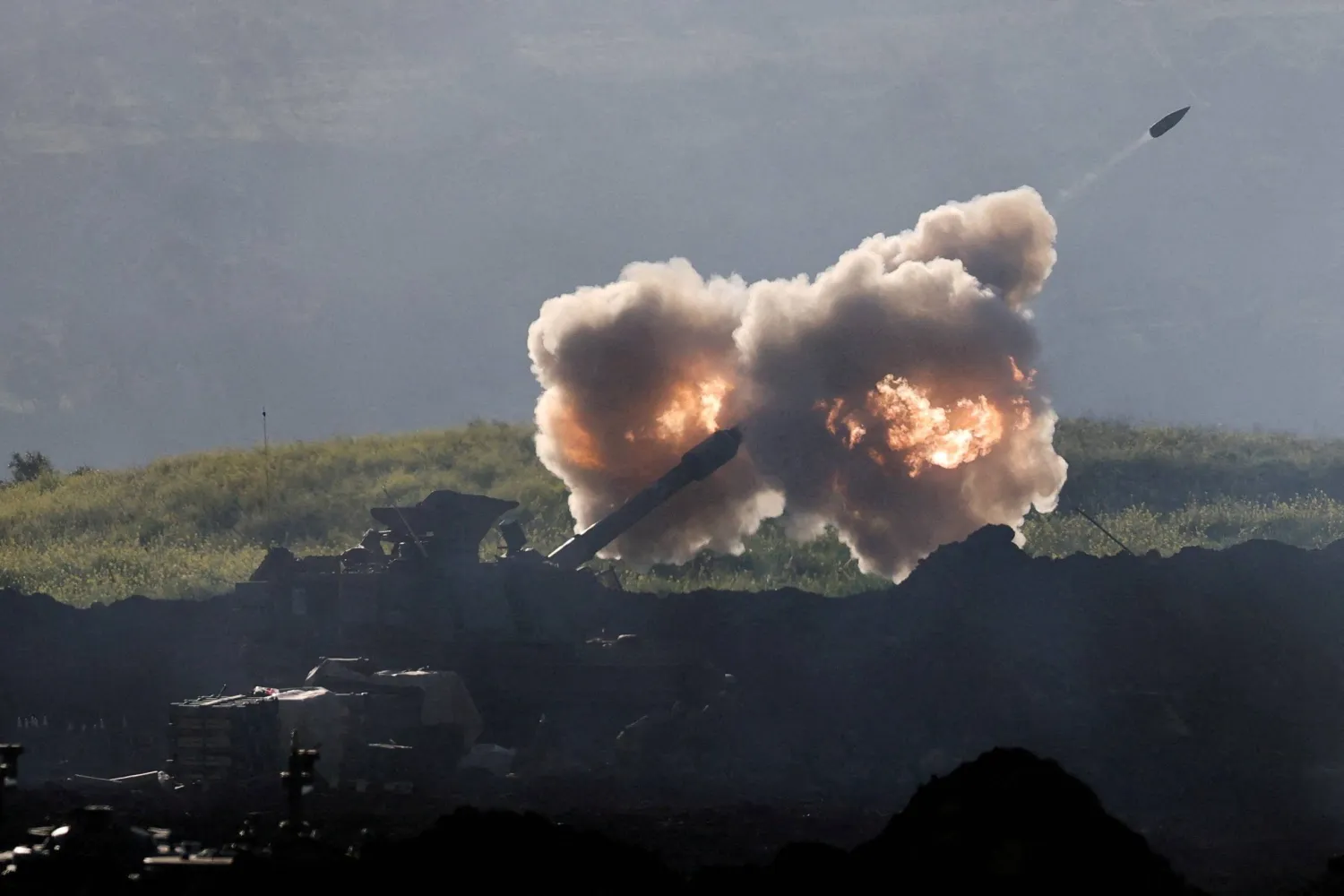
FILE PHOTO: An Israeli artillery unit fires towards Lebanon, on the Israeli side of the Israel-Lebanon border, in northern Israel, March 17, 2026. REUTERS/Ammar Awad/File Photo
TT

Israel Backs Trump's 2-week Pause on Iran Strikes, Says Lebanon Excluded

FILE PHOTO: An Israeli artillery unit fires towards Lebanon, on the Israeli side of the Israel-Lebanon border, in northern Israel, March 17, 2026. REUTERS/Ammar Awad/File Photo

Israel supports US President Donald Trump's decision to suspend strikes against Iran for two weeks, but the ceasefire does not include Lebanon, Prime Minister Benjamin Netanyahu's office said on Wednesday.

The premier's office said Israel backed the US move provided Tehran immediately opened the strait and stopped attacks against the United States, Israel and countries in the region.

The remarks came after Washington announced a two-week suspension of attacks ⁠against Iran as ⁠part of efforts to de-escalate the conflict and open a window for negotiations.

Israel also said it supported US efforts to ensure Iran no longer posed a nuclear, missile or "terror" threat to the US, Israel and Iran's Arab neighbors, ⁠adding that Washington had told Israel it was committed to achieving their shared goals in upcoming negotiations. Iran said on Wednesday negotiations with the US would begin on Friday, April 10 in Islamabad.

Pakistan's Prime Minister Shehbaz Sharif said that the United States and its allies had agreed to a ceasefire "everywhere including Lebanon", suggesting Israel had agreed to halt its invasion of its northern neighbor.”

Lebanon was drawn into the war after Iran-backed group Hezbollah launched rocket fire on Israel.

That attack sparked an Israeli invasion and air raids across Lebanon that have killed more than 1,500 people, according to authorities.



Israel’s Death Penalty Law Perpetuates Racial Discrimination, Says UN Watchdog

Protesters hold placards outside the Red Cross offices in Ramallah, in the Israeli-occupied West Bank, on March 31, 2026, during a rally against a bill approved by Israel's parliament that would allow the execution of Palestinians convicted on terror charges for deadly attacks. (AFP via Getty Images)
TT

Israel’s Death Penalty Law Perpetuates Racial Discrimination, Says UN Watchdog

Protesters hold placards outside the Red Cross offices in Ramallah, in the Israeli-occupied West Bank, on March 31, 2026, during a rally against a bill approved by Israel's parliament that would allow the execution of Palestinians convicted on terror charges for deadly attacks. (AFP via Getty Images)

Israel's new death penalty law permitting the execution of Palestinians convicted of deadly attacks perpetuates racial discrimination against them, a United Nations committee said Friday, urging its immediate repeal.

The law amounts to a grave erosion of human rights, the UN Committee on the Elimination of Racial Discrimination said in a statement.

Under the new law, passed by the Israeli parliament in March, Palestinians in the occupied West Bank convicted by military courts of carrying out deadly attacks classified as "terrorism" will face the death penalty as a default sentence.

"The new law is a severe blow to human rights, rolling back Israel's long-standing de facto moratorium on executions since 1962 and expanding the use of the death penalty," the committee said.

The law is "de facto applicable to Palestinians only" and sets a 90-day deadline for executions once a final judgement is rendered, the committee said.

Furthermore, it said Israel should ensure that all Palestinian detainees "are guaranteed their rights to equal treatment before the law, security of person, protection against violence or bodily harm, and access to justice".

The committee also called on Israel to "end all policies and practices that amount to racial discrimination against and segregation of Palestinians".

It said other countries should "ensure that their resources are not used to enforce or support discriminatory policies and practices against Palestinians living in the Occupied Palestinian Territory".

The committee of 18 independent experts monitors adherence to the Convention on the Elimination of All Forms of Racial Discrimination by its 182 states parties.

Under the convention, which came into force in 1969, countries must eliminate racial discrimination, eradicate practices of segregation and guarantee equality before the law without distinction as to race, color, descent or national or ethnic origin.

Israel ratified the convention in 1979.

In March, UN rights chief Volker Turk branded Israel's new law "cruel and discriminatory", warning that applying it in occupied Palestinian territory "would constitute a war crime".

Israel has only applied the death penalty twice: in 1948, shortly after the state's founding, against a military captain accused of high treason, and then in 1962, when the Nazi war criminal Adolf Eichmann was hanged.

Israel has occupied the West Bank since 1967 and violence in the territory has soared since Hamas's October 7, 2023, attack on Israel triggered the Gaza war.


Israeli Authorities Taking 2 Activists Who Led a Gaza-Bound Flotilla to Israel for Questioning

Protesters hold Palestinian flags during a demonstration to condemn the interception of the Global Sumud Flotilla by the Israeli army, in Turin on April 30, 2026. (Photo by MARCO BERTORELLO / AFP)
TT

Israeli Authorities Taking 2 Activists Who Led a Gaza-Bound Flotilla to Israel for Questioning

Protesters hold Palestinian flags during a demonstration to condemn the interception of the Global Sumud Flotilla by the Israeli army, in Turin on April 30, 2026. (Photo by MARCO BERTORELLO / AFP)

Israeli authorities say they are taking two activists who led an aid flotilla bound for Gaza — and who were captured by Israel in international waters of the Mediterranean Sea — to Israel for questioning. 

The activists, Palestinian-Spanish citizen Saif Abukeshek and Brazilian citizen Thiago Ávila, were among dozens of activists intercepted by the Israeli navy off the coast of Crete. They are members the Global Sumud Flotilla's steering committee, whose mission was to break Israel's naval blockade and bring some humanitarian aid to the Palestinian territory. 

In all, some 20 boats and 175 activists were intercepted by the Israeli navy. Activists said Israeli forces stormed their vessels, smashed engines and detained some of those onboard. The incident occurred hundreds of miles (kilometers) from Gaza and Israel overnight from Wednesday to Thursday. 

Israeli officials said they needed to take early action against the flotilla before it reached Israeli waters because of the high number of boats involved. 

On Friday the Israeli Foreign Ministry said on X that it was taking the two activists to Israel for questioning, and that Abukeshek was “suspected of affiliation with a terrorist organization” and Ávila was “suspected of illegal activity," without providing evidence. 

The Global Sumud Flotilla appealed for international support. “We demand that all governments do all they can to pressure the Israeli regime to release all the illegal abductees," the group said Friday. 

The rest of the flotilla participants were released in Crete late Thursday. Of the 53 vessels that had been sailing prior to the interception, 31 reached safe waters and would continue their attempts to “break the illegal siege of Gaza," organizers said. 

The flotilla set sail earlier this month from Barcelona, Spain. Organizers have said more than 70 boats and 1,000 people from around the world would be participating, with more vessels joining the original boats as the flotilla sailed east across the Mediterranean. 

The Greek foreign ministry said Thursday that it had asked Israel to withdraw its ships from the area and had offered its “good services” for the activists to disembark in Greece and be repatriated. 

Protests in solidarity with the flotilla erupted across several capitals including Rome, Athens and Istanbul. 

Spain and Brazil have not yet commented on the detention and transfer to Israel of Abukeshek and Ávila. But they said in a joint statement with several other nations late Thursday that Israel's interception of the flotilla and detention of the activists in international waters “constitute flagrant violations of international law and international humanitarian law." 

The flotilla’s latest attempt to reach Gaza comes less than a year after Israeli authorities foiled a previous effort by the group. That attempt involved about 50 vessels and around 500 activists, including Swedish climate activist Greta Thunberg, Nelson Mandela’s grandson Mandla Mandela, and several lawmakers. 

Israel arrested, detained and later deported the participants, including Ávila, who claimed Israeli authorities abused them while in detention. Israeli authorities denied the accusations. 


Trump Congratulates Zaidi on His Nomination to Be Next Iraqi Prime Minister

This handout photograph taken and released by the Iraqi Prime Minister's Press Office on April 28, 2026 shows new prime minister-designate Ali al-Zaidi talking on the phone at his office in Baghdad. (Iraqi Prime Minister’s Press Office /AFP)
TT

Trump Congratulates Zaidi on His Nomination to Be Next Iraqi Prime Minister

This handout photograph taken and released by the Iraqi Prime Minister's Press Office on April 28, 2026 shows new prime minister-designate Ali al-Zaidi talking on the phone at his office in Baghdad. (Iraqi Prime Minister’s Press Office /AFP)

US President Donald Trump congratulated Ali al-Zaidi on his nomination to be next prime minister of Iraq on Thursday, saying that he looked forward to a highly productive new relationship.

Iraq's alliance of Shiite political blocs, the Coordination Framework, on Monday named Zaidi as its ‌nominee for the ‌post of prime minister, a ‌coalition ⁠statement said.

"We wish ⁠him success as he works to form a new Government free from terrorism that could deliver a brighter future for Iraq," Trump said in a post on Truth Social.

"We look ⁠forward to a strong, vibrant, ‌and highly ‌productive new relationship between Iraq and the United ‌States."

Trump also invited Zaidi to visit ‌Washington after forming a government during a phone call on Thursday in which he congratulated him on his nomination, according to ‌a statement from the Iraqi prime minister's media office.

The call reviewed ⁠strategic ⁠ties between Iraq and the US and ways to strengthen cooperation across multiple fields, the statement said, adding that both sides affirmed joint efforts to support regional stability.

Trump had threatened in January to withdraw Washington's support for Iraq if former Prime Minister Nouri al-Maliki was designated to form a cabinet.