


World Bank Slashes 2026 Middle East Growth Forecast, Saudi Arabia Absorbs Shock

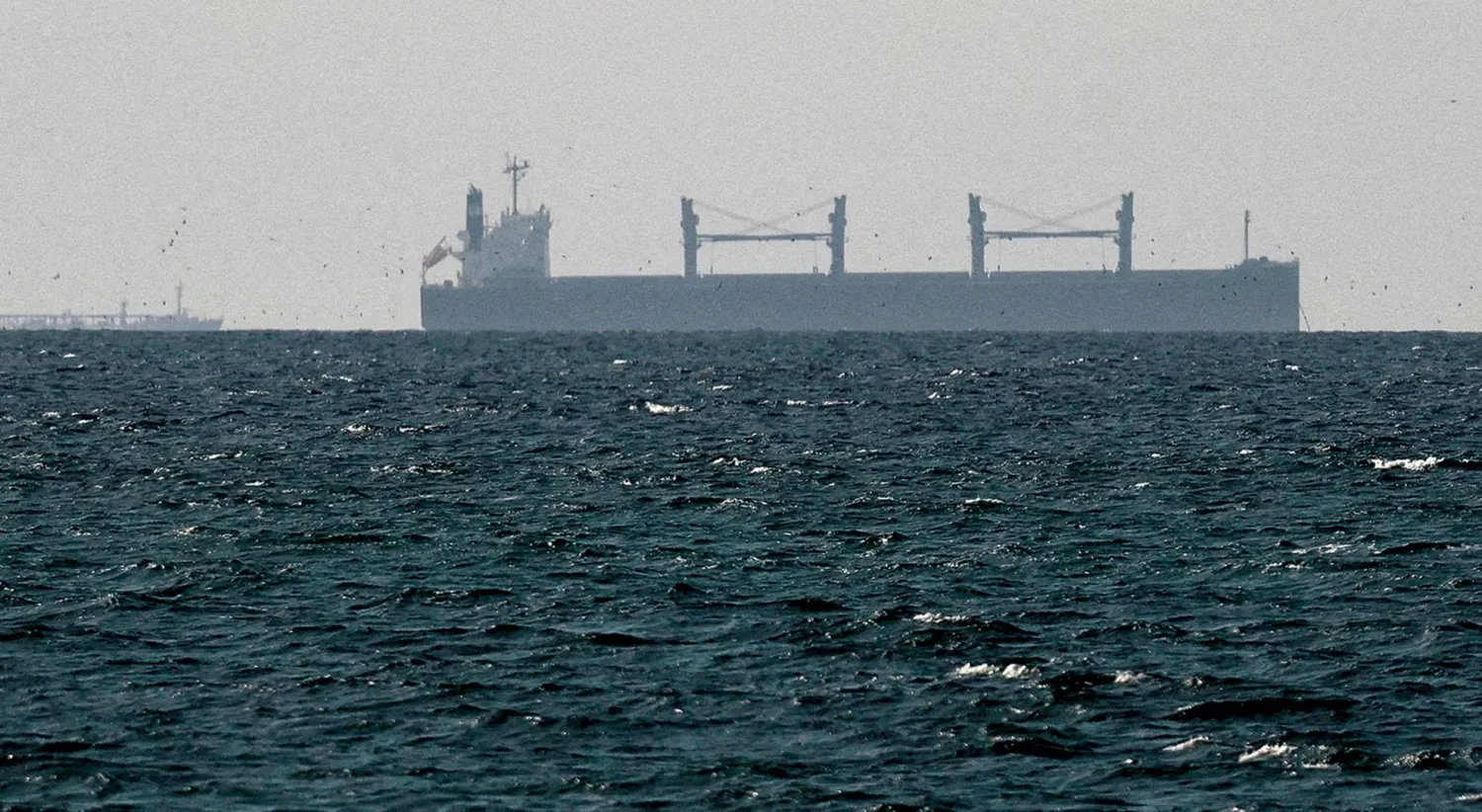
A cargo ship in the Arabian Gulf near the Strait of Hormuz (Reuters)
TT

World Bank Slashes 2026 Middle East Growth Forecast, Saudi Arabia Absorbs Shock

A cargo ship in the Arabian Gulf near the Strait of Hormuz (Reuters)

The World Bank has slashed its 2026 growth forecast for Middle East economies, saying overall GDP growth in ⁠the region is expected to slow from an estimated 3.6% in January to 1.8% for 2026.

The closure of the strategic ⁠Strait of Hormuz, and destruction ⁠of energy and public infrastructure, had disrupted markets, increased financial volatility, and weakened the 2026 growth outlook, the World Bank Group said in its Economic Update for the Middle East, North Africa, Afghanistan and Pakistan.

The report was published as US President Donald Trump late on Tuesday announced a two-week ceasefire in the conflict with Iran after he had threatened to wipe out “a whole civilization.”

According to the World Bank, the conflict comes as an additional shock to a region already suffering from low productivity growth, limited private sector dynamism and persistent labor market challenges – underscoring the urgent need to strengthen governance and macroeconomic fundamentals and take action to boost long-term job creation and resilience.

The April 2026 World Bank’s Macro Poverty Outlook forecasts that the region’s aggregate (excluding the Iran) GDP growth will decelerate to 1.8 percent in 2026, down from 4.0 percent estimated for 2025. The 2026 forecast has been downgraded by 2.4 percentage points since the January projections, reflecting the adverse effects of the ongoing conflict.

GCC states

Growth in the Gulf Cooperation Council and Iraq, among the most heavily affected by the impact of the conflict, is expected to slow to 1.3% for 2026, down 3.1 percentage points from its January projection, and driven mainly by lower projected hydrocarbon revenues due to disruptions caused ⁠by the ⁠conflict.

Saudi Arabia: Forecast was downgraded by 1.2 percentage points since January. Growth is now expected to slow from 4.3% in 2025 to 3.1% in 2026, noting that Saudi Arabia’s outlook remains the strongest among Gulf economies.

United Arab Emirates: Growth forecast for the UAE has fallen by 2.7 percentage points since January. Growth is now expected to slow from 5% in 2025 to 2.4% in 2026.

Qatar: Notably, growth forecast for the Qatari economy has seen a sharp decline of 11.0 percentage points since January. The economy is now expected to record a contraction of 5.7%, down from an estimated growth of 5.3%, due to severe obstruction to liquefied gas supplies. Qatar is a key player in the global energy market, with a global market share of liquefied natural gas (LNG) supplies ranging between 20% and 21%.

Kuwait: Likewise, Kuwait’s economy is expected to register a significant contraction of 6.4%, compared to growth of 2.6% expected in January. Kuwait relies entirely (100%) on the Strait of Hormuz to export its crude oil and derivatives. Consequently, closing the strait would mean a complete shutdown of the country’s financial lifeline, immediately halting revenue inflows to the state budget.

Bahrain: Growth forecast for Bahrain’s economy has declined by 1.8 percentage points since January. Growth is now expected to slow from 3.1% in 2025 to 1.3% in 2026.

Sultanate of Oman: Growth forecast for Oman’s economy has decreased by 1.2 percentage points since January. Growth is now expected to slow from 3.6% in 2025 to 2.4% in 2026.
Iraq

The greatest shock in the World Bank report lies in the free fall of the Iraqi economy, as its growth forecast dropped from 6.5 percent to a staggering contraction of 8.6 percent.

This alarming figure reflects the situation faced by Iraq following the closure of the Strait of Hormuz.

Iraq — the second-largest producer within the Organization of the Petroleum Exporting Countries (OPEC) — experienced the largest drop in production, estimated at nearly 70 percent, dropping to about 800,000 barrels per day from 4.3 million barrels prior to the Strait of Hormuz crisis.

Egypt

Egypt’s situation in the World Bank report differs from that of some countries in the region that saw sharp contractions; the bank maintained its forecast for Egypt’s economic growth at 4.3%.

The World Bank said that “risks are tilted to the downside.”

It added that “in the event of a prolonged conflict, the current impacts on the region will be compounded–through elevated energy and food prices, declining trade, tourism and remittances, increased fiscal pressures, and displacement.”

Peace is a precondition for the region’s durable development

“The current crisis is a stark reminder of the work ahead for the region: not only to weather shocks, but to rebuild more resilient economies with stronger macroeconomic fundamentals, innovate and improve governance, invest in infrastructure, and boost employment-creating sectors,” Ousmane Dione, the World Bank's Vice President for the region said in a statement.

"Peace and stability are preconditions for the region’s durable development. With peace and the right action, countries can build the institutions, capabilities and competitive sectors that create opportunities for people,” he added.

As for Roberta Gatti, World Bank Group Chief Economist for the Middle East, North Africa, Afghanistan and Pakistan, she said: "As countries face the heavy toll of the present conflict, it is important to also not lose sight of the work needed for long-lasting peace and prosperity.”



Saudi Arabia Announces Entry into Classification Phase, Real Estate Advertising Is Conditional on FAL License

A panel discussion is held at the Real Estate Brokerage Forum in Riyadh. (SPA)
TT

Saudi Arabia Announces Entry into Classification Phase, Real Estate Advertising Is Conditional on FAL License

A panel discussion is held at the Real Estate Brokerage Forum in Riyadh. (SPA)

The Saudi government announced during the Real Estate Brokerage Forum, which concluded its activities Sunday in Riyadh, the entry into the real estate classification phase, and the upcoming release of two draft guides for classifying real estate brokerage and marketing establishments and real estate auction establishments through the "Istitlaa" platform.

This aims to develop standards that enhance the clarity of establishment data and raise the quality of practice with the participation of the sector and the public.

The event also witnessed the announcement that real estate advertising will be restricted exclusively to those licensed to practice real estate brokerage and marketing activity through the FAL license.

The event revealed that the number of sales and rental transactions registered since the Real Estate Brokerage Law came into effect in Saudi Arabia has reached more than 13 million transactions, with a total value exceeding 1.6 trillion riyals ($426.6 billion).

These indicators highlight the size of the market in which the system operates, as well as the importance of the licensed broker's role in regulating the relationship between parties, documenting transactions, and enhancing the clarity of practice and service quality.

These figures emerged as the Real Estate General Authority (REGA) concluded the activities of the third edition of the Real Estate Brokerage Forum, marking three years since the Real Estate Brokerage Law came into effect.

The event was held in the presence of Chief Executive Officer of the Authority Engineer Abdullah bin Saud Al-Hammad with the participation of a number of experts, specialists, real estate brokers, brokerage establishments, and individuals interested in the real estate sector.

The forum reviewed the indicators of real estate brokerage activity from the time the law came into effect until the end of last June; the total number of real estate brokerage licenses issued to individuals and establishments reached more than 117,000 licenses, and the number of brokerage contracts reached 1.1 million.

The number of real estate advertisements exceeded 1.2 million advertisements, reflecting the expanding scope of licensed practice and the growing presence of documentation and regulated advertising in the real estate market.

The main session discussed the most significant changes in the real estate market and the tools that enable brokers to keep pace with them, foremost of which are the development of rules and regulations, real estate technologies and artificial intelligence, and changing consumer behavior.

Discussions also tackled the developmental and investment transformations taking place in the Kingdom and their implications for the future of real estate brokerage.

The speakers stressed that real estate rules and regulations have contributed to building a clearer contractual environment that preserves the rights of transacting parties.

They noted that a broker's professionalism is linked to knowledge, speed of execution, compliance with regulations, and understanding the scope of work, projects, and markets in which they operate.

They also said that the advanced digital infrastructure in the Kingdom grants brokers more efficient tools to verify and analyze data and to develop the customer experience.

The forum witnessed the announcement of the real estate brokerage levels track aimed at building a gradual professional qualification journey that raises practitioner readiness and combines regulatory knowledge with applied skills.

The real estate rules and regulations diploma was announced, which is offered by the Saudi Real Estate Institute in cooperation with the Institute of Public Administration. It aims to prepare specialized legal and regulatory competencies that meet the needs of the sector.

A cooperation agreement was signed between the Saudi Real Estate Institute and King Saud University to launch the Real Estate Fellowship Program.

The forum included awareness workshops addressing anti-money laundering and the role of the Saudi Real Estate Arbitration Center in settling real estate disputes.

The forum concluded with honoring the winners of the Real Estate Awareness Award, which aims to stimulate initiatives and programs to enrich specialized real estate content.

The Real Estate Brokerage Forum is held annually in conjunction with the anniversary of the Real Estate Brokerage Law coming into effect. It brings together practitioners, establishments, platforms, and specialists to discuss the profession's updates, exchange experiences, and review tracks and enablers that support the development of practice and elevate the quality of real estate services.


Egypt Says Petrojet-ENPPI Chosen for Oman Project Portfolio Exceeding $6 Billion

The ministry said the ⁠deal was part ‌of Egypt's ‌strategy to support the expansion of ‌petroleum-sector companies abroad ‌and increase exports of engineering and technical services. (AFP)
TT

Egypt Says Petrojet-ENPPI Chosen for Oman Project Portfolio Exceeding $6 Billion

The ministry said the ⁠deal was part ‌of Egypt's ‌strategy to support the expansion of ‌petroleum-sector companies abroad ‌and increase exports of engineering and technical services. (AFP)

Egypt's petroleum ministry said on Sunday that a consortium of Petrojet and ENPPI had been selected for a six-year engineering, procurement and construction framework agreement with Petroleum Development Oman covering a portfolio of projects worth ‌more than $6 ‌billion.

The agreement ‌makes ⁠the consortium one ⁠of four global consortiums eligible to bid for projects within the portfolio, according to the ministry.

The ministry said the ⁠deal was part ‌of Egypt's ‌strategy to support the expansion of ‌petroleum-sector companies abroad ‌and increase exports of engineering and technical services.

The consortium is expected to support Oman's ‌in-country value targets through knowledge transfer, training Omani engineers, ⁠and ⁠increasing the participation of local companies and national supply chains, the ministry said.

The ministry said the agreement opened new horizons for partnership between Egypt and Oman in the energy sector.


Caspian Pipeline Consortium Oil Loadings Suspended After Drone Attacks on Tankers, CPC Says

The full moon rises in the background over the infrastructure on D Island, the main processing hub, at the Kashagan offshore oil field in the Caspian sea in western Kazakhstan August 21, 2013. (Reuters)
TT

Caspian Pipeline Consortium Oil Loadings Suspended After Drone Attacks on Tankers, CPC Says

The full moon rises in the background over the infrastructure on D Island, the main processing hub, at the Kashagan offshore oil field in the Caspian sea in western Kazakhstan August 21, 2013. (Reuters)

Two oil tankers were attacked at the Caspian Pipeline Consortium (CPC) terminal off Russia's Black Sea coast, CPC said on Sunday, adding that oil loadings are suspended.

The ASIA and NISSOS IOS ‌tankers were ‌attacked during loading operations, ‌CPC ⁠said.

The ASIA ⁠tanker caught fire, which was extinguished, it added.

"There were no injuries or fatalities amongst CPC staff or contractors. There was no oil ⁠spill," CPC said, adding ‌that ‌the tankers remained afloat.

CPC did not ‌identify any party as ‌responsible for the incident.

The past week has seen a sharp escalation in attacks by ‌both Russia and Ukraine on shipping in the Black ⁠and ⁠Azov seas.

The CPC is a 940-mile (1,510 km) oil pipeline connecting Kazakhstan's Caspian Sea oil deposits with Russia's Black Sea port of Novorossiysk. Oil loaded at Novorossiysk is then taken by tanker to world markets.

CPC accounts for about 80% of Kazakhstan’s oil exports.