

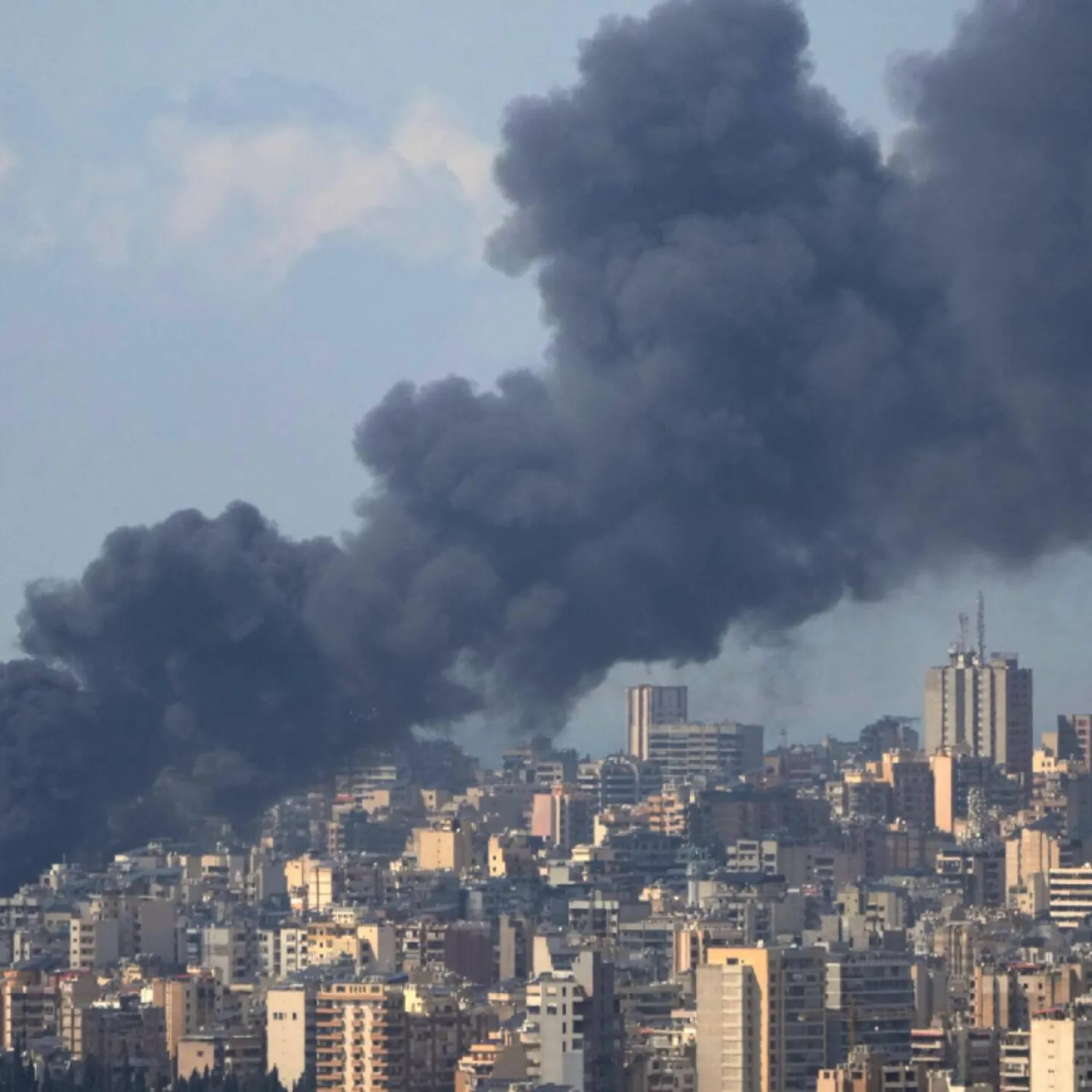

Calls for US-Iran Truce to Extend to Lebanon after Israeli Strikes

Smoke rises following an Israeli airstrike on a building in Beirut, Lebanon, on April 8, 2026. Hassan Ammar, AP
TT

Calls for US-Iran Truce to Extend to Lebanon after Israeli Strikes

Smoke rises following an Israeli airstrike on a building in Beirut, Lebanon, on April 8, 2026. Hassan Ammar, AP

Calls were mounting on Thursday for the ceasefire between the US and Iran to be extended to Israel's war with Hezbollah, after a massive wave of Israeli strikes on Lebanon killed more than 200 people. 

US President Donald Trump has claimed victory in the Middle East war after agreeing a two-week truce to allow talks to end a conflict that has killed thousands and plunged the global economy into turmoil. 

But the future of the negotiations was in limbo on Thursday after Iran denounced Israel's ongoing raids on Lebanon, and Tehran's ambassador to Pakistan deleted a social media post saying an Iranian delegation would arrive in Islamabad, which was set to host the talks. 

An official at the Iranian embassy in Islamabad told AFP that Ambassador Reza Amiri Moghadam's post was removed "because of some issues" and declined to say whether the delegation was still expected. 

At least 203 people were killed and 1,000 wounded in Israeli strikes on Wednesday, the Lebanese health ministry said. 

There had been conflicting diplomatic signals about whether the fighting in Lebanon was included in the US-Iran truce -- but Washington said that it was not and Israel made it clear that it has no intention of holding off. 

"We are continuing to strike Hezbollah with force, precision, and determination," Israel's Prime Minister Benjamin Netanyahu said, in a social media post. 

"Our message is clear: anyone who acts against Israeli civilians, we will strike them. We will continue to hit Hezbollah wherever necessary." 

- 'Running left and right' - 

But, amid fears that the fragile truce could break down in the Gulf, there were international calls for the ceasefire to encompass Lebanon. 

"Israeli actions are putting the US-Iran ceasefire under severe strain. The Iran truce should extend to Lebanon," the European Union's top diplomat Kaja Kallas said. 

France's foreign minister Jean-Noel Barrot condemned the strikes as "unacceptable", while his British counterpart Yvette Cooper called for the ceasefire to include Lebanon. 

The Lebanese prime minister's office said Thursday would be "a national day of mourning for the martyrs and wounded of the Israeli attacks that targeted hundreds of innocent, defenseless civilians". 

Hezbollah said it had fired rockets towards Israel in response to what it called a violation of the truce. 

US Vice President JD Vance backed Israel in saying Lebanon was excluded from the truce, days before he was due to lead talks with Tehran in Pakistan. 

"If Iran wants to let this negotiation fall apart... over Lebanon, which has nothing to do with them, and which the United States never once said was part of the ceasefire, that's ultimately their choice," he said. 

But Iran's speaker of parliament Mohammad Bagher Ghalibaf appeared to threaten the ceasefire, posting on X that the "workable basis on which to negotiate" had already been violated, making further talks "unreasonable". 

Ghalibaf listed three alleged US violations of the truce plan: the continued attacks in Lebanon, a drone entering Iranian airspace and Washington's opposition to the country's right to uranium enrichment. 

UN rights chief Volker Turk called the scale of killing in Lebanon "horrific", after strikes across the capital Beirut that came without warning triggered horror and panic. 

"People started running left and right, and smoke was billowing," said Ali Younes, who was waiting for his wife near Corniche Al-Mazraa, one of the areas targeted. 

- High-stakes talks - 

The bellicose rhetoric came ahead of high-stakes talks in Pakistan expected on Friday or Saturday. 

A key point of contention remains the Strait of Hormuz, through which a fifth of the world's oil as well as vast quantities of natural gas and fertilizer pass in peacetime. 

Iran announced alternative routes on Thursday for ships travelling through the strait, citing the risk of sea mines. 

But it was unclear if Tehran was in practice allowing vessels to pass through the strait, following reports on Wednesday suggesting it was shut -- something the White House called "completely unacceptable". 

Pakistani Prime Minister Shehbaz Sharif, whose country mediated the ceasefire, called in a social media post for all parties to "exercise restraint and respect the ceasefire for two weeks" to allow diplomacy to take hold. 

Further casting doubt on the truce's durability, Iranian state media announced fresh missile and drone attacks against US-allied Gulf states in retaliation for airstrikes on its oil facilities, with Kuwait, the UAE, Saudi Arabia and Bahrain all reporting strikes since the ceasefire took effect. 

In Tehran, streets were quieter than usual on Wednesday, with many shops closed after a long and anxious night for residents fearing a massive US attack. 

"Everyone is at ease now," said Sakineh Mohammadi, a 50-year-old housewife, adding she was proud of her country: "We are more relaxed." 


Lebanon-Israel Ceasefire Deal: Complete Cessation of Hezbollah Attacks, Creation of Pilot Zones

(L/R) Israel's Ambassador to the US Yechiel Leiter, State Department Chief of Staff Daniel Holler, US Ambassador to Lebanon Michel Issa and Lebanese Ambassador to the US Nada Hamadeh attend a meeting between Israeli and Lebanese delegations hosted by the United States at the State Department in Washington, DC, on June 3, 2026. (Photo by Oliver Contreras / AFP)
TT

Lebanon-Israel Ceasefire Deal: Complete Cessation of Hezbollah Attacks, Creation of Pilot Zones

(L/R) Israel's Ambassador to the US Yechiel Leiter, State Department Chief of Staff Daniel Holler, US Ambassador to Lebanon Michel Issa and Lebanese Ambassador to the US Nada Hamadeh attend a meeting between Israeli and Lebanese delegations hosted by the United States at the State Department in Washington, DC, on June 3, 2026. (Photo by Oliver Contreras / AFP)

Israel and Lebanon on Wednesday agreed to a new ceasefire following talks mediated by the United States. Under the agreement, Hezbollah is to stop all attacks on Israel and withdraw its fighters from the area south of the Litani River in southern Lebanon.

In a joint statement, the US, Israel and Lebanon said “the ceasefire is contingent on a complete cessation of Hezbollah fire and the evacuation of all Hezbollah operatives from the South Litani Sector.”

Israel and Lebanon agreed with US guidance “to swiftly advance the creation of pilot zones” in which the Lebanese army “will take exclusive control of the territory to the exclusion of all non-state actors.”

“These steps will enable progress towards a comprehensive peace and security agreement,” the statement said, adding that both sides “rejected any attempt, by any state or non-state actor, to hold Lebanon’s future hostage.”

Hezbollah has yet to comment on the ceasefire. Before it was announced, the group said it had conducted two drone and rocket attacks on Israeli troops inside Lebanon that it said took place just after midnight local time on Wednesday.

In their statement, “Israel and Lebanon reaffirmed that they have no hostile intent toward one another and committed to continuing direct negotiations to build confidence, resolve all outstanding issues, and work toward a comprehensive agreement between the two countries.”

The US reaffirmed that any agreement to cease hostilities must be reached directly between the two governments, brokered by Washington, and not through any separate track.

As for Israel, it said that its security and respect for its territorial integrity can only be achieved through Hezbollah’s disarmament and the dismantlement of its infrastructure across Lebanon.

In the statement, “Lebanon reaffirmed the necessity for mutual respect of internationally recognized borders, the urgent need for full implementation of the cessation of hostilities, underscoring the principles of territorial integrity and full state sovereignty.”

It stressed commitment to enhancing the capacity of the Lebanese army, with US support, to assert effective control across the country. 


Netanyahu Faces Plunging Support in North Israel as Voters Demand Tougher Lebanon Stance

Israeli Prime Minister Benjamin Netanyahu speaks during a press conference, amid the US-Israel conflict with Iran, in Jerusalem, March 19, 2026. (Reuters)
TT

Netanyahu Faces Plunging Support in North Israel as Voters Demand Tougher Lebanon Stance

Israeli Prime Minister Benjamin Netanyahu speaks during a press conference, amid the US-Israel conflict with Iran, in Jerusalem, March 19, 2026. (Reuters)

Israeli Prime Minister Benjamin Netanyahu faces plunging support in the electorally vital north where Hezbollah rocket fire has been heaviest, a new poll has shown, putting pressure on him to take a more hawkish stance as elections loom. Wednesday night's ceasefire agreement between Israel and Lebanon - whether it holds or not - may not be what northern voters have in mind.

The May poll by Agam Labs at Israel's Hebrew University, shared exclusively with Reuters, showed residents in the north abandoning Netanyahu's Likud more quickly than voters elsewhere and faulting him more harshly over the war in Lebanon. With Iran demanding an end to Israel's military campaign as part of any peace deal it agrees with the United States, the poll shows how Netanyahu is increasingly caught between domestic electoral considerations and the diplomatic efforts of his allies in Washington.

NORTHERN VOTERS WANT END TO HEZBOLLAH THREAT

The general election due by October could tip Netanyahu's governing coalition from power, risking his long record as Israel's arch political survivor.

While his government is widely seen as the most right-wing in Israeli history, many northern voters want a tougher military stance, unfettered by US pressure to end the conflicts in the Middle East.

For residents of ‌the northern city ‌of Kiryat Shmona, where some half of voters backed Likud in the last election, ending the threat from ‌Hezbollah and ⁠its near-daily rocket ⁠and drone attacks is the biggest issue.

When sirens start to wail, they have only seconds to seek shelter and voters there told Reuters they want the war against Hezbollah pursued until the group is dismantled.

"All night there are loud explosions," said Kiryat Shmona resident Moshe Yifrah, 45, adding that he does not believe a ceasefire with Hezbollah would protect his family. "Who would we make it with? Murderers who want to kill us?" he said.

Hezbollah began firing into Israel after the Hamas attack of October 7, 2023, and Israel waged an intense armed campaign in Lebanon, killing most of the group's leaders and forcing it to accept a ceasefire.

However, Hezbollah fired again after Israel and the United States launched a war on Iran on February 28, prompting Israel to renew its assault and seize swathes of ⁠south Lebanon.

More than 50 civilians have been killed by Hezbollah fire in north Israel since October 2023, according ‌to Tel Aviv University's Institute for National Security Studies.

In Lebanon, more than 7,500 people have been ‌killed by Israeli military action since October 2023, statements by Lebanese officials that do not distinguish between civilians and combatants show.

Many northern voters, like Yifrah, want Israel to ‌intensify its campaign, which continued despite an April truce, but believe Netanyahu is buckling to pressure from US President Donald Trump to agree a ceasefire.

"I'm ‌not ashamed to say that I voted for this government, but it turns out that the one managing it is President Trump," said Yifrah.

Trump, who wants a deal with Iran, said on Monday that Israel and Hezbollah had agreed to de-escalate hours after Netanyahu ordered new strikes on Beirut's southern suburbs. Netanyahu's electoral rivals almost immediately accused him of compromising on national security - adding to his political difficulties months before the election is due.

"Everywhere Hezbollah is deployed it must be struck and the hands of the Israeli army should not be tied," said former military chief of staff Gadi Eizenkot, a prime ministerial hopeful, in a speech on Monday. Then on Wednesday evening, a new truce agreement was struck requiring Hezbollah to leave south ⁠Lebanon. Netanyahu said soon afterwards that despite ⁠the ceasefire military operations would continue for now.

ELECTION RIVALS TARGET NORTH

The Agam Labs poll showed only 23% of voters in the north saying they would back Likud in the next election, down from the 35% it gained in the last election in 2022. Support for the wider right-wing bloc that makes up Netanyahu's coalition has fallen yet further in the north, the poll showed.

The drop in support for Likud is around three times greater in the north, home to around a fifth of the electorate, than elsewhere in Israel and around 70% of the voters surveyed there said they disapproved of the handling of the war in Lebanon - more than elsewhere in Israel.

"We see a dramatic shift," said Nimrod Nir of Agam Labs.

"It's almost a mirror image of what we saw regarding the past elections, with two thirds intending to vote for the anti-Netanyahu bloc," he added.

The chairperson of Kiryat Shmona's Likud branch did not respond to a request for comment on the party's reduced support in polls or agree to an interview.

Nestled amid lush green mountains, Kiryat Shmona had been a prosperous center of tourism and farming, but residents now describe it as a ghost town with many residents having left.

Shops were shuttered, and a playground was empty during a Reuters visit this week.

Netanyahu's main rivals are trying a hawkish message in the north, with Eizenkot visiting more than 15 times in recent weeks. Netanyahu has stayed away.

"He should come visit," said Yisrael Cohen, 40, who previously backed Likud but will not in the next election. "The government needs to see us."


Katz: Israel to Continue Operations in Lebanon for Now Despite Ceasefire

(2L/R) Israel's Ambassador to the US Yechiel Leiter, State Department Chief of Staff Daniel Holler, US Ambassador to Lebanon Michel Issa and Lebanese Ambassador to the US Nada Hamadeh attend a meeting between Israeli and Lebanese delegations hosted by the United States at the State Department in Washington, DC, on June 3, 2026. (Photo by Oliver Contreras / AFP)
TT

Katz: Israel to Continue Operations in Lebanon for Now Despite Ceasefire

(2L/R) Israel's Ambassador to the US Yechiel Leiter, State Department Chief of Staff Daniel Holler, US Ambassador to Lebanon Michel Issa and Lebanese Ambassador to the US Nada Hamadeh attend a meeting between Israeli and Lebanese delegations hosted by the United States at the State Department in Washington, DC, on June 3, 2026. (Photo by Oliver Contreras / AFP)

Israel will continue its operations on the ground in southern Lebanon for the time being and Lebanese residents forced from their homes by Israel would not be able to return, Defense Minister Israel Katz said on Thursday.

His comments came a day after Lebanon and Israel said they had ⁠agreed to implement ⁠a ceasefire during talks in Washington. The deal is contingent on a cessation of fire from Hezbollah.

In a statement, Katz said troops ⁠would remain in its so-called security zone in southern Lebanon, including in the area of Beaufort Castle, a 900-year-old fortress captured by Israel on Saturday.

According to Reuters, he said Israel would continue to "dismantle terrorist infrastructure in the area" while Israel had "freedom of action, backed by the United States, ⁠to ⁠strike in Beirut in response to attacks on Israeli communities and territory."

Lebanon and Israel agreed on Wednesday to a new US-backed ceasefire in Lebanon. They had previously agreed to a cessation of hostilities in April that was then extended in May, but violence has continued.
