


Qatar Condemns Israeli Airstrikes on Lebanon, Offers Support

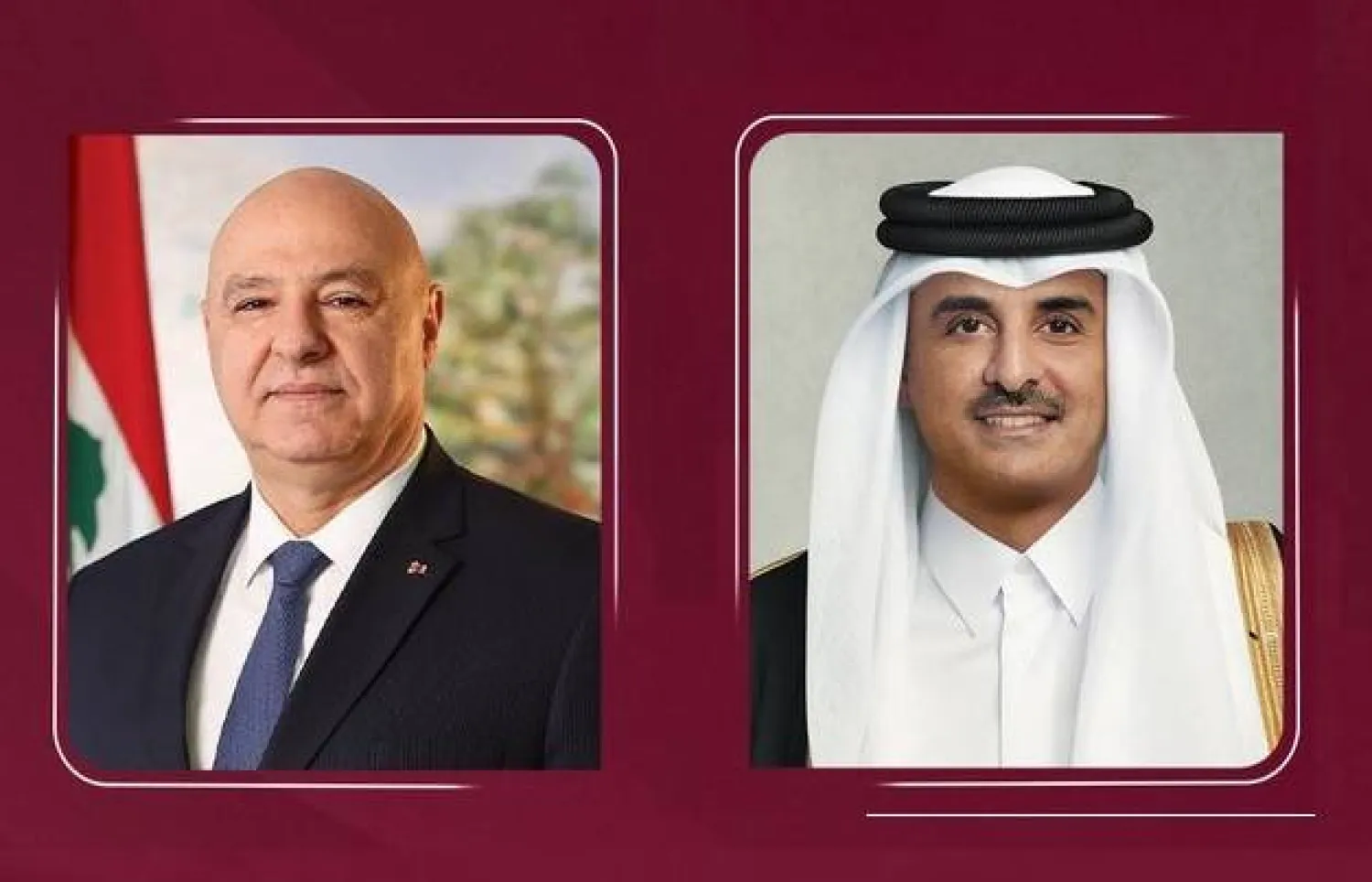
Qatar’s Emir Sheikh Tamim bin Hamad Al Thani and Lebanese President Joseph Aoun (QNA).
TT

Qatar Condemns Israeli Airstrikes on Lebanon, Offers Support

Qatar’s Emir Sheikh Tamim bin Hamad Al Thani and Lebanese President Joseph Aoun (QNA).

Qatar condemns the Israeli airstrikes targeting Lebanon, affirmed Qatar's Emir Sheikh Tamim bin Hamad Al Thani in a phone call with Lebanese President Joseph Aoun, during which he expressed his rejection of any violation of Lebanon’s sovereignty, security, and territorial integrity.

During the call, the emir and the Lebanese president reviewed developments in Lebanon, particularly in light of the current escalation and its impact on the country’s security and stability, as well as the wider region.

The Qatar News Agency said Sheikh Tamim “condemned the Israeli airstrikes targeting Lebanon, stressing his rejection of any violation of its sovereignty, security, and territorial integrity.”

They also discussed regional and international efforts to contain the escalation. The emir reiterated Qatar’s firm support for Lebanon and its people, underscoring Doha’s readiness to provide assistance and contribute to efforts aimed at advancing de-escalation and stability.

Maritime Security

Separately, Prime Minister and Foreign Minister Sheikh Mohammed bin Abdulrahman Al Thani welcomed the announcement of a ceasefire between the United States and Iran, stressing the need to build on it urgently to prevent a broader escalation in the region.

In a phone call on Thursday with Portuguese Foreign Minister Paulo Rangel, the Qatari prime minister emphasized the importance of ensuring the security of maritime routes and safeguarding freedom of navigation and international trade in accordance with international law, in a way that supports regional stability and global supply chains.

The two sides also reviewed the latest regional developments following the ceasefire announcement between the United States and Iran, along with a number of issues of mutual interest.



Bahrain Condemns Iran Drone Attack against it, Says Reserves Right to Defend Itself

Bahrain Condemns Iran Drone Attack against it, Says Reserves Right to Defend Itself
TT

Bahrain Condemns Iran Drone Attack against it, Says Reserves Right to Defend Itself

Bahrain Condemns Iran Drone Attack against it, Says Reserves Right to Defend Itself

Bahrain’s Foreign Ministry condemned on Saturday Iran’s drone attack against the kingdom, saying it was a violation of its sovereignty and international treaties and norms and a threat to its citizens and residents.

Bahrain said Iran launched a drone attack on the kingdom just after Tehran said it targeted American military installations to retaliate for overnight airstrikes.

The ministry held Tehran solely responsible for undermining peace efforts, saying the attack reflects an approach based on destabilizing security and stability in the region.

Bahrain stressed that peace cannot be achieved through threats or the use of force, adding that its unity is stronger than any threat and will not be affected by the continued attacks.

The ministry added that the attack is a “direct challenge” to the international will, pointing out that Iran had pledged, under the Islamabad Memorandum of Understanding signed on June 17, to permanently cease military operations and respect the sovereignty of the countries of the region, considering that the attack reveals its lack of commitment to those pledges.

Bahrain stressed that it retains its right to defend its sovereignty, security, and stability, in line with international law, calling on the United Nations Security Council to fulfill its responsibilities, ensure the implementation of its resolution, and hold the aggressor accountable.


Saudi Arabia Regulates Management of Assets Seized in Money Laundering, Terrorism Financing Cases

Hamad Al Sheikh, Minister of State, Member of the Council of Ministers, and Chairman of the Board of the Commission for the Guardianship of Trust Funds of Minors and Their Counterparts. (SPA)
TT

Saudi Arabia Regulates Management of Assets Seized in Money Laundering, Terrorism Financing Cases

Hamad Al Sheikh, Minister of State, Member of the Council of Ministers, and Chairman of the Board of the Commission for the Guardianship of Trust Funds of Minors and Their Counterparts. (SPA)

Saudi Arabia has approved a new law governing the preservation and management of seized assets, aiming to protect them from misuse, concealment, or damage while safeguarding public and private interests and supporting the Kingdom’s economic and social development.

Hamad Al Sheikh, Minister of State, Member of the Council of Ministers, and Chairman of the Board of the Commission for the Guardianship of Trust Funds of Minors and Their Counterparts, said the Cabinet’s approval of the Law on the Management of Assets Seized and Confiscated in Money Laundering, Predicate Offenses, and Terrorism Financing Cases reflects the leadership’s commitment to strengthening the judicial and regulatory framework, improving government efficiency, and reinforcing governance and transparency.

Al Sheikh said the law protects rights, boosts confidence in government institutions, and supports the goals of Saudi Vision 2030 by establishing a comprehensive legal framework for managing seized and confiscated assets.

It defines the law’s scope, identifies the authorities responsible for implementation, and sets out the legal and procedural rules governing asset preservation and management.

He added that the legislation will improve the management of seized assets, maximize their economic value, enhance spending efficiency, protect public resources, and strengthen the Kingdom’s legal and investment environment.

It also promotes justice and transparency, safeguards the rights of individuals and stakeholders, and supports sustainable development and quality of life.

According to Al Sheikh, the law aligns with international best practices and demonstrates Saudi Arabia’s commitment to the standards of the Financial Action Task Force (FATF), reinforcing the Kingdom’s global standing in governance and institutional management.

Published in the official gazette, the 15-article law assigns the Authority responsibility for preserving and managing seized assets upon a court order and at the request of the competent authority.

Its board may set management policies, hire specialized Saudi public or private entities to manage assets requiring technical expertise, and open dedicated accounts at the Saudi Central Bank or licensed banks to hold seized funds.


GCC Secretary-General Welcomes Omani Initiative on Strait of Hormuz, Condemns Iranian Threats

Secretary-General of the Gulf Cooperation Council (GCC) Jasem Albudaiwi. SPA
TT

GCC Secretary-General Welcomes Omani Initiative on Strait of Hormuz, Condemns Iranian Threats

Secretary-General of the Gulf Cooperation Council (GCC) Jasem Albudaiwi. SPA

Secretary-General of the Gulf Cooperation Council (GCC), Jasem Albudaiwi, welcomed Oman's announcement, made in coordination with the International Maritime Organization (IMO), to establish a temporary maritime corridor for vessels to facilitate the evacuation of more than 11,000 stranded seafarers in the Strait of Hormuz.

The initiative enhances freedom of navigation in the Strait in accordance with international law and the Law of the Sea.

The secretary-general praised this initiative, which embodies the wise approach pursued by the Sultanate of Oman in supporting regional security and stability, enhancing maritime safety and security, and consolidating the principles of international law, thereby contributing to ensuring the smooth flow of regional and international trade.

Albudaiwi expressed the GCC's rejection and condemnation of the claims issued by Iran and its threats to freedom of navigation in the Strait of Hormuz following the announcement.

He affirmed that the Omani step contributes to evacuating stranded seafarers and bolstering supply chains for both regional and global economies and reflects the GCC countries' support for all regional and international efforts aimed at enhancing maritime security, consolidating security and stability, and de-escalating tensions in the region.