
Türkiye and Syria are moving to forge a broad strategic partnership spanning all areas of cooperation, backing reconstruction and efforts to restore stability after 14 years of war.
A flurry of meetings in recent days has aimed to accelerate coordination between the neighbors across multiple sectors.
Turkish Foreign Minister Hakan Fidan said shielding Syria from spillover from the regional crisis, including tensions involving Iran, the US, and Israel, is essential.
He said protecting gains toward sustainable stability in Syria remains a top priority for Ankara.
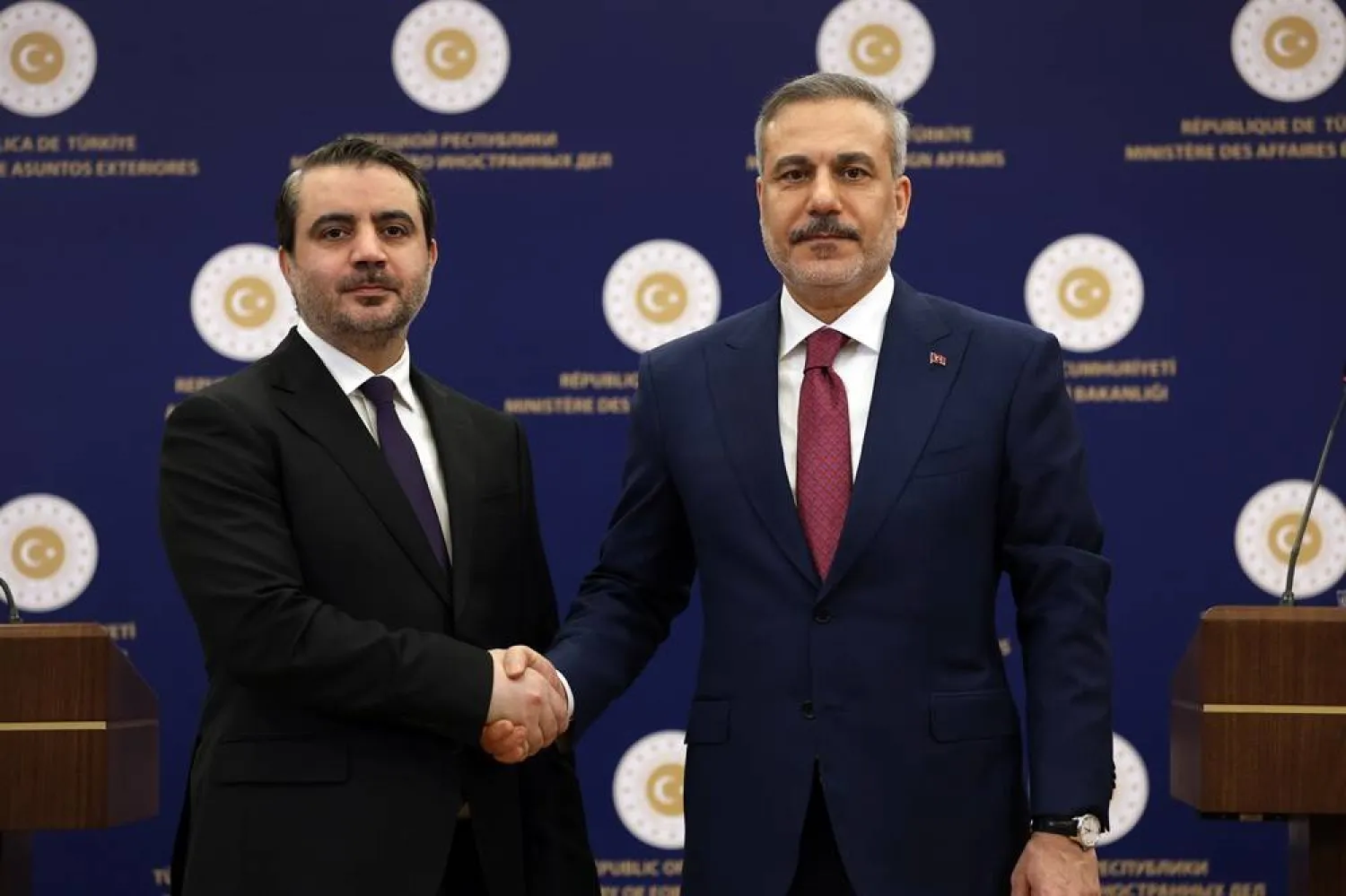
Speaking alongside Syrian Foreign Minister Asaad al-Shaibani in Ankara, Fidan said Türkiye would stand by Syria’s efforts.
Ankara is closely tracking the integration of the Syrian Democratic Forces into state institutions and wants the process completed without disruption to safeguard Syria and its neighbors, he added.
Lasting peace in the Middle East will remain out of reach unless Israel stops its expansionist ambitions. He described Israel’s actions in Lebanon as “genocide,” warning that stability cannot be achieved under continued escalation.
Shaibani said Syria and Türkiye have entered a new phase defined by a “strategic partnership,” anchored in the “Four Seas Project,” aimed at turning them into a key energy corridor linking the Gulf, the Caspian Sea, and the Mediterranean and Black seas.
He said talks covered energy, trade, and infrastructure, as well as tighter security coordination to control borders and counter threats to national security.
Shaibani said Damascus is pressing ahead with a comprehensive agreement with the Syrian Democratic Forces, with work underway to integrate them into the Syrian army and restore state control over border crossings, oil and gas fields, and civilian institutions.
Both ministers welcomed a temporary US-Iran truce and called for concrete steps to bolster regional stability.
Shaibani said Syria has endured more than 14 years of Iranian interference and militia activity, leaving one million dead, 15 million displaced or forced to flee, and 4 million homes destroyed.
He said Syria supports Arab countries hit by what he called unjustified Iranian attacks and backs efforts to ensure state control in Lebanon and Iraq, rather than armed groups operating outside official authority.
Shaibani said Syria seeks a strategic and economic partnership with Lebanon and supports a ceasefire and the Lebanese government's efforts to resolve issues through national means.
He also called for US and international backing to implement the 1974 disengagement agreement, urging Israeli forces to withdraw from Syrian territory and allow reconstruction to proceed.
After talks with Fidan, Shaibani met the US envoy to Syria and the ambassador to Türkiye, Tom Barrack, to discuss regional and international developments.
Earlier, a Turkish-Syrian investment forum in Istanbul brought together Turkish Trade Minister Omer Bolat and Syrian Economy Minister Mohammad Nidal al-Shaar to boost cooperation in transport, energy, investment, trade, and customs.
Bolat said transit trade through Syria to the Middle East and the Gulf is set to resume after a decade-long halt, with operations expected to begin next week following eased visa procedures for Turkish truck drivers via Saudi Arabia.
He said bilateral trade reached $3.7 billion last year, up 40%.
Separately Turkish Transport Minister Abdulkadir Uraloglu signed a trilateral transport deal in Amman with Jordan’s Nidal Qatamin and Syria’s Yarub Badr to deepen regional integration and develop transport infrastructure amid disruptions linked to the Iran conflict.
Uraloglu said the deal will ease truck movement, expand rail transport, boost port activity, and expand market access, adding that a Turkish technical delegation will visit Saudi Arabia next week as part of a broader plan to link the Arabian Peninsula with Central Asia and Europe.