



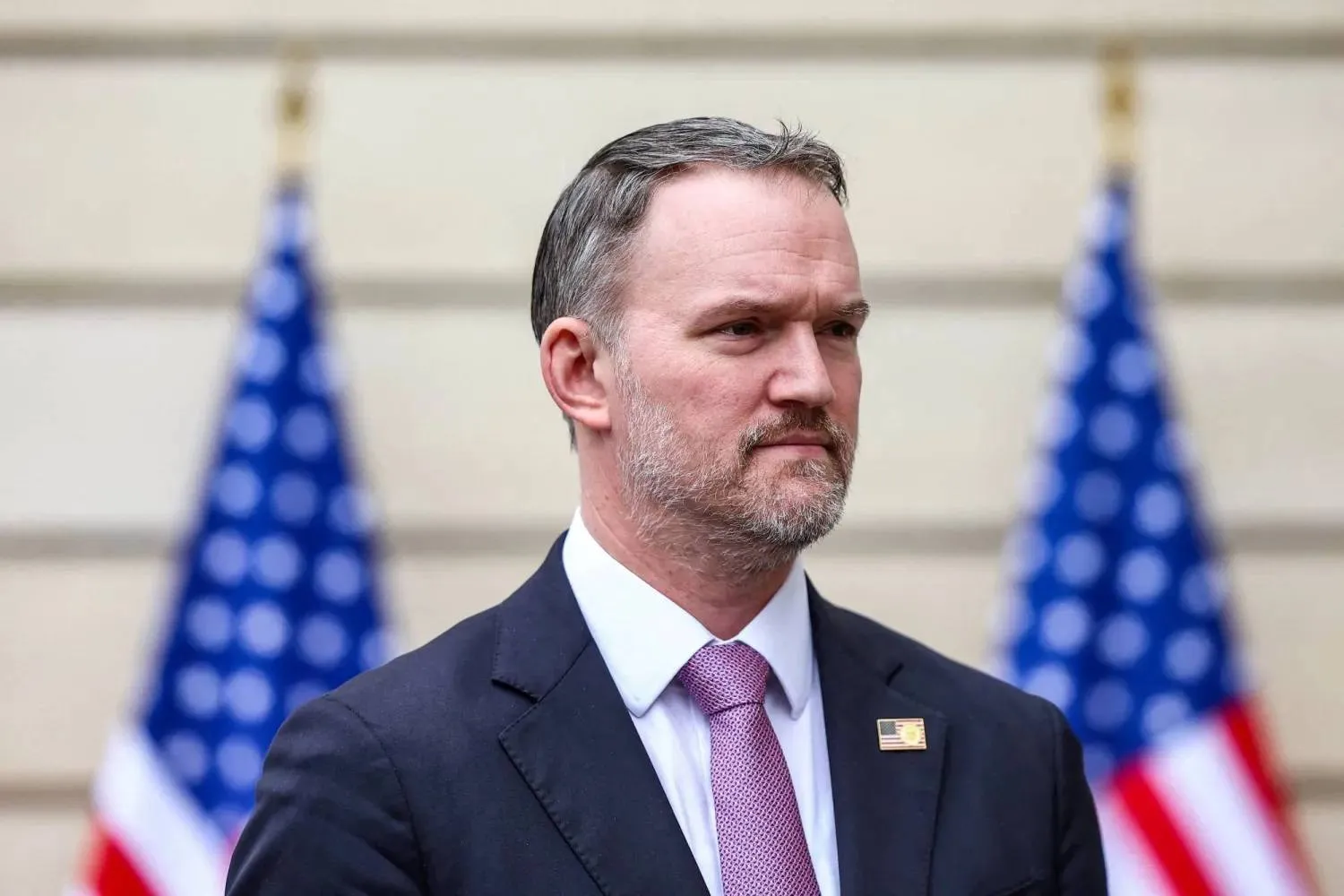

US Trade Representative Jamieson Greer said on Friday that the United States is trying to maintain a stable relationship with China, but if Beijing gets involved with Iran in a way that is counter to US interests, that would complicate matters.
“The underlying goals of our economies are so different. But there's a way where we can have some economic stability. If China is going to be involved in Iran in a way that's harmful to US interests, then that obviously complicates it, and that's China's responsibility to eliminate that,” Greer said in an interview on CNBC.
Greer also said he expects US President Donald Trump to have a good meeting next month with Chinese President Xi Jinping. The trip comes just a year after Washington rolled out sweeping and at times erratic global tariffs.
“I think the thing to remember with China is, although we're trying very hard to have stability with China, particularly in trade and economics, not every challenge with them is resolved,” Greer said.
Meanwhile, the European Union and Washington are closing in on an agreement to coordinate on producing and securing critical minerals, Bloomberg News reported on Friday.
The potential deal would include incentives such as minimum price guarantees that could favor non‑Chinese suppliers, the report said, citing an “action plan.”
The EU and US would also cooperate on standards, investments and joint projects, along with increased coordination on any supply disruptions by countries like China, the report added.
EU trade commissioner Maros Sefcovic said in March he had a “very positive” meeting with Greer on the sidelines of a World Trade Organization ministerial meeting in Cameroon, where the two sides agreed to further advance work on critical minerals and also discussed tariffs.
The EU-US deal would cover “critical minerals along the entire value chain and life-cycle management, including exploration, extraction, processing, refining, recycling and recovery,” Bloomberg reported, citing a non-binding memorandum of understanding.
The US has been scrambling to get access to critical mineral reserves, especially rare earth supply chains currently dominated by Chinese players.


