
A Novel Makes a Star Out of a Very Young Writer

The book spent 29 weeks on the German best-seller list. Photo: The New York Times
TT

A Novel Makes a Star Out of a Very Young Writer

The book spent 29 weeks on the German best-seller list. Photo: The New York Times

By Thomas Rogers

The 22-year-old Swiss writer Nelio Biedermann has strange memories of visiting his family’s old properties when he was a child. Although he grew up middle-class in Zurich, his father was the descendant of an aristocratic family in Hungary that had, at one point, sold jewelry to royalty, but whose holdings were later seized by the communist regime.

“We would always travel to the castles that used to belong to us,” Biedermann recalled in a recent interview, describing them as “fairy-tale-like.” One property had been turned into a psychiatric institution whose walls were decorated with pictures of his ancestors. “The people there knew who we were,” he said. “I couldn’t identity with that.”

The experience helped inspire Biedermann to begin writing “Lázár,” his novel about an aristocratic family, when he was still a teenager. Published in Germany in September, the book earned a slew of rave reviews (“epic, tragic and traumatic, stormy, wistful and very romantic,” wrote a critic for Süddeutsche Zeitung, one of the country’s biggest daily newspapers).

It spent 29 weeks on the German best-seller list, turning its (shockingly) young author into a literary star overnight and drawing comparisons to “Buddenbrooks,” Thomas Mann’s 1901 family epic. Summit Books is publishing it in English on Tuesday.

Swiss writer Nelio Biedermann. Photo: The New York Times

Since the fall, the German news media has seemed obsessed with the question of how a teen could write a sweeping, traditional historical novel. “Most people expect a young person’s first book to be about their own life,” Biedermann said, sipping an herbal tea in a cafe in central Zurich. “But even if you discount my age, people found it interesting that the book is stylistically, linguistically old-fashioned.”

Lanky and soft-spoken, with a thin mustache and the kind of floppy haircut popular among Gen Z Swiss men, he is unswervingly modest in conversation. He said he began writing fiction when he was quarantined during the pandemic and his high school organized a writing competition about “ends of the world.”

The result, a short story about a suicidal youth, won him the top prize and 200 francs, or approximately $250. “It was a lot of money,” he said, adding that it led him to consider more ambitious fiction-writing projects.

Like “Buddenbrooks,” his novel follows multiple generations of a single family, the titular von Lázárs, who navigate tumultuous events in Hungary between 1900 and 1956. It begins on a rural estate, with the birth of Lajos, a boy with “translucent” skin, to a baron named Sándor and his wife, Mária. Their lives, along with those of Lajos’ children, Pista and Eva, are ultimately upended by the two world wars, the dissolution of Austria-Hungary and communist repression.

The book’s historical scope and occasionally mystical tone — Lajos’ translucent skin aside, the family’s estate is located next to a seemingly magical forest that swallows up family members and seems to conjure ghosts — have led readers to compare it not only to Mann and Joseph Roth’s “Radetzky March” but Gabriel García Márquez’s “One Hundred Years of Solitude.”

The elements of magical realism allowed Biedermann more freedom to fictionalize true events. “My first attempts were too close to the reality,” he said. “I felt guilty, because I was asking myself if I’m even allowed to change the family history,” he added, explaining that the mystical tone gave him the necessary distance to “write what I wanted.”

Tom Tykwer, the director of “Run Lola Run” and co-creator of the television series “Babylon Berlin,” plans to adapt the book into a movie. In a statement announcing the adaptation, he described it as a “book that drives us through the tides of life — and love — and makes us happy in a disturbingly intense way.”

In an interview, Adam Soboczynski, the literature editor at the German newspaper Die Zeit, said that the hype around the book had emerged partly because of the contrast between Biedermann’s age and the novel’s “great breadth and historical perspective.”

He argued that family novels like “Lázár” are especially popular in Germany “precisely because so many families here have, for many reasons, been shattered or incriminated by the war.” The book, he pointed out, partly deals with two periods that remain especially central to German identity: Nazism and Stalinism.

The tumultuous, early 20th-century setting, he said, might also have appealed to a German readership eager to find some parallels to the current era of European instability. “Though it also might have appealed to readers who want to escape from our weird times into an earlier age,” he said. “These two things are not necessarily contradictory.”

The New York Times


Egypt Unveils a Striking Trove of Ancient Artifacts as the Country Tries to Boost Tourism Industry

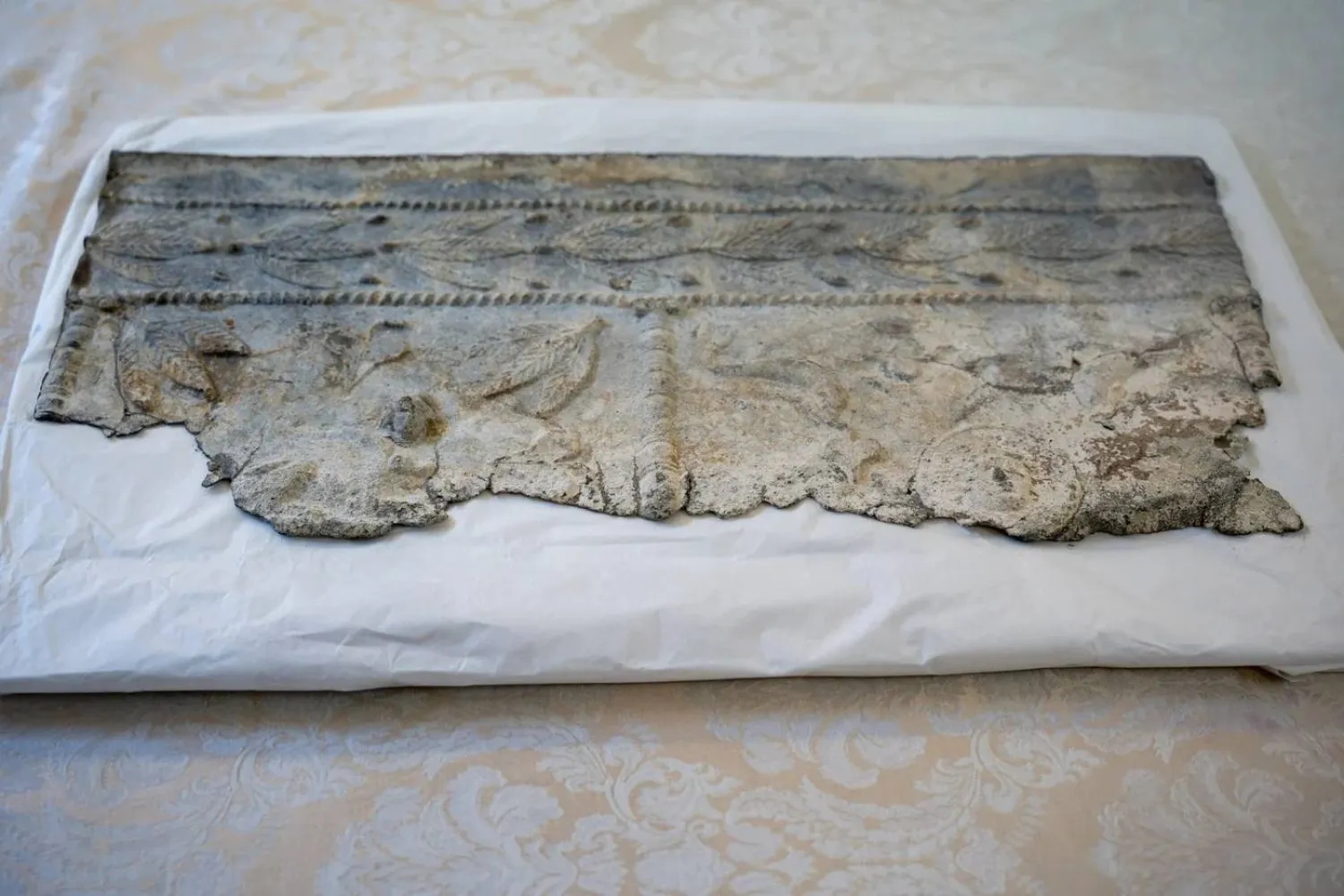
 In this photo provided by Ministry of Tourism and Antiquities, recently unearthed ancient artifacts are displayed on May 31, 2026, in Ehnasiya district in Beni Suef, 130 kilometers (80 miles) south of Cairo, Egypt. (Ministry of Tourism and Antiquities via AP)
In this photo provided by Ministry of Tourism and Antiquities, recently unearthed ancient artifacts are displayed on May 31, 2026, in Ehnasiya district in Beni Suef, 130 kilometers (80 miles) south of Cairo, Egypt. (Ministry of Tourism and Antiquities via AP)
TT

Egypt Unveils a Striking Trove of Ancient Artifacts as the Country Tries to Boost Tourism Industry

 In this photo provided by Ministry of Tourism and Antiquities, recently unearthed ancient artifacts are displayed on May 31, 2026, in Ehnasiya district in Beni Suef, 130 kilometers (80 miles) south of Cairo, Egypt. (Ministry of Tourism and Antiquities via AP)
In this photo provided by Ministry of Tourism and Antiquities, recently unearthed ancient artifacts are displayed on May 31, 2026, in Ehnasiya district in Beni Suef, 130 kilometers (80 miles) south of Cairo, Egypt. (Ministry of Tourism and Antiquities via AP)

Archaeologists unearthed a set of ancient artifacts in Egypt including Pharaonic funerary furniture, remains of a Roman basilica and a marble head of Aphrodite, the ancient Greek goddess of love and beauty.

The discoveries, announced Sunday, are part of the Egyptian government’s efforts to boost the country’s tourism industry and bring cash to the economy. At the center of these efforts was the November inauguration of the long-delayed Grand Egyptian Museum, a megaproject located near the famed Giza Pyramids and the Sphinx.

The remains of the basilica and Aphrodite’s head were found in an ancient necropolis in the province of Beni Suef, 130 kilometers (80 miles) south of Cairo, the Tourism and Antiquities Ministry said.

The Ehnasiya necropolis, which is also known by its ancient Roman name, Heracleópolis Magna, was one of the most significant cities of ancient Egypt.

Archaeologist Mohammed Abdel-Badei, head of the antiquities department at the Supreme Council of Antiquities, said that they found large stone blocks supporting columns, weighing up to 45 tons, that had been used in building the basilica. Three of the blocks remain standing in their original positions, he said.

Aphrodite’s head, measuring about 24 centimeters by 25 centimeters (9½ inches by nearly 10 inches), includes detailed features of the goddess' face and curly hair, reflecting the classical artistic traditions of the Greek and Roman periods, he said.

In this photo provided by Ministry of Tourism and Antiquities, recently unearthed ancient artifacts are displayed on May 31, 2026, in Ehnasiya district in Beni Suef, 130 kilometers (80 miles) south of Cairo, Egypt. (Ministry of Tourism and Antiquities via AP)

Archaeologists found inscriptions linked to Senusret III, who ruled between 1837 B.C. and 1819 B.C. during the ancient 12th Dynasty. The inscriptions include his throne, birth names of the Pharaoh, who is also known as Sesostris III, and was one of the most prominent rulers of Egypt’s Middle Kingdom.

Also unearthed were fragments of wall statues and terracotta molds, believed to have been used in coin crafting during the Roman period.

The findings show that Ehnasiya had been an active economic and commercial hub when Egypt was part of the Roman Empire between 30 B.C. and A.D. 395, Abdel-Badei said.

New findings in the ancient city of Heliopolis

In Cairo, archaeologists found a nearly complete set of funerary furniture in the Matariya neighborhood of Cairo, which was once part of the ancient city of Heliopolis, the ministry said.

Abdel-Badei, the head of the antiquities department, said that they unearthed a mudbrick burial with gilded remains in a coffin, believed to be for a military figure. They also found a cache of cosmetic tools, including a copper mirror and alabaster kohl containers.

Also found was a collection of yellow-colored metal earrings, consisting of five pairs of varying sizes, believed to be made of gold, he said.

The discoveries in Beni Suef and Cairo are the latest archaeological findings, which the government hopes will boost the vital tourism sector, partially driven by antiquities sightseeing.

A record number of about 19 million tourists visited Egypt last year, a 21% increase from 2024, according to official figures. The first four months of 2026 saw 6.1 million tourists visiting the country, compared with 5.7 million during the same period in 2025, the prime minister’s office said in May.


Lucian Freud Sue Tilley Portrait Could Fetch $47 Million at Auction

Sue Tilley, a model for British painter Lucian Freud, speaks in front of Freud's painting of her, titled "Sleeping by the Lion Carpet" during an interview in Sotheby's auction house in London, Thursday, May 28, 2026. (AP)
TT

Lucian Freud Sue Tilley Portrait Could Fetch $47 Million at Auction

Sue Tilley, a model for British painter Lucian Freud, speaks in front of Freud's painting of her, titled "Sleeping by the Lion Carpet" during an interview in Sotheby's auction house in London, Thursday, May 28, 2026. (AP)

A painting of Sue ‌Tilley, who found fame after artist Lucien Freud depicted her in the nude, will be auctioned next month with a price estimate of up to $47 million.

"Sleeping by the Lion Carpet" (1995-1996) is the last of four portraits the late British artist painted of Tilley or "Big Sue", a benefits supervisor and considered among his greatest works.

Depicting her naked and sleeping in an armchair, the painting has been part of businessman Joe Lewis's family collection since 1996. It is being offered at auction for the ‌first time at Sotheby's ‌with a price estimate of £25 million ‌to £35 ⁠million ($33.56 million to $46.99 ⁠million)

"It's made my life exciting," Tilley told Reuters on Friday at Sotheby's in London.

"I think that people can't believe that such a fat woman would take her clothes off and let someone paint her... I'm not really a vain person... everybody in the world is all different, all different shapes ⁠and sizes, so it's nice to have a ‌nice big one up there."

The ‌four canvases of Tilley, which Freud painted between 1993 and 1996, "are widely ‌regarded not only as the artist’s greatest body of ‌work, but also among the most important, most radical and most powerful paintings of the human figure in the entire history of art," Sotheby's said.

Among the four, "Benefits Supervisor Sleeping" (1995), showing Tilley sleeping on a ‌sofa, sold at auction for $33.6 million in 2008 - at the time, a record for a ⁠work by ⁠a living artist. In 2015, "Benefits Supervisor Resting" (1994), depicting Tilley sitting in the corner of a sofa with her head back, sold for $56.2 million.

"It's very rare that at auction we handle literally one of the greatest works the artist ever produced. So this is a real opportunity for a great collector and a masterpiece collector to acquire something," Oliver Barker, chairman of Sotheby's Europe, said.

"Sleeping by the Lion Carpet" will be sold as part of the "Masterpieces from the Lewis Collection" London auction on June 24.

Freud, known for his nude, fleshy portraits of family, friends and himself, died in 2011.


Festival Honoring Lithuania’s Iconic Cold Beet Soup Brings Thousands to Vilnius

"Šaltibarščiai" beetroot soup is prepared during the Pink Soup Fest 2026, an annual event celebrating the in Vilnius, Lithuania, on May 30, 2026. (AFP)
TT

Festival Honoring Lithuania’s Iconic Cold Beet Soup Brings Thousands to Vilnius

"Šaltibarščiai" beetroot soup is prepared during the Pink Soup Fest 2026, an annual event celebrating the in Vilnius, Lithuania, on May 30, 2026. (AFP)

A festival honoring Lithuania’s iconic cold beet soup brought tens of thousands of visitors Saturday to its capital city, which was fully decked out in pink.

The colorful three-day Vilnius Pink Soup Fest featured a synchronized "Pink Break" lunch of revelers from across the globe all sharing in the beet soup, known as šaltibarščiai, sitting at long tables.

Organizers estimated that more than three metric tons (6,614 lbs) of the fermented milk drink kefir, a key ingredient, would be consumed over the three days and more than 100,000 people would attend the event.

Lithuanians devour the refreshing soup during the Baltic country's short summer. Besides beets and kefir, the ingredients include boiled potatoes, eggs, cucumbers and dill.

The festival attracted an international crowd, including tourist Connor Holmes, who came from the United Kingdom after he found the event online and thought "it was completely ridiculous in the best possible way."

"Before I knew it, I was building a suit of pink knight armor, carrying a spoon instead of a sword, and decorating my shield with eggs, dill and potatoes," he said. "At that point, coming to Vilnius and seeing all this craziness myself felt like the next logical step."

The city transformed into a giant pink playground as tourists and locals alike dressed up in pink. Others celebrated in cucumber, egg and beet costumes as the city hosted a parade on land as well as along the Neris River.

Jolanta Žukienė, a teacher from Vilnius, said this year was her fourth time attending the festival. She brought her three children and her husband along on Saturday.

"I can see how the number of attractions and visitors from abroad is growing, and Vilnius is becoming a real magnet for everyone who loves good food and unique experiences," she said.

The festival is part of the city's efforts to increase tourism to the Baltic country.

"Looking at the crowds on the banks and the decorated boats, we joked that cold beet soup already dominates both land and water," said Dovilė Aleksandravičienė, director of Go Vilnius, the city's development agency. "Perhaps the air is next."