


World Bank to Asharq Al-Awsat: Saudi Arabia Plays a Central Role in Stabilizing Energy Markets

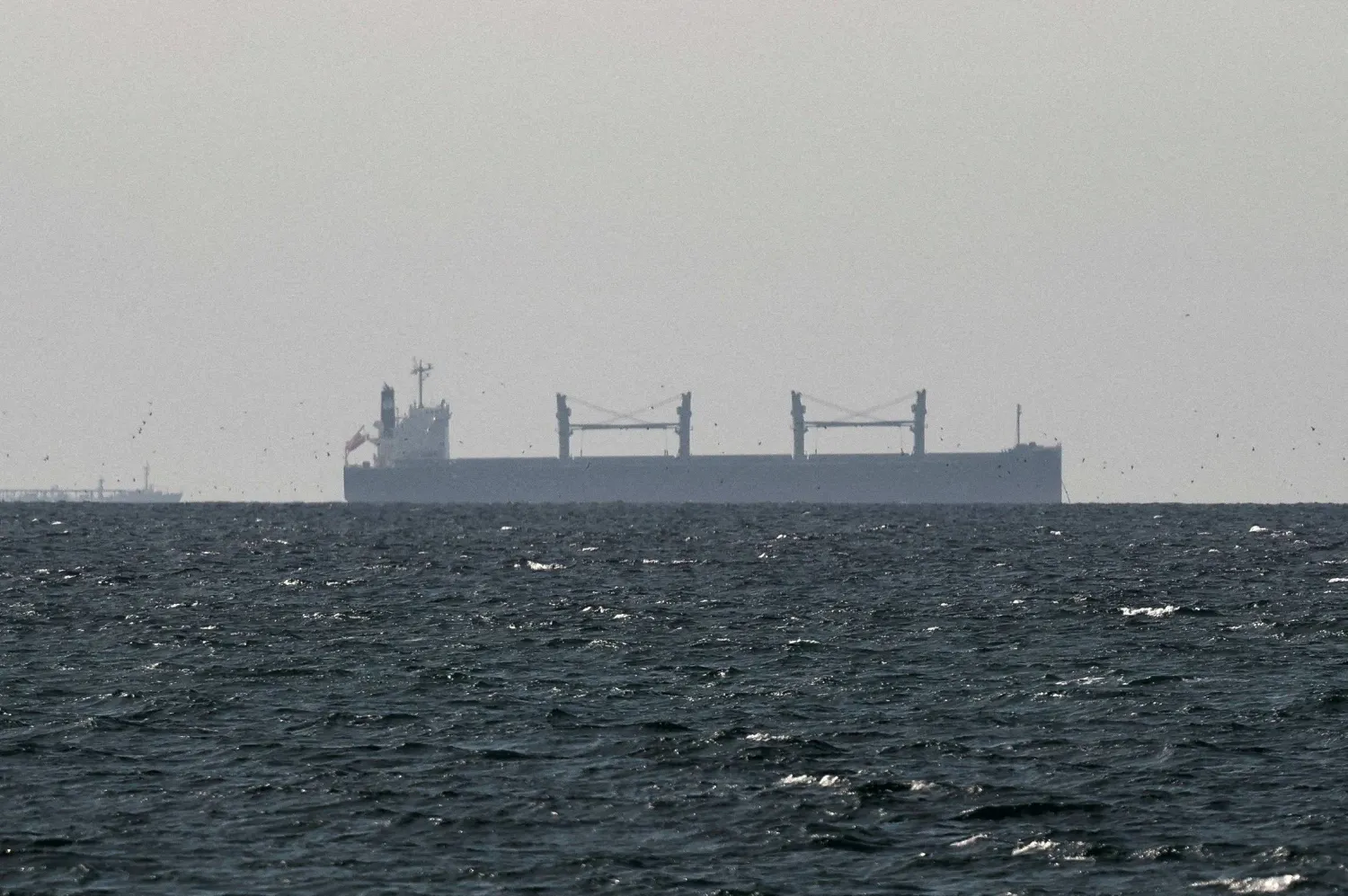
A cargo ship in the Gulf, near the Strait of Hormuz, March 11, 2026. REUTERS/Stringer/File Photo
TT

World Bank to Asharq Al-Awsat: Saudi Arabia Plays a Central Role in Stabilizing Energy Markets

A cargo ship in the Gulf, near the Strait of Hormuz, March 11, 2026. REUTERS/Stringer/File Photo

At a time when geopolitical tensions are disrupting the stability of vital maritime corridors, fundamental questions are emerging about the ability of major economic ambitions in the Gulf to withstand the test of the Strait of Hormuz, which is an indispensable “lifeline” for the global economy, said Roberta Gatti, Chief Economist for the Middle East, North Africa, Afghanistan, and Pakistan at the World Bank.  

In remarks to Asharq Al-Awsat, Gatti warned that current geopolitical tensions place the region’s economic diversification ambitions under a real test, while stressing, on the other hand, the central role Saudi Arabia plays in global energy markets through measures aimed at enhancing the reliability of supply chains.  

The Kingdom’s efforts extend not only to exporters, but also to inflation, trade, and global growth, she added. 

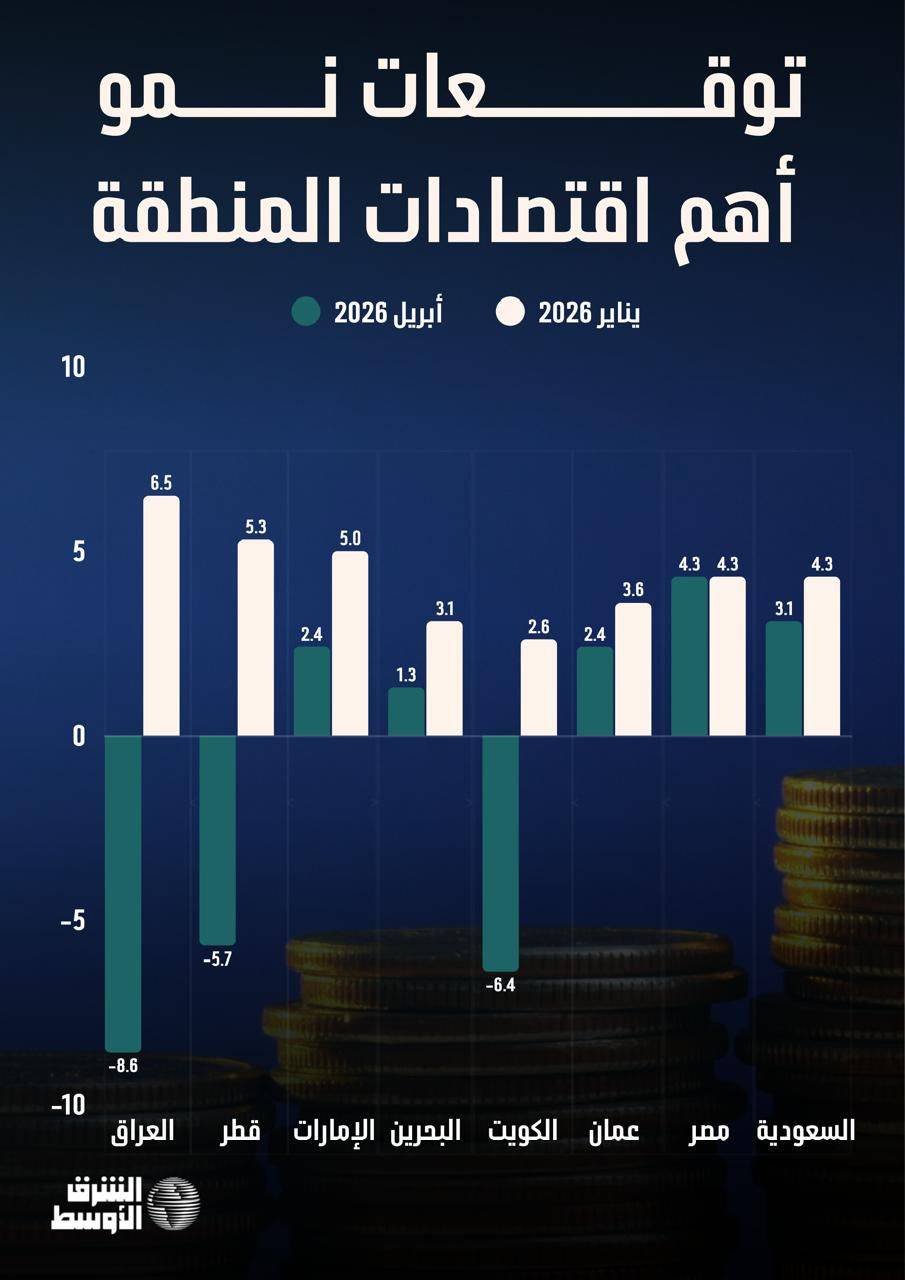
Last week, the World Bank issued a report ahead of the Spring Meetings of the World Bank and the International Monetary Fund, in which it maintained Saudi Arabia at the forefront, with projected growth of 3.1 percent in 2026, highlighting it as the Gulf economy most capable of coping with the repercussions of the current geopolitical crisis, despite sharp revisions affecting regional estimates.  

Data in the report also showed that the fiscal deficit is expected to narrow by half to 3 percent, from 6 percent in 2025, alongside a shift in the current account balance from a deficit of -2.7 percent to a surplus of 3.3 percent.  

Roberta Gatti, Chief Economist for the Middle East, North Africa, Afghanistan, and Pakistan at the World Bank. (World Bank)

On Monday, the United States imposed a naval blockade on Iranian ports, in an attempt to increase pressure on Iran to reopen Hormuz following the collapse of peace negotiations in Pakistan over the weekend. The negotiations are expected to resume in the coming days. 

Gatti stressed: “Saudi Arabia plays a central role in global energy markets, and its efforts to strengthen resilience are especially important at a time of heightened uncertainty around the Strait of Hormuz.” 

“Measures that enhance the reliability of energy supply chains - whether through infrastructure investment, alternative export routes, spare capacity, or stronger logistical preparedness - can help reduce the risk that such shocks translate into broader global disruption,” she added.  

“These efforts matter not only for reducing volatility in global oil and gas markets for the benefit of the exporters, but also for global inflation, trade, and growth, especially in energy-importing developing countries that are highly vulnerable to volatility of these markets.” 

Economic Diversification Under Stress Test

Gatti said the current conflict has directly highlighted the strategic importance of economic diversification, which is a core objective adopted in national development plans across GCC countries. She pointed out that data recorded since February 28 clearly reflects this divergence, stating: “The current conflict has highlighted the importance of economic diversification, an objective mentioned in multiple National Development Plans of GCC countries.” 

“Since February 28, relatively more diversified economies, such as the UAE and Bahrain, have seen their forecasts downgraded significantly less than those of less diversified economies, such as Qatar and Kuwait. In addition, these larger forecast downgrades for Qatar and Kuwait reflect their higher reliance on route that goes through the Strait of Hormuz for trade and energy exports and the lack of alternative bypass routes.” 

The World Bank expects Qatar’s economy to contract by 5.7 percent, marking a downgrade of 11 percentage points from previous estimates due to damage to liquefied natural gas supplies. Kuwait’s economy is also expected to contract more sharply by 6.4 percent, given its 100 percent reliance on the Strait of Hormuz for oil exports, making any closure of the waterway equivalent to a complete halt of the country’s financial lifeline.

In contrast, the UAE and Oman are expected to grow by 2.4 percent each, while Bahrain is expected to grow by 3.1 percent.
In this context, Gatti said: “The ‘Vision’ strategies remain appropriate and important as they aim to reduce structural dependence on hydrocarbons and promote private sector-led growth, but, as these recent events show, their implementation is sensitive to external shocks and the impacts are likely to be uneven across the region: more diversified economies tend to be more resilient due to stronger fiscal buffers and deeper non-oil sectors.” 

“It also matters greatly into which new sectors the economies are diversifying. For example, prolonged instability could dampen investment and further disrupt tourism, aviation, and logistics sectors which have been expanding rapidly in the region. In contrast, sectors like banking and finance have been more insulated,” she explained. 
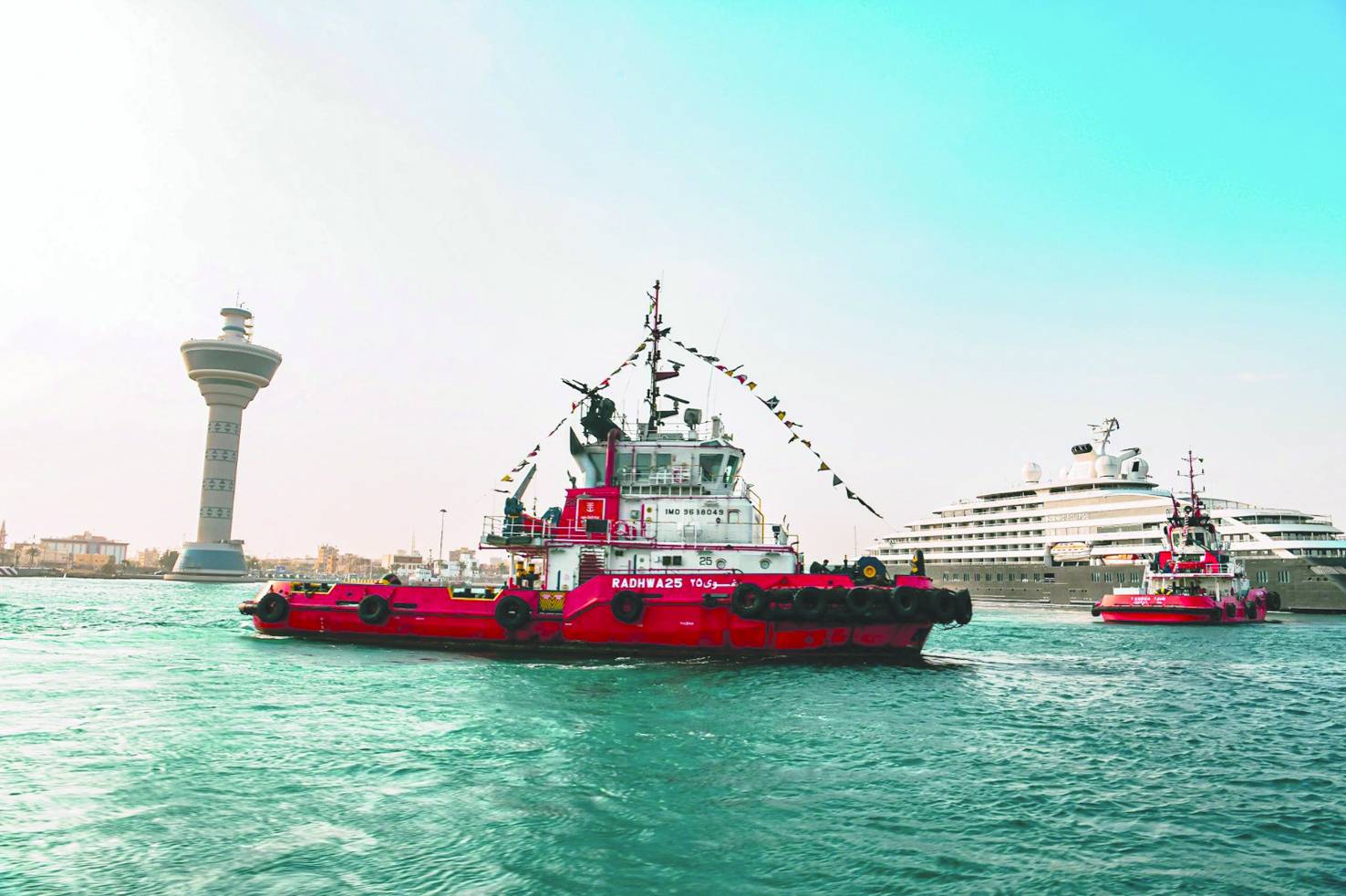
The commercial port of Yanbu is one of Saudi Arabia’s current key maritime gateways. (Mawani)

Energy Poverty

Gatti turned to the more severe dimension of energy market volatility, explaining that rising oil prices impose compounded pressures on developing importing countries, as they translate directly into higher electricity costs, more expensive public transportation, and rising food prices linked to increased fertilizer costs.

She noted that these pressures inevitably lead to wider trade deficits and greater strain on public budgets, particularly in poorer countries with limited reserves, which are forced to bear significant fiscal costs if they attempt to subsidize energy prices to ease the burden on citizens.

Gatti further noted that reliable and affordable energy is not merely a service, but a lifeline for both households and firms. In this context, volatility in fuel and gas markets delivers a “double hit” to these economies, as households struggle to meet basic needs while firms face more expensive and less reliable energy, making industrial expansion slower, riskier, and less competitive.

In this sense, sharp short-term price increases may not only have immediate effects, but could also disrupt long-term structural transformation in energy-poor developing economies, she told Asharq Al-Awsat.

“The resilience of economies to withstand oil and gas shocks depends on exposure and vulnerability of their economic structures. Degree of reliance on imported energy matters, and so do reliance on energy-intensive sectors, and how consumers, firms, and government adapt to rising prices,” she remarked.

The 'Cost' of Alternative Energy Routes

Addressing the need to invest in land corridors or pipelines that bypass narrow maritime chokepoints, Gatti said the decision requires a careful balance between economic efficiency and resilience. “Decisions on such investments must balance consideration for economic efficiency and resilience to shocks. The concentration of oil and gas export routes from the Gulf through the Strait of Hormuz suggests that this is likely the most economically efficient option, given geography and other technical and economic considerations. On the other hand, diversifying trade routes brings resilience to shocks.”

For example she highlighted that Saudi Arabia can “divert a portion of their oil exports to the Red Sea port of Yanbu via the East-West pipeline, with 7mbpd capacity. The UAE similarly has Habshan-Fujairah pipeline with 1.5-1.8mbpd capacity to bypass Hormuz.

Conversely, the Kirkuk–Ceyhan pipeline between Iraq and Türkiye can carry only about 0.4 mbpd, well below its 1.5 mbpd intended capacity, because of the delayed repairs needed for the segment within Iraq.”

The End of the 'Efficiency-Only' Era

On supply chain resilience, Gatti said the world is undergoing a severe test that began with the COVID-19 pandemic and has extended to regional conflicts, events that have exposed the fragility of excessive reliance on geographically concentrated production networks.

She stressed that the key lesson from these crises is that “efficiency alone is no longer enough,” as governments and companies increasingly need to build buffers, diversify sources, increase inventories of critical goods, and develop more flexible logistics systems.

She also pointed to the current analytical frameworks and extensive research to support countries in this transition, referring to the World Development Report 2020, which examined the challenges facing developing countries in the era of global value chains.

She also noted an upcoming report titled “Resources to Resilience: Economic Diversification for Oil and Gas Exporters in MENAAP,” which will provide a roadmap for exporters in the Middle East, North Africa, and Asia-Pacific on how to diversify their economic capabilities to navigate disruptions in maritime corridors and sudden shocks.



UK Inflation Holds Steady at 2.8% Ahead of Bank of England Decision

A shopper in a London supermarket (EPA)
TT

UK Inflation Holds Steady at 2.8% Ahead of Bank of England Decision

A shopper in a London supermarket (EPA)

British inflation unexpectedly held at 2.8% for May, unchanged from the 13-month low reached in April, official figures showed on Wednesday, a day before the Bank of England will announce its next interest rate decision.

Sterling weakened a little against the US dollar after the data and investors slightly trimmed their expectations for a rate rise later this year.

Economists polled by Reuters had forecast a rise to 3.0% for May, as the US-Iran war kept British inflation almost a percentage point higher than the BoE had forecast in February.

Lower prices than in April for meat, ⁠vegetables and dairy products ⁠as well as domestic heating oil helped offset a jump in airfares and petrol, the Office for National Statistics said.

Inflation has been above the BoE's 2% target for most of the past five years.

In April, the BoE said it was likely to rise above 3.5% by the end of the year and potentially exceed 6% early next year under the most adverse of three scenarios.

However, ⁠financial markets this week have drawn comfort from an interim agreement between the US and Iran which promises to reopen the Strait of Hormuz, a major corridor for oil exports, and is due to be signed in Switzerland on Friday.

"Today's data strengthens the case for a continued cautious approach from the Bank of England," Yael Selfin, chief economist at KPMG, said.

"Underlying inflationary pressures have yet to show clear signs of strengthening, which is likely to underpin a majority decision within the Monetary Policy Committee to hold interest rates at Thursday's meeting," she said.

Economists polled by Reuters expect the BoE's Monetary Policy Committee to vote 7-2 to keep rates on hold at 3.75%.

While Governor Andrew Bailey says ⁠the BoE has ⁠time to wait to assess the impact of the conflict, some policymakers worry businesses will use it to raise prices more broadly, or that it could dent households' confidence in the BoE inflation target.

Britain has been more affected than most Western countries by the conflict due to its reliance on imported natural gas and manufacturers reported an 8.7% annual rise in their raw material costs for May, the biggest since February 2023.

Services price inflation - which the BoE views as a guide to underlying price pressures - rose to 3.7% in May from 3.2% in April, in line with economists' forecasts.

The rise in services inflation partly reflected a 10.3% monthly jump in airfares, which are volatile. High Easter prices were not captured in April 2026 data but were in 2025.

Core inflation, which excludes food, energy, alcohol and tobacco prices, rose slightly less than expected to 2.6% from 2.5%.


Gold Steady as Investors Await Details of US-Iran Deal, Fed Verdict

People walk past a gold business shop at the Grand Bazaar in Istanbul, Türkiye, Tuesday, June 16, 2026. (AP)
TT

Gold Steady as Investors Await Details of US-Iran Deal, Fed Verdict

People walk past a gold business shop at the Grand Bazaar in Istanbul, Türkiye, Tuesday, June 16, 2026. (AP)

Gold prices were steady on Wednesday, near a one-week high, as investors awaited further details on the US-Iran agreement and the Federal Reserve's policy decision from Kevin Warsh's debut meeting as Chair.

Spot gold was flat at $4,331.29 per ounce, as of 0420 GMT. U.S. gold futures for August delivery was down 0.1% at $4,351.40.

Bullion touched an ‌over one-week ‌high of $4,370.82 on Monday.

Details of a US-Iran interim deal ‌to ⁠end the conflict ⁠are emerging, with President Donald Trump saying it would rule out a nuclear weapon for Tehran and a US official saying it would allow Iran to sell oil once signed.

Oil prices hovered near a three-month low on expectations of Iranian supply, easing inflation concerns.

"The rally (in gold) is losing some steam as all eyes turn to the ⁠monetary policy announcement from the Fed," said Ilya Spivak, ‌head of global macro at ‌Tastylive.

"This marks the first FOMC meeting to be chaired by Kevin Warsh and ‌traders still seem unsure about how he will reconcile a ‌hawkish record, rising inflation, and pressure from a White House demanding a dovish pivot," Spivak said.

Most Fed policymakers now feel they will need to keep US short-term borrowing costs on hold all year, projections due out later ‌in the day are expected to show, with a small number seen penciling in a rate ⁠hike to ⁠stop a spike in inflation from getting entrenched in the economy.

Traders see a 59% chance of a US rate hike in December, down from about 70% last week before the US-Iran peace deal announcement, according to the CME FedWatch tool.

Gold tends to lose appeal when rates are high, as it does not yield interest.

"Over the longer term, structural support (for gold) is expected to persist, driven by ongoing Asian demand and continued central bank purchases as a hedge against geopolitical and policy risks," Westpac analysts wrote in a research note.

Spot silver fell 0.2% to $70.05 per ounce, platinum lost 0.7% to $1,792.05, and palladium was down 0.8% at $1,341.23.


Oil Dips as Investors Weigh Deal on Iran War as Uncertainty Persists on Hormuz

 A person prepares to pump gas at a Valero gas station on June 16, 2026 in Austin, Texas. (Getty Images via AFP)
A person prepares to pump gas at a Valero gas station on June 16, 2026 in Austin, Texas. (Getty Images via AFP)
TT

Oil Dips as Investors Weigh Deal on Iran War as Uncertainty Persists on Hormuz

 A person prepares to pump gas at a Valero gas station on June 16, 2026 in Austin, Texas. (Getty Images via AFP)
A person prepares to pump gas at a Valero gas station on June 16, 2026 in Austin, Texas. (Getty Images via AFP)

Oil prices inched lower on Wednesday, extending the previous session's declines as investors assessed the US-Iran peace deal, though uncertainty over the full resumption of shipping through the Strait of Hormuz limited further falls.

Brent crude futures dipped 16 cents, or 0.2%, to $78.80 a barrel by 0340 GMT, while US West Texas Intermediate fell 25 cents, or 0.3%, to $75.80 a barrel.

Both benchmarks fell about 5% for a second straight session on Tuesday to stand at three-month lows, on hopes that a US-Iran deal would allow oil flows through the Strait.

"Markets are broadly stripping out ‌the embedded geopolitical risk ‌premium in oil prices," said Priyanka Sachdeva, senior market analyst at ‌Phillip ⁠Nova.

"That said, the ⁠path toward normalization remains far from straightforward. While political agreements may be progressing, physical tanker traffic through the Strait has yet to fully recover."

The deal would provide for the United States to lift its blockade of Iran's ports, while Tehran would allow oil tanker traffic through the Strait, effectively blocked since US and Israel strikes on February 28.

"Oil markets retreated on expectations the Strait of Hormuz would reopen following the peace agreement, but traders held off further ⁠selling pending details," said Hiroyuki Kikukawa, chief strategist of Nissan ‌Securities Investment.

WTI is likely to stay volatile in ‌a range of $10 above or below $80 a barrel, he added.

Before the closure, about a fifth of ‌global crude oil and liquefied natural gas supplies flowed through the Strait.

Details of ‌the interim peace deal began to emerge on Tuesday, with President Donald Trump saying it would rule out a nuclear weapon for Tehran and a US official saying it would allow Iran to sell oil upon signing.

The memorandum of understanding, not yet public, extends by another 60 days a ‌tenuous ceasefire agreed in April, so as to allow room for talks toward a permanent truce.

Still, industry officials say a ⁠full return to ⁠pre-war production and refining levels is likely to take weeks, months or even years.

Israel has distanced itself from both the April ceasefire and the latest US-Iran pact, fueling uncertainty about whether it will hold.

Israeli drone strikes targeted three vehicles in southern Lebanon on Tuesday, killing at least four and wounding others, Lebanon's National News Agency said, prompting a rare public rebuke from Trump.

China's crude oil throughput fell 9.1% in May on the year to its lowest in almost four years, data showed, also signaling that refiners were starting to draw on stockpiles amid the Iran war.

The American Petroleum Institute report showed US crude stocks fell 8.3 million barrels in the week ended June 12, the sources said.

It exceeded expectations for a draw of 4.6 million barrels, with official numbers due from the Energy Information Administration at 10:30 a.m. ET (1430 GMT) on Wednesday.