


AlUla Marks World Heritage Day, Showcases Millennia of Human Civilization

AlUla remains committed to the preservation of its archaeological sites and inscriptions through specialized restoration and rehabilitation projects - SPA
TT

AlUla Marks World Heritage Day, Showcases Millennia of Human Civilization

AlUla remains committed to the preservation of its archaeological sites and inscriptions through specialized restoration and rehabilitation projects - SPA

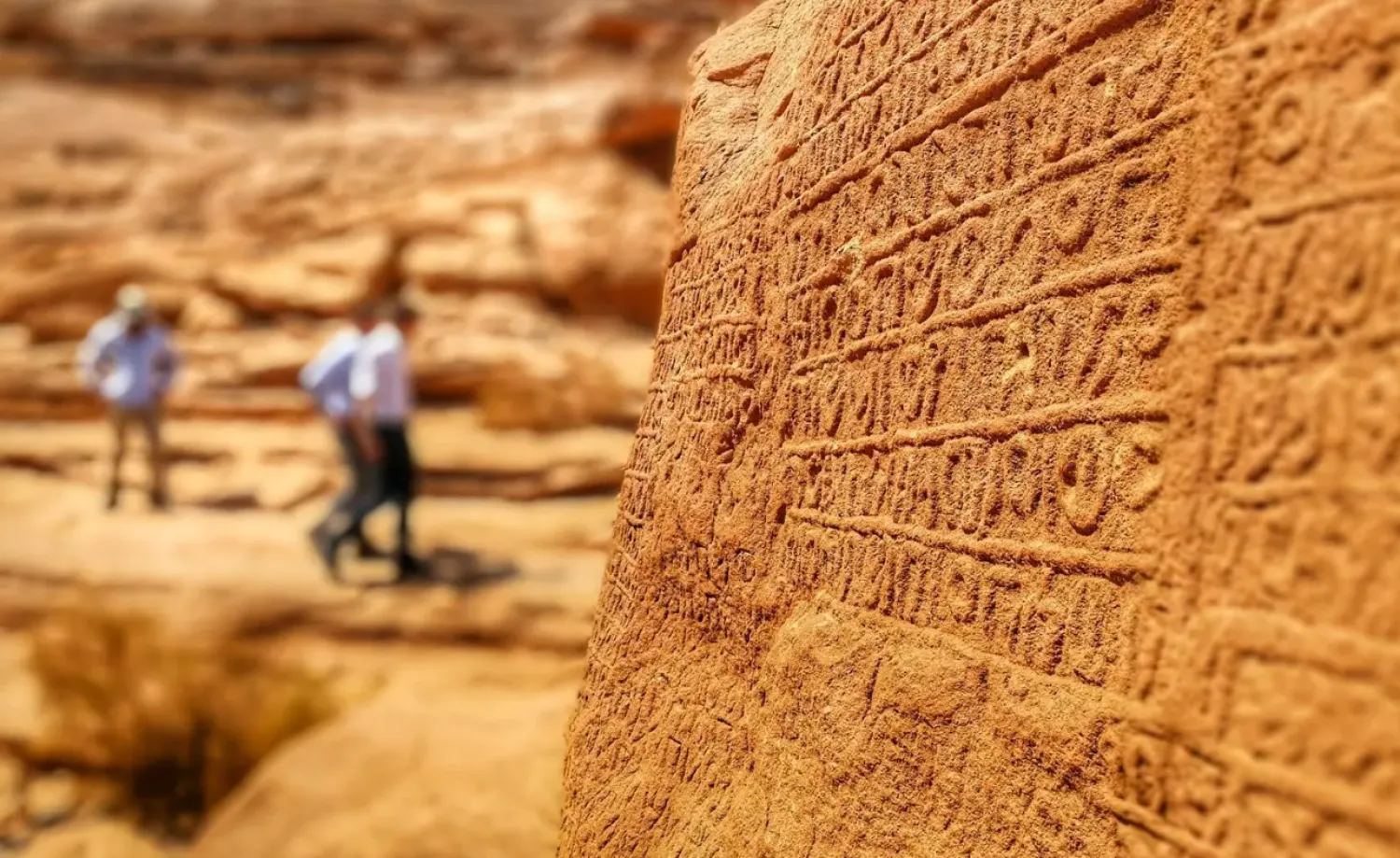
AlUla Governorate is celebrating World Heritage Day, observed annually on April 18, by showcasing a historical legacy spanning thousands of years as a crossroads of ancient civilizations and a living testament to cultural continuity and architectural development, reinforcing its status as a premier global cultural center, SPA reported.

The governorate is home to landmarks of universal value, most notably Hegra, the first Saudi site inscribed on the UNESCO World Heritage List.

Other significant sites include AlUla Old Town, featuring over 900 traditional mud-brick houses that reflect the region's historical social fabric and unique architectural heritage.

AlUla remains committed to the preservation of its archaeological sites and inscriptions through specialized restoration and rehabilitation projects.

These efforts ensure the sustainability of its heritage for future generations, aligning with international standards for protecting human history and promoting global cultural awareness.



How Some in Palestinian Diaspora Find Connection, Identity and Resilience in Traditional Embroidery

A hand-embroidered map of historic Palestine with names of cities and the words “Palestine” and “Returning” in Arabic is displayed at the Inaash Association embroidery workshop in Beirut, Tuesday, May 19, 2026. (AP)
TT

How Some in Palestinian Diaspora Find Connection, Identity and Resilience in Traditional Embroidery

A hand-embroidered map of historic Palestine with names of cities and the words “Palestine” and “Returning” in Arabic is displayed at the Inaash Association embroidery workshop in Beirut, Tuesday, May 19, 2026. (AP)

Decades later, Samar Kabouli still fondly recalls gathering with women in her family and sipping cardamom-spiced coffee as they embroidered fabric with colorful threads in traditional Palestinian patterns.

Born in Lebanon to Palestinian refugees, Kabouli had never seen her parents’ homeland. But more than just making pretty designs, the threads in her needle were stitching a connection to her heritage.

It's known as “tatreez,” and Kabouli, 48, started doing the traditional form of Palestinian embroidery in her teens to make money. Besides an economic lifeline, tatreez has provided her with a bridge to the land her parents fled during the 1948 mass displacement that Palestinians call their Nakba, or catastrophe.

Hundreds of thousands of Palestinians were expelled or fled their homes in present day Israel during the 1948 war surrounding Israel's creation. Israel refused their return.

Kabouli's work allows her to send a message of resilience, of survival.

“We’re still here,” she said. “All what has been happening in Gaza ... and we’re still standing and we’ll not forget the cause.”

From refugee camps to stitching circles and from museum halls to online classes, many in the Palestinian diaspora communities worldwide engage with tatreez as far more than a decorative aesthetic.

They're finding in it a celebration of cultural heritage, a bridge to their homeland and dispersed communities and — with its myriad embroidered symbols — a visual language of storytelling. To many, refugees or not, it's become a symbol of Palestinian identity and pride, a vehicle for documenting history and a form of resistance.

With the Israel-Hamas war in Gaza, some have also used it to raise funds for people there or stitched designs to focus attention on Palestinian suffering in the enclave.

“We had a lot of people who came and they’re like, ‘OK, we want to do a T-shirt with a Gaza chest or we want to do a scarf with the Gaza motif,’” said Ali Jaafar, general manager of Inaash Association, where Kabouli works.

The Lebanese organization provides Palestinian women in refugee camps in Lebanon with much-needed income through tatreez, while also aiming to help preserve and promote the heritage. It sells embroidered fashion, home decor and art pieces, and showcases the art form in exhibitions and museums.

Palestinian weaver Samira Nasser works on a handmade embroidered piece at the Inaash Association embroidery workshop in Beirut, Tuesday, May 19, 2026. (AP)

Protecting heritage and ‘struggling through culture’

Efforts to preserve and raise awareness about tatreez in Palestinian communities at home and abroad are part of a larger push to safeguard a heritage and connections to a history and a place that many fear are at risk of being erased.

“Palestinian tatreez is an identity and a document of our presence in every Palestinian village and town," said Maha Saca, founder and director of the Palestinian Heritage Center in Bethlehem in the Israeli-occupied West Bank, adding that old embroidered thobes, or dresses, show the presence of Palestinians in particular locations before the dispersal of many.

“The Palestinian woman has written the story of her village through motifs from her surrounding environment and her beliefs,” Saca said. “We’re struggling through culture and saying we have roots.”

The Palestinian embroidery art form was added in 2021 to UNESCO’s list of Intangible Cultural Heritage of Humanity.

In New York, Lina Barkawi, whose small business teaches tatreez, said the “constant fight for liberation and having a Palestinian identity that’s recognized globally is really what has been driving a lot of this documentation.”

Palestinian weaver Samar Kabouli works at the Inaash Association embroidery workshop in Beirut, Tuesday, May 19, 2026. (AP)

A generational practice and window into history

In Arabic, tatreez refers to embroidery in general as well as the specific Palestinian form, which is often a social practice taught through generations by grandmothers and mothers. Some seek formal training.

With motifs that Palestinian women had historically adopted from their surroundings, the old embroidered thobes can offer clues through stitched patterns, design and color about facets of a woman's personal story, her environment and regional identity, Saca said.

In the Palestinian context, such connections to time and place, including areas now in Israel, gain added importance as testament to what was, she said. “How do we have a Jaffa thobe if we hadn’t been in Jaffa?" she said. "We write history on our thobes.”

There's also an element of continuity. Her grandmother's embroidered wedding thobe bears the hallmarks of Bethlehem dresses, Saca said. Her own granddaughter's baptism dress included embroideries copied from that dress.

Tatreez also can be political, both through preservation and creation.

“Just being able to have some of the dresses from pre-1948 is a political act,” Barkawi said.

There's also the making of the so-called “intifada thobe” that included embroidered political and Palestinian symbols, such as the flag. It's linked to the “first intifada,” or uprising, which erupted in 1987 against Israel’s occupation and was met with a fierce Israeli response.

Stitching, mourning and documenting

After the war in Gaza, which was triggered by Hamas’ Oct. 7, 2023, attack on Israel, fashion designer Hama Hinnawi expressed grief through tatreez work. Tatreez is usually colorful, she said. But that was no moment for color.

The result? Black embroidery on black fabric, a statement of mourning for the killings, destruction and displacement in Gaza. She's also experimented with turning some iconic scenes from the war into new embroidery motifs.

“We have a big responsibility on our shoulders to tell this story, not to be buried for the next generations ... through tatreez, through art, through speaking.”

Born in Jordan to Palestinian parents, Hinnawi wanted to bring awareness to heritage through her fashion brand by marrying tatreez with contemporary fashion.

To her, tatreez simply means home. It’s “identity, pride, storytelling,” said Hinnawi, who shuttles between Chicago and Jordan.

She's provided embroidery work opportunities to Palestinian women in refugee camps in Jordan and talked in the US about tatreez. Before the war, she also worked with women in Gaza.

Barkawi runs an online community of Palestinian and non-Palestinian embroiderers, some of whom have created designs sold to raise funds for Gaza families. One incorporates a “water and seeds” motif with an embroidered message to “Feed Gaza Now.”

Members in different countries recreated a tapestry that once hung in a bombed Gaza home, each stitching a part and mailing it to another.

Born in the US to a Palestinian father and Panamanian mother, Barkawi said learning about tatreez deepened her Palestinian identity.

New dresses with woven stories

Embroidering her first thobe took two years. Barkawi incorporated motifs with personal meanings, such as palm trees that represent her name in Arabic. She added orchids, the national flower of Panama, for her mom.

Technically imperfect, it was the perfect dress for her Islamic marriage ceremony.

“I embedded my story as a Palestinian in the diaspora into this dress.”

In Lebanon, Kabouli, too, once dreamed of owning a tatreez piece for her wedding trousseau. She couldn’t afford one.

After their parents died, an older sister had turned to tatreez with Inaash to help support the large family. Kabouli learned from her.

Now a production supervisor at Inaash in Beirut, Kabouli sees her younger self in the women working in refugee camps in Lebanon, many in the south, which was hard hit by the latest Israel-Hezbollah war.

The vibrancy of tatreez often contrasts with harsh living conditions in camps amid employment and other restrictions the refugees face. Contending with power cuts, women, eager to finish a piece and get paid, may work on rooftops to grasp the last ray of sunlight, Jaafar said.

Besides the income, Kabouli said doing tatreez can be grounding, almost meditative.

She has another yearning: to see her parents’ homeland. They came from an area in what’s now Israel.

For now, tatreez provides her with hope.

“I don’t feel like I am far away. I keep working on Palestinian heritage, following the cause,” she said. “It connects me to my homeland, especially since we’re deprived of it.”


Heat Forces Yodelers at Annual Swiss Festival to Sing in Fountains

 Yodelers prepare for TV broadcast on the main festival stage at Petersplatz in Basel, Switzerland, Saturday, June 27, 2026. (AP)
Yodelers prepare for TV broadcast on the main festival stage at Petersplatz in Basel, Switzerland, Saturday, June 27, 2026. (AP)
TT

Heat Forces Yodelers at Annual Swiss Festival to Sing in Fountains

 Yodelers prepare for TV broadcast on the main festival stage at Petersplatz in Basel, Switzerland, Saturday, June 27, 2026. (AP)
Yodelers prepare for TV broadcast on the main festival stage at Petersplatz in Basel, Switzerland, Saturday, June 27, 2026. (AP)

City fountains became impromptu rehearsal spaces this weekend as yodelers at a festival in Basel, Switzerland, squeezed in last-minute practice while cooling off during Europe’s June heat wave.

At one fountain, a folk band dipped their toes in the water on Saturday, as festivalgoers clapped along or cooled their hands under the flowing stream.

From Friday to Sunday, singers and alphorn players filled the streets and spontaneous bursts of yodeling echoed through restaurants, where diners initially reacted with surprise before joining in.

In Petersplatz, in central Basel, seamstresses remained on call throughout the festival to repair the traditional Alpine folk costumes worn by participants in case of emergency.

This year, however, it was the fountain rehearsals that became the festival’s defining image, as the city battled record temperatures of around 39 degrees Celsius (102 degrees Fahrenheit).

Around 12,000 performers and nearly 200,000 visitors traveled to Basel for the Eidgenössisches Jodlerfest, Switzerland’s national yodeling festival. It was the first time the northwestern Swiss city hosted the event since 1924.

Swiss yodeling was added to UNESCO’s Representative List of the Intangible Cultural Heritage of Humanity in December 2025, making this the first national festival since the tradition received international recognition. It is a distinction many Swiss take great pride in.

Unlike the brighter, more melodic style often associated with Austria and the Tyrol region, Swiss yodeling is slower and more melancholic — an emotionally nuanced tradition rooted in distinct regional dialects.

"I’ve always loved music, and I left here as a child. When I moved back to New Zealand, I wanted to stay connected to Swiss culture, so I joined a New Zealand-Swiss-Kiwi yodeling club,” said Freddie Conquer, a member of Jodlerclub Echo Basel, one of the clubs hosting the festival.

The participants competed in three disciplines: yodeling, alphorn playing and flag-throwing.

The alphorn is a long wooden instrument traditionally used by herdsmen in the Alps. It can stretch to more than 3 meters (10 feet) in length, with its sound carrying across valleys — or, during the festival, through Basel’s streets. It produces all of its pitches using natural harmonics alone, with no valves or keys.

“Everything is down to the mouthpiece, hearing the note in your head, and then using your lips to shape the pitch. The higher the note, the harder you have to blow,” said Pierre-André Karlen, who was rehearsing on a school lawn.

On Sunday morning, participants gathered outside the town hall, eagerly awaiting the competition results. Members of Jodlerklub Balfrin, from the town of Visp in the canton of Valais, were nervously examining the lists and later celebrated loudly after receiving a perfect score of one, one of several such teams.

As flags were carried through the old town during the festival’s closing parade, members of Jodlerklub Muttenz rode past on a tractor to cheers from the crowd. Alphorn players followed — their instruments and costumes almost certainly a burden in the heavy heat, but the smiles remained.


GASTAT: 75.3% of Saudi Arabia's Population Visited Cultural Event Venues in 2025

The General Authority for Statistics (GASTAT) logo
TT

GASTAT: 75.3% of Saudi Arabia's Population Visited Cultural Event Venues in 2025

The General Authority for Statistics (GASTAT) logo

The General Authority for Statistics (GASTAT) said that 75.3% of Saudi Arabia's population visited venues hosting cultural events or activities in 2025. The figure highlights growing cultural momentum and increasing public participation in cultural events across the Kingdom.

The data was released as part of an initiative identified by the Arabic phrase, transliterated as "Raqam Saudi" ("Saudi Number"). The initiative aims to showcase national achievements, promote national pride and citizenship values, and demonstrate the role of official statistics in tracking progress toward the goals of Saudi Vision 2030 and sustainable development.

Under the initiative, the authority publishes a range of statistics each month through its social media platforms. The initiative highlights the Kingdom's economic, social, and developmental transformation while reinforcing the role of official statistics in raising public awareness.

The initiative targets government entities and their clients, media professionals and outlets, social media users, opinion writers, and the international community. It aims to promote the dissemination of statistical content and expand the use of official data.

GASTAT said the initiative highlights national collaboration in achieving development goals by tracking and measuring progress through statistical indicators. It also raises public awareness of the role of statistics and data in monitoring the country's development.