


Oil Prices Rise despite US-Iran Ceasefire Extension

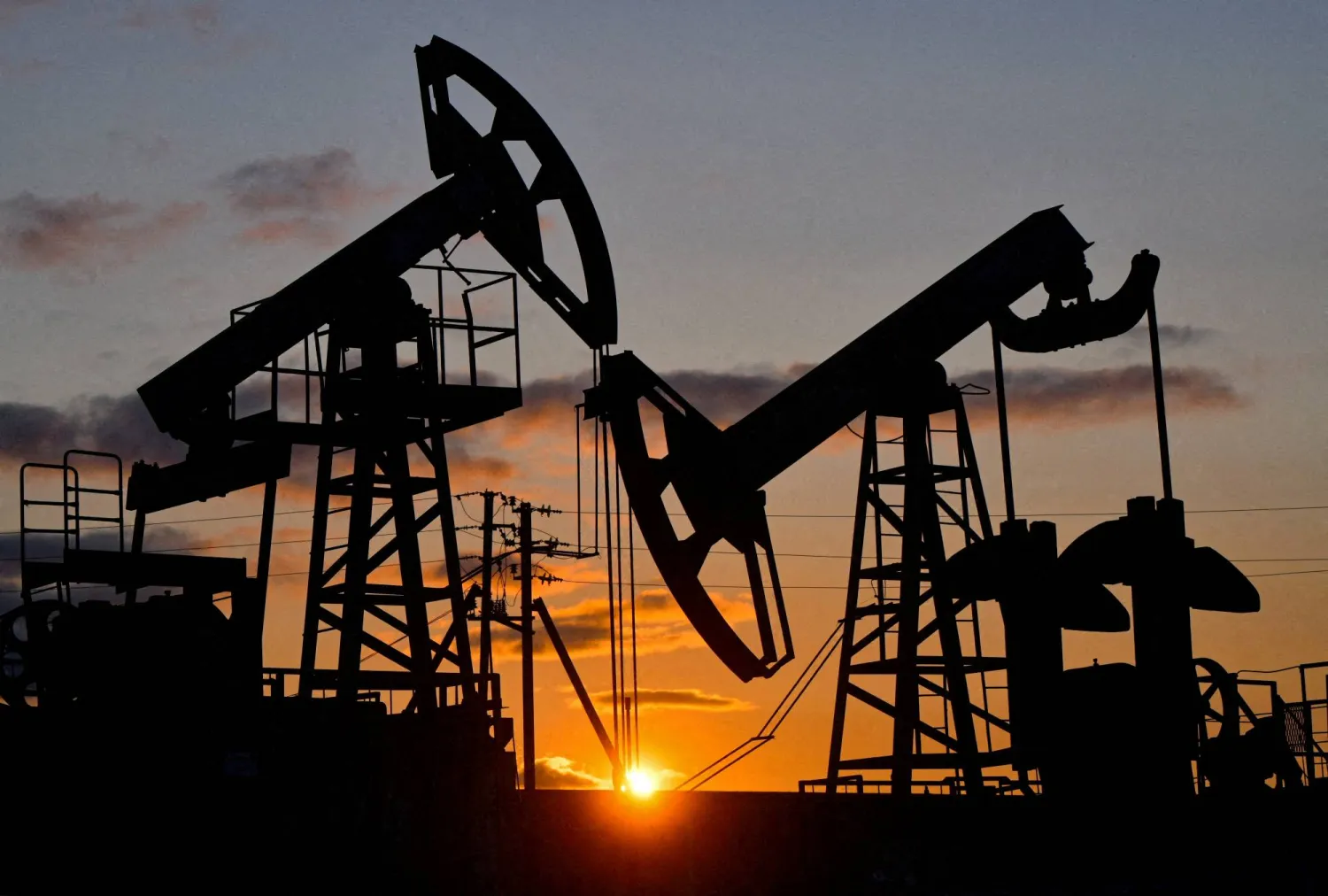
FILE PHOTO: FILE PHOTO: A view shows oil pump jacks outside Almetyevsk in the Republic of Tatarstan, Russia June 4, 2023. REUTERS/Alexander Manzyuk/File Photo
TT

Oil Prices Rise despite US-Iran Ceasefire Extension

FILE PHOTO: FILE PHOTO: A view shows oil pump jacks outside Almetyevsk in the Republic of Tatarstan, Russia June 4, 2023. REUTERS/Alexander Manzyuk/File Photo

Oil prices edged higher Wednesday while Europe's main stock markets eased on uncertainty surrounding the prospect of resumed Mideast peace talks following an extension to the US-Iran ceasefire.

Asian equities had a mixed trading day as investors wait for clarity but broadly expect that both US President Donald Trump and the authorities in Iran want to end a war that has sent oil and gas prices soaring.

"The ceasefire extension hasn't done much to calm nerves given that worries remain about the impact of the energy squeeze on the global economy," said Susannah Streeter, chief investment strategist at Wealth Club, AFP reported. 

"Shipments from the Middle East are in limbo and a resolution to the conflict remains elusive, and the price of Brent crude, the benchmark, reflects this."

Brent North Sea was once more closing in on $100 a barrel while main US contract, West Texas Intermediate, traded back above $90.

Iranian gunboats attacked at least one container ship in the Strait of Hormuz on Wednesday, maritime agencies said, despite US President Donald Trump announcing he was extending a ceasefire to allow more time for peace talks.

Trump said the US blockade of Iran's ports would continue while Pakistani mediators try to revive dialogue.

Tehran has all but shut the strait in the seven weeks since the United States and Israel launched attacks on Iran that plunged the Middle East into war, with higher energy prices threatening economic growth worldwide.

"The US and Iran may be trying to shore up leverage and playing a game of who blinks first," said Christopher Wong, a strategist at Oversea-Chinese Banking Corp.

"Whatever the outcome, the suspense in the interim may see risk appetite being curtailed," he said.

Away from the war, investors were keeping tabs on the confirmation hearing by senators of Kevin Warsh, Trump's pick to replace Federal Reserve boss Jerome Powell, whose term ends in May.

Warsh told lawmakers he would not be controlled by the president as he fielded questions on his assets and central bank independence during his first hearing.

Trump has assailed Powell for not cutting interest rates more aggressively, and told CNBC on Tuesday that he would be disappointed if the new chair did not swiftly lower borrowing costs despite rising inflation.

In Britain, official data showed that annual inflation jumped to 3.3 percent in March as the Middle East war sent oil and gas prices surging.


Caspian Pipeline Consortium Oil Loadings Suspended After Drone Attacks on Tankers, CPC Says

The full moon rises in the background over the infrastructure on D Island, the main processing hub, at the Kashagan offshore oil field in the Caspian sea in western Kazakhstan August 21, 2013. (Reuters)
TT

Caspian Pipeline Consortium Oil Loadings Suspended After Drone Attacks on Tankers, CPC Says

The full moon rises in the background over the infrastructure on D Island, the main processing hub, at the Kashagan offshore oil field in the Caspian sea in western Kazakhstan August 21, 2013. (Reuters)

Two oil tankers were attacked at the Caspian Pipeline Consortium (CPC) terminal off Russia's Black Sea coast, CPC said on Sunday, adding that oil loadings are suspended.

The ASIA and NISSOS IOS ‌tankers were ‌attacked during loading operations, ‌CPC ⁠said.

The ASIA ⁠tanker caught fire, which was extinguished, it added.

"There were no injuries or fatalities amongst CPC staff or contractors. There was no oil ⁠spill," CPC said, adding ‌that ‌the tankers remained afloat.

CPC did not ‌identify any party as ‌responsible for the incident.

The past week has seen a sharp escalation in attacks by ‌both Russia and Ukraine on shipping in the Black ⁠and ⁠Azov seas.

The CPC is a 940-mile (1,510 km) oil pipeline connecting Kazakhstan's Caspian Sea oil deposits with Russia's Black Sea port of Novorossiysk. Oil loaded at Novorossiysk is then taken by tanker to world markets.

CPC accounts for about 80% of Kazakhstan’s oil exports.


Chinese Company Demands Compensation from the UK Over British Steel Nationalization

Workers work at the British Steel site in Scunthorpe, Lincolnshire, Britain April 17, 2025. (Reuters)
TT

Chinese Company Demands Compensation from the UK Over British Steel Nationalization

Workers work at the British Steel site in Scunthorpe, Lincolnshire, Britain April 17, 2025. (Reuters)

The Chinese company that formerly owned British Steel demanded Sunday compensation from the UK government for investment losses following the nationalization of the manufacturer last week.

The British government took operational control of the company last year after Jingye Group said that it was considering closing the blast furnaces at its Scunthorpe plant in northern England, the last in the United Kingdom to make “virgin steel” from raw materials.

Jingye Group said in a WeChat statement that the nationalization move tarnished the credibility of the British government, spooked international investors and caused great losses to the company’s operation and British taxpayers' funds. It also demanded that the UK government stop “trampling on international investment rules.”

The Chinese company announced it had initiated negotiation procedures under relevant bilateral investment agreements, reserving all rights, including to international arbitration. Jingye said it will also represent British taxpayers seeking to hold the UK government and British Steel’s management legally liable. However, it did not specify how it would handle the case.

“The UK disregarded Jingye's continuous investment and significant contribution and was only willing to provide almost zero compensation,” it said.

An independent evaluation will be carried out to determine whether any compensation will be paid to Jingye Group, the UK government said last week.

The Department for Business and Trade announced the move on July 17, saying it would save thousands of jobs and protect the UK’s national interest by ensuring a supply of domestically produced steel for major construction projects and the defense industry.

British Steel and its forebears have been making steel at Scunthorpe for more than 130 years, building on the UK’s development of improved steelmaking technology during the Industrial Revolution. The plant currently employs about 2,700 people.

Jingye bought British Steel in 2020 and said it saved the steel company from crisis.

The Chinese Foreign Ministry on Saturday said the way the UK handles the issue would directly influence how Chinese investors view the British investment environment and the credibility of the British government.

“China urges the UK to earnestly respect market principles and the spirit of contract, and find solutions on compensation and other issues acceptable to both sides,” it said in a statement.

It added China supports enterprises in safeguarding their legitimate rights through legal means.


ACWA Power to Lead Saudi Arabia’s Green Hydrogen Export Drive

The NEOM Green Hydrogen Project (NEOM) 
TT

ACWA Power to Lead Saudi Arabia’s Green Hydrogen Export Drive

The NEOM Green Hydrogen Project (NEOM) 

Saudi Arabia is opening a new chapter in its energy export strategy by entrusting ACWA Power with exporting green hydrogen and its derivatives, while also tasking the company with developing projects to generate, transmit and export renewable electricity, including interconnection links with Europe and the Arab world.

The move reinforces the Kingdom’s strategy of expanding its presence in low-carbon energy markets, building on major investments in renewable energy and clean fuels, led by the NEOM Green Hydrogen Project, one of the world’s largest of its kind and a cornerstone of Saudi Arabia’s future export ambitions.

According to a filing by ACWA Power with the Saudi Exchange (Tadawul), the government has granted the company exclusive rights to export green hydrogen and its derivatives, including green ammonia, green methanol, green methane and other fuels produced using green hydrogen.

Fuad Al-Zayer, an energy adviser and former head of the information department at the Organization of the Petroleum Exporting Countries (OPEC), said ACWA Power was a natural choice given its scale and market position. He noted that the company has more than $124 billion in assets, nearly 98 gigawatts of generation capacity—including over 52 GW from renewable sources—and projects in 15 countries.

Al-Zayer told Asharq Al-Awsat that the decision strengthens the company’s position in the green hydrogen sector, which Saudi Arabia sees as a key pillar of the global transition to clean energy. He added that the Kingdom’s abundant solar and wind resources make renewable energy and green hydrogen economically competitive, supporting Vision 2030’s target of raising renewables’ share of electricity generation to around 50 percent by the end of the decade.

The NEOM Green Hydrogen Project is expected to produce about 600 tons of green hydrogen a day in the form of green ammonia once fully operational, with the first export shipments anticipated in 2027.

Al-Zayer said Europe is expected to be the primary market as it seeks secure low-carbon energy supplies. He added that Saudi Arabia’s strategic location and its large-scale projects in the Kingdom’s northwest give it a competitive advantage in serving European markets. Partnerships with countries including Italy, France and South Korea are also helping develop the supply chains and infrastructure needed to expand the global green hydrogen trade.

Despite the sector’s rapid growth, he said continued investment in transport, storage, electrolysis facilities, water supply and logistics will be essential to support production and exports. Over the next decade, exports of renewable electricity and green hydrogen are expected to transform Saudi Arabia into a reliable supplier of multiple forms of energy while reducing domestic crude oil consumption for power generation, freeing up larger volumes for export and creating new sources of economic growth.
