


Washington Tightens Conditions on Lebanese Army, Unconditional Aid Ends

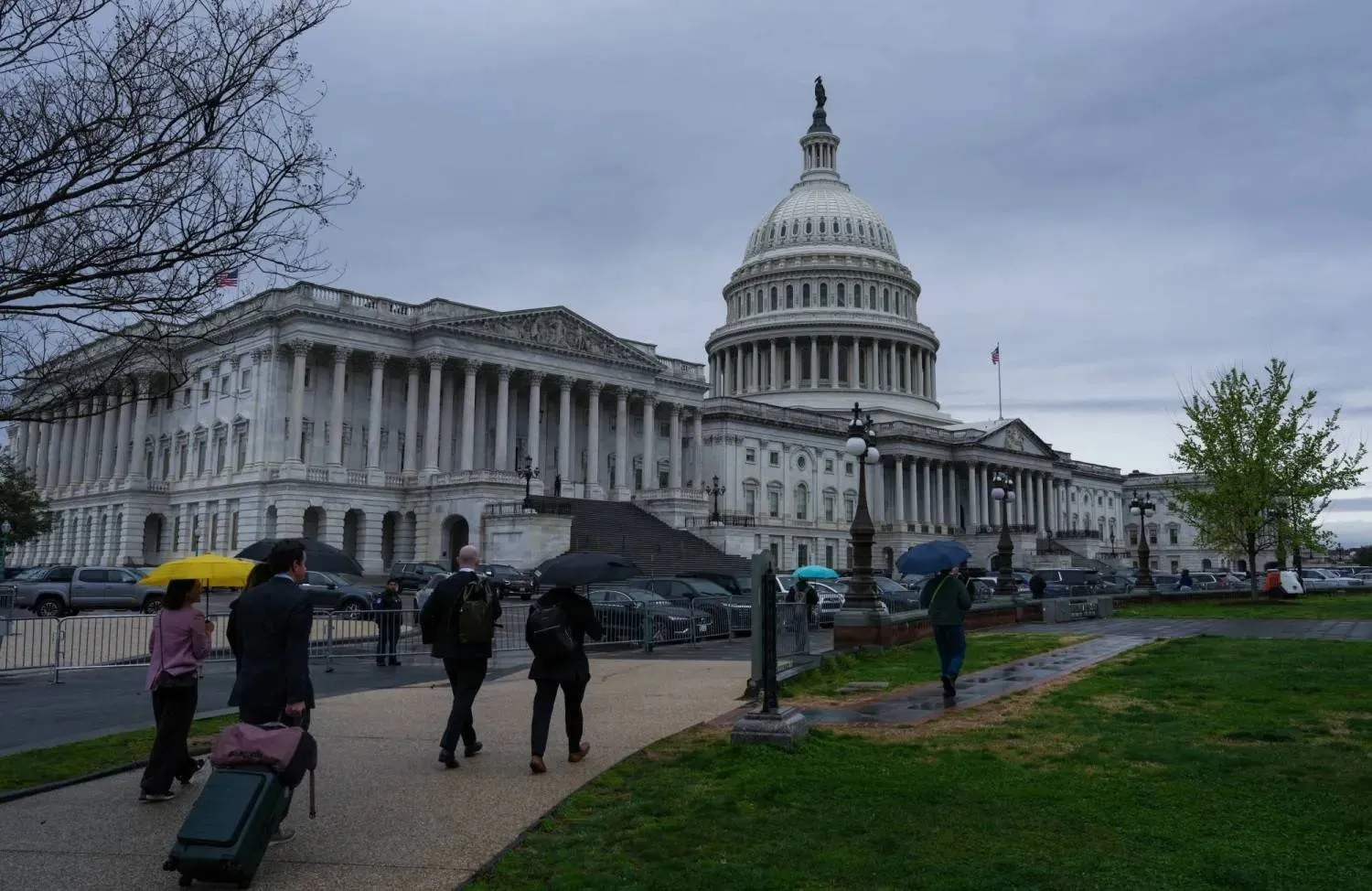
Passersby near the United States Capitol (Reuters)
TT

Washington Tightens Conditions on Lebanese Army, Unconditional Aid Ends

Passersby near the United States Capitol (Reuters)

As US-brokered direct talks between Lebanon and Israel unfold in Washington, Congress is stepping up pressure of a different kind, pushing the Lebanese army to act on pledges to disarm Hezbollah or face a freeze in annual US military aid.

Senior congressional sources told Asharq Al-Awsat that Republicans have “grown tired of hearing promises from the Lebanese army to disarm Hezbollah without seeing real effort on the ground.”

The sources, who spoke on condition of anonymity due to ongoing internal deliberations, said “the time has come for serious action,” adding that the army must prove its credibility.

They noted that funding approved by Congress comes from US taxpayers, stressing that amid heightened scrutiny of public spending under President Donald Trump, lawmakers want to ensure “every dollar is spent for a meaningful purpose.”

Pressure builds

The message is echoed by key Senate Republicans.

Senator Roger Wicker, the chairman of the Senate Armed Services Committee, issued a public call to halt US support to the Lebanese Armed Forces (LAF) unless they act to “completely” and “immediately” disarm Hezbollah.

Wicker made the statement on X after a French service member was killed in southern Lebanon. France has accused Hezbollah of killing the peacekeeper.

“Hezbollah’s killing of a French service member in southern Lebanon, only days after Israel agreed to a ceasefire, is a critical test for the Lebanese Armed Forces. Congress should not support the LAF unless it acts to disarm Hezbollah completely — and immediately,” Wicker wrote on X.

On Tuesday, Senator Jim Risch, who heads the Senate Foreign Relations Committee, made a similar call.

Risch said he agreed with Wicker, adding it was “well past time for the LAF to take tangible action to fully disarm Hezbollah and for the Lebanese government to follow through on long-promised economic reform.”

Risch said “the era of complacency and unconditional bailouts must come to an end.”

Commander under fire

In Washington, doubts are growing over Lebanese army commander Rodolphe Haykal.

Most US officials have avoided publicly calling for his removal, but Republican Senator Lindsey Graham did not. He said this week he does not trust the army to disarm Hezbollah and that Haykal should be replaced before there can be a credible plan.

Graham added that no peace deal in Lebanon will happen without a “credible path” to disarm the group.

Tensions surfaced during Haykal’s February visit to Washington, when Graham cut short a meeting after the Lebanese commander declined to label Hezbollah a terrorist organization, saying it was not so in the context of Lebanon.

"As long as this attitude persists within the Lebanese Armed Forces, I don't think we have a reliable partner in them," Graham said, echoing sentiment circulating in Congress, where lawmakers say disarming Hezbollah is the priority.

Talks seen as positive

Despite warnings about the lack of alternatives to the Lebanese army, congressional sources said aid cannot continue to be sent “blindly,” calling for strict conditions.

Lawmakers are closely watching the US-backed talks between Lebanon and Israel, describing the track as “positive” and strongly supporting the White House effort.

They acknowledge the complexity of the Lebanese file but say past approaches have failed, calling for a shift in strategy.

Wider US role

The US president’s move to return Lebanon to Washington’s strategic agenda, alongside a pledge to “make Lebanon great again,” includes tasking Secretary of State Marco Rubio, Vice President JD Vance, and Chairman of the Joint Chiefs of Staff Gen. Dan Caine with working alongside Israel and Lebanon toward “sustainable peace.”

The inclusion of Caine suggests a more active US military role.

Former US ambassador to Lebanon David Hale said one lesson Washington drew from last year is that the role of US Central Command in the monitoring group was limited, with forces confined to observation.

Speaking at a Middle East Institute event in Washington attended by Asharq Al-Awsat, he said the United States needs to go beyond monitoring, while stressing this does not mean imposing Lebanese sovereignty.

Hale noted that the Lebanese army must remain the implementing force, but Washington can be more engaged, not only through equipment and aid, but also by providing advice and more active intelligence support.

He said strong person-to-person ties between the US and Lebanese militaries could help build confidence and motivation among Lebanese personnel to carry out their duties.

Reform, sanctions in focus

Economic reform is also high on the agenda.

Congressional sources said failure to advance banking reforms creates “a major loophole” that allows Hezbollah to maintain its influence.

“We are in a vicious cycle. If Lebanon’s political class is not prepared to turn words into action, why should we continue to bail it out?” the sources said.

They added that lawmakers are watching Parliament Speaker Nabih Berri, warning that sanctions against reform obstructers remain possible.

Aid under review

As Congress sets defense spending priorities, some lawmakers are moving to translate their stance into amendments to final bills.

Since 2006, the United States has provided more than $2.5 billion in military aid to Lebanon to bolster border security, counterterrorism, and the army as a state institution.

Under Trump’s second administration, more than $117 million announced in January 2025 is aimed at helping the army maintain the ceasefire with Israel and implement UN Security Council Resolution 1701.

In October 2025, Washington approved $230 million in security assistance, including $190 million for the army and $40 million for internal security forces, following a separate $14.2 million package announced in September to boost the army’s ability to dismantle weapons stockpiles and infrastructure of non-state actors, including Iran-backed Hezbollah.



Tunisia: Ennahdha Leader Ghannouchi Handed Life Imprisonment

Tunisia's Ennahdha party chief Rached Ghannouchi after leaving court. File photo
TT

Tunisia: Ennahdha Leader Ghannouchi Handed Life Imprisonment

Tunisia's Ennahdha party chief Rached Ghannouchi after leaving court. File photo

Several officials of Tunisia's Ennahdha party, including its chief Rached Ghannouchi, were handed jail sentences on Tuesday ranging from 10 years to life in prison on terror charges.

Ghannouchi and other Ennahdha leaders were accused of establishing a "secret security apparatus" in service of the party which won the post-revolution elections in 2011.

Ghannouchi was handed 30 years in prison plus life imprisonment, Tunisian media said, with reports on the sentences confirmed by the party.

Retired military officer Kamel ben Bedoui also received a life sentence along with 32 years in prison, according to reports.

And former prime minister Ali Laarayedh was sentenced to 42 years in prison, reports added.

He has been detained since 2022 and has also been convicted in a separate case for allegedly helping send militants to Iraq and Syria.

Ghannouchi was speaker of parliament at the time of President Kais Saied's power grab in the summer of 2021.

He was arrested in 2023 and received several sentences in separate cases totaling over 40 years in prison including over "conspiracy against state security" prior to Tuesday's ruling.

Ennahdha on Tuesday said the ruling "lacked the most basic conditions for justice.”


Lebanon Launches Safety Audit of Middle East Airlines Amid Pilot Groups’ Complaints

An aerial view from the window of a Lebanese Middle East Airlines (MEA) airplane shows smoke rising, after Israeli strikes following an escalation between Hezbollah and Israel, amid the US-Israeli conflict with Iran, in the southern suburbs of Beirut, Lebanon, March 12, 2026. (Reuters)
TT

Lebanon Launches Safety Audit of Middle East Airlines Amid Pilot Groups’ Complaints

An aerial view from the window of a Lebanese Middle East Airlines (MEA) airplane shows smoke rising, after Israeli strikes following an escalation between Hezbollah and Israel, amid the US-Israeli conflict with Iran, in the southern suburbs of Beirut, Lebanon, March 12, 2026. (Reuters)

Lebanon's aviation regulator has launched a safety audit of Middle East Airlines (MEA) as pilot groups raised concerns that crews were being asked to fly close to airstrikes and penalized for reporting safety incidents, according to letters seen by Reuters.

The audit puts scrutiny on the Beirut-based flag carrier, which has kept the country connected through war and financial collapse even as many foreign airlines have avoided large parts of Middle East airspace because of missile and drone risks since the US-Israeli war against Iran began in February.

MEA, which has a fleet of around 20 planes operating in the Middle East, Europe and West Africa, has been praised at home for continuing to fly during regional conflict and helping to prop up a weak economy that is more dependent than ever on tourism and remittances from expatriates.

The airline said it has a strong and proven safety record, and that any flights during military hostilities were conducted based on risk assessments developed alongside Lebanon's government and aviation regulator, the Lebanese Civil Aviation Authority (LCAA).

But since 2024, multiple Israeli airstrikes have landed near Lebanon's largest airport, raising concerns among the International Federation of Air Line Pilots' Associations (IFALPA), a global ‌federation of pilot unions, ‌given the history of civilian aircraft being shot down in or near conflict zones.

The aviation concerns ‌have ⁠grown as Israeli ⁠strikes on Lebanon stepped up this year during a widening conflict with Iran-backed Hezbollah.

"While some may think that flying civilian aircraft and passengers in high-risk and conflict zones during war conditions is heroic, we consider this an unconscionable risk," IFALPA President Ron Hay wrote in a May 12 letter to Lebanon's central bank, which holds a majority share in MEA.

The central bank, known as the Banque du Liban, referred Reuters to MEA.

"The son of the chairman of MEA and the son of the chairman of LCAA are both captains at MEA and flew throughout the period," the airline said.

LEBANESE REGULATOR CONDUCTS SAFETY AUDIT OF MEA

LCAA head Mohammed Aziz, an air crash investigator, told IFALPA in a May 15 letter that his team would conduct an aviation safety audit on MEA and "engage in a ⁠dialogue with MEA to discuss the concerns you stated in your letter."

MEA said oversight activity conducted by ‌the LCAA on MEA from May 18 to June 1 confirmed the carrier's compliance with "regulatory ‌and operational safety requirements."

Aziz told Reuters a closing meeting with the airline was held on Monday, but the LCAA audit was still being processed, and "we were in ‌the process of mediating" between the pilots and MEA.

One MEA pilot interviewed by Reuters said aviators had a financial incentive to fly since ‌per-flight payments made up a majority of their salaries, with their base salary slashed due to a Lebanese economic collapse that began in 2019.

IFALPA, supported by other aviator groups, flagged cases where pilots reported unintentional errors for the purpose of improving safety, but faced punishment such as being sent for "training", where they lose out on the per-flight payments.

"We know definitely that pilots have spoken up and there have been actions taken against them," Hay told Reuters by phone.

MEA called IFALPA's allegations "unfounded" and said training ‌assignments were conducted in line with regulatory requirements and "should not be misconstrued as disciplinary or retaliatory measures."

PILOTS CONTACT PARTNER AIRLINES IN US, EUROPE

The safety concerns led pilot groups to contact the SkyTeam airline network ⁠alliance, which includes carriers like MEA, ⁠Air France and Delta Air Lines, to raise awareness.

Dara van Langen, chair of the SkyTeam Pilots Association, said in an interview: "If you put your passengers in the plane of a colleague airline then for sure you want to be sure the level of safety is where you want it to be."

Both the US Federal Aviation Administration (FAA) and the European Union Aviation Safety Agency (EASA) require airlines in their jurisdictions to audit foreign codeshare partners to ensure comparable safety.

Air France, which has a codeshare agreement with MEA, said it regularly audits all codeshare partners. SkyTeam and Delta, which has a less extensive interline agreement, said they were aware of pilots' concerns and were monitoring the situation, adding that safety was imperative.

MEA PAYS CIVIL AVIATION WORKERS

IFALPA said it was also concerned that MEA provided payments to LCAA workers overseeing aviation safety.

An internal spreadsheet of financial assistance for the month of November reviewed by Reuters showed that dozens of LCAA employees received payments from the airline, including three aviation safety workers.

"If the oversight of your airline is being (partly) paid by your airline," then "you don't want to speak up, do you?" IFALPA's Hay said.

MEA said it had provided financial support in coordination with Lebanon's government to ensure the country's aviation infrastructure functioned after the financial crisis caused a currency collapse. Air traffic controllers' pay was cut by more than 90% to less than $100 a month, it said.

The carrier said its support did not affect the LCAA's "independence, authority, or oversight responsibilities" and auditors and the agency's leaders, including Aziz, did not receive payments.


Syria Hopes for Terrorism Delisting to Spur Economic Recovery

01 June 2026, Syria, Deir Ezzor: A view of the war-damaged buildings in Deir Ezzor. (dpa)
TT

Syria Hopes for Terrorism Delisting to Spur Economic Recovery

01 June 2026, Syria, Deir Ezzor: A view of the war-damaged buildings in Deir Ezzor. (dpa)

The Syrian government is betting that removal from Washington’s list of state sponsors of terrorism, a designation in place since 1979, will clear the biggest political and legal hurdle to its economic recovery.

Alongside remaining sanctions, the designation has blocked any tangible gains from what was billed as a near-comprehensive lifting of international sanctions about a year ago.

Sources in Damascus said the US hesitation was tied to Israel’s opposition to lifting sanctions. Other sources pointed to a mix of regional, international and domestic factors.

In a recent phone call with US President Donald Trump, Syrian President Ahmed al-Sharaa asked for the remaining sanctions to be lifted, saying the move was essential to revive Syria’s economy, improve living conditions and attract investment.

Syria remains caught in a complex sanctions web despite limited easing in recent months. Those measures covered Sharaa himself, the interior minister, the central bank, Syrian Airlines, the ports of Latakia and Tartus, and the Syrian Petroleum Company.

Researcher and economic expert Ziad Arbash told Asharq Al-Awsat that the sanctions still in place include the Caesar Act, which has only been suspended repeatedly and temporarily for 180 days at a time, not permanently repealed, leaving investors facing uncertainty.

They also include the state sponsor of terrorism designation, as well as broad secondary sanctions, including hundreds of measures still imposed by the United States, the European Union and the United Kingdom on individuals and entities.

Other restrictions remain on technology exports, above all strict US curbs on dual-use civilian and military technologies, along with personal sanctions on fugitive former president Bashar al-Assad and his inner circle.

Arbash said removing Syria from the state sponsors of terrorism list would unlock direct US investment, which had been fully banned, help reconnect Syrian banks to the global financial system, ease bank transfers and bolster international confidence.

Washington says sanctions will continue to target people it accuses of human rights abuses, Captagon traffickers and other actors it sees as destabilizing the region.

That position comes as US policy in the Middle East rests on the view that a US-centric balance of power works best when allies are encouraged to become more self-reliant and to share burdens through their interdependence and integration with one another.

This is according to Tom Barrack’s first comments after taking up his new duties as special presidential envoy for Syria and Iraq.

But Trump’s policy may be colliding with the realities of a Syria emerging from war.

Abbas Sharifa, a researcher in international relations, said keeping Syria on the state sponsors of terrorism list raises “fundamental problems” that clash with the US view of Syria as a partner in the fight against terrorism.

He said the United States arranged its withdrawal from Syria on the basis that “the Syrian state has become capable of confronting the threat of terrorism.”

Reality also undermines the designation, he said, because “Syria today plays an important role in pursuing ISIS, has no relationship with Iranian militias and provides no support to any groups Washington considers terrorist organizations.”

Sharifa said the delay in lifting the remaining sanctions was likely tied to political positions held by some pro-Israel members of Congress.

Trump’s Syria policy, he said, has long run counter to Israel’s view, but “there appears to be Israeli pressure in some decision-making circles to obstruct this measure and link it to the signing of the security agreement with Israel, which has faltered because of Israeli intransigence.”

He ruled out Syria’s commercial and military ties with Russia as an obstacle, saying that “the US administration itself granted exemptions for the export of Russian oil.”

Across Syria, frustration has replaced the optimism that followed the partial lifting of sanctions. A year on, the economy remains far from real recovery, and the impact on daily life has been very limited, Arbash said.

He said the reasons are complex. Remaining sanctions still prevent Western banks and companies from operating freely in the Syrian market.

The United States and European countries will not move toward a full lifting of sanctions without the implementation of United Nations Security Council resolution 2254, an improved human rights record and guarantees for the safe return of refugees.

Full repeal of the Caesar Act also requires approval from the US Congress, a lengthy process with political hurdles.

“Even if sanctions were lifted completely today, the positive effects, such as investment inflows, would need months or years to appear on the ground,” Arbash said.

He also pointed to international concern that aid or investment “could fund corruption unless there are transparent mechanisms to ensure it reaches the Syrian people.”

Internal divisions are another obstacle. Some areas remain outside central government control, making it harder to apply unified economic decisions. Added to all these factors is Israeli opposition to lifting sanctions.