Lebanon-Israel Ceasefire Extended by 3 Weeks after White House Meeting

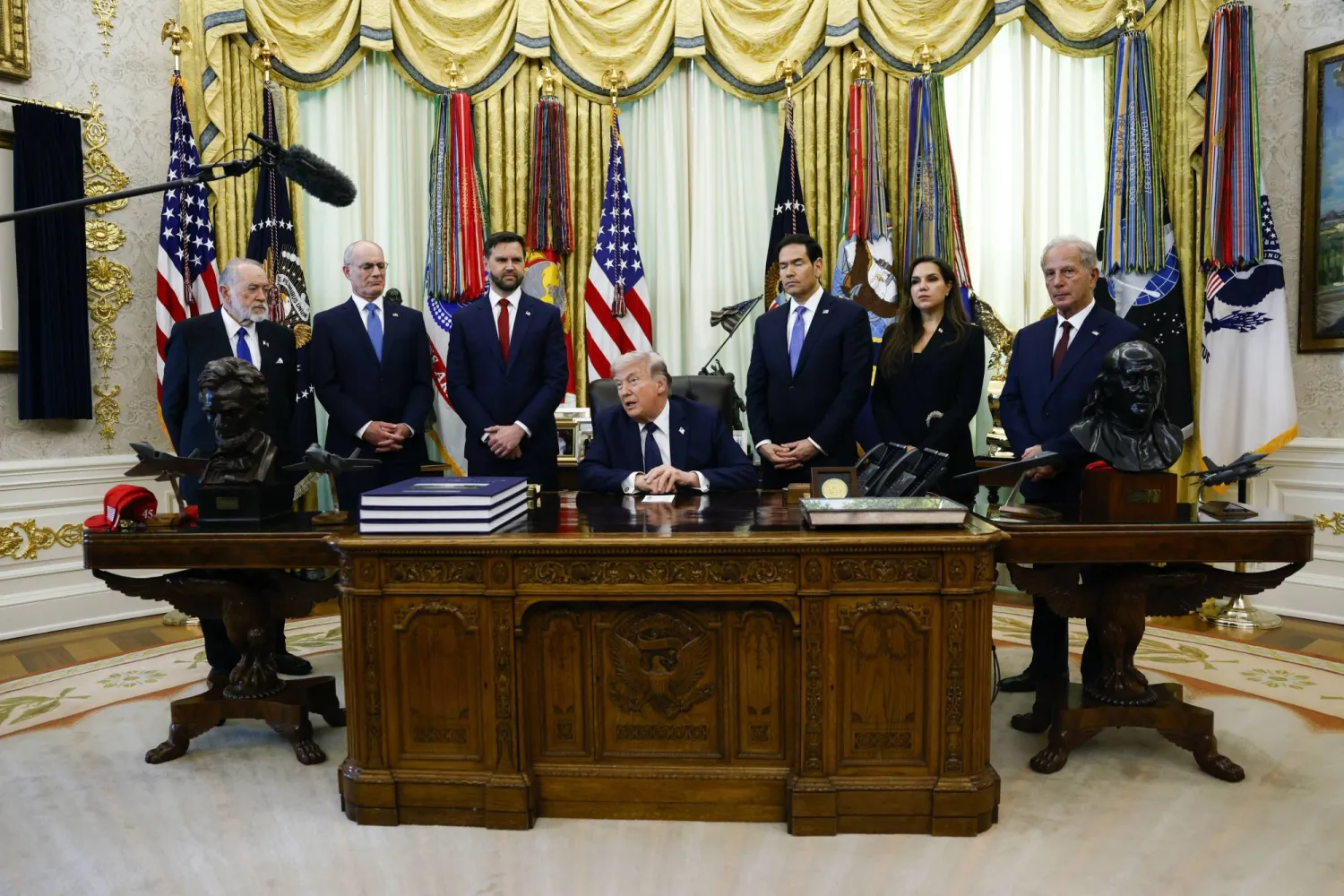
US President Donald Trump speaks to the media in the Oval Office of the White House in Washington, DC, USA, 23 April 2026. President Trump met with Lebanese and Israeli envoys at the White House for a new round of peace talks.  EPA/WILL OLIVER / POOL
US President Donald Trump speaks to the media in the Oval Office of the White House in Washington, DC, USA, 23 April 2026. President Trump met with Lebanese and Israeli envoys at the White House for a new round of peace talks. EPA/WILL OLIVER / POOL
TT

Lebanon-Israel Ceasefire Extended by 3 Weeks after White House Meeting

US President Donald Trump speaks to the media in the Oval Office of the White House in Washington, DC, USA, 23 April 2026. President Trump met with Lebanese and Israeli envoys at the White House for a new round of peace talks.  EPA/WILL OLIVER / POOL
US President Donald Trump speaks to the media in the Oval Office of the White House in Washington, DC, USA, 23 April 2026. President Trump met with Lebanese and Israeli envoys at the White House for a new round of peace talks. EPA/WILL OLIVER / POOL

Lebanon and Israel extended their ceasefire for three weeks after a high-level meeting at the White House, US President Donald Trump said on Thursday.

Trump hosted Israel's ambassador to Washington Yechiel Leiter and Lebanese ambassador to the US Nada Moawad in the Oval Office for a second round of US-facilitated talks.

"The Meeting went very well! The United States is going to work with Lebanon in order to help it protect itself from Hezbollah," Trump wrote on Truth Social.

Trump added that he looked forward to hosting Israeli Prime Minister Benjamin Netanyahu and Lebanese President Joseph Aoun in the near future.

Trump also spoke to reporters in the Oval Office alongside the participants in the meeting, saying he hoped the leaders would meet during the three-week cessation of hostilities. He said there was "a great chance" the two countries would reach a peace agreement this year.

Vice President JD Vance, Secretary of State Marco Rubio, US Ambassador to Israel Mike Huckabee and U.S. Ambassador to Lebanon Michel Issa also attended the meeting.

The ceasefire, reached after talks between the two nations' ambassadors ⁠to Washington ⁠last week, was set to expire on Sunday. It has yielded a significant reduction in violence, but attacks have continued in southern Lebanon, where Israeli troops have seized a self-declared buffer zone.

The Lebanese president said a day earlier that during the talks Moawad would ask for an end to Israeli home demolitions in villages and towns occupied by Israel after the latest war broke out on March 2.

Moawad thanked Trump for hosting the talks. "I think with your help, with your support, we can make Lebanon great again," she said.

Asked how the US would help Lebanon to fight Hezbollah, Trump did not provide details but said Washington had "a great relationship with Lebanon."

Trump said Israel had to be able to defend itself against attacks from Hezbollah.

He also called for Lebanon to abolish laws against engagement with Israel.

"Well, I'm pretty sure that that will be ended very quickly. I'll make sure of that," Trump said.


Syria Celebrates Arrest of Main Tadamon Massacre Suspect

A woman holds photos of her relatives who were killed in the Tadamon massacre during a celebration after the arrest of Amjad Youssef, the main perpetrator in the massacre, in the Tadamon neighborhood, Damascus, Syria, 24 April 2026. (EPA)
TT

Syria Celebrates Arrest of Main Tadamon Massacre Suspect

A woman holds photos of her relatives who were killed in the Tadamon massacre during a celebration after the arrest of Amjad Youssef, the main perpetrator in the massacre, in the Tadamon neighborhood, Damascus, Syria, 24 April 2026. (EPA)

For many residents of Damascus’ Tadamon district, Friday felt like a holiday.

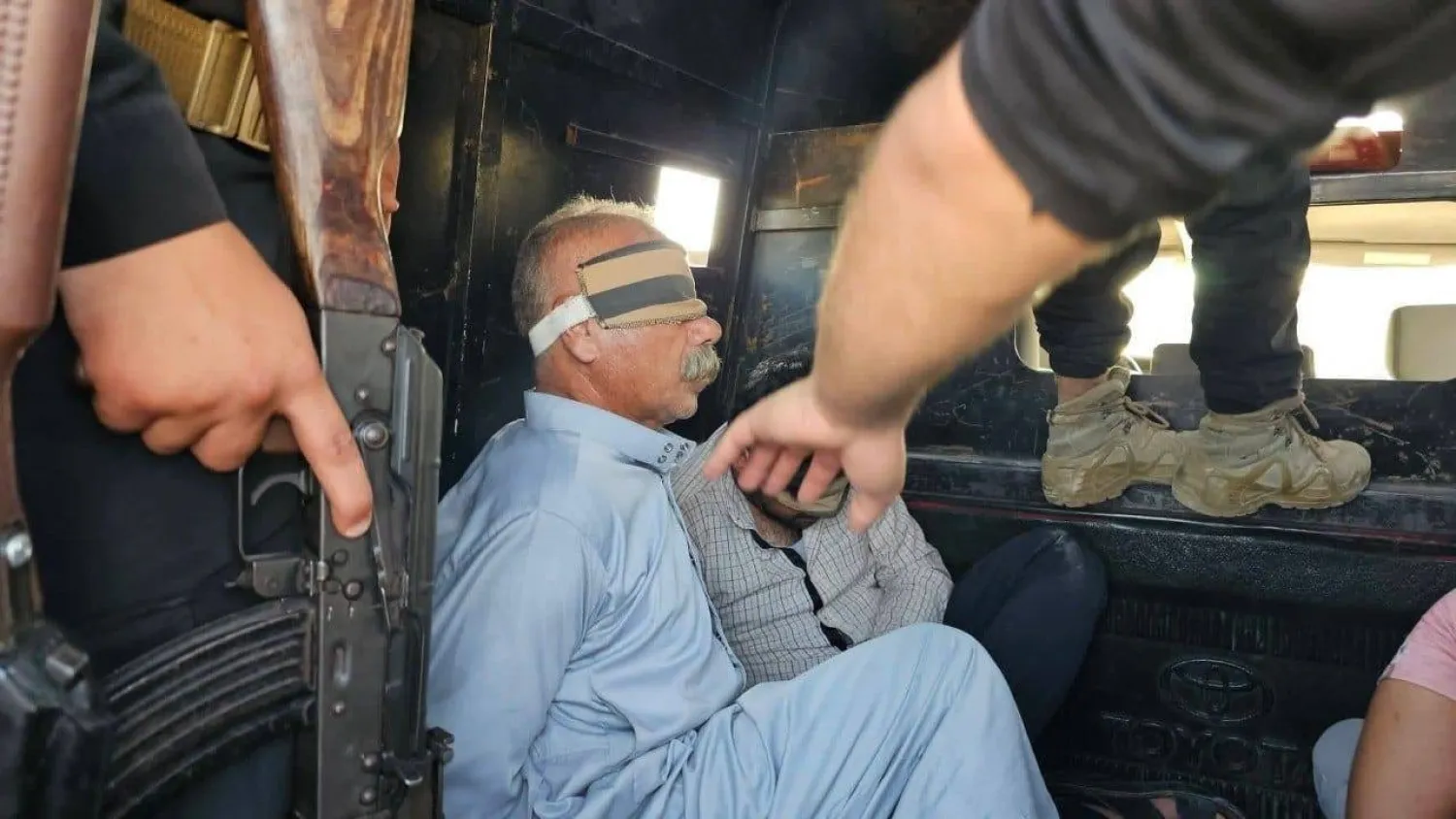
Celebratory chants rang through the streets and women handed out sweets after authorities officially announced the arrest of “Amjad Youssef,” 40, a criminal who was a former member of military intelligence under Bashar al-Assad and the main suspect in the Tadamon massacre during the early years of the uprising.

Residents of the district in southern Damascus woke up to a statement by the Interior Ministry announcing a “precise security operation” that led to Youssef’s arrest.

The ministry said he was the main suspect in the massacre in Damascus, in which dozens of innocent people were killed.

The ministry said surveillance and tracking operations had continued for several days before the raid was carried out in the Ghab region in rural Hama, adding that efforts would continue to pursue the remaining perpetrators and bring them to justice.

Justice Minister Mazhar al-Wais said Youssef’s arrest was “proof that the state is moving steadily on the path of accountability and preventing impunity.”

In a post on X, Wais said: “Justice will take its course in a way that ensures fairness for the victims and preserves their dignity.” He thanked the security forces for their efforts in pursuing those involved and bringing them to justice.

Syrian Interior Ministry spokesman Nour al-Din al-Baba said Youssef had been on the list of the most wanted suspects since the beginning of Syria’s liberation and the fall of the former regime because of the global impact of the massacre and its brutality.

A child holds a Syrian flag as residents gather in a street after Friday prayers to celebrate the arrest of Amjad Yousef, a key suspect in the 2013 Tadamon massacre, in Tadamon, Syria, April 24, 2026. (Reuters)

Baba said security agencies had made several attempts in recent months to locate and arrest Youssef, including one in September that failed. Monitoring continued until his approximate location was identified about a month ago in the village of Nabaa al-Tayeb in rural Hama.

He said Youssef had left Syria after his identity was revealed following the circulation of videos documenting the massacre, before later returning to Damascus and maintaining ties with military intelligence until liberation.

He then went into hiding, moving between several areas, including the Qardaha countryside and Ghab area.

Local media quoted Abdul Basit Abdul Latif, Chairman of the National Authority for Transitional Justice, as saying Youssef’s arrest was “a pivotal step on the road to justice. These crimes are not subject to a statute of limitations, and the rights of the victims will not be forgotten. Accountability is coming, and justice will continue until the end.”

Crowds gathered outside Al-Zubair Mosque in the center of Tadamon following the news.

After Friday prayers, worshippers chanted “God is greatest” and demanded the arrest and punishment of the remaining criminals, including Fadi Saqr, who had led the National Defense Forces militia that supported the regime’s army during the years of the uprising. Residents accuse him of involvement in the massacre.

Participants marched from the mosque toward the massacre site in the far east of the district.

Abdul Moneim Zain al-Din, the “General Coordinator of the Syrian revolution,” told Asharq Al-Awsat during the march that “there are 27 videos of the Tadamon massacre in Britain, and only one has been published,” calling for the release of the rest. He said the total number of victims was 280.

He urged the government to speed up justice for the families of those killed in the uprising.

Syrians celebrate after the arrest of Amjad Youssef, the main perpetrator in the Tadamon massacre, in the Tadamon neighborhood, Damascus, Syria, 24 April 2026. (EPA)

“We want to see the gallows of the criminals in the streets. Amjad Youssef was not alone; he had partners,” he said.

“We want the execution of Amjad Youssef, Fadi Saqr and everyone who killed the people’s sons in this square.”

The celebrations over Youssef’s arrest extended to other provinces. Local media said celebrations were held in Homs in central Syria and in the Akyoul neighborhood of Aleppo in the north.

With Youssef’s arrest, the number of suspects accused of carrying out the Tadamon massacre has reached seven, according to local media.

The Guardian revealed details of the massacre in an investigation published on April 27, 2022. It said Assad forces carried out the massacre on April 16, 2013, in Tadamon, killing about 41 people and burying them in a mass grave.

The investigation showed footage of a non-commissioned officer named Amjad Youssef from the military intelligence pushing dozens of blindfolded people into a large, deep pit before shooting them after they fell inside and then burning their bodies.

The massacre is considered one of the most horrific documented acts of violence attributed to the Assad regime during the civil war that began in 2011 and lasted 14 years.

After Syria was liberated from the former regime, Asharq Al-Awsat made several field visits to the area and found that the Tadamon massacre was not the only massacre committed in the district. It identified several other sites where other massacres or executions had taken place, as indicated by the discovery of human bones.


Shaken by Iran War, EU Seeks Larger Voice on Middle East

 Attendees pose for a family photo during a summit of the European Union and regional partners' leaders in Nicosia, Cyprus, April 24, 2026. (Reuters)
Attendees pose for a family photo during a summit of the European Union and regional partners' leaders in Nicosia, Cyprus, April 24, 2026. (Reuters)
TT

Shaken by Iran War, EU Seeks Larger Voice on Middle East

 Attendees pose for a family photo during a summit of the European Union and regional partners' leaders in Nicosia, Cyprus, April 24, 2026. (Reuters)
Attendees pose for a family photo during a summit of the European Union and regional partners' leaders in Nicosia, Cyprus, April 24, 2026. (Reuters)

EU leaders vowed to boost security and economic ties with Middle East partners and push for a diplomatic end to the Iran war, after talks in Cyprus focusing on the fallout from the conflict.

Leaders from Lebanon, Egypt, Syria and Jordan as well as the secretary general of the Gulf Cooperation Council, were in Nicosia to meet their European Union counterparts on the sidelines of an EU summit.

"The current situation clearly underscores how closely Europe's security is linked with that of the Middle East, and how vital our cooperation on security and defense has become," European Council president Antonio Costa told a press conference after the talks.

US-Israeli strikes on Iran and Tehran's retaliation, including the direct targeting of US allies in the Gulf, have rattled the global economy, with the effective closure of the Strait of Hormuz sending oil prices soaring and crimping supply of jet fuel in Europe.

"The Strait of Hormuz must immediately reopen without restrictions and without tolling, in full respect of international law and the principle of freedom of navigation. This is vital for the entire world," Costa said.

"Diplomacy is the only sustainable way forwards, and European Union is ready to contribute to all ongoing efforts," he added.

The meeting came after Trump indefinitely extended the ceasefire with Iran this week, but push for fresh peace talks in Pakistan has stalled in recent days.

An extension of a shaky truce between Israel and Lebanon has also been agreed on -- but European Commission chief Ursula von der Leyen said that was "not enough", calling for a permanent settlement.

"You cannot have stability in the Middle East or the Gulf while Lebanon is in flames," she said. "A temporary pause is not enough".

The EU has largely remained on the sidelines in the Middle East war despite US President Donald Trump lashing out at what he says is Europe's lack of support for Washington's efforts to contain Iran.

French President Emmanuel Macron told reporters that "Europe must do even more" to help end the crisis.

"It is in everyone's interest for stability to return as soon as possible and for the world's economies to be reassured," Macron said, in stark contrast to Trump who said the United States had "all the time in the World".

European Commission President Ursula von der Leyen said works was under way to boost economic, trade and political ties with Jordan, Egypt, Syria, and Gulf nations and proposed the partnership broadens to defense matters.

"We could consider expanding the scope of missions like Operation Aspides evolving from mere protection to a sophisticated joint maritime coordination," she said without providing further details.

Aspides is the EU's naval mission in the Red Sea, launched in 2024 to prevent attacks on trade vessels by Iran-backed Houthi rebel forces.

"The threat of mass proliferation of drones and missiles is sadly a shared reality. We should set up a structural cooperation of scaling up defense production," von der Leyen added.


Israel PM Says Hezbollah Trying to ‘Sabotage’ Peace Efforts with Lebanon

 Israel's Prime Minister Benjamin Netanyahu attends a ceremony commemorating Israel's Remembrance Day for fallen soldiers, or Yom HaZikaron, at the Military Cemetery on Mount Herzl in Jerusalem, Tuesday April 21, 2026. (Ilia Yefimovich/Pool Photo via AP)
Israel's Prime Minister Benjamin Netanyahu attends a ceremony commemorating Israel's Remembrance Day for fallen soldiers, or Yom HaZikaron, at the Military Cemetery on Mount Herzl in Jerusalem, Tuesday April 21, 2026. (Ilia Yefimovich/Pool Photo via AP)
TT

Israel PM Says Hezbollah Trying to ‘Sabotage’ Peace Efforts with Lebanon

 Israel's Prime Minister Benjamin Netanyahu attends a ceremony commemorating Israel's Remembrance Day for fallen soldiers, or Yom HaZikaron, at the Military Cemetery on Mount Herzl in Jerusalem, Tuesday April 21, 2026. (Ilia Yefimovich/Pool Photo via AP)
Israel's Prime Minister Benjamin Netanyahu attends a ceremony commemorating Israel's Remembrance Day for fallen soldiers, or Yom HaZikaron, at the Military Cemetery on Mount Herzl in Jerusalem, Tuesday April 21, 2026. (Ilia Yefimovich/Pool Photo via AP)

Israeli Prime Minister Benjamin Netanyahu accused Hezbollah on Friday of trying to "sabotage" efforts to reach a peace agreement with Lebanon.

"We have started a process to reach a historic peace between Israel and Lebanon, and it's clear to us that Hezbollah is trying to sabotage this," he said in his first remarks after a ceasefire with Lebanon was extended.

The comments came as the Israeli military said it struck Hezbollah targets in a south Lebanon village in response to a "ceasefire violation", after earlier warning residents to evacuate the community.

"A short while ago, the army struck military structures in the area of Deir Aames, from which rockets were launched toward the town of Shtula in Israel yesterday," it said.

"The structures that were targeted were used by the Hezbollah terrorist organization to advance terrorist activities against soldiers and the State of Israel," it added.

The military's Arabic-language spokesman, Avichay Adraee, had earlier warned residents of Deir Aames to "evacuate your homes immediately and move at least 1,000 meters outside the area".

"Due to Hezbollah's terrorist activity, the army is conducting targeted operations in the area," he said on X.

Deir Aames is located north of the so-called "Yellow Line" in Lebanon, behind which Israeli forces are operating despite the ceasefire.

On Iran, Netanyahu said he "had an excellent conversation" with US President Donald Trump, without specifying when the pair spoke.

"He is putting very strong pressure on Iran, both economically and militarily. We are working in full cooperation," he added.