Crunch Nuclear Proliferation Meeting at UN Amid Raging Global Wars

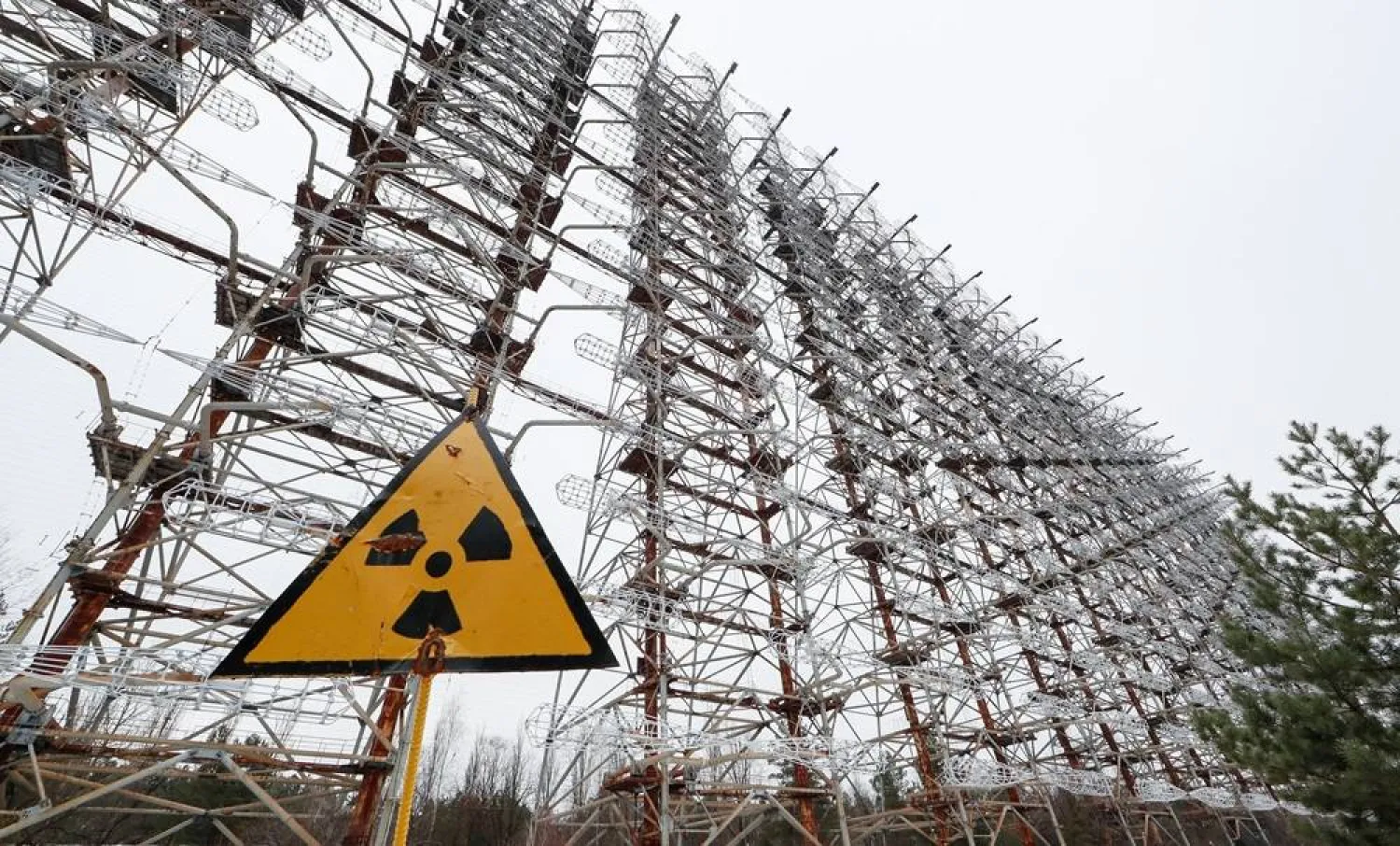
The general view of the remains of the over-the-horizon radar system "Duga" not far from city of Chernobyl, Ukraine, 22 November 2018. (EPA)
TT

Crunch Nuclear Proliferation Meeting at UN Amid Raging Global Wars

The general view of the remains of the over-the-horizon radar system "Duga" not far from city of Chernobyl, Ukraine, 22 November 2018. (EPA)

Signatories of the landmark nuclear non-proliferation treaty will meet at the UN from Monday as hopes fade they can reach agreement and tensions soar between the atomic powers.

In 2022, during the last review of the treaty that is considered the cornerstone of non-proliferation, UN Secretary-General Antonio Guterres warned humanity was "one misunderstanding, one miscalculation away from nuclear annihilation."

The situation has only worsened since then.

"I think there is a shared, if you will, sense of crisis by all states parties," said Izumi Nakamitsu, the UN High Representative for Disarmament Affairs.

"We don't have any bilateral arms control agreements between the two largest nuclear weapon states," she said referring to the February expiration of the New Start treaty between Moscow and Washington.

"We are also beginning to see quantitative increase of nuclear capabilities in all nuclear weapon states."

Nakamitsu said that mounting geopolitical tensions had halted the post-Cold War trend of disarmament.

The nuclear non-proliferation treaty (NPT), signed by almost all the countries on the planet -- with notable exceptions like Israel, India, and Pakistan -- aims to prevent the spread of nuclear weapons, to promote complete disarmament, and to encourage cooperation on civilian nuclear projects.

The nine nuclear-armed states -- Russia, the United States, France, the United Kingdom, China, India, Pakistan, Israel, and North Korea -- possessed 12,241 nuclear warheads in January 2025, according to the latest report by the Stockholm International Peace Research Institute (SIPRI).

The United States and Russia hold nearly 90 percent of nuclear weapons globally and have carried out major programs to modernize them in recent years, according to SIPRI.

China has also rapidly increased its nuclear stockpile, SIPRI said, with the G7 raising the alarm Friday over Moscow and Beijing boosting their nuclear capabilities.

US President Donald Trump has indicated his intention to conduct new nuclear tests because "other countries are doing it too."

In March, France's President Emmanuel Macron announced a dramatic shift in nuclear deterrence, notably an increase in the atomic arsenal, currently numbering 290 warheads.

- NPT could 'unravel' -

"It is obvious that trust is eroding, both inside and outside the NPT," Seth Sheldon of the International Campaign to Abolish Nuclear Weapons (ICAN), a Nobel Peace Prize laureate, told AFP.

He questioned the likely outcome of the four-week summit.

Decisions on the NPT have to be agreed by consensus, with the previous two conferences failing to adopt final political declarations.

In 2015, the deadlock was largely due to opposition by Israel's arch-ally Washington to the creation of a nuclear-weapon-free zone in the Middle East.

In 2022, the impasse was due mainly to Russian opposition to references to Ukraine's nuclear power plant at Zaporizhzhia, occupied by Moscow.

This year's summit could fall on any number of stumbling blocks.

The ongoing war in Ukraine, Iran's nuclear program and the war there, non-nuclear states' fears over proliferation and North Korea's developing arsenal could all be deal-breakers.

If there is a third consecutive failure, the treaty "might not implode overnight" said Christopher King, the conference's secretary-general.

But there is a risk "it will, over time, unravel."

Artificial intelligence could be a prominent issue as some countries call for all sides to keep human control over nuclear weapons.


Israeli Defense Minister Says No Need for Opposition Approval to Launch Strikes

25 June 2024, Jerusalem: Israeli Defense Minister Israel Katz is pictured in Jerusalem. (dpa)
TT

Israeli Defense Minister Says No Need for Opposition Approval to Launch Strikes

25 June 2024, Jerusalem: Israeli Defense Minister Israel Katz is pictured in Jerusalem. (dpa)

Israel's defense minister said Thursday that caretaker Prime Minister Benjamin Netanyahu did not need opposition permission to order fresh military operations despite election setbacks, after threats to strike Iran.

"We do not need approval from the opposition or any legal authority" for the army to carry out strikes in any of the arenas where it operates, caretaker Defense Minister Israel Katz wrote on X.

Gadi Eisenkot, who has been tasked with forming a new government, met for two hours on Thursday with Netanyahu after saying earlier he had not been properly consulted.

In a brief joint statement, the two men said that Netanyahu and his military aide had briefed Eisenkot "on the security and diplomatic challenges currently facing the State of Israel" and that the two agreed to stay in touch.

Eisenkot had earlier called on Netanyahu to show restraint, warning that the use of force without a "direct and immediate threat" could have "disastrous consequences for Israeli democracy and for citizens' trust".

Netanyahu repeatedly threatened to resume the Iran war on the campaign trail for elections last month, warning of threats and even posting an image of a nuclear bomb destroying Tel Aviv.

Katz said on Thursday that the outgoing coalition had "demonstrated resolve and sound judgement in dealing with Iran, in full coordination with the Israeli army -- and that will remain the case now, as circumstances require".

- Warning on lack of authority -

Avigdor Liberman, a key member of Eisenkot's political bloc who has been named head of a parliamentary committee on foreign and defense affairs, also criticized Netanyahu on Thursday.

"I warn you: a caretaker government is not allowed to make decisions that could drag Israel into war without parliamentary oversight and without the full consent of all security agencies," said Liberman, a hawkish former aide to Netanyahu who has become a strident critic.

Neither Liberman nor Eisenkot mentioned Iran directly.

Netanyahu's office has hit back, saying on Wednesday that Eisenkot, a former military chief, was politicizing national security.

Since last year Netanyahu has twice ordered major bombing campaigns against Iran in partnership with US President Donald Trump.

Both leaders said afterwards that they had severely set back Iran's efforts to build nuclear weapons, which the clerical state denies pursuing.

Trump has allied himself with Netanyahu but in recent days has said the focus is on diplomacy, after he also suffered a setback in elections, partly due to the war.

Eisenkot has until December 6 to form a government, although President Isaac Herzog can give him an extension until December 20.

Both Eisenkot's broad left-to-right coalition and Netanyahu's bloc of hard-right and religious parties fell short of a majority in Israel's October polls.

Eisenkot is exploring options to form a government, with Liberman demanding he not work with Israeli-Arab lawmakers, whose numbers soared in the elections on the back of anger over Netanyahu.


US Lawmakers Summon Nvidia Ex-CEO After Affair with Suspected Spy

People walk past a television broadcast showing stock indexes and Nvidia CEO Jensen Huang in Taipei, Taiwan, 13 November 2026. (EPA)
TT

US Lawmakers Summon Nvidia Ex-CEO After Affair with Suspected Spy

People walk past a television broadcast showing stock indexes and Nvidia CEO Jensen Huang in Taipei, Taiwan, 13 November 2026. (EPA)

US lawmakers have called Jensen Huang, an architect of the artificial intelligence boom, to face their questions in December after the Nvidia ex-CEO quit over extramarital affairs, including one with a suspected Chinese spy.

The scandal has wiped almost half a trillion dollars off Nvidia's market valuation, as it raises national security fears and leaves the AI industry in uncharted waters.

"Recent reports raise serious concerns about our national security and the protection of sensitive US technology," Republican Senator Tim Scott wrote Thursday on X.

Scott said he was requesting Huang and Commerce Secretary Howard Lutnick to testify in December before the Senate Banking Committee, which he chairs.

It joins a call for a closed-door interview with the leather-jacketed, 63-year-old Huang on December 1 by three House of Representatives committees, on threat of subpoena.

Huang, who has been married to his wife Lori for over 40 years, admitted Sunday to an affair, reportedly with Alice Huang, a former senior executive at Singapore-based data center company Megaspeed. The two are not related.

US intelligence reportedly circulated a memo this spring alleging she was an asset of China's Ministry of State Security. Beijing has rejected the allegations.

On Wednesday, The New York Times reported a second affair, citing video of Huang being affectionate with Nvidia's vice president of health care, Kimberly Powell.

While Nvidia's board searches for a permanent successor to Huang, who spent 33 years at the helm of the firm he co-founded, chief Financial Officer Colette Kress will serve as interim CEO.

Nvidia hit gold when the launch of OpenAI's ChatGPT in 2022 sparked a global rush to develop AI, with its processors -- once designed for video game graphics -- becoming a crucial ingredient to train and run the technology.

- Informal Trump adviser -

Nvidia did not give a reason for the departure of Huang, who also gave up his board seat.

Huang is Nvidia's largest individual shareholder, with a stake of about 3.6 percent, according to the company.

The Taiwanese-born businessman was a close informal adviser to President Donald Trump on AI, and had spent years lobbying against curbs on sales of advanced AI chips to China for national security reasons.

Dan Ives of investment bank Yorkville Ives called it "a dark day for Nvidia and the US tech industry".

But he said the board had done what it needed: "rip off the band-aid and take Nvidia into its next chapter without him."

The board named Harvey Jones, a former chief executive of chip design software firm Synopsys, as chair, and said it expected the company's operations and product roadmap "to continue without interruption."

Interim CEO Kress joined Nvidia in 2013 after nearly 25 years at companies including Cisco and Microsoft.

Trump, who had stood by Huang throughout the scandal, said former Apple boss Tim Cook should take over.

"A Legend replaces a Legend!" Trump said on his Truth Social network, adding that Cook had made Apple "one of the great companies of the world at a fairly short range".

- 'Going through hell' -

Singapore said Thursday it had barred Alice Huang, a Chinese national, from re-entering the country in February for giving investigators inaccurate information about her role at Megaspeed, though she was not investigated for espionage.

Nvidia's board opened a probe on Sunday into reporting that Huang had been the target of a "foreign intelligence effort," while saying it retained confidence in him.

When asked Thursday if Jensen should have stepped down, Trump said it would depend.

"If the woman was a spy, yes. If the woman was not a spy, perhaps it would be different," Trump said in an interview.

But Trump said he was confident that Huang will "end up on his feet," adding: "I spoke to him yesterday. He's going through hell. What he feels most badly about is his wife and family."

At the heart of the spy allegations is the race between the United States and China for supremacy in an industry widely seen as the next industrial revolution.

Key US lawmakers, including Senate Democratic leader Chuck Schumer, called Thursday for answers on what the Trump administration knew about Huang's ties to a suspected Chinese spy, days before Trump travels to China for a summit.

Reports allege the Commerce Department under Secretary Howard Lutnick may have failed to act on suspicions that Megaspeed was helping reroute restricted Nvidia technology to China.

Singapore's home ministry said it had repeatedly sought information from the US Justice Department and FBI on a US server supplier during its Megaspeed probe, but "received limited information or assistance."

On Thursday, Malaysia also said Friday it was investigating a subsidiary of Megaspeed International over the possible diversion of advanced AI chips to other countries.


Indigenous Rights in Australia ‘Embarrassing’, Says UN Envoy

Albert K. Barume, UN Special Rapporteur on the rights of Indigenous Peoples, speaks during a press conference in Sydney on November 13, 2026. (AFP)
TT

Indigenous Rights in Australia ‘Embarrassing’, Says UN Envoy

Albert K. Barume, UN Special Rapporteur on the rights of Indigenous Peoples, speaks during a press conference in Sydney on November 13, 2026. (AFP)

Cases of Indigenous women shackled while giving birth and growing numbers of children in detention are "embarrassing" to Australia, the UN's special rapporteur on Indigenous rights said on Friday.

UN Special Rapporteur Albert Barume said he visited Australia because he saw Prime Minister Anthony Albanese's attempt to recognise First Nations people in the constitution as a sign of progress, despite a national referendum failing to pass in 2023.

Barume ended his two-week visit on Friday with a bleak message that Indigenous people's rights are "unsafe" in Australia because they are controlled by states and territories, not the national government.

"The state of protection of Indigenous people's rights is a bit embarrassing. I heard the story of women giving birth shackled -- I couldn't believe it," he told a news conference in Sydney.

Rights groups say the practice used for some women prisoners disproportionately impacts Indigenous women who experience higher rates of incarceration.

An Indigenous lawmaker sought to introduce a bill to stop the practice in the federal parliament in August.

Australia's international reputation was at stake, Barume said, after he was denied access to youth detention centres in Queensland state and the Northern Territory, which have the highest rates of Indigenous youth incarceration.

Officials in these states also refused to meet him.

"If you cannot be subjected to international scrutiny, you should not be in charge of human rights," he said.

The national government should be "the sole and only duty bearer for human rights", he added.

Over 90 percent of children in detention in Queensland and the Northern Territory are Indigenous, government data shows.

Indigenous Australians make up 6.6 percent of the youth population, but 60 percent of children aged 10 to 17 in detention nationally.

Among incarcerated children aged 10 to 13 years, 79 percent are Indigenous.

Barume said Australia should establish a national minimum age of criminal responsibility of 14 years and invest in programs to prevent crime instead of jailing "huge numbers" of children.

"First Peoples' children require culturally appropriate care, protection, education, family and community support -- not criminalisation," he said.

The failure of a national referendum on Indigenous recognition three years ago had "opened a floodgate of racism" he said, urging Albanese's government "not to abandon the idea".

The office of Australia's Indigenous minister did not respond to a request for comment.