
Jeddah Summit Highlights Saudi Push for Gulf Coordination

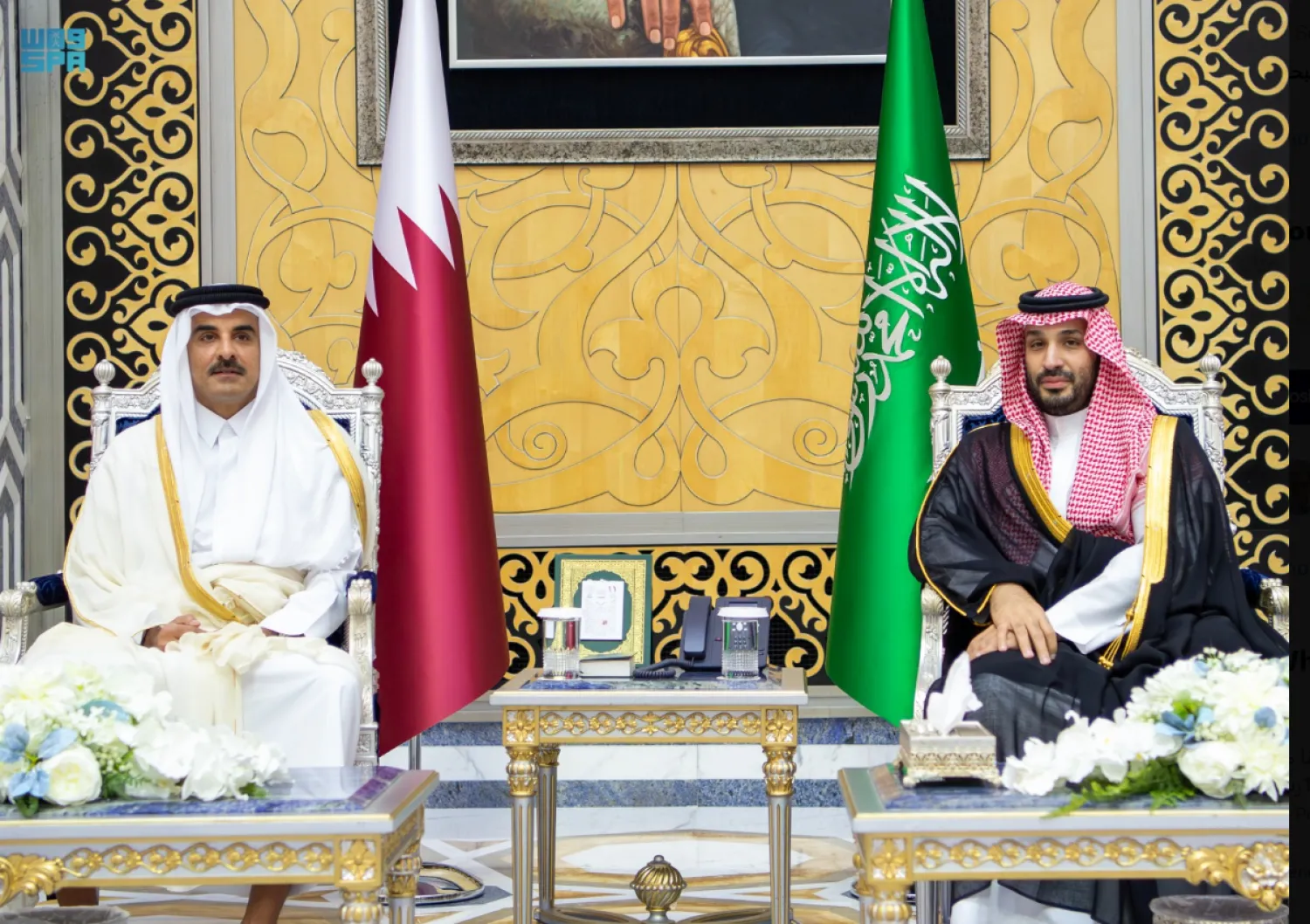
Prince Mohammed bin Salman, Saudi Crown Prince and Prime Minister, holds talks with Emir of Qatar Sheikh Tamim bin Hamad Al Thani in Jeddah on Tuesday. (SPA)
TT

Jeddah Summit Highlights Saudi Push for Gulf Coordination

Prince Mohammed bin Salman, Saudi Crown Prince and Prime Minister, holds talks with Emir of Qatar Sheikh Tamim bin Hamad Al Thani in Jeddah on Tuesday. (SPA)

Observers said Saudi Arabia’s hosting of a consultative meeting of the Gulf Cooperation Council (GCC) in Jeddah on Tuesday underscores a push by Prince Mohammed bin Salman, Saudi Crown Prince and Prime Minister, to bolster joint Gulf work, contain the fallout of the current security and economic crisis, and ensure that solutions to the conflict ensure the interests of the GCC.

Recent developments and their unprecedented repercussions have exposed a major shift in the regional security order, underscoring the need for stronger Gulf cooperation and a more integrated crisis-response strategy.

Containing fallout

Informed sources said Saudi Arabia, alongside fellow Gulf states, has led diplomatic efforts to avoid escalation in the region.

GCC countries have repeatedly stressed their territories will not be used to launch attacks against Iran, seeking to prevent a wider conflict and its economic and security consequences.

Despite this, Iran and allied militias have expanded the conflict through unjustified attacks on GCC states.

Political analyst Munif Al-Harbi told Asharq Al-Awsat that Saudi Arabia has condemned Iranian attacks targeting the Kingdom, GCC states, and several Arab and Islamic countries, warning of escalation, breaches of international law, and threats to regional stability.

He said Riyadh considers GCC security indivisible, with any attack on one member treated as an attack on all, underscoring the need to protect shared interests.

Al-Harbi said the crisis has reinforced the urgency of deeper Gulf integration and stronger defense coordination. He said GCC states have shown a strong ability to intercept most missile and drone attacks, reflecting the resilience of their defense systems.

He added that economic and logistical coordination has also intensified, with Saudi Arabia helping stabilize global markets by maintaining oil exports.

Fragile ceasefire

Political analyst Khaled Al-Habbas agreed, saying the summit came at a sensitive moment shaped by stalled negotiations and a fragile ceasefire.

He underscored the consistent GCC stance since the start of the war, including support for the Pakistani mediation and efforts to ensure a Gulf voice at the negotiating table, even without direct participation, given the damage Gulf states have sustained from the Iranian attacks, including the closure of the Strait of Hormuz.

Al-Habbas said the summit is expected to reaffirm Gulf unity, condemn Iranian attacks, and back ongoing mediation efforts.

He said it would likely stress reopening the Strait of Hormuz in line with international law, reject any unilateral Iranian arrangements, and highlight risks linked to Iran’s nuclear and missile programs and its regional proxies, as well as continued attacks on some Gulf states even after the ceasefire.

Both analysts said the summit will stress tighter coordination across defense, logistics, and supply chains, which they said has helped limit the war’s impact on GCC states.

The summit is also expected to back regional and international efforts toward a political settlement addressing all aspects of the conflict and Gulf concerns over Iran’s conduct.

Any deal reached must reflect those concerns and be backed by firm international guarantees.


Saudi Aid to Refugees and Displaced People Worldwide Approaches $24 Billion

Projects implemented by the King Salman Humanitarian Aid and Relief Center have benefited 113 countries worldwide (SPA). 
TT

Saudi Aid to Refugees and Displaced People Worldwide Approaches $24 Billion

Projects implemented by the King Salman Humanitarian Aid and Relief Center have benefited 113 countries worldwide (SPA). 

Saudi Arabia’s support for refugees, displaced persons, and temporary residents around the world has reached unprecedented levels, according to newly released figures that highlight the Kingdom’s expanding humanitarian role.

The assistance reflects Saudi Arabia’s commitment to supporting vulnerable populations, rooted in its humanitarian values and dedication to preserving human dignity wherever it is threatened.

The figures were released as the King Salman Humanitarian Aid and Relief Center (KSrelief) announced Sunday the establishment of a new camp for displaced Palestinians north of Khan Younis in the southern Gaza Strip.

The facility is intended to provide safe shelter for families who have lost their homes amid the ongoing humanitarian crisis and is part of the Saudi public fundraising campaign to assist the Palestinian people in Gaza.

Coinciding with World Refugee Day, the data show that Saudi Arabia has provided more than $23.7 billion in humanitarian assistance to refugees, displaced persons, and temporary residents, both within the Kingdom and through relief, humanitarian, and development programs implemented across the globe.

The total reinforces Saudi Arabia’s standing as one of the world’s largest humanitarian donors.

Support for Refugees Living in Saudi Arabia

According to the data, refugees account for approximately 5.5 percent of Saudi Arabia’s population. The Kingdom has devoted considerable attention to those residing within its borders by providing free healthcare and education, facilitating access to employment opportunities, and promoting their integration into society across all regions of the country.

By 2026, assistance provided to visitors and refugees from Yemen, Syria, the Rohingya minority, and Sudan had exceeded $20.43 billion.

International Relief Efforts

Internationally, KSrelief continues to implement relief programs designed to ensure aid reaches those most in need. Its efforts include establishing and equipping refugee camps, operating mobile medical clinics, distributing food baskets and shelter supplies, and implementing water and sanitation projects.

Syria topped the list of beneficiary countries, receiving 254 KSrelief projects valued at $290 million. These included the management and operation of KSrelief clinics in Jordan’s Zaatari Refugee Camp at a cost exceeding $2 million; the distribution of winter clothing vouchers in Lebanon under the Kanaf program, valued at $700,000; and the distribution of more than six million loaves of bread through the Al-Amal Charitable Bakery at a cost of more than $3 million.

In Yemen, KSrelief implemented 49 humanitarian projects worth more than $145 million. The initiatives included the operation and maintenance of the Saudi Village for Yemeni Refugees in Obock, Djibouti, as well as the operation of medical clinics providing primary and emergency healthcare services and early-stage medical intervention.

In Palestine, the center carried out 41 projects valued at more than $17 million, focusing on strengthening food and agricultural security, supplying essential inputs for bread production, and distributing vouchers for basic food commodities.

Joint Programs with International Organizations

As part of broader efforts to support refugees and displaced populations, KSrelief has signed joint implementation agreements with the United Nations High Commissioner for Refugees (UNHCR) and other international organizations.

Among these initiatives is a program to strengthen protection services for displaced and refugee families in Yemen, benefiting 44,722 individuals at a cost exceeding $3 million.

The center has also funded an emergency relief program for people affected by the humanitarian crisis in Ukraine. The initiative serves more than 23,000 beneficiaries and aims to improve living conditions while reducing the risks associated with harsh winter weather.

In Burkina Faso, KSrelief launched a separate project to procure and distribute 3,400 shelter kits to the most vulnerable families, benefiting approximately 17,000 people.

Since its establishment in 2015, the King Salman Humanitarian Aid and Relief Center has implemented 4,394 projects in 113 countries, with a total value exceeding $8 billion.


Saudi Foreign Minister Meets Counterparts from Sudan, Algeria, Syria, and Mauritania

Saudi Foreign Minister Prince Faisal bin Farhan (Asharq Al-Awsat)
TT

Saudi Foreign Minister Meets Counterparts from Sudan, Algeria, Syria, and Mauritania

Saudi Foreign Minister Prince Faisal bin Farhan (Asharq Al-Awsat)

Saudi Minister of Foreign Affairs Prince Faisal bin Farhan bin Abdullah on Monday held separate meetings in Amman with his counterparts from Sudan, Algeria, Mauritania, and Syria on the sidelines of the 165th Ordinary Session of the Council of the League of Arab States at the ministerial level, the Saudi Press Agency reported Tuesday.

During his meeting with Sudan’s FM, Mohieldin Salem Ahmed Ibrahim, the two officials discussed regional developments and exchanged views on issues of mutual interest.

The Saudi minister and his Algerian counterpart, Ahmed Attaf, reviewed bilateral relations and discussed regional developments and efforts underway to address them.

With the Foreign Minister of Mauritania, Dr. Mohamed Salem Ould Merzoug, bin Farhan reviewed bilateral relations between the two countries and discussed several issues of mutual interest.

The Saudi minister also discussed bilateral ties with Syrian Minister of Foreign Affairs and Expatriates Asaad al-Shaibani, as well as regional developments and efforts underway to address them.


Gulf FMs Discuss Efforts to Consolidate Regional Security

Gulf foreign ministers and GCC Secretary General Jasem Albudaiwi are seen in Amman on Monday. (GCC)
TT

Gulf FMs Discuss Efforts to Consolidate Regional Security

Gulf foreign ministers and GCC Secretary General Jasem Albudaiwi are seen in Amman on Monday. (GCC)

The Gulf Cooperation Council Ministerial Coordination meeting discussed in Amman on Monday the latest regional and international efforts to consolidate security and stability in the region.

GCC Secretary General Jasem Albudaiwi said the meeting, attended by Gulf foreign ministers, welcomed the signing of the Memorandum of Understanding between the United States and Iran.

“It underscored the support for mediation and de-escalation efforts, expressing hope that this signing would pave the way toward a final and comprehensive agreement that bolsters security and stability regionally and globally,” he added.

The Ministerial Coordination meeting was held on the sidelines of the Council of the League of Arab States at the Ministerial Level in its resumed 165th ordinary session.

Saudi Foreign Minister Prince Faisal bin Farhan bin Abduallah had arrived in Amman earlier to attend the meetings.

He held a series of bilateral meetings to discuss relations and exchange views on regional and international developments of common interest.