


Over 1.2 mn People in Lebanon to Face Acute Hunger due to War

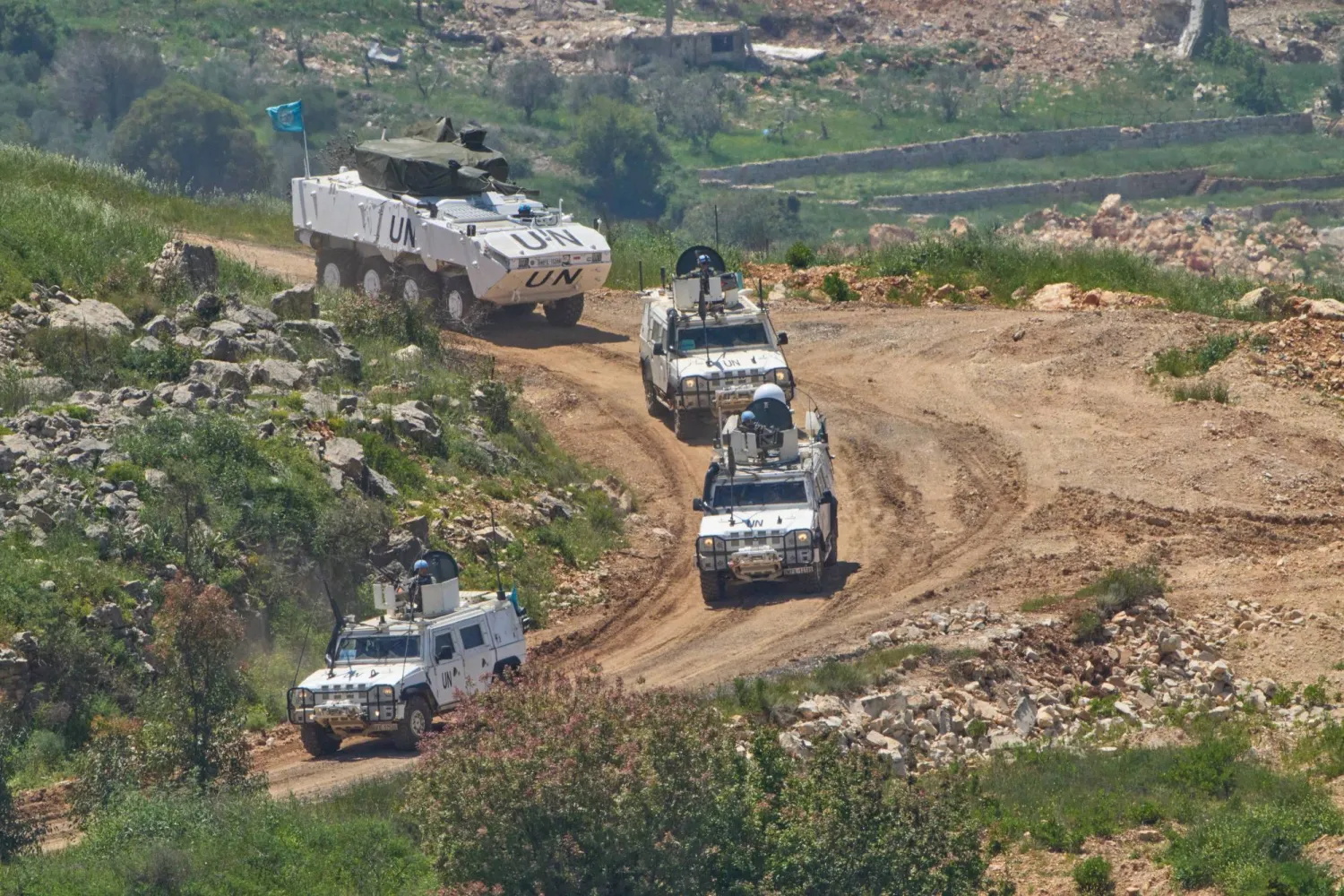
UN forces operate in southern Lebanon, as seen from northern Israel, Wednesday, April 29, 2026. (AP Photo/Ariel Schalit)
TT

Over 1.2 mn People in Lebanon to Face Acute Hunger due to War

UN forces operate in southern Lebanon, as seen from northern Israel, Wednesday, April 29, 2026. (AP Photo/Ariel Schalit)

A UN-backed report said Wednesday that more than 1.2 million people in Lebanon were expected to face acute hunger due to the latest war between Israel and Hezbollah.

The figure was announced in a joint statement by the UN's Food and Agriculture Organization, the World Food Program and Lebanon's agriculture ministry.

Some "1.24 million people -- nearly one in four of the population analysed -- are expected to face food insecurity" at crisis levels or worse between April and August 2026, they said.

They were referring to analysis from the Integrated Food Security Phase Classification (IPC), a UN-backed group that monitors hunger and malnutrition.

This marks a "significant deterioration" from before the war erupted in March, "when an estimated 874,000 people, roughly 17 percent of the population, were experiencing acute food insecurity", the statement said.

"The deterioration is due to conflict, displacement and economic pressures," it added.

A ceasefire since April 17 has paused six weeks of war between Israel and Iran-backed militant group Hezbollah that has killed more than 2,500 people in Lebanon and displaced more than one million, according to the authorities.

Israeli forces are operating in south Lebanon near the border where residents have been warned not to return, and both sides have been trading fire despite the truce.

"Acute food insecurity is likely to deepen without sustained and timely humanitarian and livelihood support," the statement added.




Arab Parties in Israel Signal Readiness to Help Oust Netanyahu

27 October 2026, Israel, Nazareth: Palestinian candidate Yousef Jabareen of the Joint List party speaks as he celebrates early exit poll results, at the party's headquarters in Nazareth, during Israel's legislative election. Photo: Jamal Awad/dpa
TT

Arab Parties in Israel Signal Readiness to Help Oust Netanyahu

27 October 2026, Israel, Nazareth: Palestinian candidate Yousef Jabareen of the Joint List party speaks as he celebrates early exit poll results, at the party's headquarters in Nazareth, during Israel's legislative election. Photo: Jamal Awad/dpa

An alliance of predominantly Arab parties in Israel has signaled its willingness to help oust Prime Minister Benjamin Netanyahu's far-right and religious coalition following the country's parliamentary elections, according to dpa.

Yousef Jabareen, chairman of the Joint List, said Wednesday that Netanyahu's government had made life unbearable for Arab citizens.

"The government of Netanyahu and [far-right National Security Minister Itamar] Ben-Gvir has made life hell for every Arab citizen," Jabareen said.

He described the support for Arab parties in Tuesday's elections as "historic."

With most votes counted, the Joint List and the conservative Islamist Ra'am party were projected to win a combined 19 seats in the 120-member Knesset.

The Arab parties could play a decisive role in determining the next government, as neither Netanyahu's bloc nor the opposition camp led by former military chief Gadi Eisenkot is expected to secure a majority.

"We will know how to leverage our political strength to advance the values we believe in," Jabareen said.

He added that his party was prepared to "pave the way for ousting the government of Netanyahu, Ben Gvir and Smotrich, and send them home."

Arab citizens account for approximately one-fifth of Israel's population.


Iraqi PM Visits Syria as Neighbors Seek to Boost Economic Ties

Syrian President Ahmad al-Sharaa and Iraqi Prime Minister Ali al-Zaidi meet at Damascus airport on Wednesday. (INA)
TT

Iraqi PM Visits Syria as Neighbors Seek to Boost Economic Ties

Syrian President Ahmad al-Sharaa and Iraqi Prime Minister Ali al-Zaidi meet at Damascus airport on Wednesday. (INA)

Iraqi Prime Minister Ali al-Zaidi arrived in Damascus on Wednesday and was met by President Ahmad al-Sharaa, Syrian state media said, as the neighbors seek to bolster economic and energy cooperation.

It is the first visit by an Iraqi prime minister since the new authorities took power after toppling longtime Syrian ruler Bashar al-Assad in December 2024 following more than 13 years of civil war.

Baghdad had initially dealt cautiously with the new Syrian authorities, though senior Iraqi political, intelligence and judicial officials have visited Damascus since Assad's ouster.

Al-Sharaa received al-Zaidi and his accompanying delegation at Damascus international airport, Syrian state television reported.

Iraq is seeking to strengthen ties with a neighbor with whom it shares a 600-kilometer (370-mile) border, while Syria is working to become a transit hub for global trade, particularly as countries look for alternatives to the Strait of Hormuz.

Al-Sharaa and al-Zaidi also met last month in New York on the sidelines of the United Nations General Assembly.

In an interview broadcast on Tuesday by Iraqi television channel Dijlah, al-Sharaa welcomed al-Zaidi's visit and said that "in the past year and a half, something positive has been built in Syrian-Iraqi relations, particularly in economic matters".

He said his country sees ties with Iraq in terms of their "great historical and economic commonalities" rather than sectarian terms.

Iraq recently began exporting limited quantities of oil through Syria, after maritime traffic through the Strait of Hormuz was disrupted following the outbreak of the Middle East war earlier this year.

In July, Damascus and Baghdad signed a memorandum of understanding to revive a pipeline for transporting oil from Iraq to Syria's coast, linking Iraqi production to export markets in the Mediterranean and beyond.

In February, the United States transferred over 5,700 ISIS group detainees from more than 60 countries to Iraq, after they had been held for years at prisons in north and northeast Syria administered by Kurdish forces.

In Tuesday's interview, al-Sharaa said some of the around 3,000 Syrian detainees transferred to Iraq had "no connection" to ISIS, with efforts underway to categorize them, examine Syria's responsibility and possibilities for repatriation.


France Says Israel Vote Will Not Deter Push for Two-State Solution

 France's Foreign Affairs Minister Jean-Noel Barrot addresses the audience during a session of questions to the government at the National Assembly, France's lower house of parliament in Paris on October 27, 2026. (AFP)
France's Foreign Affairs Minister Jean-Noel Barrot addresses the audience during a session of questions to the government at the National Assembly, France's lower house of parliament in Paris on October 27, 2026. (AFP)
TT

France Says Israel Vote Will Not Deter Push for Two-State Solution

 France's Foreign Affairs Minister Jean-Noel Barrot addresses the audience during a session of questions to the government at the National Assembly, France's lower house of parliament in Paris on October 27, 2026. (AFP)
France's Foreign Affairs Minister Jean-Noel Barrot addresses the audience during a session of questions to the government at the National Assembly, France's lower house of parliament in Paris on October 27, 2026. (AFP)

France will continue to push for a two-state solution regardless of the outcome of Israel's election, Foreign Minister Jean-Noel Barrot said Wednesday.

"Our course will not change," whether the coalition led by outgoing Prime Minister Benjamin Netanyahu wins or the opposition bloc under Gadi Eisenkot claims victory, Barrot told France 2 television.

France and Israel have had a strained relationship, particularly since President Emmanuel Macron's recognition of a Palestinian state a year ago.

More recently, Macron announced that France would cease trade with illegal Israeli settlements located in the occupied West Bank.

Barrot declined to say, however, whether the relationship would be any smoother should the opposition bloc come to power.

"Our course is very clear, and our position remains unchanged," Barrot said.

"What we want is security for Israel, but also the prospect of two states living side-by-side -- recognized, respected in their rights, and at peace."

No clear majority had emerged as of early Wednesday -- following the counting of half the votes.

"We must let things take their course. We must accept the governments that the people choose," Barrot said.