


Sinner Beats Rising Star Jódar in Madrid and Declares 'What a Player'

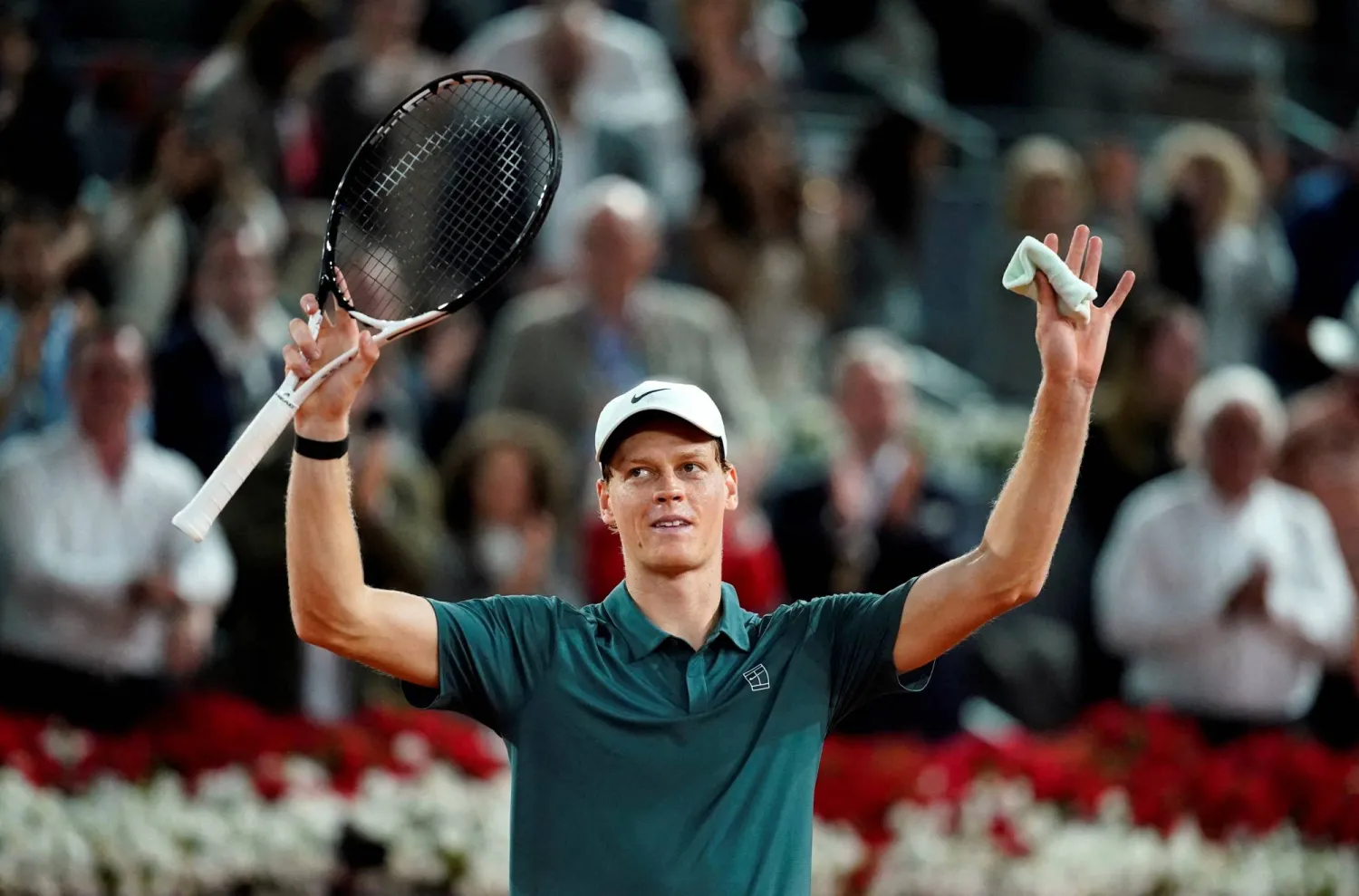
Tennis - Madrid Open - Park Manzanares, Madrid, Spain - April 29, 2026 Italy's Jannik Sinner celebrates winning his quarter final match against Spain's Rafael Jodar REUTERS/Ana Beltran
TT

Sinner Beats Rising Star Jódar in Madrid and Declares 'What a Player'

Tennis - Madrid Open - Park Manzanares, Madrid, Spain - April 29, 2026 Italy's Jannik Sinner celebrates winning his quarter final match against Spain's Rafael Jodar REUTERS/Ana Beltran

Top-ranked Jannik Sinner proved too much for Rafael Jódar, the latest tennis sensation from Spain.

Jódar's run was halted by a 6-2, 7-6 (0) loss to Sinner in the quarterfinals of the Madrid Open on Wednesday.

The 19-year-old Jódar has been quickly rising up the rankings and had impressed in Madrid with victories against better-ranked opponents.

“What a player,” Sinner wrote on the lens of the on-court camera after the match at the Caja Magica center court.

“In the beginning he was maybe a little bit, felt a bit of tension, which is normal,” The Associated Press quoted Sinner as saying. “But after, it came out as a good match. I had a little bit of experience, you know, a little bit more of experience than him in crucial moments, but it was a good match.”

Sinner had praised the Spaniard a few other times before and was courtside to see Jódar defeat fifth-seeded Alex de Minaur in the round of 64.

“That’s also one of the reasons why I went to watch him, you know, him and João Fonseca,” Sinner said. “I like to watch because I know that they are going to be potentially the future opponents most of the time. Everyone is a very different player, and you need to adjust yourself.”

The 24-year-old Sinner said Jódar has “everything what’s needed” to be among the top players.

“At the end of the day, you know, the player has to make the step forward, and then we see. But what he’s doing, it’s incredible,” Sinner said. “But in the same time, don’t push him too much, you know. Because sometimes it’s getting into your head and it’s very tough to get out.

He’s a very, very good kid, he has a great family behind him. The father seems very, very humble. He has a small bubble, which is great for him. I think he’s going to make some incredible results in the future.”
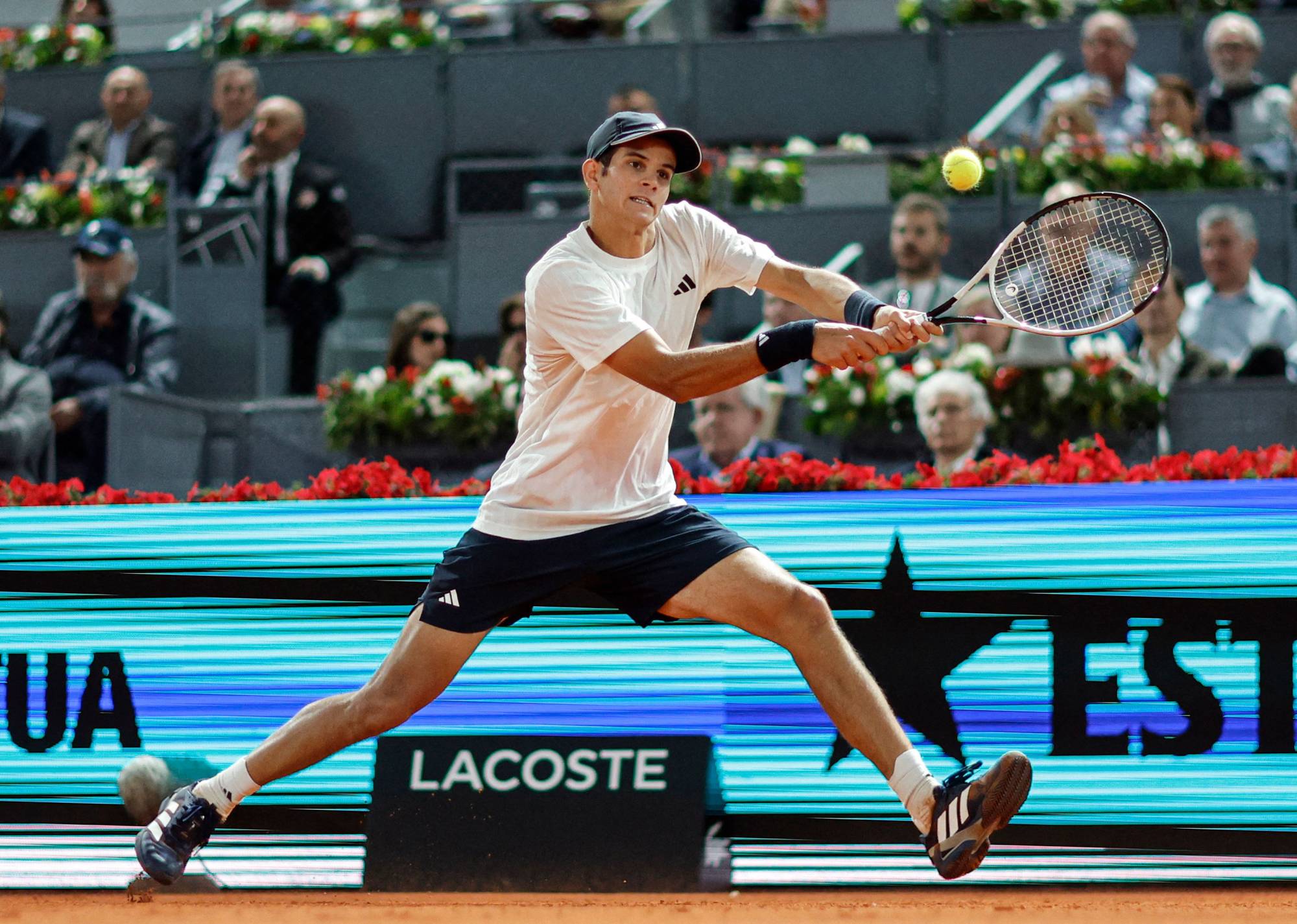
Spain's Rafael Jodar returns a ball to Italy's Jannik Sinner during their 2026 ATP Tour Madrid Open tennis tournament quarterfinal singles match at the Caja Magica in Madrid, on April 29, 2026. (Photo by OSCAR DEL POZO / AFP)

The 42nd-ranked Jódar was playing in the quarterfinals of a Masters 1000 tournament for the first time. He had already become just the third Spaniard — after Rafael Nadal and Carlos Alcaraz — to earn a main-draw win in Madrid before turning 20.

Jódar earlier this month won in Marrakech for his first ATP Tour title, then reached the semifinals in Barcelona. He was outside the top 600 in the rankings just a year ago and entered the top 100 in March.

“Jannik played very well during the whole match,” Jódar said. “I take many positive things, and I’m trying to learn from this match and for the future. I’ll try to re-watch it again and try to learn from this match.”

It was the 21st straight win for Sinner, who saved all seven break points he faced. He will be playing in the Madrid semifinals for the first time. The Italian has completed the set of semifinal appearances across all nine ATP Masters 1000 events.

Sinner, trying to become the first player to win five consecutive Masters 1000 tournaments, will next face Barcelona champion Arthur Fils, the 21-year-old who extended his winning streak to nine matches with a 6-3, 6-4 win over Jiri Lehecka.


‘Heat Dome’ Threatens Sweltering Conditions for World Cup Fans, Players

 Ivory Coast goalkeeper Alban Lafont runs his hands through water from a sprinkler as he participates in a training session in Dallas, Monday, June 29, 2026, ahead of the team's World Cup soccer match against Norway. (AP)
Ivory Coast goalkeeper Alban Lafont runs his hands through water from a sprinkler as he participates in a training session in Dallas, Monday, June 29, 2026, ahead of the team's World Cup soccer match against Norway. (AP)
TT

‘Heat Dome’ Threatens Sweltering Conditions for World Cup Fans, Players

 Ivory Coast goalkeeper Alban Lafont runs his hands through water from a sprinkler as he participates in a training session in Dallas, Monday, June 29, 2026, ahead of the team's World Cup soccer match against Norway. (AP)
Ivory Coast goalkeeper Alban Lafont runs his hands through water from a sprinkler as he participates in a training session in Dallas, Monday, June 29, 2026, ahead of the team's World Cup soccer match against Norway. (AP)

Extreme heat will greet fans and ‌players this week at the World Cup, as an imposing "heat dome" settles over the central and eastern United States - plus parts of Canada - as the knockout rounds progress.

The weather phenomenon known as a "heat dome" - a large area of high pressure that traps heat and humidity - could lead to dangerously high temperatures, with heat indices set to hit 105 to 115 degrees Fahrenheit in parts of the Midwest and East Coast, according to the US National Weather Service.

Those conditions are set to extend through the Fourth of July holiday weekend in the US, which is celebrating its 250th anniversary, with matches from Toronto to Kansas City to East Rutherford, New Jersey and Philadelphia all feeling the heat.

"Even after the sun goes down, it's still going to be ‌very hot," said ‌AccuWeather Senior Meteorologist Alan Reppert. "We're at a pattern that's really going ‌to ⁠be hot during ⁠the good portion of the afternoon and even into the evening hours."

Reppert projects that New York, which will welcome fans for a Round of 16 match in nearby New Jersey on July 5, will see temperatures reach their highest levels since 2013. He added that even matches played in the evening could be affected.

"The sun will be down," he said. "That will help make things better, but it's still going to be hot."

HYDRATION BREAKS FEATURE AT TOURNAMENT

The conditions have the potential ⁠to reignite the issue of player safety and welfare that came ‌up a year ago during the Club World Cup, ‌which was held in the US, when FIFPRO said the scorching weather should serve as a "wake-up call."

FIFA ‌instituted mandatory three-minute hydration breaks in each half in every match for the World ‌Cup this year, a measure that supporters say benefits player welfare, but critics argue disrupts the flow of play at the tournament.

World soccer's governing body did not immediately respond to a request for comment on any additional measures that could be taken for player or fan safety during the expected period of ‌intense heat.

Toronto, which will host a Round of 32 match between Portugal and Croatia on Thursday, put its "Heat Relief Strategy" into effect ⁠after Environment and ⁠Climate Change Canada issued a heat warning that runs from Tuesday through Friday.

Three of the stadiums hosting matches under the umbrella of the heat dome - Atlanta, Dallas and Houston - have retractable roofs and air conditioning, offering significant relief.

But even the stroll to the modern home of the Dallas Cowboys can feel more like a firewalk, with the concrete-and-asphalt-laden Texas city built for cars and primed to absorb heat.

Alina Mitina, an emergency department physician for Hackensack University Medical Center in New Jersey, said fans should seek out shade as much as possible and watch out for telltale signs of heat-related illness, including dizziness.

"Shady areas will really save lives in these types of situations," said Mitina. "So as long as there's lots of shade and areas to buy water, I think they're going to be in really good shape."


Lebanon’s Brazil Fans Celebrate a World Cup Round of 32 Win

Supporters of Brazil's national team celebrate, after Brazil defeated Japan in a Round of 32 soccer match at the FIFA World Cup, in Zgharta, northern Lebanon, Monday, June 29, 2026. (AP)
TT

Lebanon’s Brazil Fans Celebrate a World Cup Round of 32 Win

Supporters of Brazil's national team celebrate, after Brazil defeated Japan in a Round of 32 soccer match at the FIFA World Cup, in Zgharta, northern Lebanon, Monday, June 29, 2026. (AP)

In the northern Lebanese town of Zgharta, Brazilian flags hung from balconies and stone alleyways as families prepared for Brazil’s Round of 32 FIFA World Cup match against Japan.

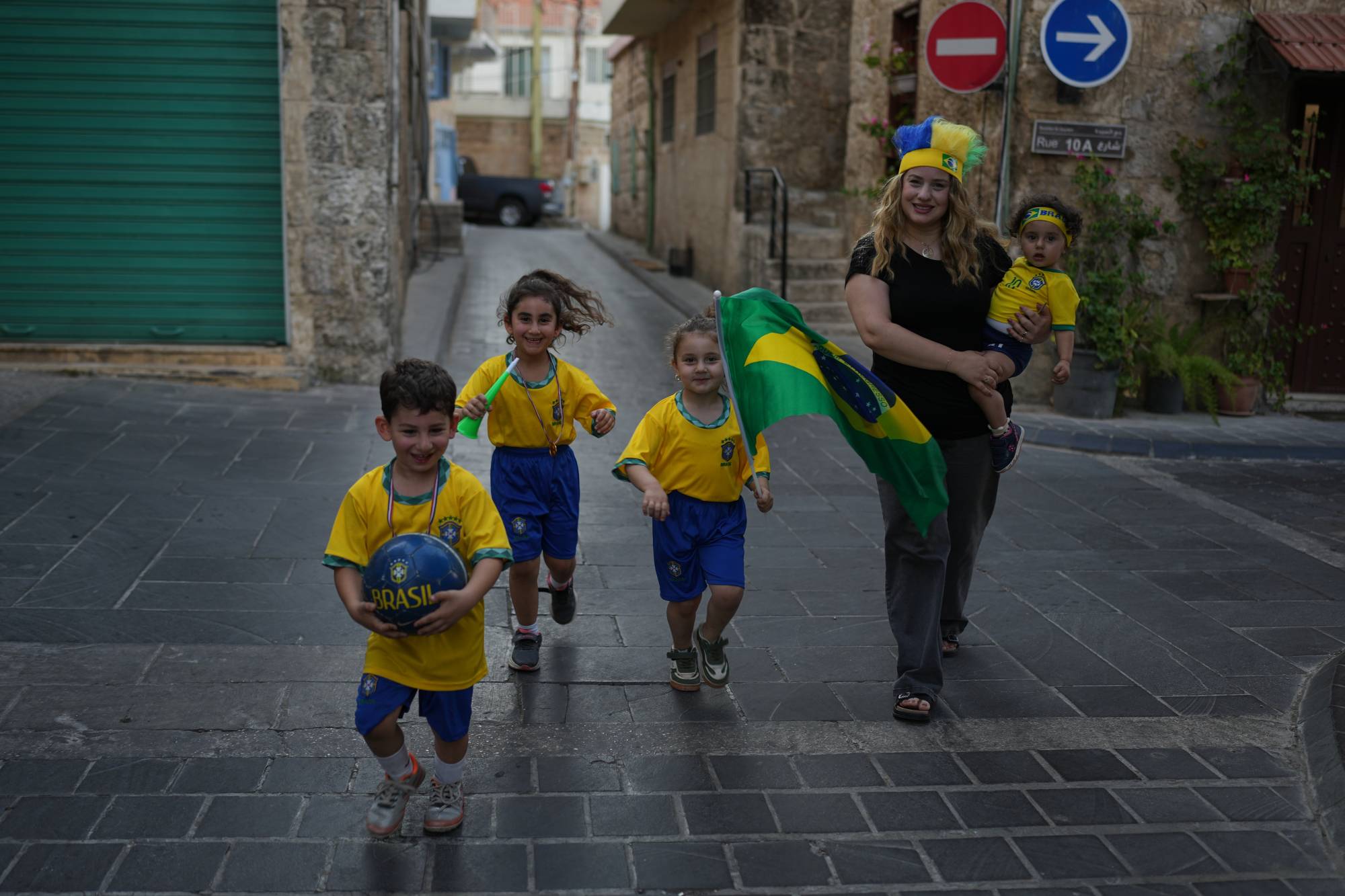
Children wearing yellow jerseys played football in the streets, while cafés and public squares filled with supporters draped in green and yellow, reflecting a passion for Brazil that stretches across Lebanon.

The connection between the two countries runs deep. Government estimates say between 7 million and 10 million Brazilians have Lebanese ancestry, more than Lebanon’s population of about 6 million.

Those family and cultural ties, shaped by over a century of migration, have helped make Brazil one of the most widely supported national football teams across Lebanon.

Children wearing Brazil jerseys carry a Brazilian flag and a soccer ball as they head with their family to watch the Round of 32 match between Brazil and Japan at the FIFA World Cup, in Zgharta, northern Lebanon, Monday, June 29, 2026. (AP)

For many Lebanese fans, Brazil’s attacking style of play, flair and history of producing legendary players have also inspired generations of supporters, passing that passion from parents to their children.

As kickoff approached, drums echoed through the streets and fans gathered around screens to cheer every attack.

“Today we had to work a bit for the win, but I was sure we were going to win,” said Brazil supporter Bagus Fadlallah. “We’re Brazil, and we’ll show everyone what Brazil is really made of.”

After Brazil’s victory, supporters in villages and cities across Lebanon took to the streets, waving Brazilian flags, beating drums and celebrating a team many Lebanese have supported for generations.


‘We Came from Nothing’: DR Congo Dreams of England World Cup Upset

 Congo's Yoane Wissa (20) celebrates scoring their third goal during the World Cup Group K soccer match between DR Congo and Uzbekistan in Atlanta, Saturday, June 27, 2026. (AP)
Congo's Yoane Wissa (20) celebrates scoring their third goal during the World Cup Group K soccer match between DR Congo and Uzbekistan in Atlanta, Saturday, June 27, 2026. (AP)
TT

‘We Came from Nothing’: DR Congo Dreams of England World Cup Upset

 Congo's Yoane Wissa (20) celebrates scoring their third goal during the World Cup Group K soccer match between DR Congo and Uzbekistan in Atlanta, Saturday, June 27, 2026. (AP)
Congo's Yoane Wissa (20) celebrates scoring their third goal during the World Cup Group K soccer match between DR Congo and Uzbekistan in Atlanta, Saturday, June 27, 2026. (AP)

DR Congo's long road to a first World Cup in 52 years has been beset by challenges that their English opponents in the last 32 on Wednesday could scarcely imagine.

Despite having to navigate 13 qualifiers, a pre-tournament quarantine due to an Ebola outbreak and the instability caused by decades of conflict, the war-torn nation is making its mark on the global stage.

"It's not easy in our country," said Yoane Wissa after his two goals secured his nation's first World Cup win against Uzbekistan and a meeting against England, where the Newcastle striker has played his club football for the past five years.

That is by no means the only English connection in the squad.

Aaron Wan-Bissaka was born in London and played for England to under-21 level.

Axel Tuanzebe also represented the Three Lions at youth level and could come up against his former schoolmate and teammate Marcus Rashford in Atlanta.

Of the 26-man squad, 20 were born outside of Congo -- the majority, like Wissa, in France.

The battle for the mineral-rich East Congo has sparked a decades-long conflict between a litany of armed groups and forced families to flee, seeking security in Europe.

"There's a war in East Congo. Every day, every time we wear this shirt, we think about them," added Wissa.

"Because we want peace and for them, I just say 'thank you'. Thank you because we came from far. We came from nothing to be here. Now we write our story with a black pen and we need to be proud."

The roots of an inspiring story on the field come from that tragic backdrop.

Sourcing and recruiting dual-national players has become crucial for smaller nations to punch above their weight in international football.

- 'New generation wants to help' -

Wan-Bissaka was one of those who initially needed some convincing.

Signed by Manchester United for £50 million ($66 million) when just 21, DR Congo swooped when the England career he imagined he would have failed to materialize.

But as the Leopards' star has risen, players are becoming increasingly keen to join the Congolese cause.

Noah Sadiki represented Belgium at youth level and would almost certainly now be a mainstay for the Red Devils had the Sunderland midfielder not switched allegiance.

"There is a new generation that wants to help the people of the country," Sadiki told French sports paper L'Equipe.

Competing as Zaire in 1974, the country's only previous World Cup ended in embarrassment with 14 goals conceded in three defeats.

Over half a century on, Congo's new generation have given a nation reason to dream.

The outbreak of Ebola that has claimed more than 300 lives had had an impact on the team's World Cup preparations.

The United States imposed a 21-day isolation period on players in Belgium before they were allowed to enter.

Their most famous fan Michel Nkuka Mboladinga -- known for his statue-like pose honoring the country's first prime minister Patrice Lumumba -- was denied entry to the US.

But the team led by Sebastien Desabre, a Frenchman, has defied the odds.

Congo eliminated African powerhouses Cameroon and Nigeria in qualifying before sealing their place with victory over Jamaica in an inter-continental play-off in March.

Desabre's men then thwarted Cristiano Ronaldo's Portugal as Wissa's header secured a 1-1 draw in their opening World Cup game.

A narrow 1-0 defeat to Colombia meant they had to beat Uzbekistan to reach the knockout stages for the first time.

Roared on by thousands from the Congolese diaspora in the stands, Wissa was the hero once more in a 3-1 win.

The challenge of England, one of the favorites for the competition, awaits.

But Congo are unlikely to be overawed given the hurdles they have scaled to get to this stage.
