



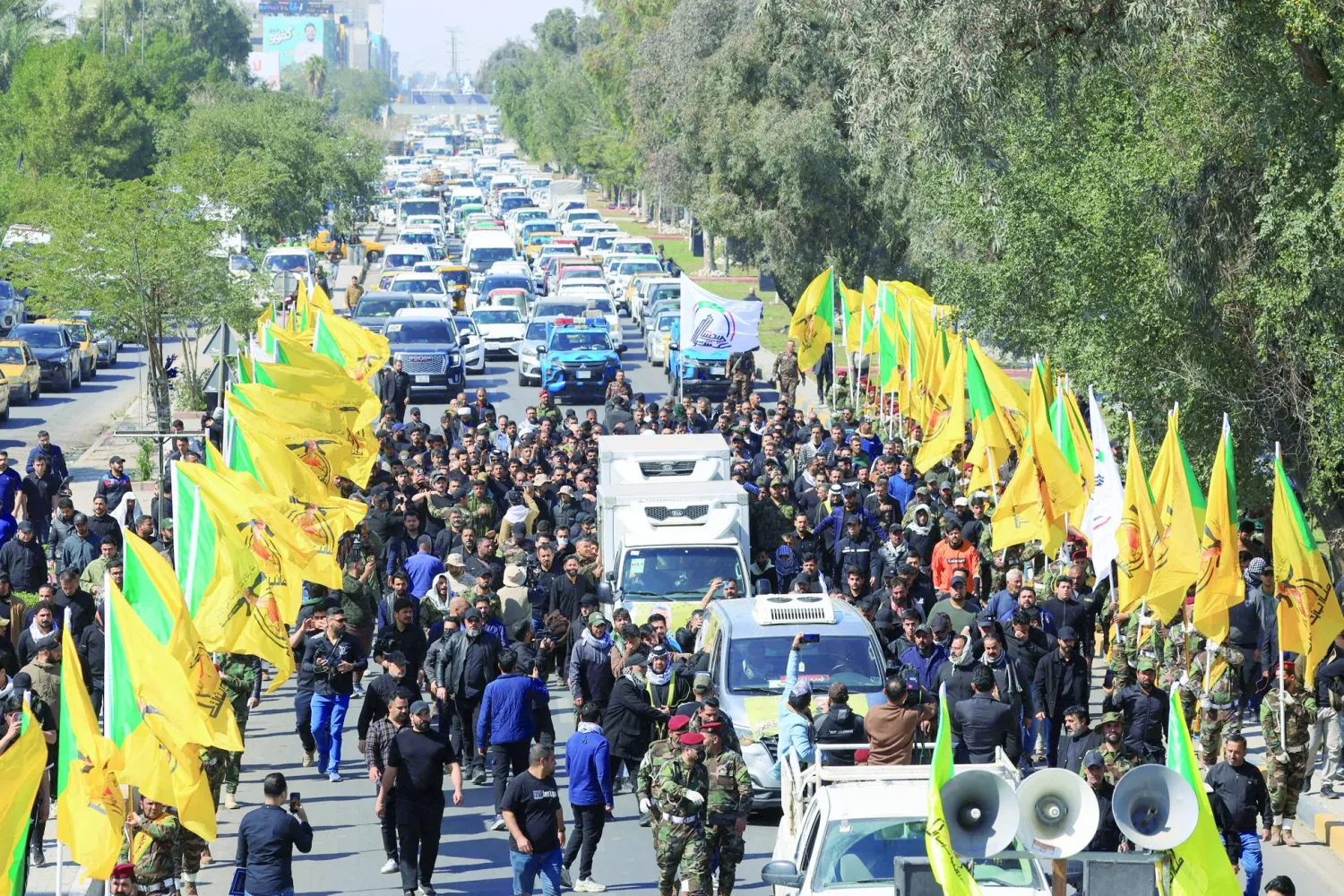

Reports have diverged over whether the faction Asaib Ahl al-Haq, led by Qais al-Khazali, and Kataib al-Imam Ali, affiliated with Shibl al-Zaidi, have handed over their weapons to the Popular Mobilization Forces (PMF). The move is seen as a partial response to US conditions calling for disarming factions and placing all arms under the authority of the Iraqi state. However, it may be largely symbolic, while informed sources speak of a “theoretical framework” gaining traction that could eventually allow the factions file to be resolved.
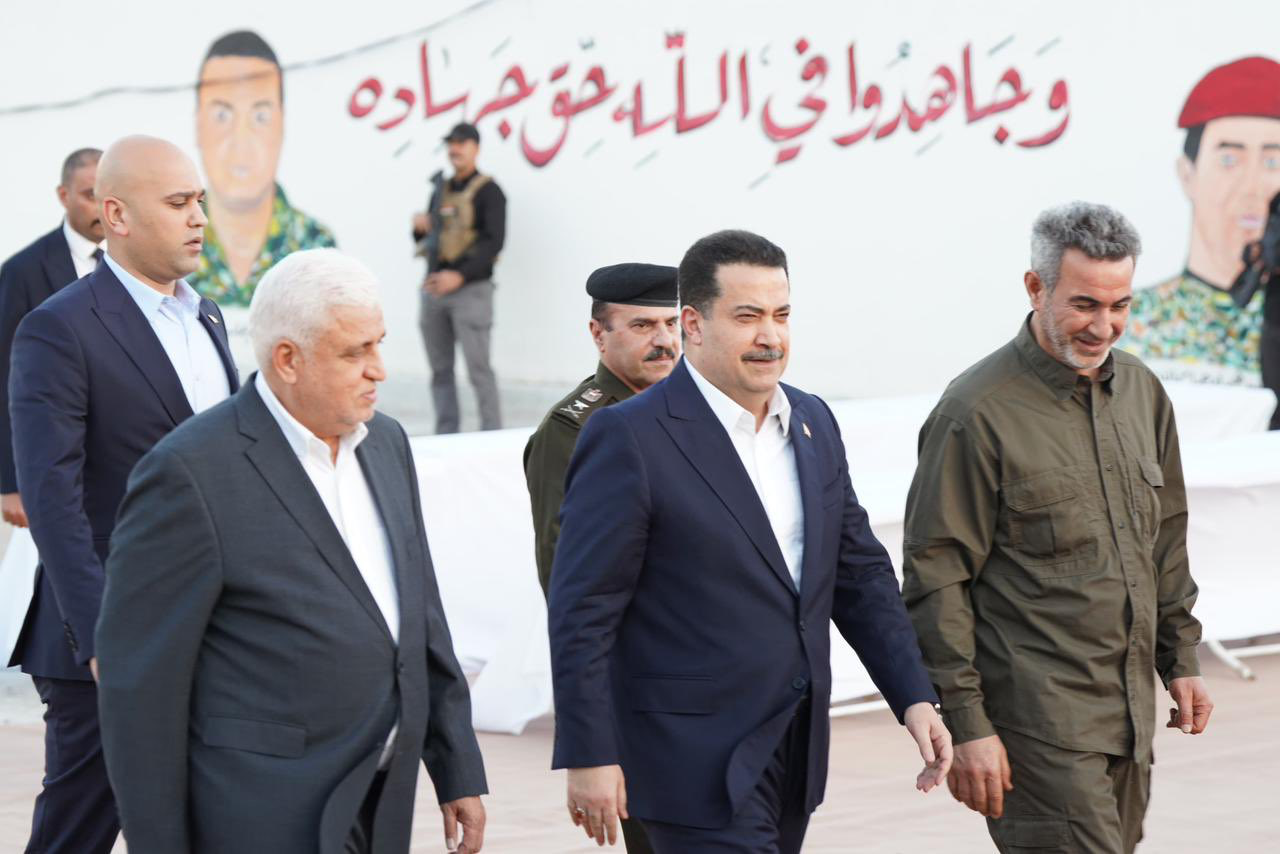
The reports come just days after Coordination Framework forces succeeded in nominating Ali al-Zaidi for prime minister, and President Nizar Amidi tasked him with forming a government. The assignment appears relatively straightforward given the continued US support for Zaidi, as well as a call from President Donald Trump inviting him to visit the White House.
In mid-April, the US Treasury Department designated seven leaders of Iraqi factions responsible for planning, directing, and carrying out attacks against US personnel, facilities, and interests in Iraq, including figures linked to Asa’ib Ahl al-Haq.
Disarmament
For months, there has been ongoing discussion about the possibility of disarming factions, particularly those with significant weight inside the Coordination Framework, such as Asaib Ahl al-Haq and Kataib al-Imam Ali. This contrasts with repeated rejection from factions such as Harakat al-Nujaba and Kataib Hezbollah.
By end of March, the Services Alliance, which holds around six seats in parliament, announced it was severing ties with Kataib al-Imam Ali, despite Shibl al-Zaidi leading both the alliance and the armed faction. The alliance said it sought to present itself as a “comprehensive national political alliance based on the principle of national partnership, bringing together multiple political forces and currents that collectively bear responsibility for governing the state and serving society,” according to a statement at the time.
Amid the talk of weapons handovers, neither Asaib Ahl al-Haq nor Kataib al-Imam Ali has issued an official statement on the reports. The supposed mechanism of such a transfer is also surrounded by major questions, as it would effectively mean “moving what you hold in your right hand to your left,” according to sources close to the PMF and the factions.
Sources told Asharq Al-Awsat that Asaib Ahl al-Haq has three main brigades within the PMF (41, 42, and 43), deployed in northern Baghdad and Salah al-Din province, while Kataib al-Imam Ali has the 40th Brigade, led by Shibl al-Zaidi. If they were to hand over their weapons to the PMF, they would in practice be transferring them to their own brigades already embedded within the PMF structure.
A theoretical framework
The same sources said they were unaware of any serious move at this stage to disarm the factions or even to carry out the reported transfer to the PMF. Instead, they referred to what could be described as a “theoretical framework” that may later translate into a possible settlement addressing weapons held outside the state.
They suggested that circulating such reports may serve as an early test of the prime minister-designate’s intentions and his responsiveness to US pressure regarding factional arms. It could also be a way to secure ministerial positions in the next government.
The sources added that Asaib Ahl al-Haq, which holds 27 seats in parliament and secured the position of first deputy speaker in the current term, may be genuinely seeking to avoid potential US anger. It is attempting to shed its factional past and aims to obtain ministerial portfolios, as it did in the previous term, but appears unable to convince Washington.
For this reason, the sources believe that a vague announcement of this kind about handing over weapons is insufficient to persuade Washington that the factions are disarming. More substantive steps would likely be required, potentially involving restructuring the PMF and integrating it into the regular armed forces.
Many observers point to the need to restructure leadership within the PMF as a first step toward resolving the issue of factional weapons. They also highlight the need to change key positions within the organization by redeploying some brigades to distant sectors, integrating selected units into the army or federal police, and retiring or sidelining undisciplined commanders.


