

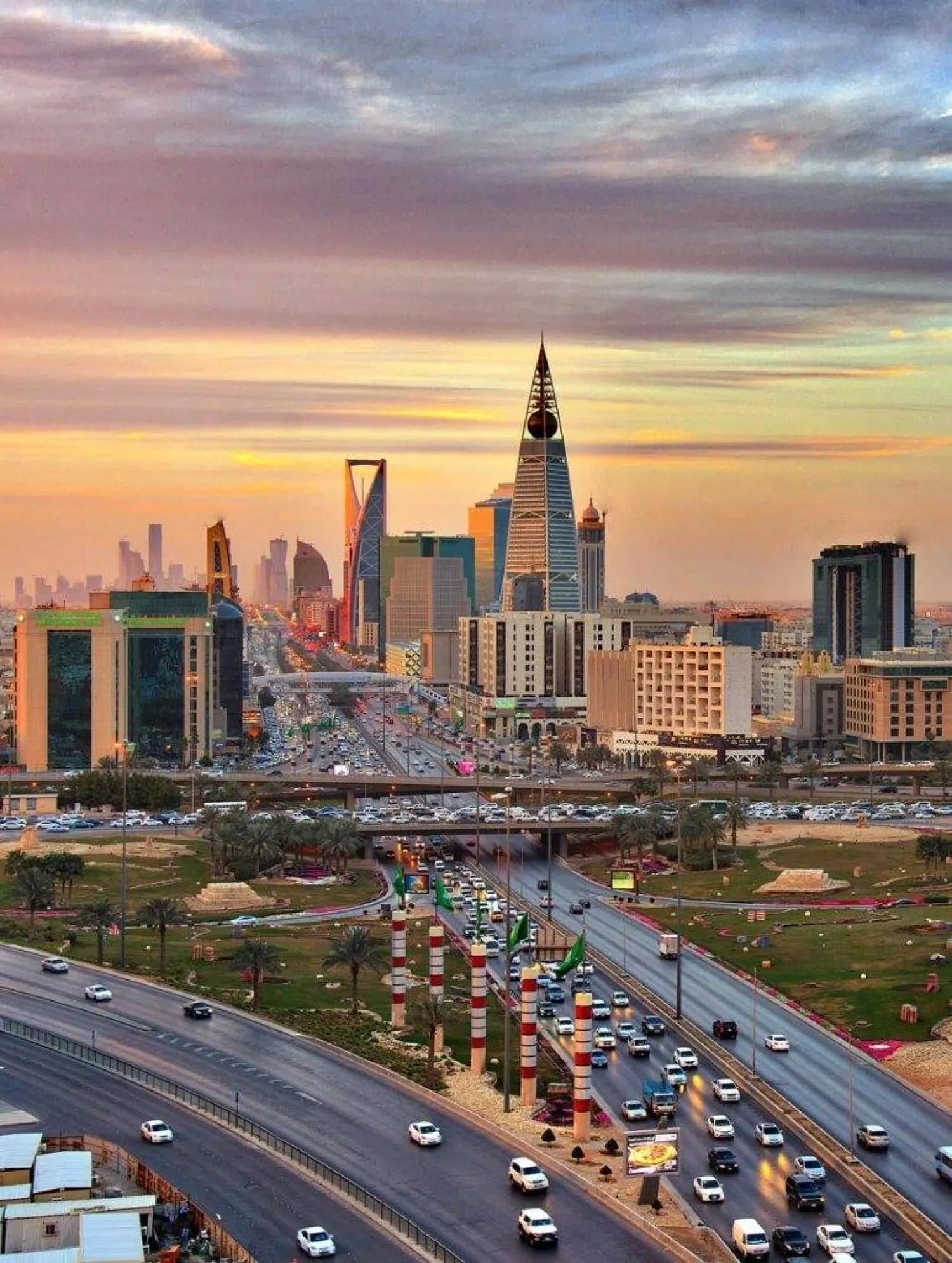

Saudi Arabia Ranks Second Globally in Data Center Market Attractiveness

A view of the Riyadh skyline, the Saudi capital (Royal Commission for Riyadh City)
TT

Saudi Arabia Ranks Second Globally in Data Center Market Attractiveness

A view of the Riyadh skyline, the Saudi capital (Royal Commission for Riyadh City)

Saudi Arabia has ranked second globally, after the United States, among the most attractive markets for data centers—an achievement that reflects the Kingdom’s growing position in digital infrastructure and its rapid expansion in a market increasingly driven by artificial intelligence and cloud computing.

According to a Bloomberg analysis, Saudi Arabia secured second place globally in data center market attractiveness. The analysis also indicated that power availability and land enablement together account for 58% of market attractiveness for data center projects. At the same time, 22.8 gigawatts of new capacity are currently under development worldwide and are expected to come online within the next three years, increasing the value of markets capable of absorbing this growth at scale and with speed, SPA reported.

This progress builds on the rapid expansion of the data center sector in the Kingdom, where operational capacity increased from 68 megawatts in 2021 to 440 megawatts in 2025—representing nearly sixfold growth over four years. This reflects the accelerated development of digital infrastructure and the growing attractiveness of the Saudi market in this critical sector.

The sector continued its growth in the first quarter of 2026, with capacity rising to 467 megawatts—an increase of more than 6% since the beginning of the year—highlighting the sustained expansion of a market that has become a key driver of digital infrastructure and the data-driven economy powered by cloud computing and artificial intelligence.

According to SPA, today, Saudi Arabia hosts more than 60 data centers across multiple regions, reflecting the expansion of the market, the strengthening of its operational base, and its ability to meet the growing demand for digital services, cloud computing, and AI applications. This growth is further supported by the Kingdom’s geographic depth, which provides developers and operators with greater flexibility in site distribution and phased expansion, in addition to its strategic location linking Asia, Europe, and Africa—enabling access to broad markets from a single hub.

Commenting on this progress, head of the Artificial Intelligence Enablement Office at the Ministry of Communications and Information Technology Eng. Bassam Al-Bassam stated: “This reflects the Kingdom’s growing position in the data center sector and confirms that the progress achieved in digital infrastructure, power availability, development speed, and operational readiness has positioned Saudi Arabia among the most capable markets in attracting high-quality investments in this sector.”

He added that this progress strengthens the confidence of global investors in the Saudi market and supports the Kingdom’s positioning as a global hub for digital infrastructure and artificial intelligence.

This achievement gains further significance as Saudi Arabia ranked first globally in the Digital Readiness Framework 2025, scoring 94 out of 100 in the “very high” category, ahead of Finland, Germany, the United Kingdom, Norway, and France. This reflects the maturity of the regulatory environment, digital governance, and institutional efficiency—factors that are increasingly critical in a sector that depends on regulatory clarity, operational reliability, and speed of execution.

This position is further reinforced by an advanced digital ecosystem, including 99% internet penetration, fiber coverage reaching 5.8 million homes, and a technology market exceeding SAR199 billion in 2025. In addition, local internet traffic through the Saudi Internet Exchange surpassed 2.462 terabits per second in the same year, enhancing the readiness and reliability of the digital environment supporting data center operations.

This achievement underscores that Saudi Arabia is not only keeping pace with growing demand for digital infrastructure but is also advancing in building the foundational capabilities required for the next phase of the digital economy. As global pressures on power and land intensify in traditional markets, Saudi Arabia is emerging as a destination that combines capacity, readiness, flexibility, and scalability—further strengthening its position as a rising global hub in the data center race.



India Turns to Latin American, African Oil After Hormuz Disruption

 A worker holds a nozzle to pump fuel in a vehicle at a petrol pump in New Delhi, India, May 19, 2026. (Reuters)
A worker holds a nozzle to pump fuel in a vehicle at a petrol pump in New Delhi, India, May 19, 2026. (Reuters)
TT

India Turns to Latin American, African Oil After Hormuz Disruption

 A worker holds a nozzle to pump fuel in a vehicle at a petrol pump in New Delhi, India, May 19, 2026. (Reuters)
A worker holds a nozzle to pump fuel in a vehicle at a petrol pump in New Delhi, India, May 19, 2026. (Reuters)

Indian refiners turned to imports from Latin America and Africa after supplies from the Middle East were disrupted as the Israeli-US war on Iran restricted shipping in the Strait of Hormuz, data provided by trade sources show.

Refiners in the world's third-largest oil importer and consumer bought most of their crude from the nearby Middle East until the war broke out at the end of February.

In April and May, Indian refiners raised imports ‌from Venezuela, Brazil, Angola ‌and Nigeria to make up the shortfall, as well ‌as ⁠continuing to buy ⁠Russian oil, preliminary data from Kpler show.

Last month, India skipped purchases from Iraq as exports were halted, while it received Iranian oil after a gap of seven years following a temporary waiver granted by Washington to help stabilize global oil prices.

New Delhi reduced imports from Russia by about 29.4% from March to 1.6 million barrels per day as Nayara Energy shut its 400,000-bpd ⁠refinery for maintenance, the data showed.

However, in May, ‌India is due to get about ‌1.9 million bpd of Russian oil and about 41,000 bpd of Iraqi oil, preliminary data ‌from Kpler showed.

Overall, India imported 4.57 million bpd oil in ‌April, unchanged from March, but down 15.5% from a year earlier, the data showed.

Imports from the United Arab Emirates rebounded in April to 669,700 bpd from 230,600 bpd in March while intake of Saudi Arabian oil stayed at about 619,500 bpd, ‌the data showed.

The UAE and Saudi Arabia are the only Gulf producers with pipelines that export crude bypassing ⁠the Strait ⁠of Hormuz, while Kuwait, Iraq, Qatar, and Bahrain rely on the waterway for shipments.

The share of the Organization of the Petroleum Exporting Countries, including the UAE as its member during the month, in India's imports rose to 45.2% in April from about 30% in March, the data showed. The UAE exited OPEC in May.

Higher imports from the UAE helped arrest a decline in the Middle East's share of India's imports, while the share of Russian oil declined to about 35% from nearly 50%.

Russia remained India's top oil supplier, followed by the UAE and Saudi Arabia. Brazil was the fourth-largest supplier, while Venezuela ranked fifth. Venezuela is on course to become the fourth-largest supplier in May, Kpler data showed.


Asian Shares Mostly Gain and Oil Prices Fall After Trump Says Peace Talks on Iran War Are Proceeding

 People walk in front of an electronic stock board showing Japan's Nikkei index at a securities firm Monday, May 25, 2026, in Tokyo. (AP)
People walk in front of an electronic stock board showing Japan's Nikkei index at a securities firm Monday, May 25, 2026, in Tokyo. (AP)
TT

Asian Shares Mostly Gain and Oil Prices Fall After Trump Says Peace Talks on Iran War Are Proceeding

 People walk in front of an electronic stock board showing Japan's Nikkei index at a securities firm Monday, May 25, 2026, in Tokyo. (AP)
People walk in front of an electronic stock board showing Japan's Nikkei index at a securities firm Monday, May 25, 2026, in Tokyo. (AP)

Asian shares mostly rose Monday and oil prices plunged after US President Donald Trump said talks on ending the war with Iran are progressing.

Japan's benchmark Nikkei 225 surged 2.8% to 65,130.03. Australia's S&P/ASX 200 added 0.4% to 8,692.00. The Shanghai Composite gained 0.8% to 4,143.97.

Trading was closed in South Korea and Hong Kong for local holidays. Markets will be closed in the US on Monday for Memorial Day.

Trump said negotiations with Iran were “proceeding in an orderly and constructive manner.” Meanwhile, regional officials told The Associated Press on Sunday that the United States is close to reaching a deal with Iran that would end the war, reopen the Strait of Hormuz and see Iran give up its stockpile of highly enriched uranium,

Reopening the Strait of Hormuz will help decide the direction of oil prices. The closure has prevented oil tankers from exiting the Gulf and delivering crude to customers worldwide. Japan, for instance, imports almost all its oil, most of it through the strait.

“Markets are rapidly transitioning from pricing geopolitical fear toward pricing a potential peace dividend as Hormuz reopening expectations pressure oil and the dollar lower,” analyst Stephen Innes said in a commentary.

Early Monday, benchmark US crude was down $5.52 at $91.08 a barrel. Brent crude, the international standard, sank $5.56 to $97.08 a barrel.

In currency trading, the US dollar declined to 158.91 Japanese yen from 159.16 yen. The euro cost $1.1639, up from $1.1605.

Friday on Wall Street, stocks finished their eighth straight winning week, the best such streak since 2023. That’s even though a survey showed US consumers are feeling even worse about the economy than before.

The S&P 500 added 0.4% and pulled closer to its all-time high set in the middle of last week. The Dow Jones Industrial Average rose 0.6%, and the Nasdaq composite gained 0.2%.

Recent earnings reports from US companies that topped analysts’ expectations also helped markets. But worries about inflation have pushed bond yields higher worldwide.

The yield on the 10-year Treasury edged down to 4.56% Friday from 4.57% late Thursday, but it remains well above its 3.97% level from before the war.


Vessels Carrying Middle East Oil, LNG Exit Hormuz, Head for Pakistan, China

Vessels in the Strait of Hormuz, Iran, May 22, 2026. Majid Asgaripour/WANA (West Asia News Agency) via Reuters
TT

Vessels Carrying Middle East Oil, LNG Exit Hormuz, Head for Pakistan, China

Vessels in the Strait of Hormuz, Iran, May 22, 2026. Majid Asgaripour/WANA (West Asia News Agency) via Reuters

Two liquefied natural gas tankers are exiting the Strait of Hormuz on Monday, heading to ‌Pakistan and China, while a supertanker with Iraqi crude for China left the Gulf on Saturday after being stranded for nearly three months, shipping data showed.

The US-Israeli war on Iran that began on February 28 has severely curtailed shipping through the Strait of Hormuz, through which around one-fifth of the world's supply of oil and LNG normally flows.

The vessels are among a handful of supertankers exiting the Gulf this month via a transit route ⁠that Iran has ordered ships to use. Last week, three Very Large Crude Carriers (VLCCs) made their way to China and South Korea with 6 million barrels of crude, according to Reuters.

LNG tanker Fuwairit is crossing the Strait of Hormuz on Monday and is expected to discharge its cargo in Pakistan on Tuesday, shipping data on LSEG and Kpler showed. The vessel, sailing under the Bahamas flag, loaded LNG at Qatar's Ras Laffan port around March 28.

Separately, the VLCC Eagle Verona, which exited the strait on Saturday, is expected to reach Ningbo port in eastern China on June 12 to discharge its cargo, ⁠shipping data on LSEG and Kpler showed.

The Singaporean-flagged vessel chartered by Unipec, the trading arm of Asia's largest refiner, Sinopec, loaded nearly 2 million barrels of Basrah crude around February 26, according to the data.

The Eagle Verona was among seven ships Malaysia had sought ⁠permission from Iran to transit, two sources earlier told Reuters. Five of the ships have since exited the waterway, while two more remain in the Gulf.

Before the war began, shipping traffic through the strait averaged 125 to 140 daily passages. Some 20,000 seafarers remain stranded inside the Gulf on board hundreds of ships.