


Oil Slips After Trump Says US Will Assist Ships Stranded in Strait of Hormuz

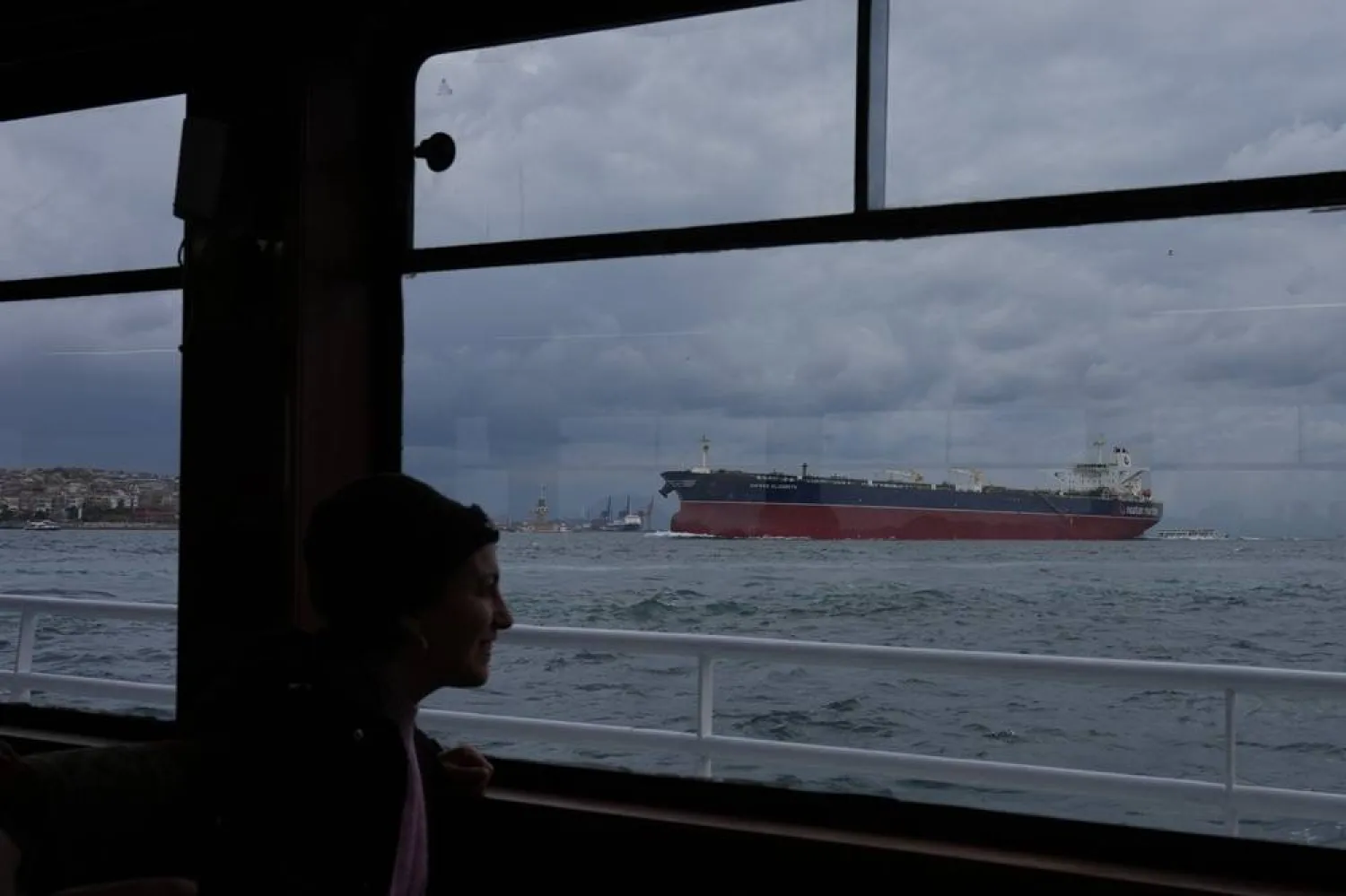
The oil tanker Safeen Elizabeth sails across the Bosphorus, in Istanbul, Türkiye, Saturday, May 2, 2026. (AP)
TT

Oil Slips After Trump Says US Will Assist Ships Stranded in Strait of Hormuz

The oil tanker Safeen Elizabeth sails across the Bosphorus, in Istanbul, Türkiye, Saturday, May 2, 2026. (AP)

Oil prices eased on Monday after President Donald Trump said the United States would begin an effort to assist ships stranded in the Strait of Hormuz, but the lack of a US-Iran peace deal kept the market supported above $100.

Brent crude futures fell 6 cents, or 0.1%, to $108.11 a barrel by 0400 GMT after settling ‌down $2.23 on Friday. ‌US West Texas Intermediate was at $101.50 ‌a barrel, ⁠down 44 cents, ⁠or 0.4%, following a $3.13 loss on Friday.

"The broader market remains tightly supported by persistent supply disruptions and geopolitical uncertainty," said Priyanka Sachdeva, analyst at Phillip Nova.

"Unless there is a clear and sustained resolution that restores normal flows through the Strait of Hormuz, oil prices are likely to remain elevated, with risks ⁠still tilted toward further upside."

Trump said on Sunday ‌that the US will ‌guide ships safely out of the Strait of Hormuz, but oil prices ‌stayed above $100 a barrel, with no peace deal in ‌sight and shipping through the strategic waterway still constrained.

Negotiations between the US and Iran continued over the weekend with the countries assessing responses from each other.

Trump has made securing a nuclear deal ‌with Tehran a priority, but Iran wants to defer nuclear talks until after the war and ⁠first lift ⁠rival blockades on Gulf shipping.

On Sunday, the Organization of the Petroleum Exporting Countries and their allies, or OPEC+, said they will raise oil output targets by 188,000 barrels per day in June for seven members, the third consecutive monthly rise.

The increase is the same as that agreed for May minus the share of the United Arab Emirates, which left OPEC on May 1.



US Diesel Prices Hit New High amid Iran War Disruption

Crude oil, gasoline, and diesel storage tanks at the Kinder Morgan terminal in Los Angeles (Reuters)
TT

US Diesel Prices Hit New High amid Iran War Disruption

Crude oil, gasoline, and diesel storage tanks at the Kinder Morgan terminal in Los Angeles (Reuters)

The price of diesel -- the vital fuel used for road hauling, agriculture and construction -- hit a new record in the United States on Friday, the AAA motorists' association said amid disruption from the US war with Iran.

The price is now $5.85 a gallon, up from $3.71 a year ago, the AAA said.

Because diesel is used for many freight and delivery networks, higher diesel prices mean higher transportation costs for a long list of everyday goods.

This could add to Republicans’ political challenges ahead of November’s midterm elections, with voters already sour on President Donald Trump’s management of the economy. AP-NORC polling this summer showed two out of three U.S. adults disapproved of how Trump is handling the economy.

More expensive fuel is increasing bills for businesses across sectors — some of which have already passed on costs to consumers in the form of added fees on online orders and packages in the mail. And shoppers may see more and more sticker shock trickle down to store shelves.

One of the most immediate strains is being felt in the grocery aisle, particularly with produce, meat and other perishable foods that need to be hauled in and restocked frequently — or even harvested using diesel-powered farm equipment. It can take time for all of those costs to trickle down.

Still, experts warn that price hikes could mount the longer diesel remains expensive. A range of other products are also transported by diesel trucks, trains and boats, including clothing, cosmetics, furniture and more.

The price for regular gasoline has also been going up, although not as fast as the price of diesel. The average price was $4.15 a gallon, compared with $3.20 at this time last year, according to AAA, which says gas has never been above $4 a gallon on Labor Day. Prices for regular gasoline, however, are far from the record of $5.02 a gallon set in June 2022.


FAO: World Food Prices at Highest Since 2022 as Supply Risks Mount

A vendor loads coconuts into a cart to transport them by tricycle in Quezon City, Metro Manila, Philippines, 04 September 2026. EPA/ROLEX DELA PENA
TT

FAO: World Food Prices at Highest Since 2022 as Supply Risks Mount

A vendor loads coconuts into a cart to transport them by tricycle in Quezon City, Metro Manila, Philippines, 04 September 2026. EPA/ROLEX DELA PENA

World food prices rose in August to their highest since late 2022, as adverse weather and war disruption in the Gulf and Black Sea heightened concern over supply of staples, the United Nations' Food and Agriculture Organization said on Friday.

Extreme heat and drought in Europe, the threat of a severe El Nino weather pattern and trade upheaval caused by the Ukraine and Iran wars have unsettled agricultural markets, pushing grain prices to three-year highs and sugar to a one-year ⁠peak.

The FAO Food ⁠Price Index, which tracks monthly changes in a basket of internationally traded food commodities, averaged 133.3 points in August, up from July's revised reading of 130.8.

That was the highest score since November 2022, though nearly 17% below a record peak from March 2022, ⁠after Russia's full-scale invasion of Ukraine.

"August’s increase in global food prices is a warning that the risk premium is returning to food markets: climate shocks, geopolitical tensions and disrupted trade logistics are converging to tighten supply expectations," FAO Chief Economist Maximo Torero said in a statement, according to Reuters.

The FAO's price benchmarks for cereals, vegetable oils, sugar, meat and dairy all rose in August.

The extreme weather in Europe affected prospects for the maize and sugar beet ⁠harvests ⁠as well as livestock output, while the anticipated El Nino phenomenon fueled concerns for vegetable oil and sugar output, it said.

Escalating attacks in the Black Sea have curtailed grain shipments from Russia and Ukraine in their 4-1/2-year-old war, while the US-Iran conflict was still straining flows of fertilizer for crops.

In a separate report, the agency cut its 2026 global cereal production forecast by 3.4 million metric tons from July to 2.980 billion tons, now 2.0% below 2025, though still the second-largest harvest on record.


Nepal Floods Could Cost Insurers Over $130 Mln Even Before Death, Injury Claims

People hold onto a cage on a makeshift zip line as they cross the Trishuli River from Koloni following deadly flash floods that damaged bridges and temporarily stranded residents, in Nuwakot district, Nepal, September 4, 2026. REUTERS/Adnan Abidi
TT

Nepal Floods Could Cost Insurers Over $130 Mln Even Before Death, Injury Claims

People hold onto a cage on a makeshift zip line as they cross the Trishuli River from Koloni following deadly flash floods that damaged bridges and temporarily stranded residents, in Nuwakot district, Nepal, September 4, 2026. REUTERS/Adnan Abidi

The devastating flood in Nepal last week could result in commercial insurance losses exceeding 20 billion Nepali rupees ($132.3 million), with hydropower projects accounting for most claims, according to a top official at one of the country's leading insurers.

The insurance cover, when paid out, covers losses borne by the operators of the power plants.

Life insurance, personal accident and workers' compensation claims are expected separately as authorities verify deaths and missing persons in inaccessible areas.

The disaster on Nepal's border with China's Tibet region caused an estimated $2.56 billion in economic losses in the Himalayan nation of 30 million people, the country's disaster authority chief told Reuters on Friday, leaving more than 1,200 dead and many more missing.

Eleven ⁠Nepali hydropower projects ⁠lie in the affected region, some covered by standard commercial insurance policies that are still being assessed, Toton Chakraborty, CEO of Oriental Insurance Company Nepal, told Reuters.

Oriental Insurance Nepal, a unit of the New Delhi-based Indian insurer, is among the leading insurers in the region.

"Hydropower projects along the affected river corridor have suffered the largest damage. In many cases, access roads and above-ground infrastructure have been washed away," he said.

Projects including Rasuwagadhi, Upper Trishuli-3A, Chilime and Devighat, were directly affected, ⁠while assessments at five others are ongoing, he said.

Data from the Nepal Insurance Authority show the regulator has so far received 583 flood-related claims worth 25.87 billion Nepalese rupees ($171.13 million) as of August 31.

Chakraborty said these figures largely reflect insured exposure rather than final claims, which will only be clear once detailed surveys are completed.

Claims could rise further if repairs delay project commissioning, as some policies compensate developers for lost revenue resulting from postponed commercial operations, he said.

Nepal's non-life insurance market is small by global standards. The country's 14 non-life insurers generated premiums of about 5.3 billion Nepali rupees ($35.06 million) during July-August, regulatory data showed, compared with 314 billion Indian rupees ($3.3 billion) written by Indian insurers during a similar period.

The market is supported by domestic reinsurers ⁠Nepal Re and Himalayan ⁠Re, alongside international players including India's GIC Re and Germany's Hannover Re.

The floods could have lasting implications for insurance coverage of Himalayan infrastructure, four industry executives said.

The Himalayan region faces severe risks from earthquakes and any future glacial floods, a senior UN official told Reuters this week.

"The recent mountain floods in South Asia may lead insurers to further review hydropower and infrastructure risks, particularly in highly exposed locations," said Benjamin Ng, power leader for Asia at Aon, an international insurance broker.

Insurers may increasingly impose exclusions, lower sub-limits and narrow coverage, resulting in higher premiums and more selective underwriting, Ng said.

Other recent Himalayan catastrophes include the 2023 glacial lake outburst flood in India's Sikkim and the flash flood in the northern Indian state of Uttrakhand in 2021.

The latest floods could reshape industry views on risk accumulation and glacial lake outburst flood exposure, said Sanjay Mokashi, chief underwriting officer at Indian state-owned reinsurer GIC Re.