

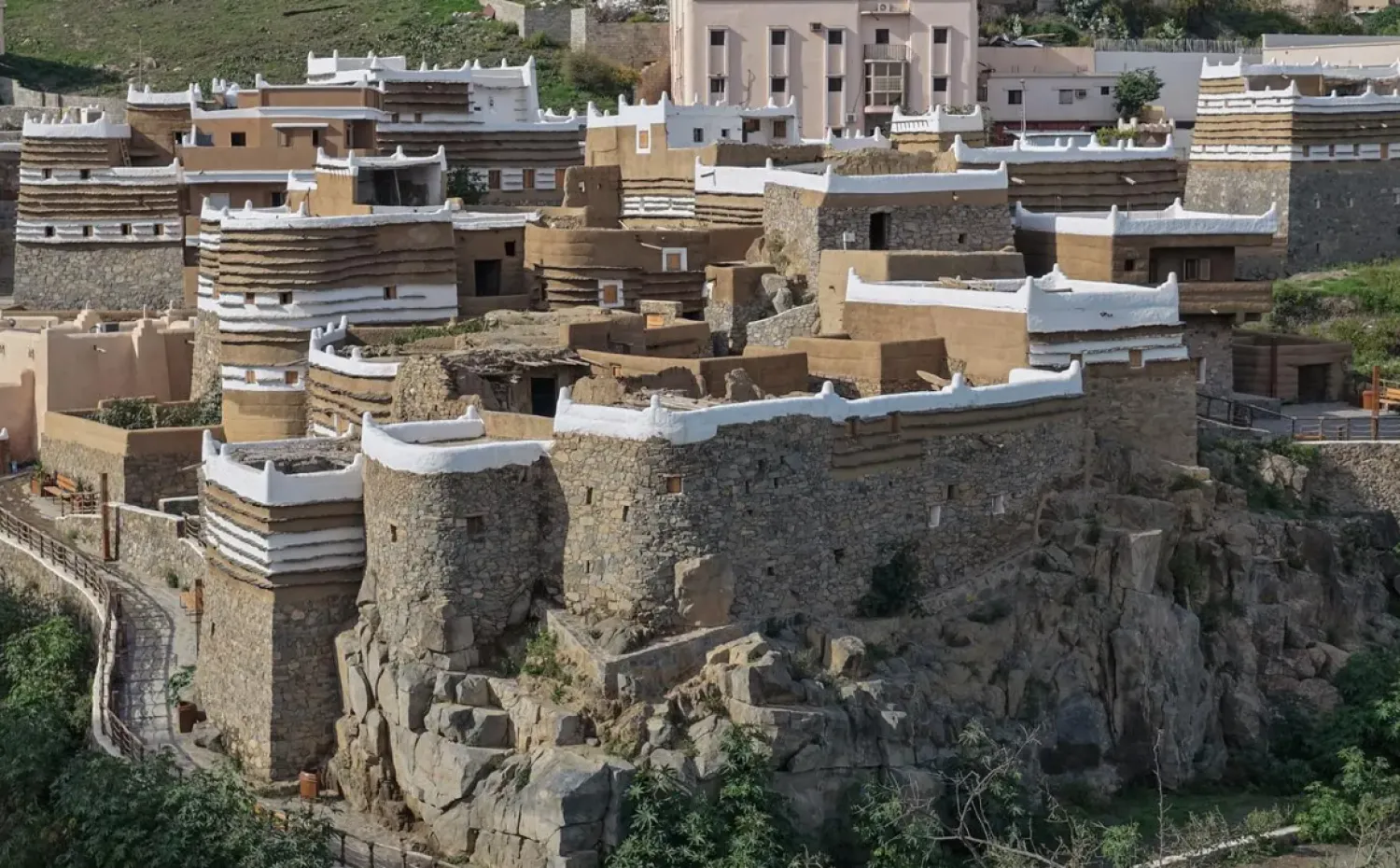

Heritage Commission Revives Al-Nasb Heritage District as Abha Cultural Tourism Destination

The district’s significance lies in its unique architectural composition - SPA
TT

Heritage Commission Revives Al-Nasb Heritage District as Abha Cultural Tourism Destination

The district’s significance lies in its unique architectural composition - SPA

Al-Nasb Heritage District in Abha is one of the most prominent living examples of traditional architecture in Aseer Region, preserving its long history and architectural details that embody people’s connection to their local environment and document the social and cultural patterns that have shaped the identity of the place across generations.

The district’s significance lies in its unique architectural composition, where mud and stone buildings stand side by side in visual harmony. They were built using local materials such as stone, clay, and juniper trunks, while the narrow alleyways and closely set buildings give the district a cohesive social character that reflects the spirit of past communities in the region and the close relationship between people and place.

The Heritage Commission has revived the district through an integrated restoration and rehabilitation project aimed at preserving its original elements and enhancing its sustainability, as part of national efforts to protect urban heritage and highlight it as a cultural and tourism asset, SPA reported.

The site is also distinguished by its natural setting, as the district overlooks the banks of Abha Valley and surrounding farms, giving it a distinctive visual and aesthetic dimension. Its narrow passageways and closely set buildings illustrate a traditional urban pattern that strengthens ties among residents and captures the nature of social life in that era.

The district is now a growing destination for culture and tourism in Abha, attracting visitors and heritage enthusiasts who come to explore the details of authentic architecture and learn about the traditional ways of life that have shaped Aseer Region’s identity across generations. The project helps raise awareness of the importance of preserving archaeological sites as a key pillar in forming national memory.

The project is part of the Kingdom’s efforts to protect and effectively manage cultural heritage, in line with the targets of Saudi Vision 2030, which gives special attention to the cultural sector. It seeks to turn heritage sites into vibrant spaces that support cultural tourism and sustainable development while reconnecting society with its historical roots.



Saudi Heritage Commission Expands National Urban Heritage Register with 9,586 New Sites

The Saudi Heritage Commission logo
TT

Saudi Heritage Commission Expands National Urban Heritage Register with 9,586 New Sites

The Saudi Heritage Commission logo

The Heritage Commission announced the registration of 9,586 urban heritage sites in the National Urban Heritage Register in two consecutive phases.


The first phase included 3,000 sites, followed by an additional 6,586, bringing the total number of registered sites across Saudi Arabia’s regions to 59,586, SPA reported.

The registered sites in the two phases were distributed across several Saudi regions, including 169 sites in Riyadh Region, 1,755 in Makkah Region, 23 in Madinah Region, 13 in Qassim Region, 19 in Eastern Region, 4,363 in Aseer Region, two in Tabuk Region, 21 in Hail Region, one in Northern Borders Region, 673 in Najran Region, and 2,547 in Al-Baha Region.

The Heritage Commission urged citizens and residents to report unregistered urban heritage sites or any practices that may compromise their integrity through the archaeological report service, the commission’s official social media channels, by visiting one of its branches or offices across the Kingdom, or by contacting the Unified Security Operations Center at 911.


Red Sea Museum Transforms Learning into Experiences of Discovery and Creativity

The program’s educational dimension extends to archaeology, the environment, and the protection of underwater cultural heritage - SPA
TT

Red Sea Museum Transforms Learning into Experiences of Discovery and Creativity

The program’s educational dimension extends to archaeology, the environment, and the protection of underwater cultural heritage - SPA

The Red Sea Museum in Historic Jeddah takes visitors on a journey this August that goes beyond viewing its collections to engaging with the Red Sea as a space for discovery and learning.

The program offers a range of activities that take visitors from the screen to the depths of the sea. As part of the Sea Cinema program, the museum hosted a screening of Finding Nemo on August 7, offering a cinematic experience that evoked the wonder of the ocean and its adventures, SPA reported.

The program’s educational dimension extends to archaeology, the environment, and the protection of underwater cultural heritage through a panel discussion on August 15, addressing the relationship between preserving archaeological evidence and protecting the marine environment.

Moreover, the museum offers children a dedicated space for creativity through the “From Waste to Wonder” workshop, which encourages them to transform used items into new ideas and experiences.

The Red Sea Lab stands out as one of the key experiences in the August program, turning the museum into an interactive laboratory for children aged 10 to 14 from August 25 to 29.

The program brings together science, technology, engineering, and mathematics (STEM), allowing participants to explore the Red Sea from a scientific perspective, from its geological formation and biodiversity to coral reefs, ocean chemistry, and water quality, as well as exploration, mapping, and environmental conservation technologies.

The August program coincides with the final days of the “Sunken Treasures: The Maritime Heritage of the Red Sea” exhibition, which runs through August 15.


Initiatives Make Saudi Cultures a Greater Part of Life in the Kingdom

More than 1.3 million visitors attended the latest edition of the Riyadh International Book Fair. (Saudi Ministry of Culture)
TT

Initiatives Make Saudi Cultures a Greater Part of Life in the Kingdom

More than 1.3 million visitors attended the latest edition of the Riyadh International Book Fair. (Saudi Ministry of Culture)

Saudi Arabia’s cultural sector continues to expand, with the latest Ministry of Culture figures highlighting progress toward making culture a way of life. Heritage sites, literary activities and cultural initiatives have drawn millions of visitors and participants, reflecting a society increasingly engaged with its culture.

Cultural commissions across the Kingdom are working to broaden access to culture in Saudi cities, with efforts centered on strengthening national identity, extending cultural activities to different regions and segments of society, and improving quality of life for citizens and residents.

The Ministry of Culture’s latest statistics showed continued growth in the sector, with rising attendance at activities and events and increasing numbers of trainees and graduates in cultural disciplines.

In 2025, the cultural ecosystem recorded 6,314 days of cultural events, while employment in the sector reached 282,709 and the number of graduates in cultural disciplines stood at 29,211. Cultural infrastructure expanded to 94 facilities.

More than 14.1 million people visited national and world heritage sites, while the number of sites open to visitors reached 232. Historic Jeddah alone attracted 12 million visits during the year.

The literary sector also drew significant interest, with more than 1.3 million visitors attending the Riyadh International Book Fair. Authorities also registered 2,260 new archaeological sites.

More than 9 million visits to cultural events

Visits to cultural events in 2025 reached 106% of the annual target of 9 million, encompassing activities on the annual calendar as well as cultural assets operated by the Ministry of Culture and its affiliated commissions and entities.

The sector recorded 6,314 cultural days, achieving 210% of its 3,000-day target.

New cultural houses opened in additional cities and regions, bringing the total across Saudi Arabia to eight.

Meanwhile, the fifth edition of the Literary Partner Initiative staged 3,668 events across the Kingdom in 2025, attracting 71,000 visitors.

Book vending machines expand access to reading

Book vending machines across Saudi Arabia sold more than 13,000 books, making reading material readily available in parks, neighborhoods and public squares.

Short-story dispensers recorded about 673,000 reads during 2025, as part of efforts to encourage reading and broaden public exposure to literature.

Other initiatives included the launch of the “Qari’e” platform in cooperation with the Authority for the Care of People with Disabilities, designed to facilitate access to digital platforms for local and international books for blind and visually impaired users.

The “Masmooa” audio-device initiative is also being introduced in public spaces across Saudi cities, allowing people to listen to a range of audiobooks.