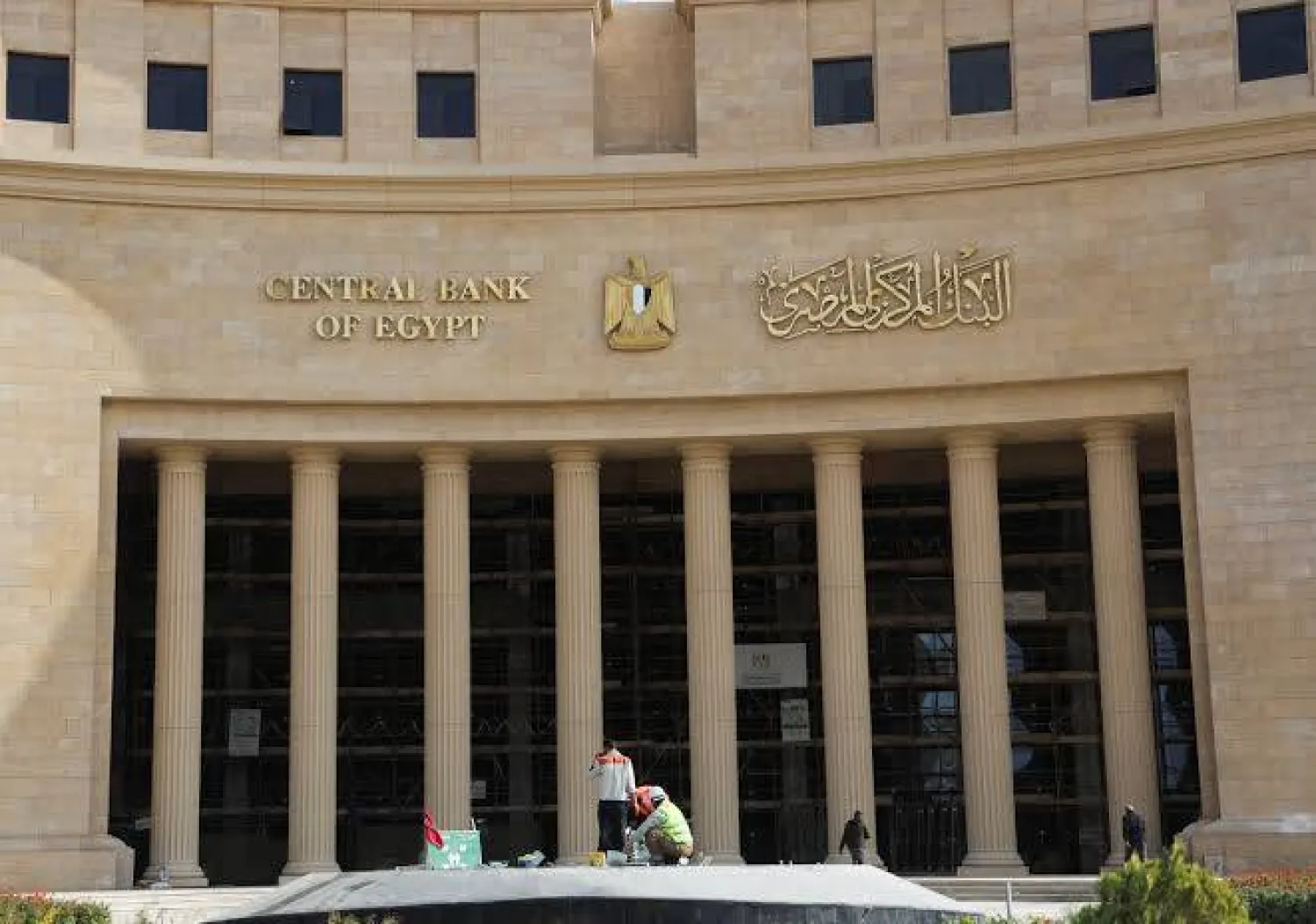
Kuwait Renews Egypt Deposit, Reinforcing Bilateral Ties

The Central Bank of Egypt. (Reuters)
TT

Kuwait Renews Egypt Deposit, Reinforcing Bilateral Ties

The Central Bank of Egypt. (Reuters)

Kuwait has renewed its deposit at the Central Bank of Egypt, a move that reinforces ties between the two countries.

Kuwait’s ambassador to Egypt Ghanem Saqr Al-Ghanem told Asharq Al-Awsat the extension followed “a thorough study” and reflects Kuwait’s commitment to supporting Egypt’s economy as “a fundamental pillar of Arab and regional security.”

He added that relations between the two countries are “at their best.”

Al-Ghanem described the decision as “a new step reflecting the strength of the special and strategic relations between the two brotherly countries,” adding it confirms continued Kuwaiti support for Egypt amid regional and international challenges.

He noted that the renewal highlights Kuwait’s commitment to Egypt’s economic stability and reflects “deep-rooted ties, shared interests and solidarity in facing regional challenges.”

An Egyptian banking expert told Asharq Al-Awsat the extension will bolster foreign currency reserves, support the economy and “shut down rumors” that the deposit would not be renewed.

The step underscores strong relations and is likely to enhance future partnership and investment between the two countries, he added.

A report by the Central Bank of Egypt on the country’s external position said Kuwait renewed a $2 billion deposit that had been due to mature in September 2025, extending it to September 2026.

The report, cited by Egyptian media on Sunday, said Kuwaiti deposits consist of two tranches of $2 billion each. One has been extended to next September, while the other matured in April. The report, which covers the first quarter of the current fiscal year, did not specify whether the April tranche was also renewed.

It added that long-term Arab deposits at the central bank stood at $9.3 billion at the end of September 2025, including $5.3 billion from Saudi Arabia and $4 billion from Kuwait, split across two deposits renewed annually in April and September.

In December 2025, Kuwait renewed a separate $2 billion deposit for another year through April 2026 to support Egypt’s foreign currency reserves, according to the same report.

Banking expert Mohamed Abdel Aal said the latest extension will support Egypt’s economy across key indicators, particularly reserves, and could pave the way for deeper cooperation, whether through continued deposits or converting them into investments that strengthen bilateral partnership.

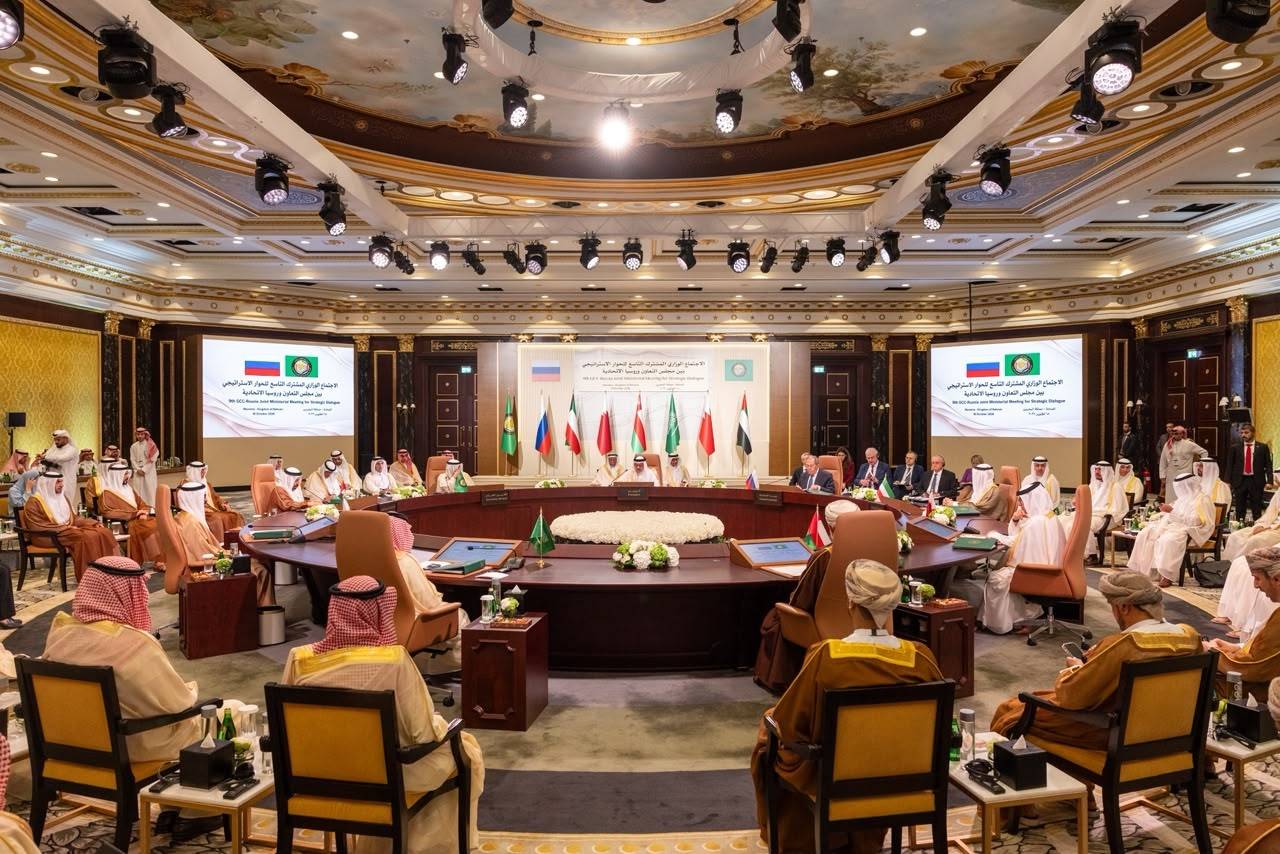

Gulf Calls on Russia to Play Role in Stopping Attacks by Iran, Starting Dialogue with it

GCC Foreign Ministers and Russian Foreign Minister Sergei Lavrov at the 9th Joint Ministerial Meeting of the Strategic Dialogue between the GCC and Russia in Manama on Sunday. (Russian Foreign Ministry)
TT

Gulf Calls on Russia to Play Role in Stopping Attacks by Iran, Starting Dialogue with it

GCC Foreign Ministers and Russian Foreign Minister Sergei Lavrov at the 9th Joint Ministerial Meeting of the Strategic Dialogue between the GCC and Russia in Manama on Sunday. (Russian Foreign Ministry)

Gulf Cooperation Council (GCC) countries called on Russia on Sunday to play an active role in urging Iran to cease its attacks on regional countries and to adhere to UN Security Council resolutions.

They also urged Iran to respect freedom of navigation in the Strait of Hormuz and to engage in a dialogue with Gulf states based on the principles of good neighborliness, respect for sovereignty, and non-interference in internal affairs.

Meanwhile, Russian Foreign Minister Sergei Lavrov stressed that Russia supports the peace efforts exerted by Arab countries to prevent the Middle East from sliding into a major war.

The call came during the 9th Joint Ministerial Meeting of the Strategic Dialogue between the GCC and Russia, which was hosted by the Bahraini capital, Manama. The meeting took place amid escalating regional tensions and ongoing threats facing the security of Gulf states, international navigation, and energy supplies.

Chaired by Bahrain’s FM Dr. Abdullatif bin Rashid Al Zayani, the meeting underlined the importance of working with Moscow in de-escalation efforts and addressing regional crises through political and diplomatic means.

Lavrov stressed the need to grant Gulf states a decisive role in determining regional security arrangements.

Officials are seen at the 9th Joint Ministerial Meeting of the Strategic Dialogue between the GCC and Russia in Manama on Sunday. (GCC)

Deepening contacts with the GCC remains a priority for Russian diplomacy, he added, pointing out that his country supports efforts to prevent the region from sliding into a large-scale war.

"We must give the Gulf states the decisive word and the firm decision in ensuring the security of the region," he remarked, expressing his country's determination to move forward in strengthening the strategic dialogue with the Gulf states.

In the same context, the Russian Ministry of Foreign Affairs announced that Moscow and Riyadh expressed their concern over the tensions in the southern Arabian Peninsula and the Bab al-Mandeb Strait.

The Bahraini Foreign Minister valued the Russian positions calling for de-escalation, stressing that the security of the GCC states is a pillar of international security.

Addressing crises requires respecting the sovereignty of states and refraining from interfering in their internal affairs, he noted.


Bahrain, UAE, Oman Offer Condolences to Saudi Arabia over Najran Helicopter Crash Victims

General view of Riyadh, Saudi Arabia. (SPA)
TT

Bahrain, UAE, Oman Offer Condolences to Saudi Arabia over Najran Helicopter Crash Victims

General view of Riyadh, Saudi Arabia. (SPA)

Bahrain, the UAE and Oman extended condolences to Saudi Arabia over the death of two officers in a helicopter crash in the Najran region due to technical failure, the Saudi Press Agency reported Monday.

In statements issued by their foreign ministries, the three countries expressed deep sympathy with Saudi Arabia's leadership, government, and people.
They affirmed full solidarity with Saudi Arabia in this painful loss, praying that Allah Almighty bestow His mercy on the two officers and grant their families patience and solace.

On Sunday, official Spokesperson for the Coalition to Restore Legitimacy in Yemen Major General Turki Al-Malki said in a ⁠statement that a Saudi AH-6i helicopter crashed in Najran due to technical malfunction, killing its two crew members.

The helicopter crashed in an area under the jurisdiction of the Saudi National ⁠Guard Ministry, the statement added.


Gulf Countries Demand to Be Included in Any Negotiations with Iran that Must Cover its Missile Program

Foreign ministers of the Gulf Cooperation Council (GCC) pose for a photo at the 168th GCC Ministerial Council in Manama on Sunday. (BNA)
TT

Gulf Countries Demand to Be Included in Any Negotiations with Iran that Must Cover its Missile Program

Foreign ministers of the Gulf Cooperation Council (GCC) pose for a photo at the 168th GCC Ministerial Council in Manama on Sunday. (BNA)

Foreign ministers of the Gulf Cooperation Council (GCC) called on Sunday for designating the Houthi group as a terrorist organization and halting the support that allows it to acquire missiles and drones.

Meeting in Bahrain for the 168th GCC Ministerial Council, they demanded that Iran cease its aggression against regional countries and compensate for the resulting damages.

The ministers stressed the need to involve Gulf states in any negotiations or arrangements affecting their security.

Any understandings with Iran must encompass its nuclear and missile programs, as well as its drones and support for regional proxies, while expressing support for diplomatic efforts aimed at de-escalation, they added in a statement.

They condemned the ongoing Houthi attacks against Saudi Arabia, including the targeting of the Two Holy Mosques, civilian airports, and vital installations, which resulted in civilian casualties. The council expressed its condolences to the families of the victims and wished the injured a speedy recovery.

The council underscored the full solidarity of the Gulf states with Saudi Arabia and backed all measures it takes to protect its security and sovereignty.

It stressed that any attack on a member state constitutes an attack on all council states under the Joint Defense Agreement, while emphasizing the council states' right to individual and collective self-defense under Article 51 of the United Nations Charter.

The ministers welcomed the presidential statement by the UN Security Council on October 15, which condemned the Houthi attacks on Saudi Arabia, including the targeting of Aramco facilities, and stressed the Kingdom's right to self-defense.

They also demanded the strict implementation of the arms embargo against the Houthis and expressed support for reaching a political solution to the Yemeni crisis in line with the three references.

On Iran, the Ministerial Council held Tehran fully responsible for the attacks on the Gulf states and Jordan. It demanded accountability for those responsible and urged that Iran be compelled to repair the resulting damages in accordance with Human Rights Council Resolution 61/1 of 2026.

The ministers stressed the importance of protecting navigation in the Strait of Hormuz, Red Sea, and Bab al-Mandeb Strait, warning against closing these waterways, obstructing navigation within them, targeting commercial vessels and their crews, or planting mines.

They rejected the imposition of unlawful fees or restrictions on the transit of ships, as well as subjecting transit passage to prior permission or mandated routes. Furthermore, they demanded the restoration of freedom of navigation and the return of conditions in the Strait of Hormuz to what they were prior to February 28.