Gulf Markets Higher as US-Iran Ceasefire Holds

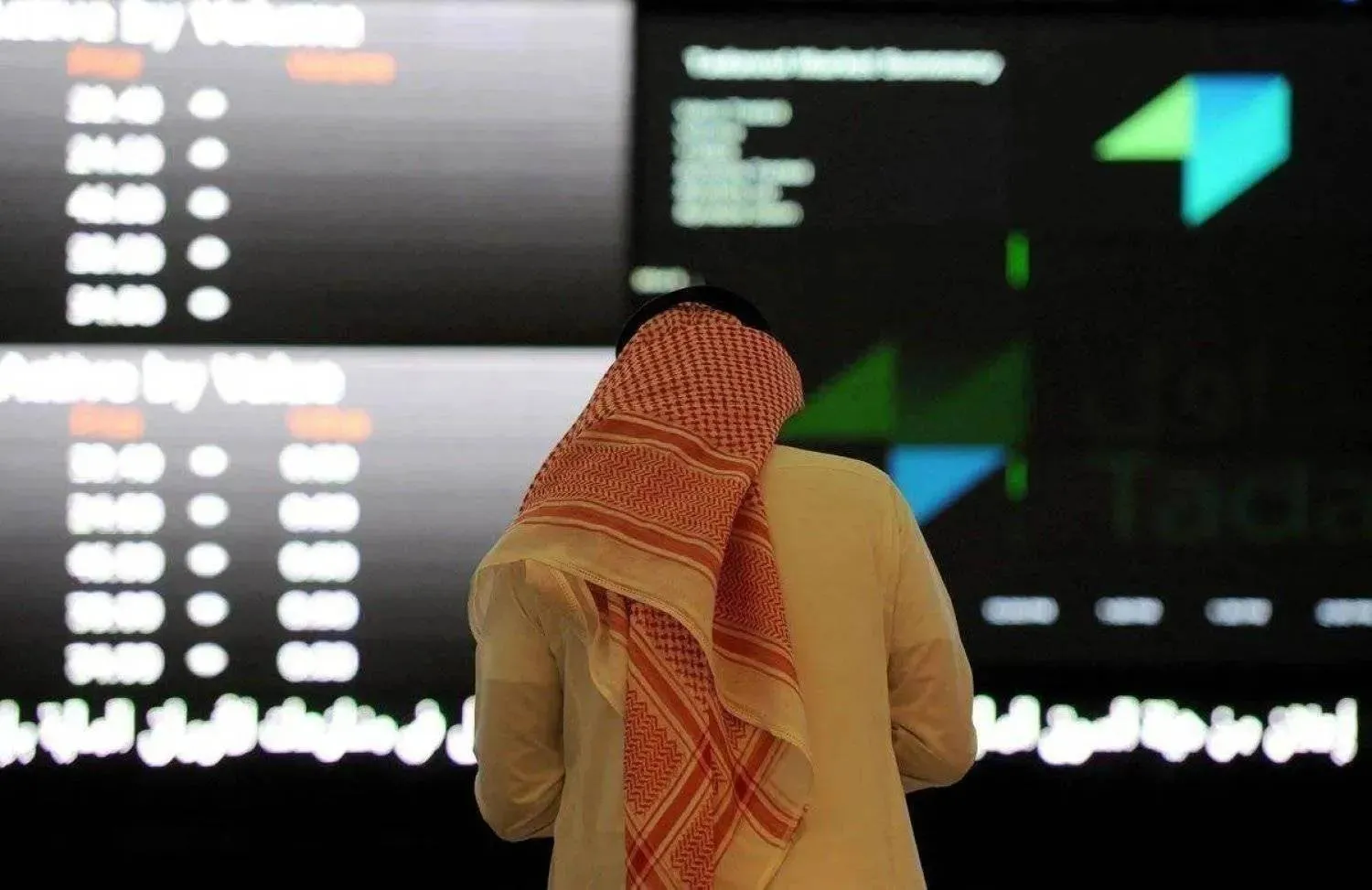
An investor watches a stock screen at the Saudi Stock Exchange in Riyadh (AFP)
TT

Gulf Markets Higher as US-Iran Ceasefire Holds

An investor watches a stock screen at the Saudi Stock Exchange in Riyadh (AFP)

Saudi Arabia's ⁠benchmark stock ⁠index rose 0.4% on Wednesday, with most constituents trading in positive territory. Gains were led by information technology, materials and healthcare stocks.

Saudi Arabian Mining Co added 4.5%, while Arabian Mills for Food Products surged 8% after reporting a 32% rise in first-quarter net profit.

US President Donald Trump said he would briefly pause an operation escorting ships through the Strait of Hormuz, a key waterway that carries about a fifth of global oil supplies and has been blockaded by Iran since late February, triggering a global energy crisis.

So the fragile US-Iran ceasefire held firm despite a fresh flare-up in tensions, allowing investors to turn their attention back to corporate earnings.

Dubai's benchmark stock index rose 1.5%, rebounding from losses in the previous session.

Among individual stocks, blue-chip developer Emaar Properties gained 1.7%, while Dubai's largest lender, Emirates NBD, added 1.5%.

The Abu Dhabi benchmark index advanced 0.5%, with most constituents trading higher. ⁠Gains were led by utilities, healthcare and technology shares.

Presight AI Holding jumped 5%, while Alpha Dhabi climbed 2.3%.

The Qatari benchmark index edged up 0.3%, as most stocks traded higher. Industries Qatar gained 0.7%, while Qatar Fuel Co added 0.6%.


Most Gulf Markets Gain on Iran Deal

 Traders wait at the Bahrain Bourse in Manama_ Bahrain_ November 8_ 2020. REUTERS
Traders wait at the Bahrain Bourse in Manama_ Bahrain_ November 8_ 2020. REUTERS
TT

Most Gulf Markets Gain on Iran Deal

 Traders wait at the Bahrain Bourse in Manama_ Bahrain_ November 8_ 2020. REUTERS
Traders wait at the Bahrain Bourse in Manama_ Bahrain_ November 8_ 2020. REUTERS

Most ‌Gulf equities rose in early trade on Monday after the US and Iran announced a preliminary deal to end the war and restore traffic through the Strait of Hormuz.

Pakistan's prime minister said the two countries ‌are expected to ‌sign a memorandum ‌of ⁠understanding in Switzerland ⁠on Friday, following mediation by Islamabad.

Trump said on Sunday the waterway would reopen "toll free" and that the US blockade of Iranian ⁠ports would be lifted, while ‌Iran's ‌Mehr news agency reported the ‌draft deal envisages reopening it ‌within 30 days under Iranian arrangements.

Saudi Arabia's benchmark index gained 0.5%, with the country's biggest ‌lender by assets, Saudi National Bank.

However, oil giant ⁠Saudi ⁠Aramco slipped 1.1%.

Brent crude futures fell $3.65, or 4.2%, to $83.68 a barrel by 0630 GMT.

Qatar's benchmark index advanced 1%, with Qatar National Bank, the region's largest lender, jumped 1.9%.

UAE bourses were closed for a public holiday.


Musk Says SpaceX Could Bring $1 Trillion in Revenue by 2030

Founder, CEO, Chairman, and Chief Engineer of SpaceX, Elon Musk, speaks via videolink on the day of SpaceX's initial public offering (IPO) at the Nasdaq MarketSite in New York City, US, June 12, 2026. REUTERS/Brendan McDermid
TT

Musk Says SpaceX Could Bring $1 Trillion in Revenue by 2030

Founder, CEO, Chairman, and Chief Engineer of SpaceX, Elon Musk, speaks via videolink on the day of SpaceX's initial public offering (IPO) at the Nasdaq MarketSite in New York City, US, June 12, 2026. REUTERS/Brendan McDermid

Elon ‌Musk said on Sunday that his rocket company, SpaceX, could bring in $1 trillion in revenue by 2030, making the statement two days after the company went public, valuing it at over $2 trillion.

"And I would be surprised if revenue ‌is not greater ‌than $1T in 2031," he ‌wrote ⁠on his social ⁠media platform X, replying to journalist and financial commentator Jon Erlichman.

SpaceX on Friday became the sixth-largest US firm, cementing Musk's status as the ⁠world's first trillionaire.

However, the ‌company ‌still makes far less money than similarly ‌valued tech giants like ‌Broadcom and Amazon.com.

In 2025, SpaceX's revenue jumped to $18.67 billion from $14.02 billion a year earlier, but the ‌company swung to a net loss of $4.94 billion from ⁠a ⁠profit of $791 million.

Some Wall Street analysts are cautious about the company's growth.

Goldman had estimated that SpaceX's revenue would exceed $470 billion in 2030, while Morgan Stanley projected it would reach nearly $330 billion, according to a Wall Street Journal report from earlier this month.


Fitch Affirms China's Credit Rating at 'A'

 A woman walks past murals at a shopping center in Beijing on June 13, 2026. (AFP)
A woman walks past murals at a shopping center in Beijing on June 13, 2026. (AFP)
TT

Fitch Affirms China's Credit Rating at 'A'

 A woman walks past murals at a shopping center in Beijing on June 13, 2026. (AFP)
A woman walks past murals at a shopping center in Beijing on June 13, 2026. (AFP)

Global ratings agency Fitch on Monday affirmed China's long-term sovereign rating at "A" with a stable outlook, citing its large and diversified ‌economy, which supports ‌prospects for solid ‌GDP ⁠growth and the ⁠country's important role in global trade.

China, which faced high US tariff uncertainty last year, should see some relaxation after US President ⁠Donald Trump's visit, Fitch said, ‌even ‌as it warned of weak ‌household confidence weighing on goods ‌consumption.

Data from last month showed China's official manufacturing purchasing managers' index dropping to 50 from ‌50.3 in April, its lowest reading in three months ⁠as ⁠demand weakened. A level below 50 typically signals contraction.

"The energy price shock may pose a challenge, but large crude oil inventories, substantial refining capacity and diversified energy sources should cushion risks," the ratings agency said.