


Saudi Arabia, Türkiye Agree on Visa Exemption for Diplomatic and Special Passports

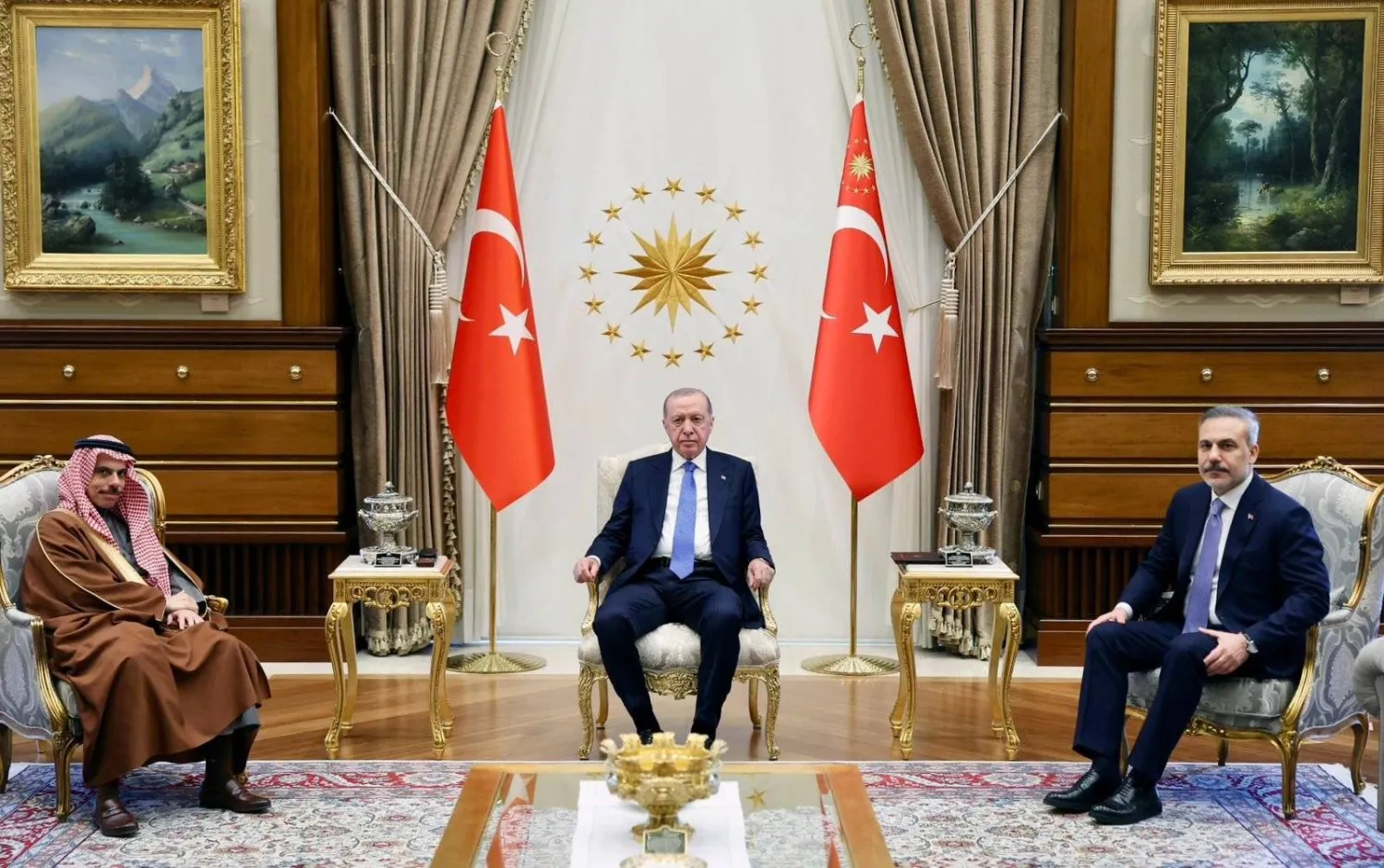
The Turkish President receives the Saudi Foreign Minister in the presence of his Turkish counterpart in Ankara on Wednesday (SPA)
TT

Saudi Arabia, Türkiye Agree on Visa Exemption for Diplomatic and Special Passports

The Turkish President receives the Saudi Foreign Minister in the presence of his Turkish counterpart in Ankara on Wednesday (SPA)

Saudi Arabia and Türkiye have signed a reciprocal visa exemption agreement for holders of diplomatic and special passports.

After the signing of the agreement, Saudi Minister of Foreign Affairs Prince Faisal bin Farhan bin Abdullah met with Turkish President Recep Tayyip Erdogan at the Presidential Complex in Ankara.

During Wednesday’s meeting, the two sides reviewed bilateral relations and ways to strengthen cooperation to serve common interests and promote security and stability in the region.

The meeting was attended by Saudi Vice Minister of Foreign Affairs Waleed Elkhereiji, the Kingdom’s Ambassador to Türkiye, Fahad Abualnasr, and Director General of the General Department for Councils and Committees Fahad Alharthi.
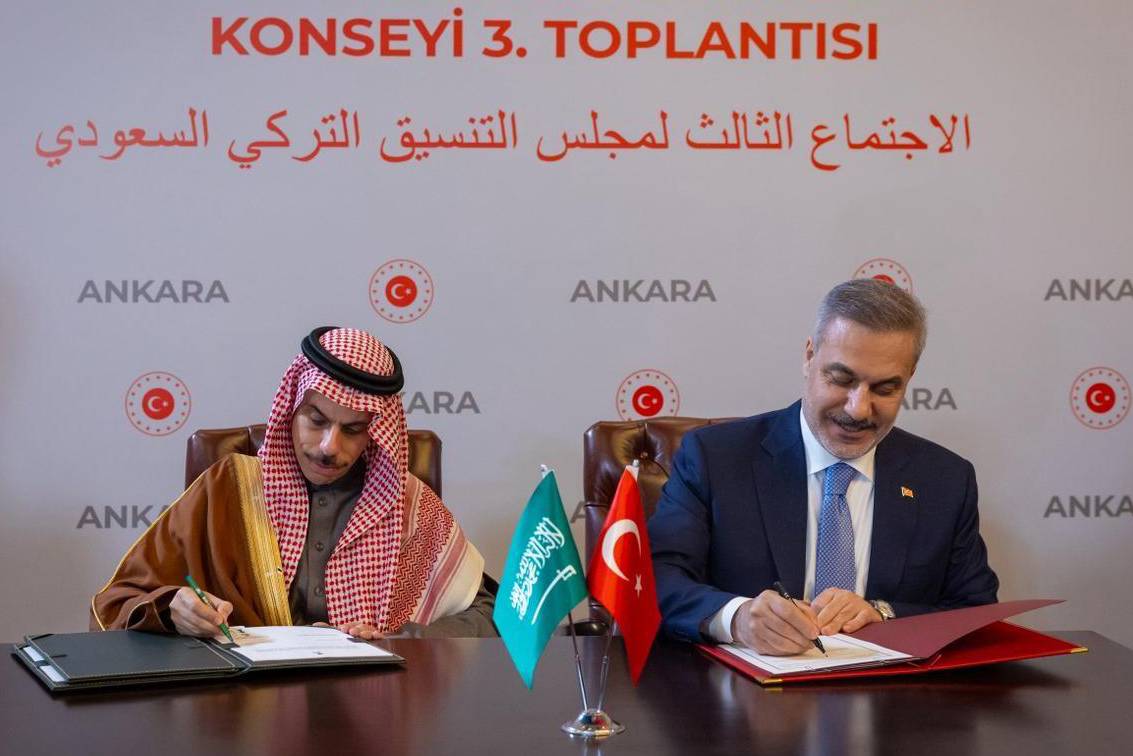
 

06 May 2026, Türkiye, Ankara: Turkish Foreign Minister Hakan Fidan (R) and Saudi Foreign Minister Prince Faisal bin Farhan Al Saud sign a bilateral agreement on mutual visa exemption for diplomatic and special passport holders following the third meeting of the Turkish-Saudi Coordination Council in Ankara. Photo: -/Saudi Press Agency/dpa


Also Wednesday, Prince Faisal and Turkish Minister of Foreign Affairs Hakan Fidan co-chaired the third meeting of the Turkish-Saudi Coordination Council in Ankara.

The meeting reflected the advanced relations between the two countries and their commitment to strengthening coordination and cooperation across all fields in a manner that serves common interests and meets the aspirations of the leadership and peoples of both countries.

At the outset of the meeting, the ministers reviewed relations between the two countries and stressed the importance of institutionalizing current and future cooperation within the framework of the Turkish-Saudi Coordination Council to ensure sustainable progress and shared prosperity.

They also stressed the need to leverage the capabilities and resources available to both countries to achieve mutual benefits, while commending the role of the council’s secretariat and affiliated committees.

The two ministers hoped to hold the fourth meeting of the council in the Kingdom on a date to be agreed upon by both sides.
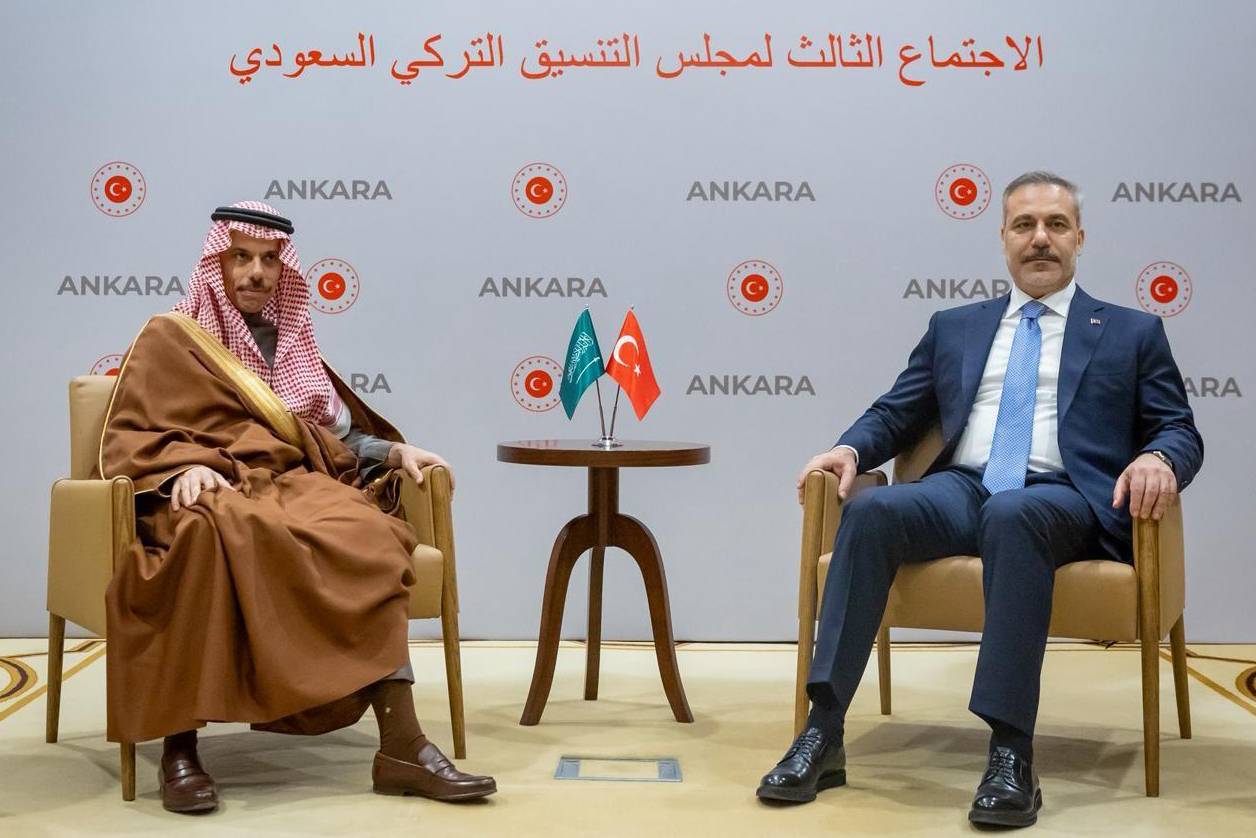
 

06 May 2026, 06 May 2026, Türkiye, Ankara: Turkish Foreign Minister Hakan Fidan (R) meets with Saudi Foreign Minister Prince Faisal bin Farhan Al Saud following the third meeting of the Turkish-Saudi Coordination Council in Ankara. Photo: -/Saudi Press Agency/dpa


The Turkish-Saudi Coordination Council, established in 2016, is a mechanism for cooperation and consultation between the two countries aimed at developing and strengthening relations in all their dimensions within an institutional framework.

The first meeting of the Council was held in Ankara on February 7 and 8, 2017, while the second meeting was held in Riyadh on May 18, 2025.

The Council includes 5 sub-committees with the participation of relevant authorities from both countries: The Political and Diplomatic Committee, the Military and Security Committee, the Culture, Sports, Media, and Tourism Committee, the Social Development, Health, and Education Committee, and the Trade, Industry, Investment, Infrastructure, and Energy Committee.

Regular meetings of the sub-committees are held, the last of which was the meeting of the Political and Diplomatic Committee held virtually on April 28 last year to prepare for the Council's third meeting.

Saudi Aid to Refugees and Displaced People Worldwide Approaches $24 Billion

Projects implemented by the King Salman Humanitarian Aid and Relief Center have benefited 113 countries worldwide (SPA). 
TT

Saudi Aid to Refugees and Displaced People Worldwide Approaches $24 Billion

Projects implemented by the King Salman Humanitarian Aid and Relief Center have benefited 113 countries worldwide (SPA). 

Saudi Arabia’s support for refugees, displaced persons, and temporary residents around the world has reached unprecedented levels, according to newly released figures that highlight the Kingdom’s expanding humanitarian role.

The assistance reflects Saudi Arabia’s commitment to supporting vulnerable populations, rooted in its humanitarian values and dedication to preserving human dignity wherever it is threatened.

The figures were released as the King Salman Humanitarian Aid and Relief Center (KSrelief) announced Sunday the establishment of a new camp for displaced Palestinians north of Khan Younis in the southern Gaza Strip.

The facility is intended to provide safe shelter for families who have lost their homes amid the ongoing humanitarian crisis and is part of the Saudi public fundraising campaign to assist the Palestinian people in Gaza.

Coinciding with World Refugee Day, the data show that Saudi Arabia has provided more than $23.7 billion in humanitarian assistance to refugees, displaced persons, and temporary residents, both within the Kingdom and through relief, humanitarian, and development programs implemented across the globe.

The total reinforces Saudi Arabia’s standing as one of the world’s largest humanitarian donors.

Support for Refugees Living in Saudi Arabia

According to the data, refugees account for approximately 5.5 percent of Saudi Arabia’s population. The Kingdom has devoted considerable attention to those residing within its borders by providing free healthcare and education, facilitating access to employment opportunities, and promoting their integration into society across all regions of the country.

By 2026, assistance provided to visitors and refugees from Yemen, Syria, the Rohingya minority, and Sudan had exceeded $20.43 billion.

International Relief Efforts

Internationally, KSrelief continues to implement relief programs designed to ensure aid reaches those most in need. Its efforts include establishing and equipping refugee camps, operating mobile medical clinics, distributing food baskets and shelter supplies, and implementing water and sanitation projects.

Syria topped the list of beneficiary countries, receiving 254 KSrelief projects valued at $290 million. These included the management and operation of KSrelief clinics in Jordan’s Zaatari Refugee Camp at a cost exceeding $2 million; the distribution of winter clothing vouchers in Lebanon under the Kanaf program, valued at $700,000; and the distribution of more than six million loaves of bread through the Al-Amal Charitable Bakery at a cost of more than $3 million.

In Yemen, KSrelief implemented 49 humanitarian projects worth more than $145 million. The initiatives included the operation and maintenance of the Saudi Village for Yemeni Refugees in Obock, Djibouti, as well as the operation of medical clinics providing primary and emergency healthcare services and early-stage medical intervention.

In Palestine, the center carried out 41 projects valued at more than $17 million, focusing on strengthening food and agricultural security, supplying essential inputs for bread production, and distributing vouchers for basic food commodities.

Joint Programs with International Organizations

As part of broader efforts to support refugees and displaced populations, KSrelief has signed joint implementation agreements with the United Nations High Commissioner for Refugees (UNHCR) and other international organizations.

Among these initiatives is a program to strengthen protection services for displaced and refugee families in Yemen, benefiting 44,722 individuals at a cost exceeding $3 million.

The center has also funded an emergency relief program for people affected by the humanitarian crisis in Ukraine. The initiative serves more than 23,000 beneficiaries and aims to improve living conditions while reducing the risks associated with harsh winter weather.

In Burkina Faso, KSrelief launched a separate project to procure and distribute 3,400 shelter kits to the most vulnerable families, benefiting approximately 17,000 people.

Since its establishment in 2015, the King Salman Humanitarian Aid and Relief Center has implemented 4,394 projects in 113 countries, with a total value exceeding $8 billion.


Saudi Foreign Minister Meets Counterparts from Sudan, Algeria, Syria, and Mauritania

Saudi Foreign Minister Prince Faisal bin Farhan (Asharq Al-Awsat)
TT

Saudi Foreign Minister Meets Counterparts from Sudan, Algeria, Syria, and Mauritania

Saudi Foreign Minister Prince Faisal bin Farhan (Asharq Al-Awsat)

Saudi Minister of Foreign Affairs Prince Faisal bin Farhan bin Abdullah on Monday held separate meetings in Amman with his counterparts from Sudan, Algeria, Mauritania, and Syria on the sidelines of the 165th Ordinary Session of the Council of the League of Arab States at the ministerial level, the Saudi Press Agency reported Tuesday.

During his meeting with Sudan’s FM, Mohieldin Salem Ahmed Ibrahim, the two officials discussed regional developments and exchanged views on issues of mutual interest.

The Saudi minister and his Algerian counterpart, Ahmed Attaf, reviewed bilateral relations and discussed regional developments and efforts underway to address them.

With the Foreign Minister of Mauritania, Dr. Mohamed Salem Ould Merzoug, bin Farhan reviewed bilateral relations between the two countries and discussed several issues of mutual interest.

The Saudi minister also discussed bilateral ties with Syrian Minister of Foreign Affairs and Expatriates Asaad al-Shaibani, as well as regional developments and efforts underway to address them.


Gulf FMs Discuss Efforts to Consolidate Regional Security

Gulf foreign ministers and GCC Secretary General Jasem Albudaiwi are seen in Amman on Monday. (GCC)
TT

Gulf FMs Discuss Efforts to Consolidate Regional Security

Gulf foreign ministers and GCC Secretary General Jasem Albudaiwi are seen in Amman on Monday. (GCC)

The Gulf Cooperation Council Ministerial Coordination meeting discussed in Amman on Monday the latest regional and international efforts to consolidate security and stability in the region.

GCC Secretary General Jasem Albudaiwi said the meeting, attended by Gulf foreign ministers, welcomed the signing of the Memorandum of Understanding between the United States and Iran.

“It underscored the support for mediation and de-escalation efforts, expressing hope that this signing would pave the way toward a final and comprehensive agreement that bolsters security and stability regionally and globally,” he added.

The Ministerial Coordination meeting was held on the sidelines of the Council of the League of Arab States at the Ministerial Level in its resumed 165th ordinary session.

Saudi Foreign Minister Prince Faisal bin Farhan bin Abduallah had arrived in Amman earlier to attend the meetings.

He held a series of bilateral meetings to discuss relations and exchange views on regional and international developments of common interest.