

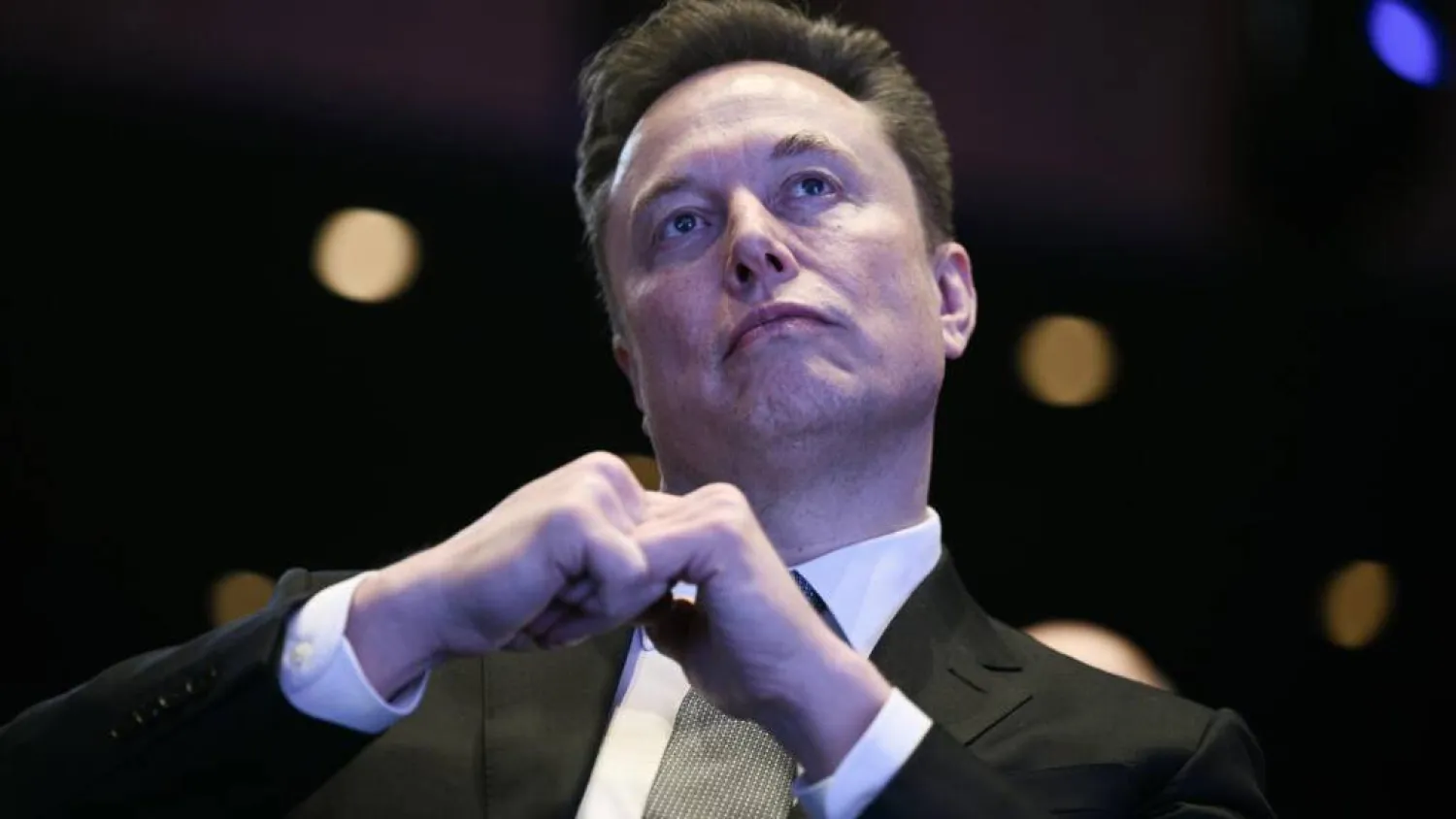

Musk's SpaceX Strikes Data Center Deal with Anthropic

The deal involving Elon Musk's SpaceX and Anthropic marks a surprising partnership between two companies whose leaders have been publicly at odds. Brendan SMIALOWSKI / AFP
TT

Musk's SpaceX Strikes Data Center Deal with Anthropic

The deal involving Elon Musk's SpaceX and Anthropic marks a surprising partnership between two companies whose leaders have been publicly at odds. Brendan SMIALOWSKI / AFP

AI startup Anthropic announced Wednesday it has agreed to a major computing partnership with Elon Musk's SpaceX, securing access to a vast data center as the Claude maker scrambles to keep pace with surging demand for its AI services.

Under the deal, Anthropic will use all of the compute capacity at SpaceX's Colossus 1 data center in Memphis, Tennessee -- a facility originally built to power Musk's rival AI venture, xAI, AFP said.

The agreement gives Anthropic access to more than 300 megawatts of capacity, backed by over 220,000 Nvidia AI chips, within one month.

The company said the additional capacity would directly benefit subscribers to its Claude Pro and Claude Max plans.

Anthropic also announced it was immediately letting users do more with its technology.

The company said it was doubling the amount of Claude Code -- an AI-powered coding assistant that can write, edit, and debug software -- that paying subscribers can use in a five-hour window and eliminating restrictions that had previously cut access during busy periods.

The SpaceX deal marks a surprising partnership between two companies whose leaders have been publicly at odds.

Musk wrote in February that Anthropic "hates Western Civilization" and questioned whether there was a "more hypocritical company than Anthropic."

Anthropic CEO Dario Amodei has rankled Musk and other Silicon Valley insiders with his public warnings about the dangers of AI.

Amodei has also clashed with the Trump administration after the Pentagon designated Anthropic a supply chain risk earlier this year, a move Anthropic said amounted to unconstitutional retaliation for the company's advocacy on AI safety.

But on Wednesday Musk changed his tone, writing on X that he had spent time with senior Anthropic staff over the past week and was "impressed."

"Everyone I met was highly competent and cared a great deal about doing the right thing," he wrote.

In a separate post, Musk said he was "dissolving" xAI as a standalone company. "It will just be SpaceXAI, the AI products from SpaceX," he added, without elaborating.

SpaceX merged with xAI earlier this year in a deal valuing the two companies at $1.25 trillion. The company is widely expected to pursue an IPO this year that could be among the largest in corporate history.

The Colossus facility in Memphis has been a source of controversy.

xAI installed dozens of natural gas-burning turbines to power the site, claiming no federal permit was required because they were only for temporary use -- a move that drew persistent protests from civil rights groups who said it worsened air pollution in the Memphis area.

The SpaceX pact is the latest in a string of major compute agreements Anthropic has announced in recent months as the company looks to secure the computing power needed to meet its growing needs.

These include megadeals with Amazon, Google and Broadcom, Microsoft and Nvidia, and an infrastructure investment with Fluidstack.

- AI battle -

The announcement comes as Anthropic and OpenAI -- crosstown rivals in San Francisco -- are locked in a direct battle to equip businesses with AI agents: semi-autonomous assistants capable of writing code, analyzing large volumes of documents, or processing medical records, whose adoption is accelerating rapidly.

On Tuesday, Anthropic unveiled 10 AI agents tailored specifically for banks, insurers, and asset managers -- tools capable of drafting sales presentations, conducting regulatory checks, and analyzing financial statements.

OpenAI, meanwhile, announced a partnership Tuesday with global auditing giant PwC to support its financial operations.

But the race to deploy AI agents is running headlong into a scramble for the chips and energy needed to power them.

Data center construction in the United States, despite moving at an accelerated pace, has struggled to keep up.

And the energy-hungry projects, blamed for driving up household electricity bills, are drawing growing opposition from American citizens -- an issue that could weigh on November's midterm elections.



Nvidia Boss Presses G20 Ministers to Build AI Infrastructure

Nvidia CEO Jensen Huang speaks during the G20 Innovation Ministerial on September 2, 2026 in Chapel Hill, North Carolina. (Getty Images/AFP)
TT

Nvidia Boss Presses G20 Ministers to Build AI Infrastructure

Nvidia CEO Jensen Huang speaks during the G20 Innovation Ministerial on September 2, 2026 in Chapel Hill, North Carolina. (Getty Images/AFP)

Nvidia chief Jensen Huang urged G20 ministers on Wednesday to build more data centers to support the artificial intelligence revolution, and warned that leaders who talk up the technology's dangers risk leaving their countries behind.

Huang made the plea on the second day of a G20 meeting in North Carolina, where the Trump administration has corralled top AI executives to pitch their vision to ministers from the world's leading economies.

"In the end, what every single country will have to recognize is that (AI) is infrastructure, just as it's water, roads, electricity, the internet," Huang told ministers at the event.

"Every single country needs to build infrastructure so that you can support your own local economy," he said.

Nvidia is the key company behind the generative AI frenzy that has catapulted it to become the world's most valuable publicly traded company.

The company's graphics processing units (GPUs), housed in specially built data centers going up across the world, are the key components for training AI models.

Such facilities provide "the digital intellectual capacity to support your researchers and students and society and industries and startups," he said.

Huang pushed back on notions that AI posed a threat to jobs, one of the fears that has fueled public opposition to the technology.

"The idea that somehow all the jobs are going to be eliminated or removed -- that's just nonsense," Huang told the G20 technology ministers.

Work would be redefined rather than eliminated, he argued.

"The tasks are going to be automated, but our jobs' purpose remain," he said.

He warned that countries would suffer if leaders "talk about the technology with fear, with uncertainty."

"The worst outcome is that you don't take advantage of it, that you are left behind. That is the single worst outcome," Huang said.

Huang also urged governments not to overregulate the technology, echoing similar comments by Elon Musk a day earlier.

"Don't regulate hypothetical theoretical harm, regulate actual and pragmatic harm," Huang said.

His appearance was moderated by US Commerce Secretary Howard Lutnick, who called Huang an "American treasure."

"Your company is leading us in a path that none of us, when we were young, ever dreamed possible," Lutnick said.

The meeting came amid a growing backlash against the construction of AI data centers in the United States, an issue that has taken on political weight as the country heads toward midterm elections in November.

President Donald Trump on Monday attacked opponents of artificial intelligence data centers, saying they would end up "backwards and poor."


Saudi Human Resources Ministry Launches AI Arabia Center of Excellence Initiative at LEAP 2026

The Saudi Ministry of Human Resources and Social Development launched the AI Arabia Center of Excellence initiative during LEAP 2026 held in Riyadh. (SPA)
TT

Saudi Human Resources Ministry Launches AI Arabia Center of Excellence Initiative at LEAP 2026

The Saudi Ministry of Human Resources and Social Development launched the AI Arabia Center of Excellence initiative during LEAP 2026 held in Riyadh. (SPA)

The Saudi Ministry of Human Resources and Social Development, represented by the Digital Sector Skills Council, the Ministry of Communications and Information Technology, Microsoft, and Gulf Intelligence, launched the AI Arabia Center of Excellence initiative during LEAP 2026 held in Riyadh.

The initiative aims to accelerate the adoption of artificial intelligence technologies by workers in the labor market, develop their skills to meet future needs, and achieve the goals of Saudi Vision 2030, the Saudi Press Agency reported on Wednesday.

The joint initiative focuses on the opportunities offered by AI in developing economic sectors and increasing their productivity, in addition to strengthening national capabilities to utilize these technologies and transform them into applications and solutions with a tangible economic impact.

The initiative includes a range of knowledge and dialogue outputs, including three working papers on AI's future and its economic applications. It also features dialogue sessions bringing together leading experts, decision-makers, and sector leaders to discuss the transition from using AI technologies to achieving measurable economic value. In addition, the initiative includes several other outputs and knowledge content.


From Technology to Impact: Saudi Interior Ministry Showcases Future of Security at LEAP 2026

The Saudi Interior Ministry's pavilion at LEAP 2026 in Riyadh. (SPA)
TT

From Technology to Impact: Saudi Interior Ministry Showcases Future of Security at LEAP 2026

The Saudi Interior Ministry's pavilion at LEAP 2026 in Riyadh. (SPA)

Technology does not begin with a device, nor does it end at a screen. At LEAP 2026, the Saudi Ministry of Interior is presenting an integrated approach to harnessing modern technologies, data, artificial intelligence (AI), and digital solutions, reported the Saudi Press Agency on Tuesday.

The approach transforms standalone tools into interconnected capabilities that enhance security and safety, empower security personnel, improve institutional efficiency and services, and strengthen decision-making.

The ministry’s participation highlights six interconnected systems that reflect the broader digital transformation of the security and services ecosystem. These include field security and safety, where technology enhances readiness and accelerates response; rapid response, which strengthens early intervention capabilities; and road safety, which uses technology and data to make roads safer.

The systems also include security cameras, which provide broader visibility and more advanced monitoring capabilities, and digital services, which make users’ interactions easier, faster, and more integrated. Institutional services serve as the overarching intelligence connecting the various components of the system.

Together, the six systems encompass 36 services and projects: seven in field security and safety, eight in rapid response, three in road safety, seven in security cameras, nine in digital services, and two in institutional services.

The figures reflect the breadth of the Ministry of Interior’s digital transformation and the diversity of its applications across the ministry’s ecosystem.

At LEAP 2026, the Ministry of Interior is demonstrating more than a collection of technologies. It is presenting an integrated ecosystem in which technology translates into capability — from the field to command centers, from roads to communities, from monitoring to response, and from digital services to institutional operations.

Assistant Minister of Interior for Technology Affairs Thamer Alharbi stressed that the Ministry of Interior has harnessed modern technologies and artificial intelligence to deliver reliable security, humanitarian services, and public safety. 

Inaugurating the ministry's pavilion at the LEAP 2026 conference, Alharbi stressed that the ministry's core mission remains protecting people, fostering trust, and empowering service providers through robust digital capabilities. 

He highlighted key achievements, noting that the national digital identity platform "Nafath," developed with the National Information Center, serves over 32 million beneficiaries across 1,245 linked platforms, facilitating more than 6.5 billion transactions. 

Alharbi outlined field-support innovations, including the "Maidan Companion," which builds situational context and coordinates specialized emergency capabilities, alongside "Absher Open Services," enabling governed multi-entity integration. 

He added that "Absher Companion," developed with the Ministry of Communications and Information Technology and the Digital Government Authority, has processed over 3.3 million interactions and executed more than 348,000 transactions with a 96% completion rate.