


Saudi Entertainment Becomes Strategic Driver of Economy

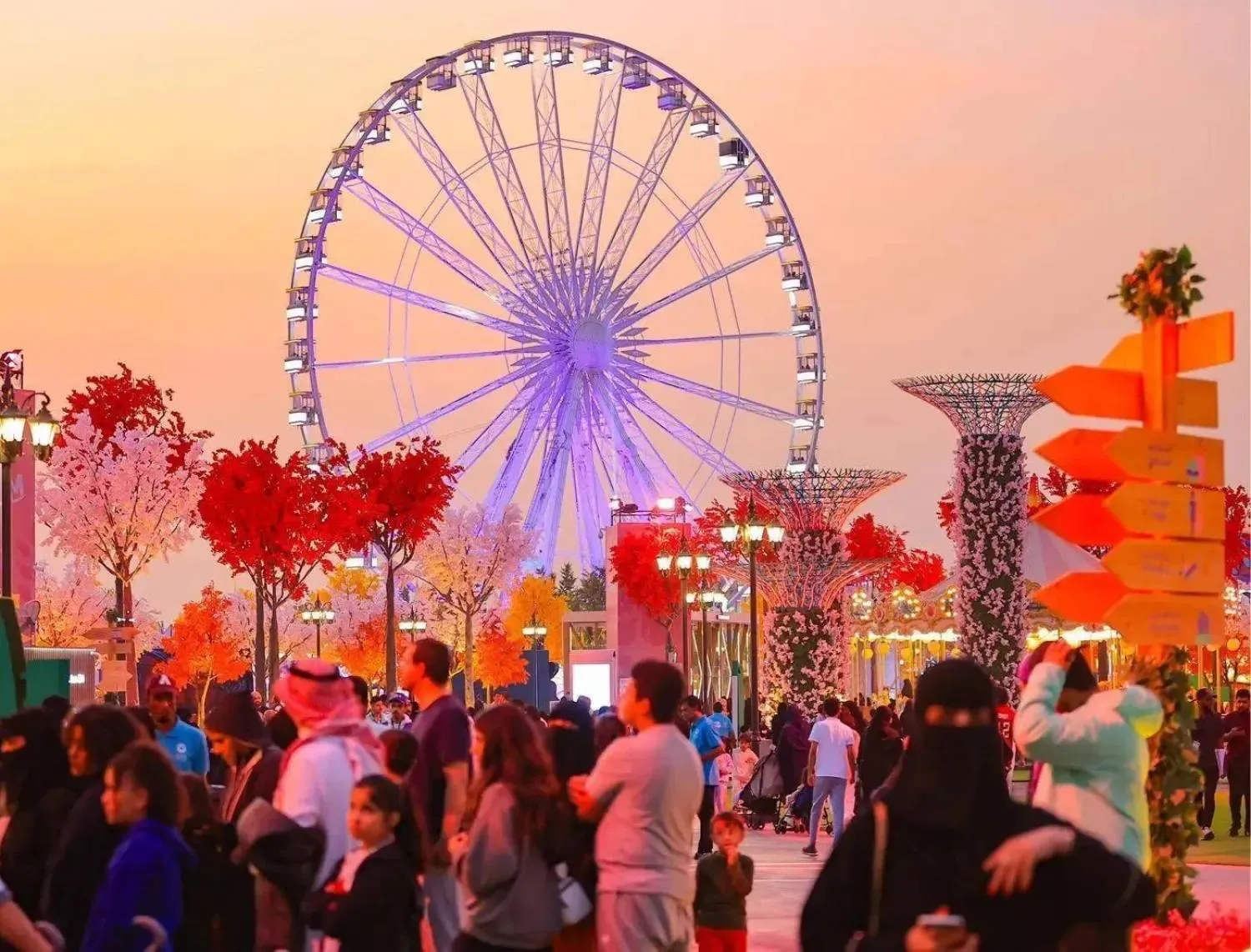
 Large crowds attend Riyadh Season, SPA
Large crowds attend Riyadh Season, SPA
TT

Saudi Entertainment Becomes Strategic Driver of Economy

 Large crowds attend Riyadh Season, SPA
Large crowds attend Riyadh Season, SPA

Over the past decade, Saudi Arabia’s entertainment sector has shifted from an activity with limited influence to one of the main drivers of economic diversification under Vision 2030.

After years in which the sector was viewed as marginal or seasonal, it has become an integrated industry covering major events and festivals, concerts and international shows, cinema and artistic production, gaming and esports, entertainment tourism, and the restaurant and retail sectors linked to events.

The transformation has been reflected economically through the attraction of billions of riyals in local and international investment, the creation of thousands of jobs for young people, and higher domestic spending that might otherwise have flowed abroad. It has also stimulated related sectors such as hospitality, aviation, and transport.

Since its establishment in 2016, the General Entertainment Authority has played a central role in building and accumulating the sector’s regulatory infrastructure and attracting international events, turning cities such as Riyadh and Jeddah into regional hubs for events and entertainment.

As a result, entertainment is no longer merely a consumer activity. It has become an economic, investment, and cultural tool that contributes to improving the quality of life and strengthening Saudi Arabia’s position as a regional and global destination.

320 million visitors

General Entertainment Authority Chairman Turki Alalshikh said that over 10 years of continuous work, Saudi Arabia’s entertainment ecosystem had developed through more than 39 seasons and 21 entertainment programs, offering diverse experiences and drawing more than 320 million visitors.

He said this had helped consolidate the country’s global presence in the sector.

Alalshikh thanked Custodian of the Two Holy Mosques King Salman bin Abdulaziz and Crown Prince Mohammed bin Salman for their “unlimited” support in establishing the General Entertainment Authority and building an integrated entertainment sector in the kingdom.

The chairman of the General Entertainment Authority had previously disclosed that the estimated brand value of Riyadh Season had reached $3.2 billion, reflecting the major growth in the season’s global reputation and confirming that it had become one of the leading entertainment brands in the Middle East and the world.

During the previous edition of Riyadh Season, he said the event included 11 main entertainment zones across the capital, 15 international championships, and 34 exhibitions and festivals, with the participation of more than 2,100 companies across various fields.

Local companies accounted for 95% of the total, through 4,200 contracts signed with the private sector, reflecting the empowerment of national talent and the growing contribution of the private sector to the local economy.

Tourism economy

In this context, the World Travel and Tourism Council, WTTC, recently said Saudi Arabia’s tourism sector was the largest in the Middle East.

It said the total contribution of travel and tourism to the kingdom’s economy reached about $178 billion in 2025, accounting for 46% of the Middle East’s tourism economy, according to the council’s methodology, which includes the sector’s direct and indirect contribution to gross domestic product.

The economic impact report said the total contribution of travel and tourism to Saudi Arabia’s GDP grew by about 7.4% in 2025, nearly double the global average growth rate of 4.1%.

At the regional level, Saudi Arabia exceeded the Middle East average growth rate of 5.3%, reinforcing its position as the fastest-growing tourism market in the region.

The figures underscore Saudi Arabia's regional leadership in tourism and its rapid growth since the start of the comprehensive transformation path outlined by Vision 2030.

The report pointed to business travel as one of the key enablers of growth in Saudi tourism, noting the kingdom’s emergence as a central hub for conferences, exhibitions and major international events. This strengthens its position as a leading global tourism destination with diverse demand drivers.

The WTTC report confirms the continued growth of Saudi Arabia’s tourism sector, a trend reflected in various global and local reports.

Saudi Arabia recently issued the Vision 2030 annual report for 2025, which showed strong performance in the tourism sector last year. The total number of domestic and inbound tourists reached about 123 million, further strengthening the kingdom’s position as a leading global tourism destination.


Oil Extends Climb on Prolonged Hormuz Export Uncertainty

An automated oil drilling rig operated by ExxonMobil in Midland, Texas, US, August 17, 2026. REUTERS/Sheila Dang
TT

Oil Extends Climb on Prolonged Hormuz Export Uncertainty

An automated oil drilling rig operated by ExxonMobil in Midland, Texas, US, August 17, 2026. REUTERS/Sheila Dang

Oil prices climbed for a fourth straight day on Wednesday as investors weighed conflicting messages from Tehran and Washington on whether the Strait of Hormuz is open to ships.

Brent crude futures climbed 69 cents, or 0.8%, to $91.71 by 0415 GMT, while US West Texas Intermediate crude futures were up 76 cents, or 0.9%, to $85.70 a barrel, Reuters reported.

Both contracts closed on Tuesday at their highest in more than three weeks as hopes of peace between the US and Iran faded.

US President Donald Trump said on Tuesday no talks were taking place with Iran ⁠and insisted the ⁠Strait of Hormuz was open, contradicting Iran's assertion that the critical waterway remained shut to shipping.

A temporary ceasefire agreement expired on Monday and a senior Iranian official told Reuters that his country was moving to a "fully offensive" military posture due to the diplomatic stalemate, though there were no reports of fresh strikes by either side on Tuesday.

"The shipping risks are increasing again as attacks from Iran ⁠and Houthis remain prevalent in both key chokepoints, keeping oil prices supported in the near term," said June Goh, senior oil market analyst at Sparta Commodities, referring to the Strait of Hormuz and Bab el-Mandeb strait.

Shipping through Hormuz slowed, data showed on Wednesday, as most shipowners avoided the key waterway due to a lack of clear signaling on its reopening from a blockade.

"However, Gulf producers are finding alternative export routes to bring oil out to the Gulf of Oman," said Goh. "If sustainable, this could help increase shut-in production from these two producers."

To avoid the Strait of Hormuz, Iraq's cabinet approved mechanisms for exporting Iraqi ⁠crude through specialized international ⁠and local companies and via multiple export outlets, the government said on Tuesday.

The contracts under the new mechanism will run for three months starting September 1, according to a statement issued after the cabinet meeting.

In the US, crude oil and distillate inventories fell, while gasoline stocks rose last week, market sources said, citing data from the American Petroleum Institute.

Official inventory numbers from the US Energy Information Administration are due at 10:30 a.m. ET (1430 GMT), with analysts polled by Reuters expecting crude stocks fell by about 600,000 barrels in the week ended August 14.


Iraq Approves Three-Month Mechanism to Export Crude via Local, International Firms

The Zubair Oil Field in Basra, Iraq, April 6, 2026. (Reuters)
TT

Iraq Approves Three-Month Mechanism to Export Crude via Local, International Firms

The Zubair Oil Field in Basra, Iraq, April 6, 2026. (Reuters)

Iraq's cabinet approved mechanisms for exporting Iraqi crude through specialized international and local companies and via multiple export outlets, the government said on Tuesday.

The contracts under the new mechanism will run for three months starting September 1, according to a statement issued after the cabinet meeting.

Iraq ‌is seeking ‌to diversify its oil ‌export ⁠channels and maintain flexibility ⁠in marketing its crude amid the Iran war and the closure of the Strait of Hormuz, which has disrupted regional oil flows and created uncertainty around shipping routes.

Iraq ⁠has worked to develop ‌alternative export ‌routes in addition to its traditional southern terminals, ‌including routes through Türkiye and Syria, ‌as it seeks to reduce reliance on Gulf shipping routes.

Iraq is OPEC's second-largest oil producer and relies heavily on ‌crude exports for state revenue. Most of its exports are ⁠shipped ⁠from terminals in the southern Gulf, leaving the country particularly exposed to disruptions in the Strait of Hormuz.

The government did not immediately provide details on the companies to be selected, the volumes to be exported under the mechanism, or the specific export outlets covered by the contracts.


Aramco, Maaden Sign Joint Venture Agreement on Mineral Exploration, Hard-Rock Mining in Saudi Arabia

File photo of the Saudi flag - SPA
TT

Aramco, Maaden Sign Joint Venture Agreement on Mineral Exploration, Hard-Rock Mining in Saudi Arabia

File photo of the Saudi flag - SPA

Aramco and Maaden announced the signing of a shareholders’ agreement to form a Joint Venture (JV) to unlock new opportunities in mineral exploration and hard-rock mining in the Kingdom of Saudi Arabia.

Combining the strengths of two leaders in their respective fields, the JV would focus on copper and other minerals critical to the energy transition. The JV plans were first disclosed in January 2025.

The JV is expected to be owned 51% by Maaden and 49% by Aramco, and focus on exploration across Zone-4, also known as the Transition Zone, within the Arabian Platform. It represents a major new opportunity for mineral discovery in the Kingdom.

Spanning approximately 182,000 square kilometers, nearly 10% of Saudi Arabia’s total land area, the expected exploration area stretches along a 100-kilometer-wide zone running parallel to the Arabian Shield.

Aramco Vice President of Transition Minerals Saleh M. Al Saleh said: "Over 90 years, Aramco has accumulated and analyzed the largest amount of geological and geophysical data ever acquired in a single basin for the Kingdom. This partnership intends to leverage this legacy information to find minerals in the JV area within the basin. Maaden’s expertise, our people, high-performance computing, and AI are expected to play a pivotal role in accelerating the discovery of key transition minerals at low cost."

Maaden Executive Vice President for Exploration Darryl Clark said: “Maaden has been advancing one of the world’s largest single jurisdiction exploration programs across the Arabian Shield to help unlock the Kingdom’s mineral potential. This joint venture would take that ambition into a new area. By combining Maaden’s exploration and development expertise with Aramco’s extraordinary knowledge of the Arabian Platform, we would have an opportunity to move faster, explore smarter, and create new opportunities to discover the minerals that will power the energy transition.”

Copper, which is increasingly significant for electric vehicles, power networks, energy storage, and renewable energy systems, would be a main focus of the JV. Copper is a major metal making up over 20% of the $1.2 trillion mined metals market. The copper market is currently valued at approximately $250 billion and is projected to grow to over $400 billion by 2035. The JV would also explore for other energy transition minerals including zinc, lead, and rare earth elements that are expected to be crucial to industries of the future.

Leveraging advanced computational algorithms, AI, and high-performance computing, the JV intends to target areas most likely to contain copper and valuable minerals, accelerating the path from regional screening to target definition and discovery. This is expected to support long-term sector development, reinforce the Kingdom’s role in the global minerals value chain, and help meet rising demand for transition minerals.

The effectiveness of the shareholders’ agreement and the incorporation of the JV is conditional upon the fulfillment of certain condition precedents, including, but not limited to, obtaining all the required corporate and regulatory approvals and antitrust clearance.
