


Trump is Lifting Restrictions on Hunting in National Parks, Refuges and Wilderness Areas

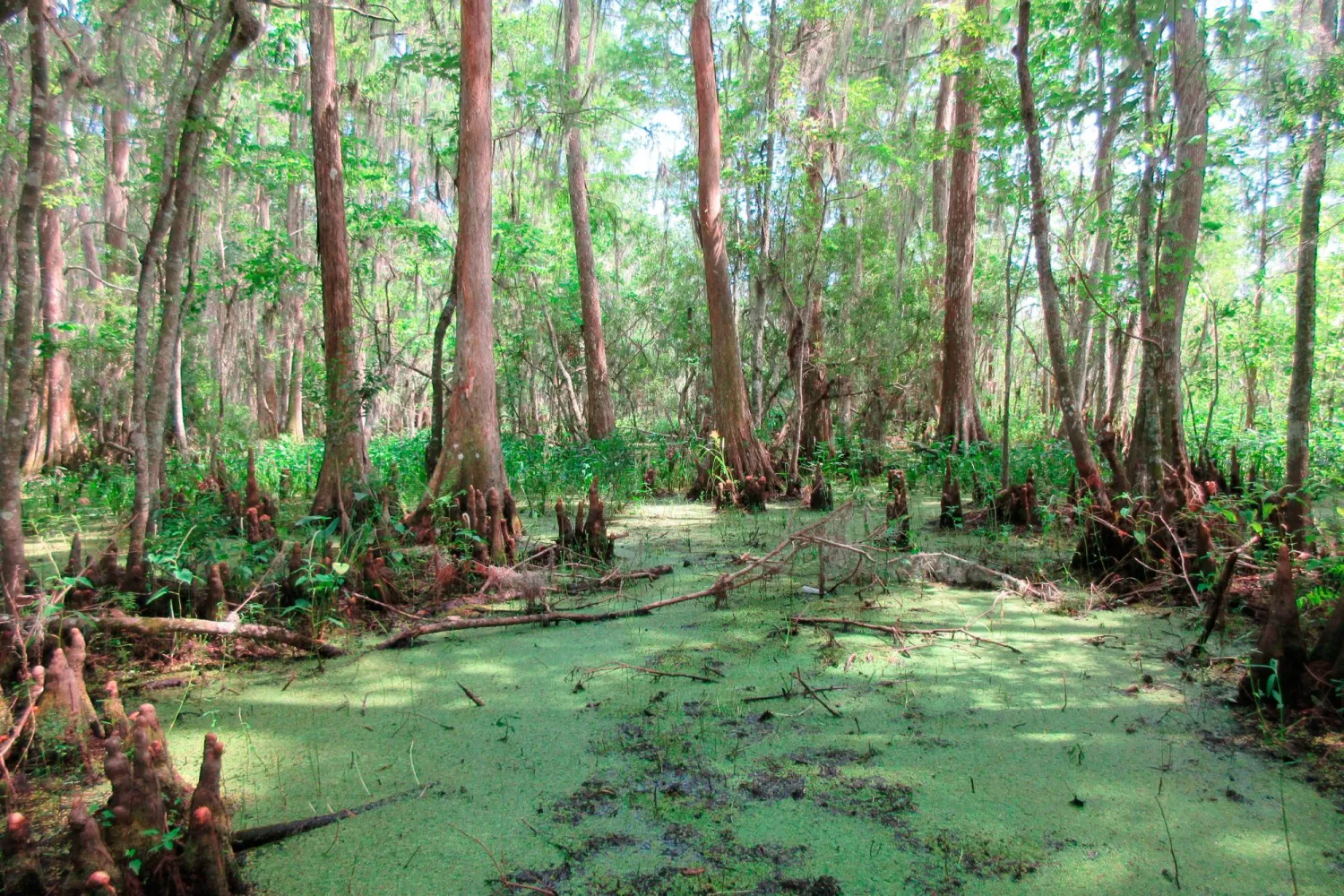
FILE - Cypress trees grow in a swamps in the Barataria Preserve, part of Jean Lafitte National Historical Park and Preserve in Marrero, La., June 3, 2018. (AP Photo/Beth J. Harpaz, File)
TT

Trump is Lifting Restrictions on Hunting in National Parks, Refuges and Wilderness Areas

FILE - Cypress trees grow in a swamps in the Barataria Preserve, part of Jean Lafitte National Historical Park and Preserve in Marrero, La., June 3, 2018. (AP Photo/Beth J. Harpaz, File)

President Donald Trump's administration is quietly pushing national park, refuge and wilderness area managers to dramatically scale back hunting restrictions, raising questions about visitor safety and the impact on wildlife.

US Department of the Interior Secretary Doug Burgum issued an order in January directing multiple agencies to remove what he termed “unnecessary regulatory or administrative barriers” to hunting and fishing and justify regulations they want to keep in place.

“Expanding opportunities for the public to hunt and fish on Department-managed lands not only strengthens conservation outcomes, but also supports rural economies, public health, and access to America's outdoor spaces,” Burgum wrote. “The Department's policy is clear: public and federally managed lands should be open to hunting and fishing unless a specific, documented, and legally supported exception applies.”

Order clears the way for tree stands, training dogs and more The order applies to 55 sites in the lower 48 states under the National Park Service's jurisdiction, according to the National Parks Conservation Association. Managers at various locations have already lifted prohibitions on hunting stands that damage trees and training hunting dogs, using vehicles to retrieve animals and hunting along trails, according to an NPCA review of site regulations the organization recently performed after learning of the order. The New York Times was the first to report on the changes.

The hunting season in the Cape Cod National Seashore in Massachusetts, for example, would be extended through the spring and summer. Hunters in the Lake Meredith National Recreation Area in Texas would be allowed to clean their kills in bathrooms. And hunters would be allowed to kill alligators in the Jean Lafitte National Historical Park and Preserve in Louisiana.

An effort to save hunting? Burgum’s order comes as hunting continues to decline in the face of increasing urbanization. Only about 4.2% of the US population identified as a hunter older than 16 in 2024, according to US Fish and Wildlife Service and US Census data, leaving state wildlife agencies short on revenue from license sales and excise taxes on guns and ammunition.

Hunting advocates and conservative policymakers have been exploring multiple avenues to keep hunting alive, including promoting the sport to women and young children, creating seasons for more species and expanding hunter access to public land.

Hunting is currently allowed across about 51 million National Park Service acres spanning 76 sites, although only about 8 million of those acres lie in the contiguous United States with the rest in Alaska, according to the NPS website. Fishing is allowed in 213 sites. NPS sites typically adopt state hunting and fishing regulations although they can impose restrictions that go beyond them to protect public safety and wildlife resources, like prohibiting shooting along a trail or near buildings.

‘I’d love to know the problem we're trying to solve' Dan Wenk, a former Yellowstone National Park superintendent and NPS deputy operations director, said park managers established their regulations by talking with stakeholders and, as a result, most of the restrictions have been widely accepted. He said it makes no sense for the Trump administration to upend that structure without substantial public discussion.

“Process never seems to stand in the way of many things with this administration,” Wenk said in a telephone interview with The Associated Press. “This was never a big issue. I'd love to know the problem we're trying to solve. Then I could understand the costs that it's going to take to solve it in terms of resources and visitor safety.”
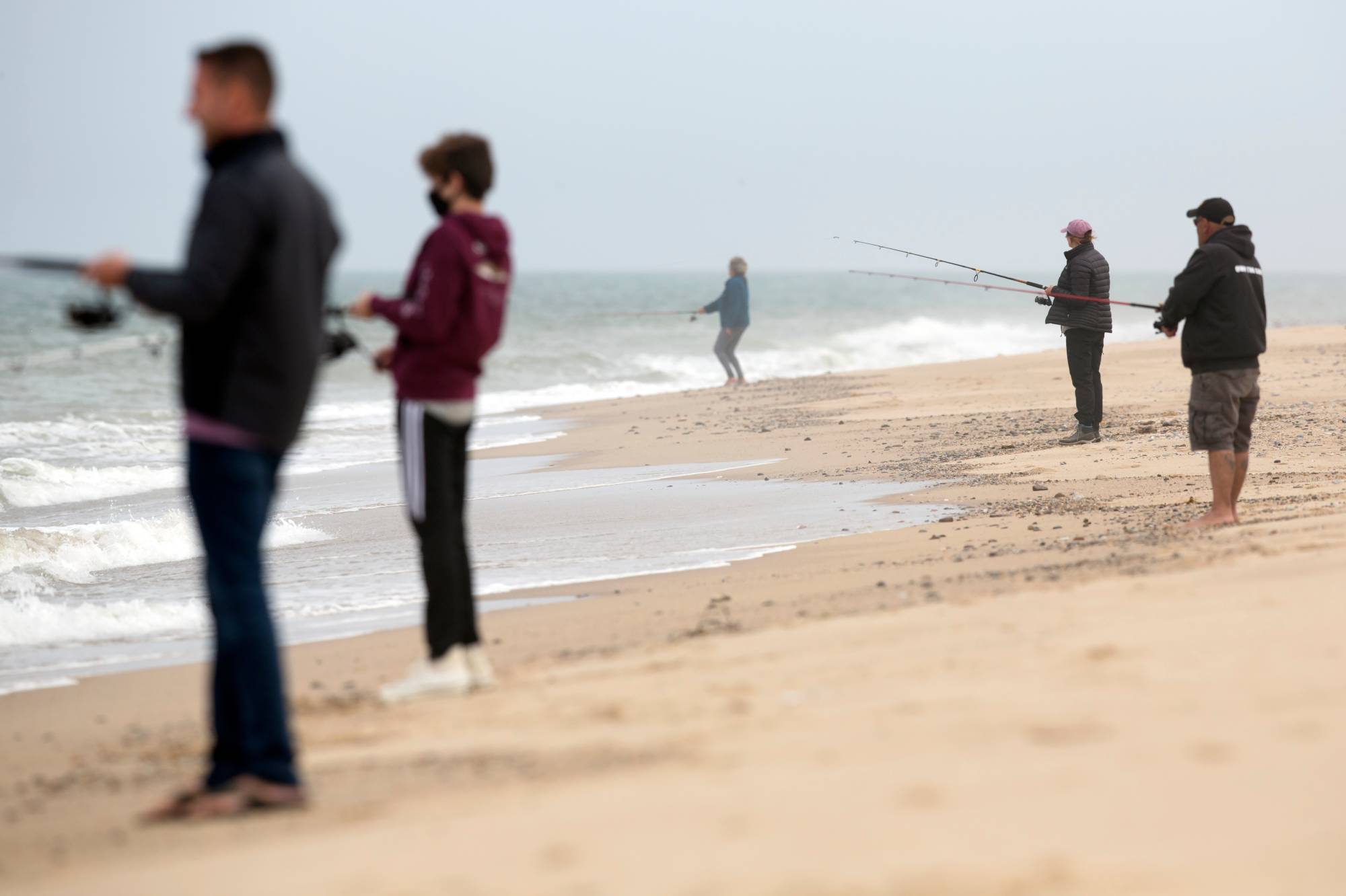
FILE - People fish on Race Point Beach, part of Cape Cod National Seashore, May 25, 2020, in Provincetown, Mass. (AP Photo/Michael Dwyer, File)

Interior Department spokesperson Elizabeth Peace said in an email that the order is a “commonsense approach to public land management" and promised that any closures or limits needed for public safety, resource protection or legal compliance will remain in place.

“For decades, sportsmen and women have been some of the strongest stewards of our public lands," she said, “and this order ensures their access is not unnecessarily restricted by outdated or overly broad limitations that are not required by law.”

Asked in a follow-up email about the extent of any public outreach efforts, if any, Peace said only that the department had given the AP its statement on the order.

Hunting groups applaud the order The Theodore Roosevelt Conservation Partnership, which works to preserve access for hunting and fishing, posted a statement online in January calling the order a balance between wildlife management and outdoor traditions hunters and anglers support. Ducks Unlimited posted a statement in March saying Burgum's order recognizes duck hunters' “vital role.”

“This process will streamline federal regulations, make them more consistent with existing state rules, and provide more public-land access for outdoor recreation. Thank you, Secretary Burgum, for prioritizing America’s hunters and anglers," the statement said.

Elaine Leslie, former head of the NPS' biological resources department, said Trump is undermining a process that was put in place in good faith and the order does not reflect science-based management.

“I don't want to take my young grandchildren to a park unit only to have a hunter drag a gutted elk they shot across a visitor center parking lot. Nor enter a restroom where hunters are cleaning their game,” Leslie said in a text to the AP. "There is a time and place for hunting, trapping and fishing ... but that doesn't mean every place has to be open to every activity especially at the expense of others and degrading our public resources.”
Centuries-old Japanese Art of Ikebana Draws Those Seeking Calm

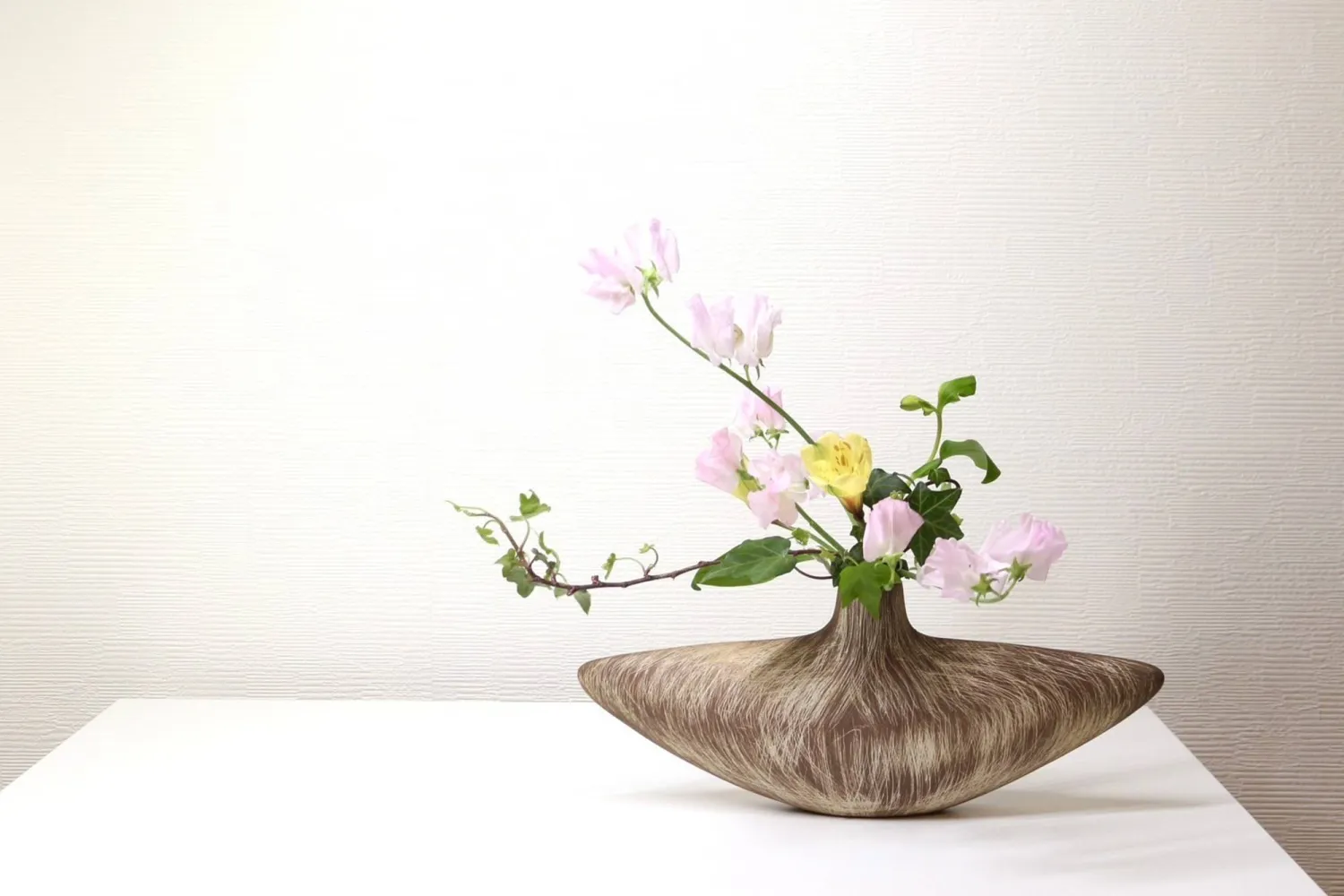
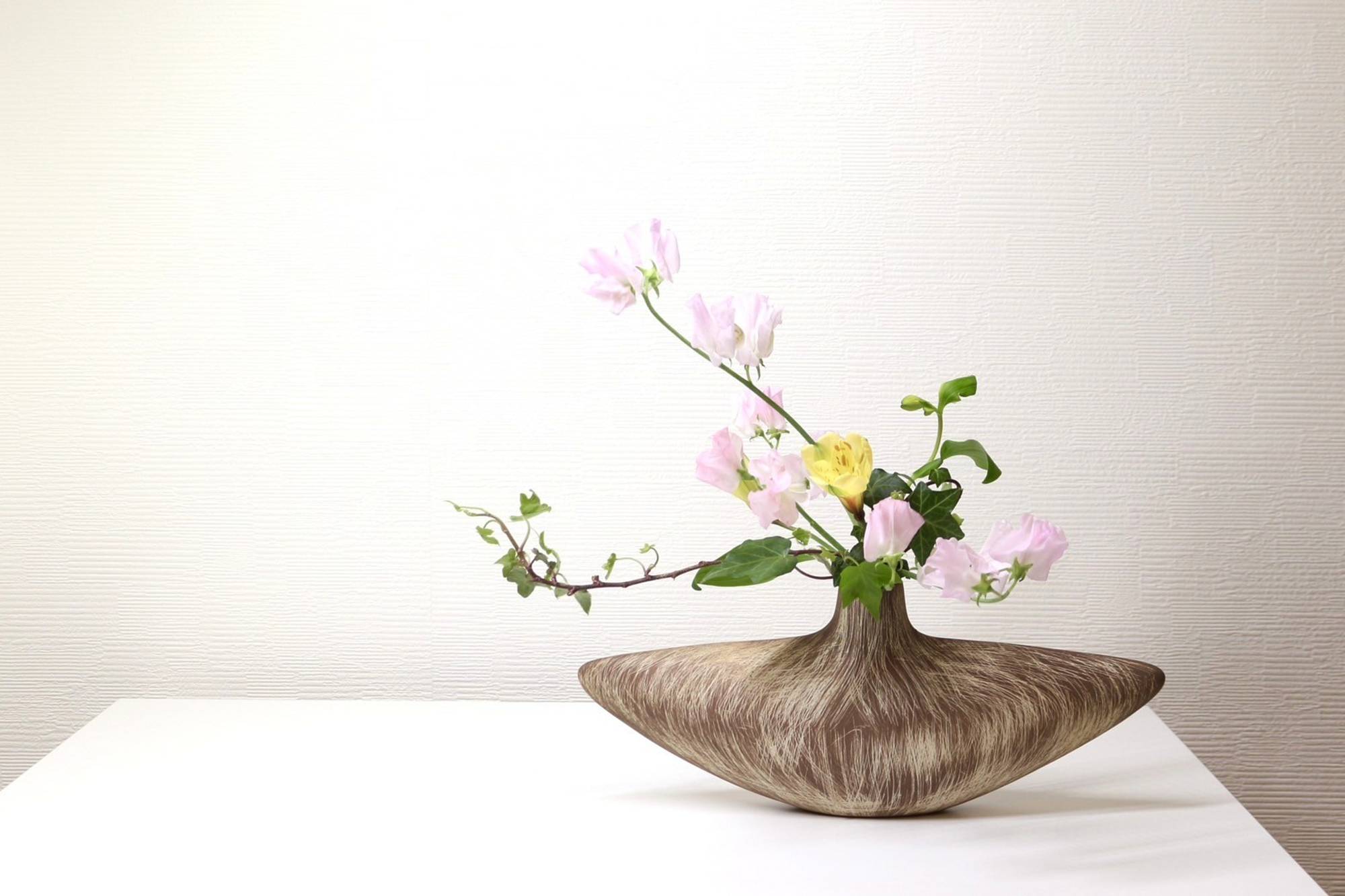
This photo released by Hiroyuki Okada shows a free-style Ikenobo ikebana arrangement in Tokyo on March 11, 2026. (Hiroyuki Okada via AP)
TT

Centuries-old Japanese Art of Ikebana Draws Those Seeking Calm

This photo released by Hiroyuki Okada shows a free-style Ikenobo ikebana arrangement in Tokyo on March 11, 2026. (Hiroyuki Okada via AP)

Ikebana, the Japanese art of arranging flowers, is a form of expression that dates back more than 500 years. It continues to blossom, quietly, not only with traditionalists but also with newcomers who find its blend of creativity and mindfulness to be restorative.

Ikebana can be a bit like solving a puzzle, except there’s no fixed answer. Because each flower, and human individual, is different, there are multiple solutions.

“There’s a ‘detox’ purifying factor, and a healing,” says Hiroyuki Okada, 40, who began taking lessons in ikebana about seven years ago. He now teaches Ikenobo, the oldest of three major ikebana schools, The Associated Press reported.

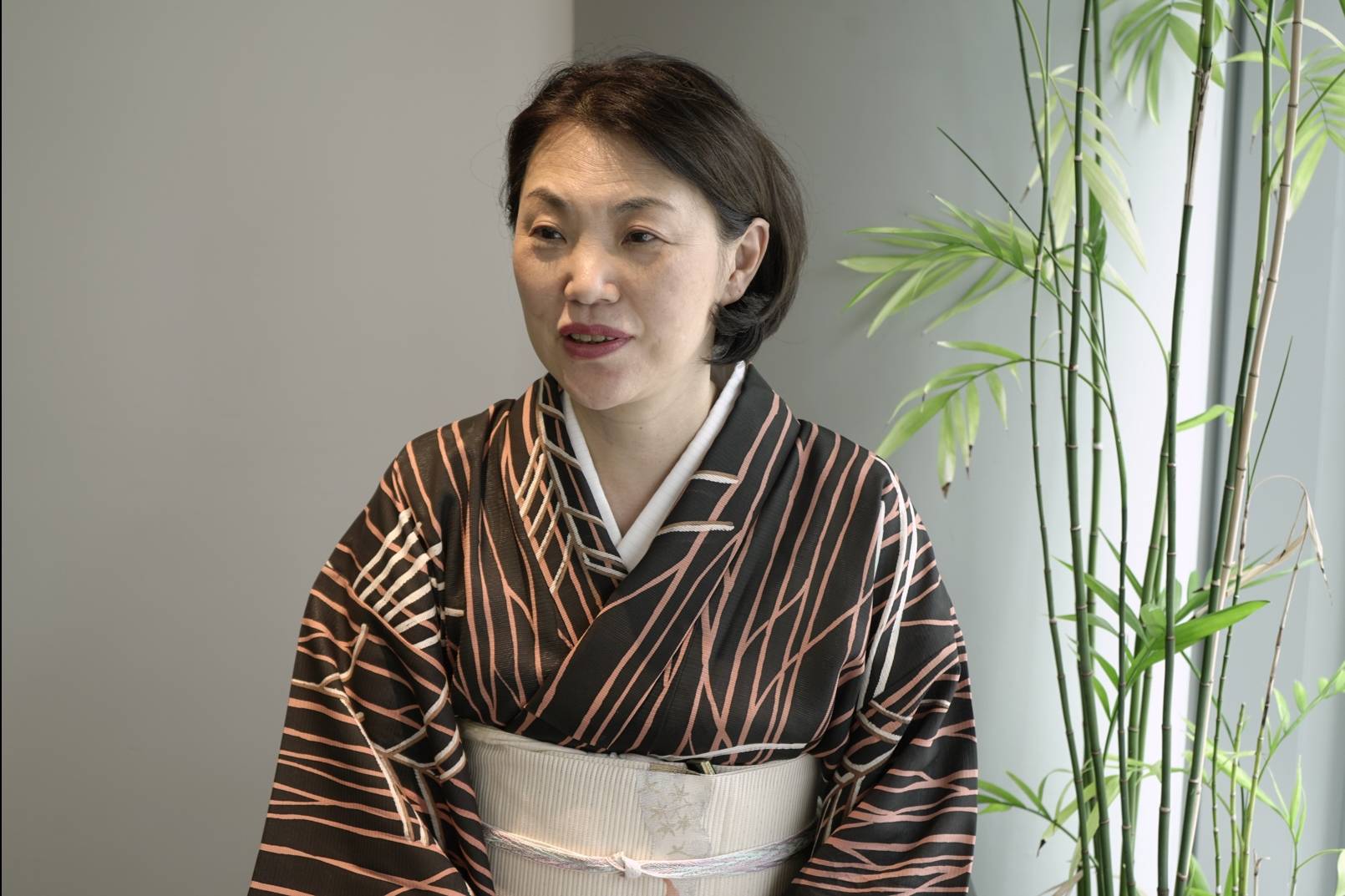
Ikenobo headmaster designate Senko Ikenobo speaks during an interview in Tokyo, on July 17, 2026. (AP Photo/Mayuko Ono)

Okada, who also teaches backflips to anyone who wants to learn, usually wears silver chains and jeans, but he wears a nice kimono when he formally demonstrates his arrangements. He considers himself typical of those drawn to ikebana today, people looking for joy, purpose, or solace from the daily grind or pain of modern life.

“In arranging (flowers), you are dealing with the life that is there, the beauty, of course, but you find what’s in your heart,” said Okada. “You come face to face with yourself.”

The Kyoto-based Ikenobo school, which is rooted in Buddhism, now has chapters around the world.

Okada's previous job at a nonprofit involved talking to people from around the world, and he realized how different — and alike — people were. When he switched to his current job, at a flower shop, he decided to take up a pursuit that was Japanese, so he could explore that aspect of himself, and one that could be done for a long time, alone.

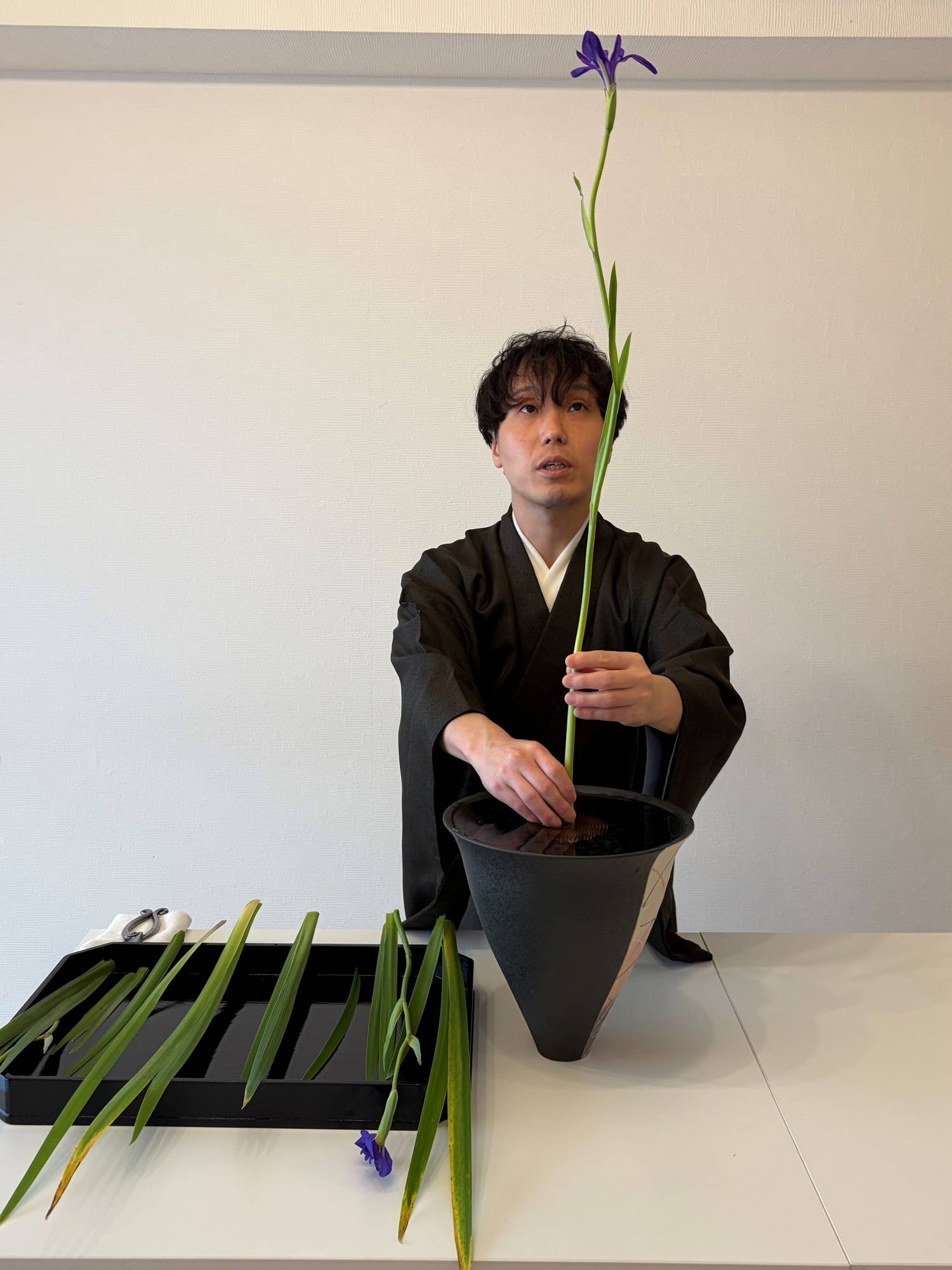
Ikenobo ikebana instructor Hiroyuki Okada demonstrates a basic flower arrangement style called “Shoka Shofutai” at a studio in Tokyo on Aug. 11, 2026. (AP Photo/Yuri Kageyama)

Observing how flowers and plants grow is part of the art Ikebana involves interacting with nature, although on a small scale — usually in a little vase.

“It is about the relationship of the creator with the flowers,” said Senko Ikenobo, headmaster-designate of the Ikenobo school.

Her family dates back generations to the originators of the art. Her father is the current headmaster.

Jeannette Haviland-Jones, professor of social psychology at Rutgers University, says studies have shown “that flowers and even flower scents promote happiness in people. We suggested a coevolutionary theory for this in which flowers became the ‘pets’ of the plant world.”

Besides a flower's beauty and fragrance, the feel of its petals and leaves to the touch is crucial, like petting a kitten or a puppy, according to Okada.

There are toddlers who do Ikenobo, copying their moms, and there are devoted centenarians. The headmaster-designate says she has seen ikebana help women who are juggling work and motherhood, or taking care of aging parents.

Ikebana has a healing effect similar to that of yoga, meditation or play, says Mayu Shimizu, who works for an online educational service and has been taking lessons from Okada for about three years.

“I like this moment of nothingness when you are concentrating on the flowers before you,” she says. “My mind feels clearer. I feel more at peace, and gentle.”

This photo released by Hiroyuki Okada shows a free-style Ikenobo ikebana arrangement in Tokyo on March 11, 2026. (Hiroyuki Okada via AP)

One traditional Ikenobo arrangement is shoka shofutai, which attempts to arrange the flowers, leaves and branches as they might look in nature, reaching toward sunlight or bending in the wind. The vase, sometimes crafted from wood or pottery, also becomes part of the arrangement's vision.

Yet the overall look is pure and simple, expressing the life cycle of flowers — from blossoming through withering — through three main elements:

— Shin, the tallest element, is arranged first, representing one's core, reaching up toward the sky.

— Soe, which is trimmed to about two-thirds the height of the shin and is placed at the side, expresses the flower’s individuality. The leaves might be slightly faded, representing the later stages of life.

— Tai, the third element, is the future. Choose a blossom or fresh small leaves — things that are being born.

There are also freer, spinoff styles that look more like casual, Western-style bouquets than the stoic, textbook-oriented shoka shofutai. That may feel easier, and more fun, for beginners.

Just as ikebana connects a person with flowers, those who practice the art say it’s also about the passing of the art over generations, connecting people.


In First, French Presidential Candidate Gives Birth During Campaign

Marine Tondelier, National Secretary of Les Ecologistes (the Ecologists - EELV - French Green Party) party arrives for a meeting with French President Emmanuel Macron about the situation in the Middle East and Ukraine and their consequences for France's security and energy supplies, at the Elysee Palace in Paris, France, September 18, 2026. REUTERS/Sarah Meyssonnier
TT

In First, French Presidential Candidate Gives Birth During Campaign

Marine Tondelier, National Secretary of Les Ecologistes (the Ecologists - EELV - French Green Party) party arrives for a meeting with French President Emmanuel Macron about the situation in the Middle East and Ukraine and their consequences for France's security and energy supplies, at the Elysee Palace in Paris, France, September 18, 2026. REUTERS/Sarah Meyssonnier

French Greens leader and candidate in the 2027 presidential election Marine Tondelier said Wednesday she had given birth to a son, emphasizing that she would press on campaigning while prioritizing the health of her child.

Tondelier, 40, was the first candidate in French politics to campaign while pregnant and, while acknowledging the challenges, she had expressed hope it would push issues including infertility and motherhood up the agenda.

Her boy Leon was born in Lens in northern France on September 18, Tondelier told AFP, saying the family had kept the news private for a few days.

He was born hours after Tondelier as Greens chief had attended a rare meeting at the Elysee Palace where President Emmanuel Macron had warned France's political leaders over the risk of Russian hybrid attacks.

She told AFP that the birth had gone "very well," adding that she would be "working differently" for a while and "trying to figure out how to balance a presidential campaign with a newborn, whose health and well-being come first."

Already the mother of a 7-year-old boy, Tondelier was confirmed as the candidate for the Greens on Monday. In December, the party will decide whether to maintain her candidacy or withdraw and throw the party's weight behind another left-wing figure.

Polls currently show Tondelier, who has the slogan "another Marine is possible!" in reference to far-right frontrunner Marine Le Pen, lagging well under five percent in the first round of voting.


Voting Opens in Alaska's Annual Fat Bear Week

A brown bear eats his catch while fishing for salmon in Brooks Falls, Alaska on August 12, 2023. (Photo by JOHN MOORE / GETTY IMAGES NORTH AMERICA / AFP)
TT

Voting Opens in Alaska's Annual Fat Bear Week

A brown bear eats his catch while fishing for salmon in Brooks Falls, Alaska on August 12, 2023. (Photo by JOHN MOORE / GETTY IMAGES NORTH AMERICA / AFP)

Polls opened Tuesday in the only American election that really matters: Fat Bear Week.

While the United States might be gearing up for midterm ballots that will decide who runs Washington, hundreds of thousands of people were readying to vote on animals gorging themselves in rural Alaska.

In a contest that has rapidly become one of the internet's favorite moments, the brown bears of Katmai National Park unwittingly compete in a series of head-to-head contests to see which one of them has most impressively piled on the pounds ahead of hibernation.

Viewers can watch a livestream of the enormous animals as they scoop salmon from the Brooks River, or browse biographies of some of the top contenders, including before-and-after pictures showing how much weight the bears have gained over a summer of feasting.

"For each match-up, vote for the bear you believe best exemplifies fatness and success in brown bears," said organizers, according to AFP.

"The bear with the most votes advances to the next round. Only one will be crowned Fat Bear Week champion."

Last year's winner, Chunk, beat out a stiff challenge from two-time winner Grazer.

Summer and early autumn are key fueling periods for the brown bears, which will not eat for five months of hibernation, relying on their store of fat to survive the punishing Alaskan winter.

The online contest began in 2014 with just a few thousand people voting, but has now turned into an eagerly awaited exercise in tongue-in-cheek democracy with more than a million people voting every year.

The aim is to raise awareness of brown bears and their habitat in Alaska, and the risks they face from human activity.
