

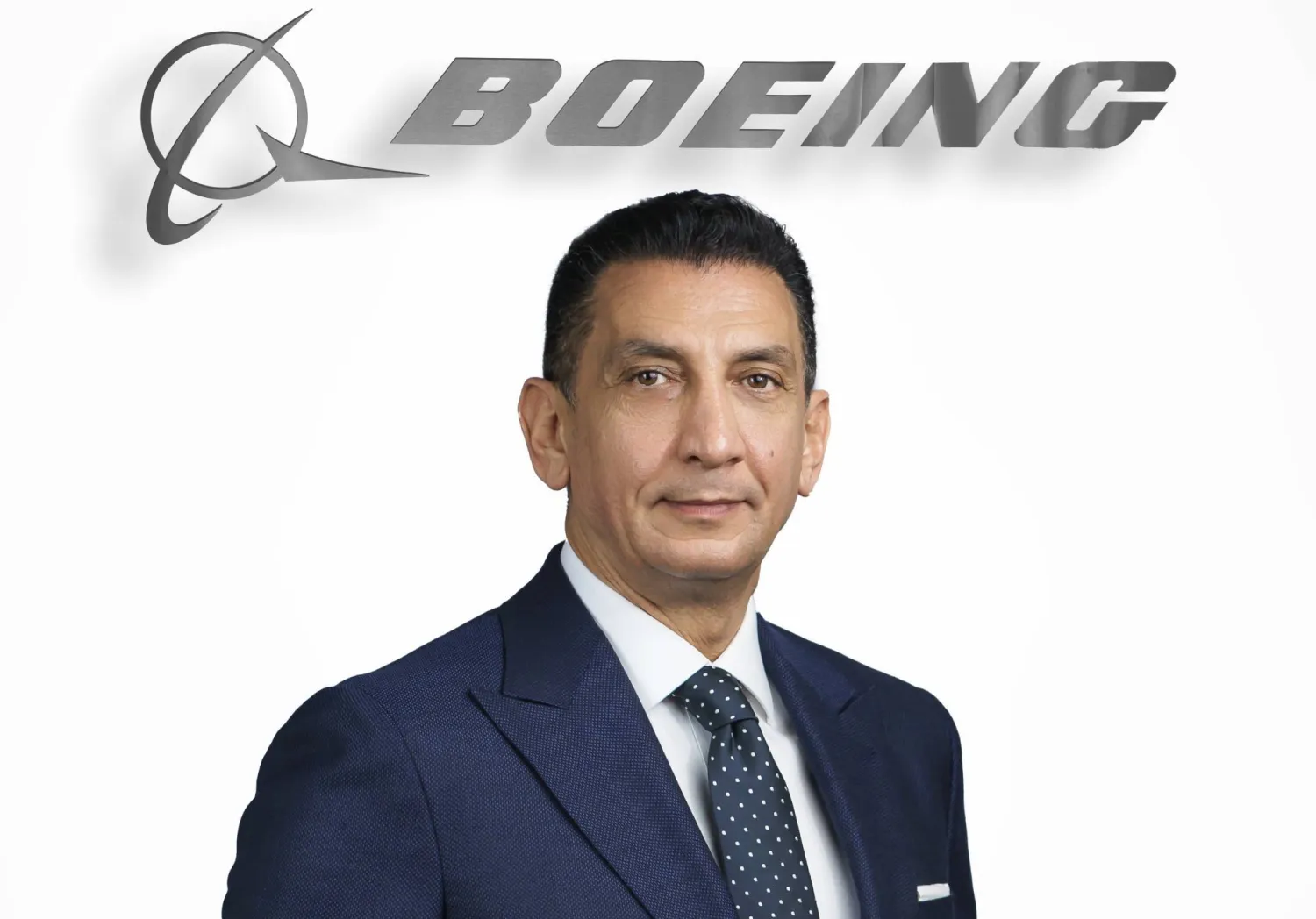

Boeing: Building a Strategic Partnership to Cement Saudi Arabia as a Global Aviation, Tourism Hub

Omar Arekat, Boeing’s vice president for commercial sales and marketing in the Middle East (The company) 
TT

Boeing: Building a Strategic Partnership to Cement Saudi Arabia as a Global Aviation, Tourism Hub

Omar Arekat, Boeing’s vice president for commercial sales and marketing in the Middle East (The company) 

Boeing is seeking to strengthen its presence in Saudi Arabia, citing significant opportunities to support its regional expansion and stressing that cooperation has evolved beyond aircraft sales into a long-term partnership aimed at transforming the Kingdom into a global aviation and tourism hub.

Omar Arekat, Boeing’s vice president for commercial sales and marketing in the Middle East, said Saudi Arabia is among the company’s most important markets outside the United States, amid rising demand for fleet modernization and expanded air connectivity.

Supporting Transformation

In remarks to Asharq Al-Awsat, Arekat underscored Boeing’s role in supporting the transformation underway in Saudi Arabia’s aviation sector, noting that the partnership, which spans more than 80 years, has entered a deeper and more strategic phase as the goals of Vision 2030 accelerate.

He said one of the clearest signs of that cooperation is orders for more than 140 aircraft across several models, including the 787 Dreamliner and 737-8, reflecting the rapid expansion of the Kingdom’s aviation sector and its growing role in boosting global connectivity while supporting sustainability through more fuel-efficient, lower-emission aircraft.

Arekat added that Vision 2030 has reshaped the aviation sector into an integrated strategic ecosystem driven by economic diversification and higher local content targets, fueling demand for maintenance and repair services and paving the way for the development of local supply chains and aviation-related industries.

Localizing Maintenance

He further underlined that Boeing has expanded its local partnerships to include the localization of maintenance operations and engine repair, as well as exploring opportunities for the initial manufacturing of materials used in the sector, including aluminum and titanium, in cooperation with Saudi companies — a move aimed at strengthening industrial self-sufficiency and building sustainable local capabilities.

On the delivery of Dreamliner aircraft to Riyadh Air, Arekat described the move as a milestone in building the Kingdom’s future aviation network. He said the aircraft offer long-range capabilities and high operational efficiency, supporting the launch of direct flights linking Riyadh with destinations worldwide and reinforcing the Saudi capital’s position as a global travel hub.

He stressed that expanding air connectivity is a major economic driver, contributing to tourism growth, attracting investment and facilitating trade, while also creating direct and indirect jobs as passenger and business traffic into the Kingdom increases.

Global Hub

Arekat said the partnership with Riyadh Air is a key factor in accelerating the Kingdom’s ambitions to become a global aviation hub, despite challenges related to infrastructure, workforce development and regulatory frameworks. He added that such challenges represent opportunities to strengthen cooperation between the public and private sectors, as well as academic institutions.

Addressing geopolitical tensions, he noted that demand for air travel in Saudi Arabia and the wider region continues to grow strongly, supported by major infrastructure investments and long-term development strategies. He added that the sector’s economic fundamentals remain solid despite global volatility.

Human Capital

On workforce development, Arekat stressed that investment in human capital is a cornerstone of the company’s strategy, noting Boeing’s support for education and scientific research through academic partnerships and local training programs that have achieved 100 percent Saudization, in addition to investments exceeding SAR 60 million ($16 million) in community initiatives since 2012.

He added that partnerships with Saudi carriers are playing a key role in strengthening the Kingdom’s position within global supply chains through the use of digital solutions, data analytics and operational expertise, helping improve efficiency, enhance the passenger experience and cement Saudi Arabia’s role as a regional hub for aviation services and industries.


Oil Stocks in US Strategic Petroleum Reserve Fall to Lowest Level since 1982

Crude oil, gasoline, and diesel storage tanks at Kinder Morgan's facility in Los Angeles (Reuters)
TT

Oil Stocks in US Strategic Petroleum Reserve Fall to Lowest Level since 1982

Crude oil, gasoline, and diesel storage tanks at Kinder Morgan's facility in Los Angeles (Reuters)

Stocks of crude oil in the US Strategic Petroleum Reserve fell to 283 million barrels last week, the lowest level since October 1982, according to data from the Department of Energy, Reuters reported.

The drawdowns are part of a US agreement to release 172 million barrels from the facility.

Additionally, the Trump administration last week said it is offering to loan energy companies 40 million barrels of oil from the Strategic Petroleum Reserve.


Saudi Market Resumes Decline Under Pressure from Banking Sector

A man monitors trading screens in the Saudi market (Saudi Exchange)
TT

Saudi Market Resumes Decline Under Pressure from Banking Sector

A man monitors trading screens in the Saudi market (Saudi Exchange)

The Saudi Exchange's main index, TASI, resumed its decline at the close of Monday's trading, falling 0.25 percent to 10,479 points.

The decline was driven by losses in a number of stocks. On Sunday, the index had ended a losing streak, rising about 1 percent.

Riyadh Development Company (Ridan) led the decliners, falling 4.43 percent to SAR18.13, followed by SNB, which dropped 2.77 percent to SAR38.60, and BSF, which fell 2.75 percent to SAR19.80.

On the other hand, Saudi Fisheries Company led the gainers, rising 9.96 percent to SAR51.90, followed by East Pipes Integrated Company, which gained 7.70 percent to SAR184.70, and Leden, which rose 6.98 percent to SAR1.84.


Saudi Arabia's SAL Expands Logistics Options as Global Trade Map Shifts

A SAL booth at the Saudi Warehousing & Logistics Expo (Asharq Al-Awsat)
TT

Saudi Arabia's SAL Expands Logistics Options as Global Trade Map Shifts

A SAL booth at the Saudi Warehousing & Logistics Expo (Asharq Al-Awsat)

The speed and cost of transporting shipments are no longer the only factors determining companies' choices in the logistics services market. Geopolitical disruptions and changes in global trade routes have redefined the concept of supply chain efficiency. Securing transportation alternatives, the ability to shift quickly between routes and modes of transport, and ensuring the uninterrupted flow of goods have become more prominent factors in customer decisions.

In Saudi Arabia, this shift is reflected in growing demand for integrated logistics services, alongside the expansion of industrial activity, imports, and infrastructure investment. Companies operating in the sector are taking advantage of this trend to expand their operational capabilities and develop solutions that combine air, land, and sea transport, providing greater flexibility in response to changes in global trade.

SAL is among the leading beneficiaries of this demand, having recorded its highest quarterly revenue in its history during the second quarter of this year, at SAR512.1 million ($136.6 million), up 30 percent year on year. Net profit rose 18 percent to about SAR191 million ($50.9 million). In the first half of the year, revenue increased 23.1 percent to SAR957.9 million ($255.4 million).

Rayan Al-Bakri, CEO of SAL's logistics business, said that "reliability and flexibility have become among the most important factors influencing customer decisions and global supply chains." He noted that when certain trade routes or transportation channels face operational challenges or unexpected changes, customers turn to solutions that ensure business continuity and speed of access to markets.

He added in an exclusive statement to Asharq Al-Awsat that SAL is seeing growing interest in integrated logistics solutions that combine more than one mode of transport according to each customer's needs. He explained that the company does not view air or land freight as direct alternatives to sea transport, but rather as complementary elements within a single system designed to achieve efficiency and flexibility in the movement of goods.

Al-Bakri said that "goods always find a way to reach the end customer, with the means varying," noting that the company continues to leverage strategic partnerships to expand logistics connectivity options for customers.

In this context, he pointed to SAL's cooperation with SPARK Logistics to activate a new land corridor between the Port of Sohar in Oman and the dry port at King Salman Energy Park (SPARK). He said the route strengthens regional trade flows and increases the flexibility and reliability of supply chains.

He also pointed to increased operating capacity at airports and the provision of solutions to receive and accommodate demand from customers and partners in the domestic and Gulf markets, alongside connecting airports through an integrated operating network to enhance supply chain flexibility.

Positive Demand Outlook

Al-Bakri views the outlook for demand for SAL's services positively in the coming period, amid continued growth in inbound shipments and expanding imports of spare parts and equipment related to industrial activities, as well as rising demand for more integrated and flexible logistics solutions across the region.

According to Al-Bakri, this outlook is based on several factors, including the diversity of the customer base, the expansion of specialized logistics services, and the investments the company is making to strengthen its operational capabilities and infrastructure.

Domestic consumption and the building of strategic inventories for most products are also creating opportunities for sustainable growth across the sector as a whole.

At the same time, the sector is dealing with a range of global variables that could affect profitability and operating costs, including transportation, insurance, and energy costs, as well as geopolitical developments that could affect international trade flows.

Al-Bakri said SAL is focusing instead on improving operational efficiency, increasing productivity, leveraging modern technologies, and diversifying revenue sources to support sustainable performance over the long term.

He added that the ability to adapt quickly to changes, along with operational discipline and continued investment in value-added services, would remain among the key factors supporting the company's performance in the coming period, ensuring business continuity and maintaining service levels for partners and customers across different sectors and services.

Infrastructure Expansion

Investment in infrastructure and operational capabilities is a key part of SAL's growth strategy. The company is working on a range of parallel initiatives aimed at increasing operational readiness, enabling the logistics sector, and strengthening the Kingdom's position as a global logistics hub.

Al-Bakri said the company's current priorities include expanding operational capabilities at airports across the Kingdom, developing SAL logistics zones, and investing in digital solutions and smart technologies that improve operational efficiency and accelerate the flow of shipments through the various stages of the supply chain.

SAL is also focusing on developing infrastructure that supports specialized services and integrated logistics solutions in line with the needs of the Kingdom's vital and growing sectors.

In this context, Al-Bakri said the company is continuing to expand its international presence through the acquisition of Aviapartner Liège, strengthening connections between its customers and one of Europe's air cargo hubs and supporting SAL's reach across global trade routes.

At the same time, the company is expanding its network of global partnerships supporting the development of advanced infrastructure and logistics services. These include two memorandums of understanding signed with CIMC Middle East to explore cooperation opportunities in cargo handling systems, automation, robotics, and autonomous vehicles.

The areas of cooperation include developing facilities and warehouses within SAL's logistics zones and attracting global investments and companies to the Kingdom, strengthening its position as a regional hub for manufacturing, logistics services, and international trade.

Automation and Specialized Services

As part of its digital transformation, SAL continues to invest in modern technologies and smart solutions, including cooperation with Huawei Tech Investment Saudi Arabia to explore applications of artificial intelligence, 5G, and cloud computing in the logistics sector.

Al-Bakri said these efforts support the development of smarter logistics zones, improve operational efficiency, and enhance the customer experience across the various stages of the supply chain.

At the same time, specialized logistics services, particularly pharmaceutical, medical, and temperature-controlled shipments, continue to grow amid the high levels of precision and reliability required by these sectors.

He said these services are becoming increasingly important within SAL's strategy because they require advanced operational capabilities, specialized infrastructure, and specialized expertise, in addition to the value they provide to customers.

According to Al-Bakri, the company continues to accelerate its automation and digital transformation efforts through investment in smart technologies and solutions that improve operational efficiency, handling accuracy, and decision-making speed.

SAL is also focused on sustainability by adopting practices and solutions that contribute to more efficient use of resources and support the objectives of the logistics sector in the Kingdom.

Al-Bakri said the company's direction is to expand specialized and integrated services, support them with modern technologies, and develop more sustainable logistics solutions that meet customer expectations and keep pace with the transformation taking place in the sector at both the regional and global levels.
