


Baghdad Remains Silent about Makeshift Israeli Base that Operated against Iran from Iraq

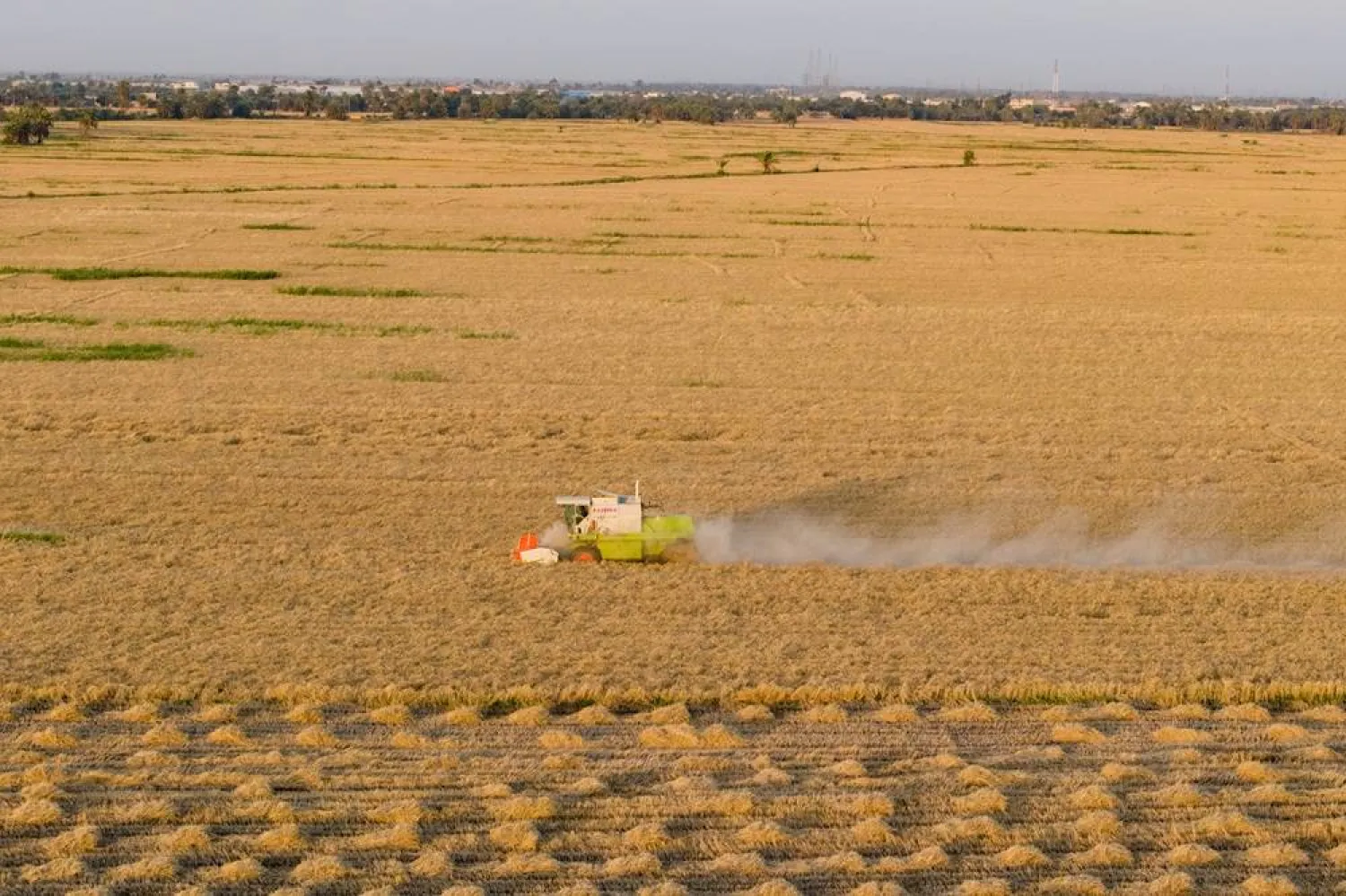
 An Iraqi farmer drives his combine harvester through the wheat field in the Iraqi town of Al-Mishkhab south of Najaf. Iraq, Saturday, May 9, 2026. (AP)
An Iraqi farmer drives his combine harvester through the wheat field in the Iraqi town of Al-Mishkhab south of Najaf. Iraq, Saturday, May 9, 2026. (AP)
TT

Baghdad Remains Silent about Makeshift Israeli Base that Operated against Iran from Iraq

 An Iraqi farmer drives his combine harvester through the wheat field in the Iraqi town of Al-Mishkhab south of Najaf. Iraq, Saturday, May 9, 2026. (AP)
An Iraqi farmer drives his combine harvester through the wheat field in the Iraqi town of Al-Mishkhab south of Najaf. Iraq, Saturday, May 9, 2026. (AP)

The revelations about a clandestine makeshift military base that Israel had set up in Iraq during the US-Israeli war on Iran has caused uproar in Iraq.

With western media revealing details about the base, Iraqi authorities have yet to comment on the revelations.

Israeli forces established a makeshift base using an old airstrip in Iraq's desert during the war against Iran, two security officials told AFP on Sunday, confirming a report by The Wall Street Journal.

Early in the war, which was ignited by joint US-Israeli attacks on Iran on February 28, the troops were detected in the Najaf desert in the country's southwest and clashed with Iraqi forces, killing one soldier and wounding two others.

The security official said "Israeli forces established a base in an abandoned airstrip in the Najaf desert".

"There are no longer forces there, but they may have left equipment," he said, adding that the Israeli operation "was in coordination with the US".

It was unclear how long the forces were there or what their mission was.

Iraq was drawn into the Middle East war from the outset, with strikes blamed on the US and Israel targeting Iran-backed armed groups, which in turn launched hundreds of attacks on US interests in Iraq and across the Gulf region.

Reports of foreign troops in the Najaf desert emerged early in the war after a shepherd reported seeing military activity.

On Saturday, the Wall Street Journal reported that "Israel set up a clandestine military outpost in the Iraqi desert to support its air campaign against Iran", quoting people familiar with the matter including US officials.

The report said that "Israel built the installation, which housed special forces and served as a logistical hub for the Israeli air force, just before the war started with the knowledge of the US".

Israel’s Maariv said on Sunday that the "clandestine Israeli base in the Iraqi desert" boasted Israeli commandos.

The Israeli military did not respond to an AFP request for comment.

Following the WSJ report, an Iraqi security spokesperson referred journalists to a previous statement issued on March 5.

At the time, Qais al-Mohamadawi, Iraq's deputy commander of joint operations, had told state media that Iraq protested to the US-led anti-ISIS coalition stationed in the country about an air raid in Najaf.

He said that after receiving reports of "individuals or movement in the Najaf" desert, Iraq's military sent a force to investigate.

The troops came under heavy aerial fire, leaving one soldier dead and two others wounded.

Reinforcements later searched the area, but "did not find anything", Mohamadawi said.

He added that at the site in Najaf, "one force was providing support to another that was conducting reconnaissance or setting up equipment".

He said no foreign troops were authorized to be in that location.

Another security official told AFP on Sunday that there were "indications that the operation involved an Israeli technical team under American military protection".

"There are no longer military personnel there," though they left equipment behind, including a radar, probably used for jamming.

The site was hidden in a valley, "a location chosen carefully to avoid Iranian missile strikes", the official said.

The Najaf desert is vast and largely uninhabited, making it difficult for Iraqi forces to maintain tight security there.

The WSJ's sources said that Israel "deployed search-and-rescue teams there so they could respond more quickly if needed for emergency rescue missions".

‘Grave’ security flaws

Iraqi authorities have come under strong criticism over the past two days. A source close to the government said the revelations about the Israeli base underscore the "grave flaws in the Iraqi security forces’ ability in protecting the country and securing its borders."

The source told Asharq Al-Awsat that "Iraq boasts over 1.5 million security forces and over 6 billion dollars a year are spent on them, and yet, they failed in protecting the country."

Security expert Mukhlid Hazem revealed to Asharq Al-Awsat that the Israeli force remained in Iraq around five to seven days before Iraqi security commanders made intense contacts with the Americans to make them leave.

He said prominent military commanders in the Defense Ministry were aware of the foreign forces that were deployed there, but they did not know where they came from.

They contacted the anti-ISIS coalition to inquire about them and were informed that they also were not aware of them.

Hazem said the Israelis chose to deploy in that area to establish an advanced operations center that would secure the passage of their jets over the region and also provide telecommunications technology for the aircraft that were operating over Iran.

The location was chosen because it lies in a remote desert area that is not protected by Iraqi forces, he explained.

The authorities had also closed Iraq’s airspace and banned the use of drones, "which allowed the hostile forces to exploit the situation," he added.

"The development is a dangerous violation of Iraqi sovereignty. We need an integrated security vision for the upcoming phase to handle similar situations," urged Hazem.



Palestinian-American Returns to West Bank to Defend His Home Under Siege by Israeli Settlers

 Palestinian-American Louis Ridi, who seeks access to his home in the Israeli-occupied West Bank that has been encircled by militant settlers for more than a week, embraces his mother at her home, in Qusra village, Israeli-occupied West Bank, August 17, 2026. (Reuters)
Palestinian-American Louis Ridi, who seeks access to his home in the Israeli-occupied West Bank that has been encircled by militant settlers for more than a week, embraces his mother at her home, in Qusra village, Israeli-occupied West Bank, August 17, 2026. (Reuters)
TT

Palestinian-American Returns to West Bank to Defend His Home Under Siege by Israeli Settlers

 Palestinian-American Louis Ridi, who seeks access to his home in the Israeli-occupied West Bank that has been encircled by militant settlers for more than a week, embraces his mother at her home, in Qusra village, Israeli-occupied West Bank, August 17, 2026. (Reuters)
Palestinian-American Louis Ridi, who seeks access to his home in the Israeli-occupied West Bank that has been encircled by militant settlers for more than a week, embraces his mother at her home, in Qusra village, Israeli-occupied West Bank, August 17, 2026. (Reuters)

The Palestinian-American whose home in the occupied West Bank has been besieged by Israeli settlers for over a week arrived in the region Monday and said he planned to join other family members in defending the property.

The standoff, in the village of Qusra, has seen groups of settlers surround several Palestinian houses and prevent residents from leaving.

The United States has condemned the siege and the Israeli military has deployed troops it says are there to maintain order.

The siege of Palestinian homes by Israeli settlers comes as violence in the West Bank has soared in recent months. The settlers, emboldened by Prime Minister Benjamin Netanyahu’s right-wing government, have ramped up attacks on Palestinian towns and villages, harassing residents and setting homes, mosques and fields ablaze.

As Loui Ridi, an Ohio-based owner of one of the houses, landed in Israel, settlers were still roaming near Qusra, according to video footage taken by his brother.

Qusai Abu Rida and his teenage son have stayed inside the home to protect it from the settlers.

“I’m terrified for my brother and his son and their safety," Ridi told reporters at Israel's main international airport. “And now I'm going to have to fear for my own safety.”

He said he would try to reach Qusra, which is about 10 miles (16 kilometers) southeast of Nablus, but was unsure if he would be able to enter. The Israeli army declared the part of Qusra where Ridi's home is located a closed military zone last week.

According to Palestinian health officials, Israeli soldiers and settlers have killed 87 Palestinians so far this year. Palestinians have killed three Israelis, including two who were killed in the West Bank village of Tell last month.


Israeli Flags on Lebanon Road Violate UN Resolution, UNIFIL Says

A photograph taken from the southern Lebanese village of Chaqra shows an Israeli flag fluttering over the burnt fields of the border village of Mais al-Jabal, burnt during Israeli military operations on August 11, 2026. (AFP)
TT

Israeli Flags on Lebanon Road Violate UN Resolution, UNIFIL Says

A photograph taken from the southern Lebanese village of Chaqra shows an Israeli flag fluttering over the burnt fields of the border village of Mais al-Jabal, burnt during Israeli military operations on August 11, 2026. (AFP)

Israeli flags planted on a main coastal highway in southern Lebanon are a violation of a UN Security Council resolution, the UN peacekeeping force in Lebanon said on Monday, urging all sides to avoid "provocative actions".

Israel's military invaded a swathe of southern Lebanon during a war with Hezbollah earlier this year, occupying a self-declared security zone it says aims to shield northern Israel from attacks by the Iran-backed group.

A video posted on Sunday by Israel's Channel 12 news journalist Amit Segal showed Israeli flags flying along the Naqoura-Tyre coastal road, a primary artery for southern ‌Lebanon and a route ‌used by the UN Interim Force in Lebanon (UNIFIL).

The footage ‌appeared ⁠to have been ⁠taken from a military vehicle.

Reuters was able to confirm the location of the video, but could not verify when the footage was filmed. Segal told Reuters he was sent the video by Israeli soldiers.

Peacekeepers have observed several Israeli flags in Lebanese territory, including recently on the coastal road and in Naqoura village, UNIFIL spokesperson Kandice Ardiel said.

Ardiel said the Israeli flags were a violation of UN Security Council resolution 1701, ⁠which ended a 2006 war between Israel and Hezbollah.

"As always, ‌we call on the Israeli army and all actors ‌to cease violations of the resolution and avoid any provocative action that could increase tensions ‌or trigger further violations," Ardiel added.

Israel's military, in response to a request for ‌comment, said that its forces were "operating in southern Lebanon with the aim of removing threats posed by the Hezbollah terrorist organization to Israeli civilians and troops, in accordance with international law".

"Israel is not acting against the Lebanese state or its citizens," the military said.

There was no ‌immediate comment from the Lebanese army.

Israeli Defense Minister Israel Katz said last week that Israel won't withdraw from southern ⁠Lebanon until Hezbollah ⁠is disarmed.

A US-brokered deal between the governments of Lebanon and Israel foresees a progressive Israeli withdrawal linked to Hezbollah's verified disarmament.

Hezbollah, founded by Iran's Revolutionary Guards in 1982, strongly opposes Beirut's talks with Israel and has ruled out any discussion of its weapons before an Israeli withdrawal.

Israeli Prime Minister Benjamin Netanyahu, who is facing an October election, listed the buffer zone as a major achievement when visiting troops on June 30.

The zone is mostly empty of Lebanese civilians who fled villages that are now all but destroyed.

At least 11 people were killed in Israeli strikes in southern Lebanon on Saturday, the Lebanese health ministry said, some of the deadliest in weeks. The Israeli military said it struck Hezbollah infrastructure in response to actions against its soldiers there.


UN Rights Chief Alarmed about Risk of ‘Full-Scale Conflict’ in Yemen

27 December 2024, Yemen, Sanaa: A Houthi supporter brandishes a rifle during a demonstration against the United States and Israel in Sanaa, Yemen. (dpa)
TT

UN Rights Chief Alarmed about Risk of ‘Full-Scale Conflict’ in Yemen

27 December 2024, Yemen, Sanaa: A Houthi supporter brandishes a rifle during a demonstration against the United States and Israel in Sanaa, Yemen. (dpa)

The UN rights chief voiced alarm Monday at the rising civilian toll of escalating hostilities in Yemen, and called for efforts to avoid plunging the country back into full-scale war.

"I call on all parties to de-escalate tensions and spare the Yemeni people from further misery. The Yemeni people have already suffered way too much from the devastating legacy of years of conflict, displacement and humanitarian crisis," Volker Turk said.

"I urge all parties to halt immediately any actions that risk returning Yemen to full-scale conflict."

The Iran-backed Houthi militia escalated their attacks on government positions in recent weeks, risking plunging the country into war after relative calm following a 2022 truce.