


Nazi-Looted Portrait Found in Home of Dutch SS Leader’s Family

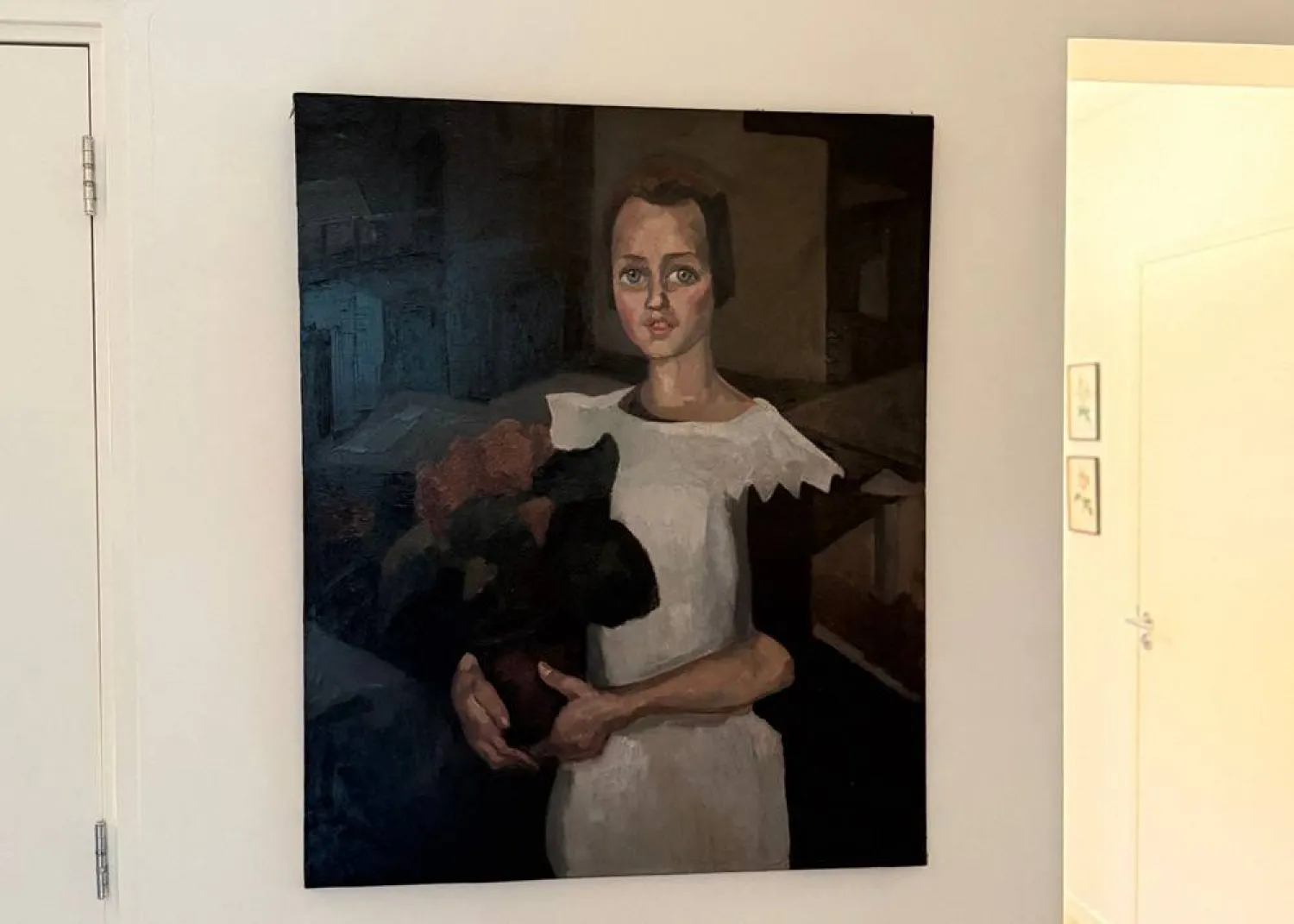
This handout photograph taken in an undisclosed area and released by Arthur Brand on May 11, 2026, shows the painting "Portrait of a Young Girl" by Dutch artist Toon Kelder, an art piece stolen from the world-famous Goudstikker collection by the Nazis, discovered in the house of the descendants of a notorious Dutch SS collaborator. (Handout and Arthur Brand / AFP)
TT

Nazi-Looted Portrait Found in Home of Dutch SS Leader’s Family

This handout photograph taken in an undisclosed area and released by Arthur Brand on May 11, 2026, shows the painting "Portrait of a Young Girl" by Dutch artist Toon Kelder, an art piece stolen from the world-famous Goudstikker collection by the Nazis, discovered in the house of the descendants of a notorious Dutch SS collaborator. (Handout and Arthur Brand / AFP)

An artwork plundered by the Nazis from the world-famous Goudstikker collection has surfaced in the family of a notorious SS collaborator in the Netherlands, Dutch art detective Arthur Brand told AFP Monday.

"Portrait of a Young Girl", by Dutch artist Toon Kelder, had likely been hanging for decades in the home of descendants of Hendrik Seyffardt, Brand said, describing it as "the most bizarre case of my entire career".

The case has drawn parallels to a find that made global headlines in 2025, when an 18th-century Nazi-looted painting -- also from the collection of late Jewish art dealer Jacques Goudstikker -- featured in a property ad in Argentina.

In the Dutch case, Brand said he was approached by a man who had recently uncovered two horrifying secrets: he was a descendant of Seyffardt, and his family had displayed the looted art for years.

This family member, who wished to remain anonymous, told Brand he saw the painting hanging in the hallway of the granddaughter of Seyffardt, who was assassinated by Dutch resistance fighters in 1943.

Seyffardt, one of the highest-ranking Dutch collaborators with the Nazis, commanded a Waffen-SS unit of Dutch volunteers on the Eastern Front.

The New York Times splashed news of his death on its front page in 1943, and a lavish Nazi state funeral was held for him in The Hague, complete with a wreath sent by Adolf Hitler.

According to Brand, Seyffardt's granddaughter told the family member the painting was "Jewish looted art, stolen from Goudstikker. It is unsellable. Don't tell anyone."

But the family member wanted the story to go public, so contacted Brand, who has made a name for himself cracking numerous high-profile cases of stolen art.

This family member told De Telegraaf daily: "I feel ashamed. The painting should be returned to the heirs of Goudstikker."

The grandmother, quoted by the Dutch daily, said the family was discussing whether the painting should be returned to the Goudstikker heirs, and denied knowing it was looted.

"I received it from my mother. Now that you confront me like this, I understand that Goudstikker's heirs want the painting back. I didn't know that," she was quoted as saying.

- 'Truly tops everything' -

Brand launched his own investigation. The painting has a Goudstikker label on the back and the number 92 carved into the frame.

He searched the archives of an auction in 1940 where part of the looted Goudstikker collection went under the hammer and found item number 92: "Portrait of a Young Girl" by Toon Kelder.

Hermann Goering, a top Nazi official, plundered Goudstikker's entire collection when the art dealer fled to England in 1940.

Brand surmises that the Dutch collaborator Seyffardt acquired the painting at the 1940 auction and it was then passed down throughout the generations.

Lawyers for the Goudstikker heirs confirmed to Brand that this painting was looted and have called for its return.

The family member who contacted Brand also wants the painting returned to the Goudstikker heirs, but the police are powerless as the theft has passed the statute of limitations.

The Dutch Restitution Committee, which advises on looted Nazi art, is also hamstrung as it cannot compel private individuals to return artworks.

"The family member sees public exposure as the only way to hopefully return the painting to the Goudstikker heirs, where it rightfully belongs," Brand told AFP.

Brand, who has been nicknamed the "Indiana Jones of the Art World" for his extraordinary finds, said this surpassed anything he had uncovered before.

"I have recovered Nazi-looted art from World War II before, including pieces in the Louvre, the Dutch Royal Collection, and numerous museums," he said.

"But discovering a painting from the famous Goudstikker collection, in the possession of the heirs of a notorious Dutch Waffen-SS general, truly tops everything."




J&J Prostate Cancer Drug Reduces Risk of Cancer Spread and Death in Late-stage Study

A Johnson & Johnson banner is displayed on the front of the New York Stock Exchange (NYSE) in New York City, in New York City, US, December 5, 2023. REUTERS/Brendan McDermid
TT

J&J Prostate Cancer Drug Reduces Risk of Cancer Spread and Death in Late-stage Study

A Johnson & Johnson banner is displayed on the front of the New York Stock Exchange (NYSE) in New York City, in New York City, US, December 5, 2023. REUTERS/Brendan McDermid

Johnson & Johnson's prostate cancer drug Erleada used with hormone-blocking therapy six months before and after prostate surgery improved the chances of eliminating the cancer and reduced the risk of disease progression or death, according to data from a late-stage trial presented on Sunday.

The study, which followed patients for over five years, found that those who received the regimen were nine times more likely to have little to no detectable cancer in the prostate at the time of surgery compared with those given testosterone-blocking therapy alone.

The addition of Erleada also reduced the risk of the cancer spreading or death by 20%, the company said.

The data, presented at the American Society of Clinical Oncology meeting in Chicago, is likely to change how doctors approach treatment of men with high-risk localized or locally advanced prostate cancer. Currently, surgery to remove the prostate and radiation therapy are the standard of care for such patients, Reuters reported.

About 40% of the 330,000 people diagnosed with prostate cancer in the US are considered high-risk, J&J said.

The study also looked at a full year of treatment with Erleada and hormone therapy before and after surgery.

Among those patients, men who received the combination therapy on average went more than six years before requiring subsequent treatment, nearly double the time for the hormone therapy alone group. The longer therapy with Erleada also reduced the risk of recurrence and death by 29%.

Nearly half of patients who receive the current standard prostate-removal surgery and radiation see their cancer return and require additional treatment, J&J said.

'PARADIGM CHANGING'

Erleada, known chemically as apalutamide, belongs to a class of drugs called androgen receptor pathway inhibitors that block signals that drive prostate-cancer growth.

"No ARPIs are approved for localized high-risk prostate cancer with either surgery or radiation. So the (data) would be paradigm changing," said Dr. Mary-Ellen Taplin, the study's lead researcher from Dana-Farber Cancer Institute in Boston.

The trial enrolled more than 2,000 patients with high-risk localized or locally advanced prostate cancer who were candidates for prostate gland removal surgery.

At the time of surgery, 8.9% of patients who received the combination treatment had little to no detectable cancer, compared with 1% of those receiving hormone therapy alone.

"The patient benefit here is unequivocal," Mark Wildgust, J&J's medical affairs lead for oncology, said in an interview. "I think that the evidence is really showing that Erleada is adding something that we had not seen before."

Widely used ARPIs include Pfizer's Xtandi and Bayer's Nubeqa.

The safety profile of the Erleada combination treatment was consistent with previous studies, J&J said. Common side effects among patients who received the treatment include hot flushes, urinary incontinence and erectile dysfunction.

Erleada won US approval in 2018 and is currently used in combination with hormone therapy that suppresses production of testosterone, which drives prostate-cancer growth.

The company said it plans to work with regulators to get the combination therapy approved globally for earlier stages of prostate cancer.


Venice’s Growing Flamingo Population Finds Refuge in Recovering Wetlands

FILE PHOTO: A general view of the Grand Canal, in Venice, Italy, June 23, 2025. REUTERS/Yara Nardi/File Photo
TT

Venice’s Growing Flamingo Population Finds Refuge in Recovering Wetlands

FILE PHOTO: A general view of the Grand Canal, in Venice, Italy, June 23, 2025. REUTERS/Yara Nardi/File Photo

Perhaps nothing better illustrates the flamingo’s status as a newcomer to the Venetian Lagoon than the fact that the local dialect has no word for them.

But the pale pink birds — called “fenicotteri” in Italian — are now flocking to Venice in record numbers, as ecological efforts to restore damaged wetlands could help expand their habitat and possibly induce them to nest in the lagoon, The Associated Press reported.

Flamingos — which most famously nest in Spain and France — started showing up in the vast Venetian Lagoon in the early 2000s, mostly in fishing valleys and mudflats in the lagoon’s furthest reaches, with only rare sightings in the canaled historic center of Venice that is most frequented by global tourists.

Venice Lagoon becomes an unlikely flamingo haven Environmentalists say their arrival in Venice as the European flamingo’s range expands is a sign of the lagoon’s health and suitability as a feeding ground.

Last year, the number of wintering flamingos in Venice peaked at a record of nearly 24,000. That is 8,000 more than the previous year, numbers “that position the Venetian Lagoon as one of the most important wintering spots in its entire habitat range,” said ornithologist Alessandro Sartori.

Sartori surveys the lagoon weekly by boat for signs of nesting, which would indicate a self-sustaining Venetian colony. So far there are no fresh signs after two nesting attempts, in 2008 and 2013, in northern lagoon fishing valleys suffered serious setbacks, including violent hail that killed dozens of birds.

More than 90% of the birds counted in last year’s census were in the northern lagoon, which contains a large area of natural salt marsh. The flamingos are also attracted by the traditional fishing valleys, semi-natural embanked wetlands that provide abundant food but can also bring them into conflict with human activity.

Venice seeks to recover its lost marsh A project to reconstruct salt marshes in the more isolated southern lagoon — past the historic center and the industrial port — raises prospects that flamingo numbers will increase there as well by offering a new habitat in an area of the lagoon where wetland erosion has been especially severe. It could also draw the birds away from competing human uses in the north.

The Venetian Lagoon, covering an expanse of 550 square kilometers (more than 200 square miles), was originally nearly half salt marsh. Today the area of salt marsh — or “barene” in the Venetian dialect — is just about 7%, about half of it reconstructed, said Jane da Mosto, the executive director of We Are Here Venice, the local partner in the EU’s 23.6 million euro ($27.5 million), 5-year WaterLANDS project to restore wetlands across Europe.

The damage is especially stark in the central and southern lagoon, due to the combination of natural erosion and the dredging of shipping channels to access the Marghera industrial port in the 1960s.

“And since then, there’s been much more widespread erosion and loss of sediments from the lagoon to the point that Venice is now on a trajectory to becoming a marine bay,” said da Mosto. The wetlands reconstruction project “is specifically to show that it’s possible to address this trend and change the course of history.”

Rebuilding the salt marshes increases the lagoon’s ability to capture carbon dioxide, a greenhouse gas and driver of climate change, and mitigates the effects of rising sea levels. But da Mosto said much larger areas would need to be restored to produce meaningful climate benefits. The goal of the EU project is to make salt marsh reconstruction scalable.

Flamingos can also benefit as biodiversity increases.

Da Mosto’s team is researching ways to increase biodiversity on the reconstructed marshes, including planting species that can help reduce erosion and make the wetlands more resilient.

The mudflat where they are working contains signs of flamingo activity, chiefly stray pink feathers. On a recent day, a flock of some 30 were perched in the distance — scattering when a pair of squawking oystercatchers alerted them to visitors.

Already, Sartori believes that the reconstruction has begun to draw more flamingos to the area. Over the last three years, he has seen their numbers in the southern lagoon grow from just a handful to as many as 300 to 400 in certain periods.

“The hope is that they can find — as they have found in other parts of the Mediterranean — right here on these barene, places where they can nest,” Sartori said.

Venice’s pink newcomers could draw a different kind of visitor The flamingos' presence in the lagoon underlines the importance of the Venetian ecosystem and offers a new way for visitors to interpret the canaled city and outer islands through their ecological — and not just historical and artistic — significance.

Still, visitors to Venice who hope to casually spy flamingos will probably be disappointed, and AP reporters recently had to travel by boat for an hour to spot any. The flamingos inhabit shallow, difficult-to-access reaches of the lagoon where navigating safely requires close attention to tides and channels.

Even at a distance, the birds are easily disturbed and quick to take flight.

Sartori predicts flamingo spotting — already a possibility from the shores of the small lagoon islands of Murano and Burano but rare in the historic center — could become more common as their numbers continue to grow.

“Obviously this should always be done with respect for the animals, keeping a safe distance and not interfering with their daily lives,” he said.


Meteor Explodes over US with Blast Equivalent to 300 Tons of TNT

This image taken from video shows a suspected meteor falling through the sky in the greater Pittsburgh, Pa., area on Tuesday, March 17, 2026. (Jared Rackley via AP)
TT

Meteor Explodes over US with Blast Equivalent to 300 Tons of TNT

This image taken from video shows a suspected meteor falling through the sky in the greater Pittsburgh, Pa., area on Tuesday, March 17, 2026. (Jared Rackley via AP)

A meteor crashing toward Earth exploded over the northeastern United States on Saturday, NASA said, setting off booms that echoed over the region with a blast equivalent to 300 tons of TNT.

The fireball broke up over northeastern Massachusetts and southeastern New Hampshire at 2:06 pm (1806 GMT), the US space agency's deputy news chief Jennifer Dooren told AFP in a statement.

"This fireball was not associated with any currently active meteor shower, but it was a natural object and not a re-entry of space debris or a satellite," she said.

"The energy released at breakup is estimated to be equivalent to about 300 tons of TNT, which accounts for the loud booms."

The meteor was traveling at 75,000 mph (more than 120,000 kph) at an altitude of 40 miles when it broke apart, Dooren said.

Area residents were alarmed by the unexpected loud booms, with social media users reporting they were so powerful that houses were shaking.

In 2013 a fireball streaked above Chelyabinsk, Russia. The house-sized space rock blew apart 14 miles above the ground, releasing a blast equivalent to 440,000 tons of TNT, NASA said.

The explosion blew out windows over 200 square miles (518 square kilometers), injuring more than 1,600 people, mostly due to broken glass.