


Asia Braces for a Second Wave of Energy Shocks from the Iran War

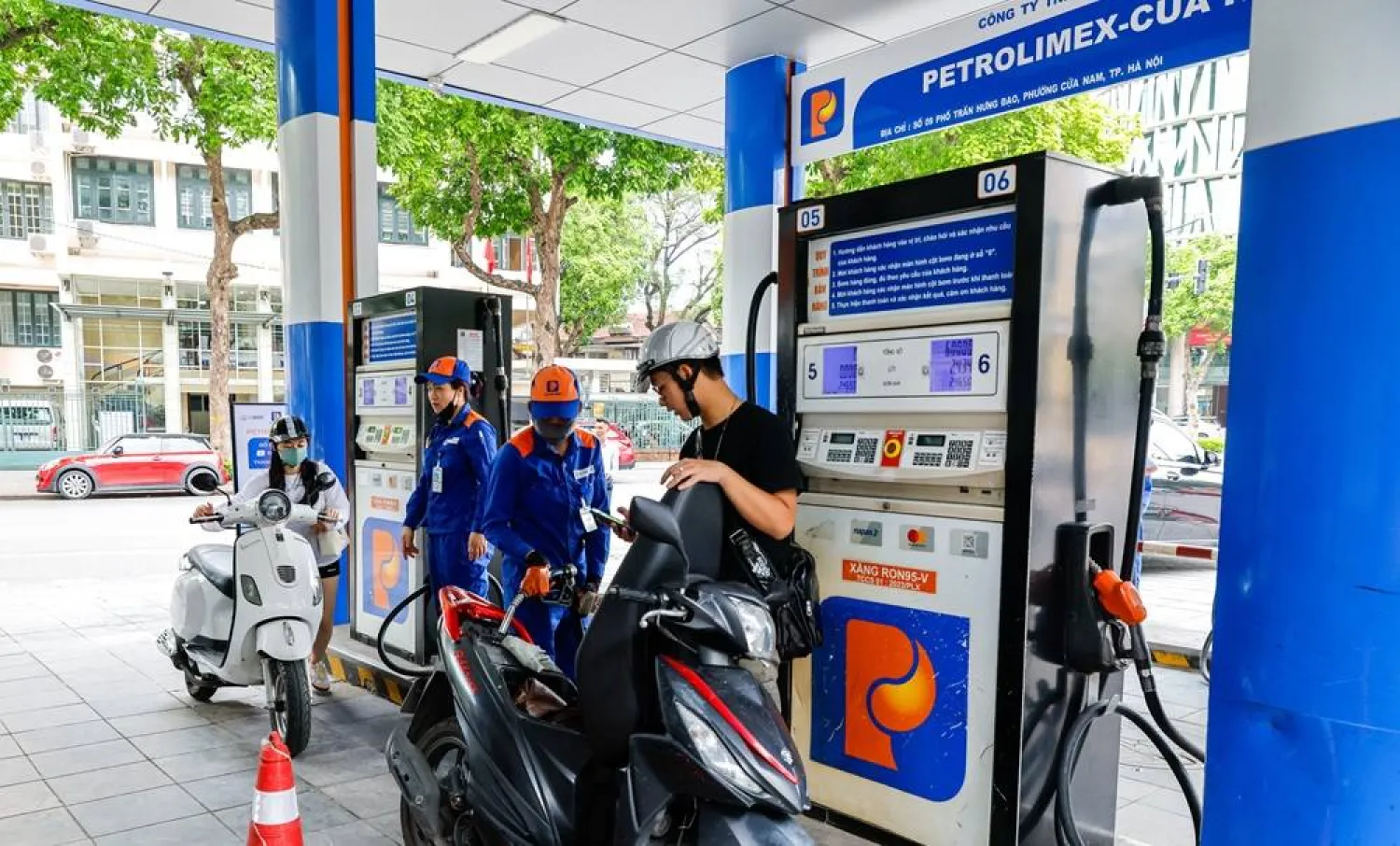
An employee pumps gasoline into a customer’s motorbike at a gas station in Hanoi, Vietnam, 04 May 2026. (EPA)
TT

Asia Braces for a Second Wave of Energy Shocks from the Iran War

An employee pumps gasoline into a customer’s motorbike at a gas station in Hanoi, Vietnam, 04 May 2026. (EPA)

Asia’s first defenses against energy shocks from the Iran war are running short and a more consequential second wave of impacts is beginning to hit.

When the war started, governments scrambled to adapt to the closure of the Strait of Hormuz, a critical artery for energy flowing to Asia. They made difficult trade-offs: saving power at the risk of slowing businesses, prioritizing gas for households at the risk of fertilizer production and dipping into energy stockpiles for temporary relief.

But these measures were based on the war lasting only a short time, allowing a quick resumption of energy flows. That has not happened.

With no clear end in sight, the fuel crisis is now rippling across economies. Airfare costs, shipping rates and utility bills are climbing, jeopardizing economic growth. About 8.8 million people are in danger of being pushed into poverty and the conflict may cause $299 billion in economic losses to the Asia-Pacific region, according to the United Nations Development Program.

“The countries with the least resources to respond, or the consumers who can least afford to pay, are the ones who feel everything first,” said Samantha Gross of the US-based think tank Brookings Institution.

Asian governments planned their budgets assuming the price of oil would average around $70 a barrel. Subsidies helped to keep fuel prices stable. But the war pushed the price of Brent crude to as high as about $120 a barrel.

Governments now face a stark choice between maintaining those costly subsidies, straining public finances, or cutting them to pass higher costs on to consumers, risking a public backlash, said Ahmad Rafdi Endut, a Kuala Lumpur-based independent energy analyst.

Asia braces for a second wave of impacts

In India, early steps to redirect fuel supplies toward cooking gas for roughly 330 million households cut into supplies for fertilizer plants. The surging of fertilizer prices and meteorologists warning of weak rainfall in an El Niño year is a concern for the world’s largest rice exporter.

India has relied on subsidies to shield its 1.4 billion people until now, but on Sunday, Prime Minister Narendra Modi urged citizens to buy locally and cut down on travel abroad to save dollars. He also encouraged people to work from home and use public transport to reduce fuel consumption, and asked farmers to halve fertilizer use.

The Philippines quickly shifted to a four-day work week to save fuel. It also rolled out targeted subsidies for poorer households. However, Fitch Ratings noted that most consumers are still paying higher energy costs, causing business activity to slow in major cities like Manila.

Thailand abandoned its diesel price cap less than a month after the conflict began, as its fuel subsidies ran out. It's now cutting other spending to manage higher oil prices while trying to keep its budget under control.

Vietnam extended a suspension of fuel taxes to ease pressure on domestic prices. Jet fuel shortages have led to flight cuts. Tourism makes up nearly 8% of Vietnam's gross domestic product — the nation's total output of goods and services — so that affects the entire economy.

“Business is not good right now," said Hanoi-based tour guide Nguyen Manh Thang. “There are already fewer tourists.”

Fuel shortages have pushed cash-strapped countries like Pakistan and Bangladesh to buy oil and gas at current market prices, which are often higher and more volatile than long-term contracts. This raises import costs and adds to pressure on their already limited foreign exchange reserves.

Governments can keep costly fuel subsidies by cutting spending from other priorities like welfare, or borrow more and risk higher inflation, said Endut in Kuala Lumpur. Alternatively, they can reduce subsidies and pass higher costs on to consumers, risking angering voters.

Once subsidies are exhausted and inflation starts to rise, countries could face what he called a “fiscal time bomb.”

Vulnerable Asia will not see immediate relief

The war's eventual end won't bring quick respite to Asia.

The global oil and gas trade will not bounce back right away, and it will take time to restart production, said Gross with the Brookings Institution. Repairing damaged infrastructure, restarting facilities and allowing for transport time from the Middle East to final markets will take weeks or even months.

Europe will feel a similar impact to Asia, but with about a four-week lag, experts say.

Americans are also feeling the pinch as gas prices spike across the US But Southeast Asia is currently the “biggest pain point," said Henning Gloystein of the Eurasia Group consultancy firm.

“This fuel shortage situation is going to get worse,” he said.

In Africa, higher energy and import costs are similarly straining budgets, widening deficits and driving up inflation. The war is also taking a toll on Latin America and the Caribbean, where growth is projected to slow slightly.

The complex disruptions across global supply chains will continue to have broader impacts, warned Ted Krantz, CEO of supply chain risk firm Interos.ai.

The crisis also highlights the fragility of Asia’s growing middle class, said Maria Monica Wihardja of the Singapore-based ISEAS-Yusof Ishak Institute, with many people at risk of slipping back into poverty.

The energy shock will reshape Southeast Asia’s economies over time, she said, including shifts in job markets and how countries plan for future energy crises.

Countries are already debating and implementing longer-term solutions, like diversifying fossil fuel suppliers, developing nuclear energy and renewables like solar.

The war is making geopolitical risk central to the economic outlook of Southeast Asia and directly slowing regional growth, said Albert Park of the Asian Development Bank.

"The longer it lasts, the larger those negative effects would be,” he said.


Trump Calls for Probe Into Gasoline Price 'Gouging'

LOS ANGELES, CALIFORNIA - JUNE 22: Yellow caution tape is seen wrapped around a gas pump at a Shell gas station on June 22, 2026 in Los Angeles, California. Justin Sullivan/Getty Images/AFP
TT

Trump Calls for Probe Into Gasoline Price 'Gouging'

LOS ANGELES, CALIFORNIA - JUNE 22: Yellow caution tape is seen wrapped around a gas pump at a Shell gas station on June 22, 2026 in Los Angeles, California. Justin Sullivan/Getty Images/AFP

US President Donald Trump said on Wednesday that he has instructed the Department of Justice to look into oil companies for not lowering gasoline pump prices in line with falling crude costs, and accused the companies of "gouging" customers.

According to Reuters, Trump did not name any companies in his social media post, which came after midnight. The White House and the Justice Department (DOJ) did not respond to a request for further comment outside regular business hours.

Diplomacy between the US and Iran has translated into relief at the pump for Americans, data ⁠showed earlier this ⁠week, with gasoline prices falling for a sixth straight week.

However, Trump said the fall in gasoline prices was neither enough nor proportionate with declines in crude oil costs.

"Gasoline prices better start going down a lot faster than what I’m seeing!"

Trump's latest post comes as consumers raise concern ⁠over high gasoline prices, just as the president and fellow Republicans are battling to hold narrow majorities in Congress in November's midterm elections.

The average price of gasoline in the US was $3.906 per gallon early Wednesday, GasBuddy data showed, down more than 14% from the peak in May.

By comparison, over the same period, crude oil prices have fallen 23%, with the US and Iran reaching an interim peace deal and reopening the Strait of Hormuz, through which one-fifth of global oil ⁠supply ⁠moved before the war began. From their peak in March, US crude prices have sunk about 40%.

"The big Oil Companies are not dropping their price at the pump commensurate with the sharply lower prices they are paying for Oil. Those prices are dropping like a rock! In other words, customers are being "gouged"," Trump said in a post on Truth Social.

"I have instructed the DOJ to immediately start looking into this."

Pump prices remain significantly higher than the $2.764 per gallon recorded in January, more than a month before the Iran conflict began.


Paris Club Says Debt Restructurings Need Improvement

Tourists with an umbrella take a photo in Paris, Monday, June 22, 2026. (AP Photo/Christophe Ena )
TT

Paris Club Says Debt Restructurings Need Improvement

Tourists with an umbrella take a photo in Paris, Monday, June 22, 2026. (AP Photo/Christophe Ena )

Despite progress in recent years the process for helping over-indebted countries restructure their public debts needs further improvement, the Paris Club said Tuesday.

The Paris Club brings together 22 mostly Western creditor nations which negotiate together on the terms to reduce the debt burden of countries that can no longer pay back their loans.

The group, in its annual report, said better coordination among creditors, more transparency and better information sharing could help improve the process, AFP reported.

In 2020, the Paris Club and the G20 nations launched a so-called Common Framework to streamline the debt restructuring of eligible low-income countries.

"Over the course of five years, the Common Framework has delivered significant results in practice," the Paris Club's co-chairman, Thomas Revial, said in the report.

He noted that more than $45 billion of external debt has been restructured under the framework.

"Negotiation timeframes have been compressed between each successive case: it took one year to Ethiopia and its official bilateral creditors" to reach a preliminary agreement restructuring $8.4 billion of debt in March 2025.

He noted however that Zambia hasn't fully restructured its debt six years after starting the process, when bilateral deals should be completed within a year of a preliminary agreement being reached.

The Paris Club members negotiate only their bilateral debts with over-indebted countries, but they require that private creditors don't receive more favorable terms, thus helping nations achieve better results.

Revial said one way to facilitate the process further would be to allow debtor countries to share information on the official creditor's debt treatment to its other creditors, without non-disclosure agreements.

"The Common Framework should eventually become the standard framework for sovereign debt restructurings beyond low-income countries," said Revial.

"It is indeed apparent that a lack of coordination of official bilateral creditors can lead to stalemate and prevent debtor countries from recovering," he added.

The Paris Club, which is housed in the French Treasury, celebrates its 70th anniversary this year.


Saudi Arabia’s Investment Appeal Lures Global Manufacturers

The German pavilion at Riyadh International Industry Week 2026 in Riyadh. (Asharq Al-Awsat)
TT

Saudi Arabia’s Investment Appeal Lures Global Manufacturers

The German pavilion at Riyadh International Industry Week 2026 in Riyadh. (Asharq Al-Awsat)

Saudi Arabia’s push to build a broader industrial base and attract global investment is turning the Kingdom into a strategic market for international manufacturers seeking stability and long-term growth.

The growing presence of global companies in Saudi Arabia shows how the industrial transformation driven by Vision 2030 is reshaping the investment landscape, supported by advanced infrastructure, a strategic location and policies that strengthen the competitiveness of local production.

That momentum is clear at Riyadh International Industry Week 2026, now underway in the Saudi capital, with more than 400 manufacturing companies from over 20 countries taking part.

Sebastian Walter, business development director for the Middle East and West Africa and France at Germany’s BBM, an engineering and machinery manufacturing company, and one of its co-owners, told Asharq Al-Awsat that Saudi Arabia has been one of the company’s largest export markets worldwide for about 15 years.

He said the rapid growth of local manufacturing and industrial investment is driving demand for packaging solutions and industrial components, including in sectors linked to the automotive industry.

BBM's Business Development Manager showcases the company's products (Asharq Al-Awsat)

Packaging

Speaking during Riyadh International Industry Week 2026 at the Riyadh International Convention and Exhibition Center, Walter said Saudi Arabia is among the global markets with the highest number of BBM machines installed.

He said the shift toward local manufacturing, instead of importing value-added products, has strengthened demand for packaging solutions.

The growth, he added, is not limited to packaging. It is also extending to other industries, including the automotive sector, where demand for locally manufactured components is rising.

Walter, whose company is a leading manufacturer of plastic-forming machinery, said Saudi Arabia’s investment environment has become far more open than it was two decades ago.

He cited the possibility of full foreign ownership, easier access to qualified Saudi talent, competitive energy prices and the kingdom’s geographic position, which gives manufacturers access to African and Asian markets.

He said BBM views Saudi Arabia as a stable and strategic market within its operations in the Middle East and Africa. The Kingdom is the company’s most important market in the Arab region and one of its most important worldwide, he said.

Over more than 20 years in the Saudi market, BBM has built long-term partnerships with several major local companies, Walter added.

Local production

Walter said the automotive sector is one of the most promising areas for cooperation in the coming years.

Higher levels of local production by companies such as Lucid and Ceer, he said, will bring an integrated industrial value chain to Saudi Arabia and create fresh opportunities for manufacturers, suppliers and industrial solutions providers.

He said many investors still focus heavily on initial capital spending when making purchasing or manufacturing decisions. But the more important factor, he added, is the long-term cost per unit produced and operational efficiency.

Companies that adopt advanced technologies and plan for expansion tend to focus more on productivity and operational efficiency, he said.

Walter said BBM chose Dubai as its regional headquarters for the Middle East and Africa because of its connectivity and ease of travel to regional markets, especially Africa, where the company’s business has expanded significantly in recent years.

At the same time, he said travel and visa procedures for Saudi Arabia have become easier than before.

Raw materials

Walter said BBM is following developments in the availability of raw materials used by some of its customers.

That area has faced some challenges in the past, he said, but Saudi Arabia still offers promising opportunities for expansion in petrochemicals, food industries, pharmaceuticals and automotive manufacturing.

He said he expects industrial activity in Saudi Arabia to keep growing in the coming years, supported by investment and new projects.

Walter urged investors to look at industrial opportunities from two angles.

The first, he said, is to develop products already available in the market and make them more competitive. The second is to identify specialized products found in other markets but not yet produced locally.

Investors, he added, should analyze the real cost of manufacturing rather than focusing only on the size of the initial capital investment.

Week’s events

Riyadh International Industry Week 2026 opened on Sunday under the patronage of the Ministry of Industry and Mineral Resources at the Riyadh International Convention and Exhibition Center, with more than 400 exhibitors from 20 countries taking part.

The event brings together three specialized exhibitions: the 21st Saudi Plastics & Petrochem exhibition, Saudi Print & Pack, and the fourth Saudi Smart Logistics exhibition.

The week runs until June 24 and is jointly organized by Riyadh Exhibitions Company Ltd. and Germany’s Messe Düsseldorf.

It includes panel discussions and specialized workshops with local and international officials and experts. Sessions cover industrial transformation, innovation, localization, industrial enablers and advanced packaging solutions, along with the latest practices in plastics, packaging, printing and plastic recycling.

The event comes as Saudi Arabia’s industrial sector undergoes a period of growth and development, driven by Vision 2030, which aims to strengthen the Kingdom’s position as a leading industrial power regionally and globally.
