


Trump Says Ceasefire Is on ‘Life Support’ After Rejecting Iran’s Latest Offer

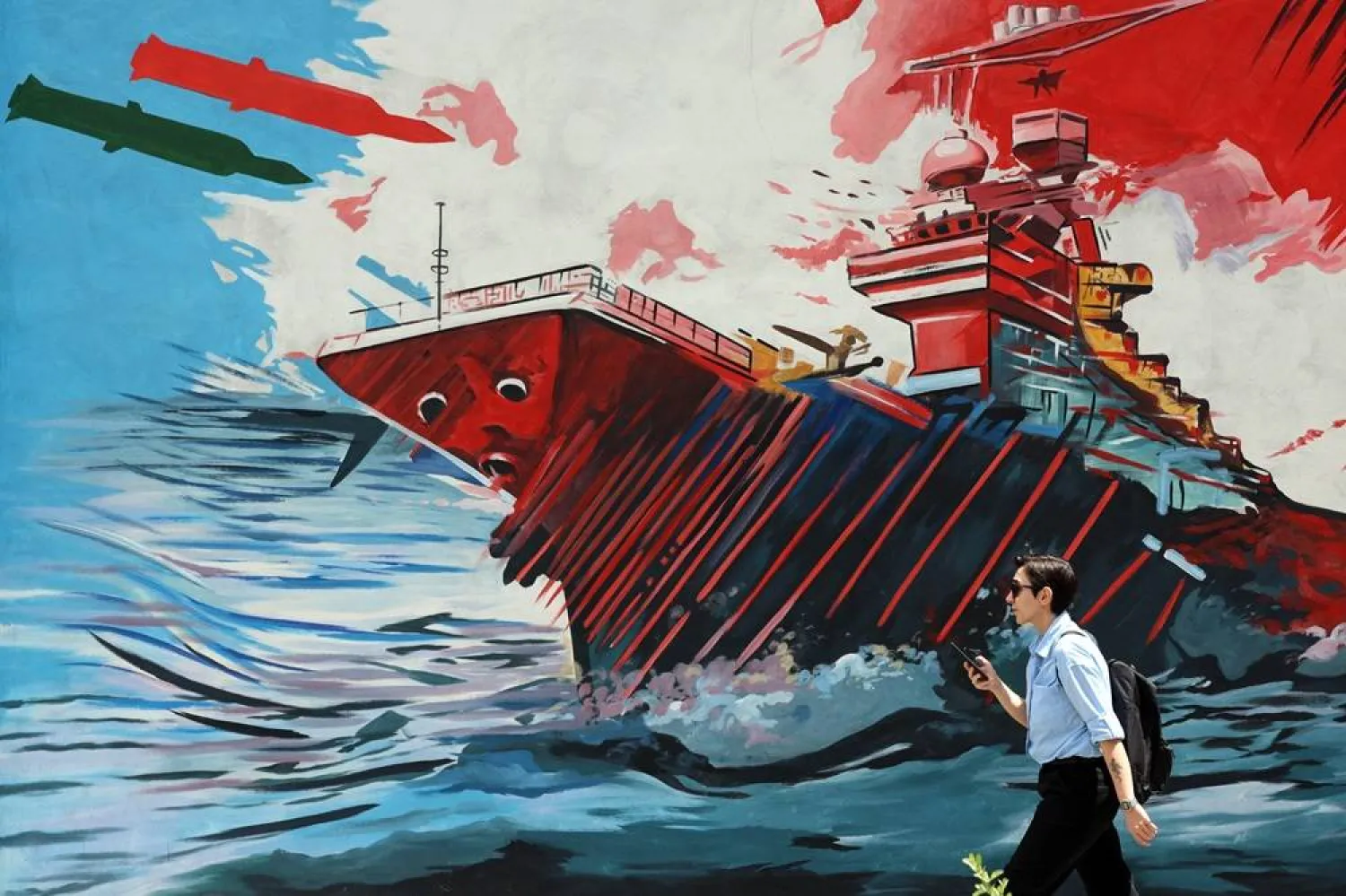
An Iranian walks next to a anti-US and Israel mural in a street in Tehran, Iran, 08 May 2026. (EPA)
TT

Trump Says Ceasefire Is on ‘Life Support’ After Rejecting Iran’s Latest Offer

An Iranian walks next to a anti-US and Israel mural in a street in Tehran, Iran, 08 May 2026. (EPA)

US President Donald Trump on Monday said the Iran ceasefire is on “life support” after he rejected the country’s latest proposal for not including a nuclear concession. 

Asked if the ceasefire was still in place, Trump said he’d say it’s “unbelievably weak” and on “life support.” 

“I would call it the weakest right now after reading that piece of garbage they sent us,” Trump said during an unrelated appearance in the Oval Office. “I didn’t even finish reading it.” 

Iran and the United States were at an impasse again Monday over how to end their war while their ceasefire grew increasingly shaky, with the two sides exchanging fire in recent days, ships and Gulf states being targeted, and fighting flaring between Israel and the Lebanese group Hezbollah. 

The volatility could tip the Middle East back into open warfare and prolong the worldwide energy crisis sparked by the conflict, with Iran’s chokehold on the Strait of Hormuz and America’s blockade of Iranian ports still in place.  

Trump is expected to use a trip this week to China to urge Chinese President Xi Jinping to pressure Iran into making concessions and end the limbo. Beijing is the biggest buyer of Tehran’s sanctioned crude oil, giving it leverage. 

But getting to any deal likely remains tough work. Iran insists it wants to see the American blockade end and sanctions lifted before beginning negotiations over its stockpile of highly enriched uranium. The US — and Israel — want that material removed since it could be used to eventually build a bomb, should Iran choose to do so. Tehran insists its program is peaceful, but it has enriched uranium beyond the levels needed for civilian power generation. 

Israel insists enriched uranium must be taken out of Iran  

Trump said Sunday that Iran’s response to his latest proposal was “TOTALLY UNACCEPTABLE!” Ending the US blockade before discussing Iran’s nuclear program would eliminate a major point of leverage. 

In the meantime, the standoff over the strait, a key transit point for the world's oil and natural gas exports, has sent fuel prices skyrocketing and rattled world markets. 

Israeli Prime Minister Benjamin Netanyahu, who launched the war with Trump on Feb. 28, insisted that the conflict was “not over,” telling CBS’ “60 Minutes” in an interview that aired Sunday that a critical goal is getting the nuclear material out of Iran.  

If that can't be accomplished with negotiations, Netanyahu said that Israel and the US agree “we can reengage them militarily.” 

Netanyahu also said the current Iranian government's "days are numbered — but it could take a lot of days.” 

The US and Israel have killed dozens of high-ranking Iranian officials, including the country’s supreme leader in the opening salvos of the war, and the conflict has inflicted heavy damage to Iran’s economy, but its theocracy maintains its grip on power. 

Iran and the US blame each other for the impasse 

Trump quickly rejected a new Iranian proposal sent Sunday to him via Pakistan. In it, Iran demanded war reparations from the US, full Iranian sovereignty over the Strait of Hormuz, an end to sanctions and the release of its seized assets abroad, Iranian state television reported. 

Iran also called for an immediate end to the war, including the fighting between Israel and Hezbollah, which have repeatedly exchanged fire though technically in a ceasefire. That conflict has seen Israeli strikes in Lebanon, its occupation of Lebanese territory and deadly Hezbollah attacks, including one that killed another Israeli soldier, the Israeli military said Monday. 

"We did not demand any concessions — the only thing we demanded was Iran’s legitimate rights," Iranian Foreign Ministry spokesman Esmail Baghaei said Monday. “The American side still insists on its one-sided views and unreasonable demands.” 

Iran did, however, offer to dilute part of its highly enriched uranium and transport the rest to a third country, and called for 30-day negotiations to finalize details, two regional officials involved in the negotiations told The Associated Press. The officials spoke on condition of anonymity to discuss the sensitive diplomacy taking place. 

Russian President Vladimir Putin has offered to take the uranium from Iran. 

Russia runs Iran's sole nuclear power plant at Bushehr and also took some of Iran's uranium stockpile in Tehran's 2015 nuclear deal with world powers, which the US later withdrew from under the first Trump administration. 

Asked Monday about Putin's comments, Baghaei said: "At the current stage, our focus is on ending the war." 

Iran continues with its executions  

Meanwhile, Iran executed another man it accused of spying for both the CIA and Israel's Mossad intelligence service. Iran's state-run IRNA news agency identified the prisoner as Erfan Shakourzadeh, saying he had worked on satellite communications and relayed classified information to those intelligence services. 

Iran has carried out a string of executions since nationwide protests swept the country in January. 

Activist groups have long accused Iran of carrying out closed-door trials during which defendants are unable to fully defend themselves.  

Iran's judiciary chief has repeatedly said that Tehran would increase the speed with which it carried out hangings to fight back against its enemies at home and abroad. 


Iran Says to Announce New Restricted Zone in the Gulf in the Coming Days

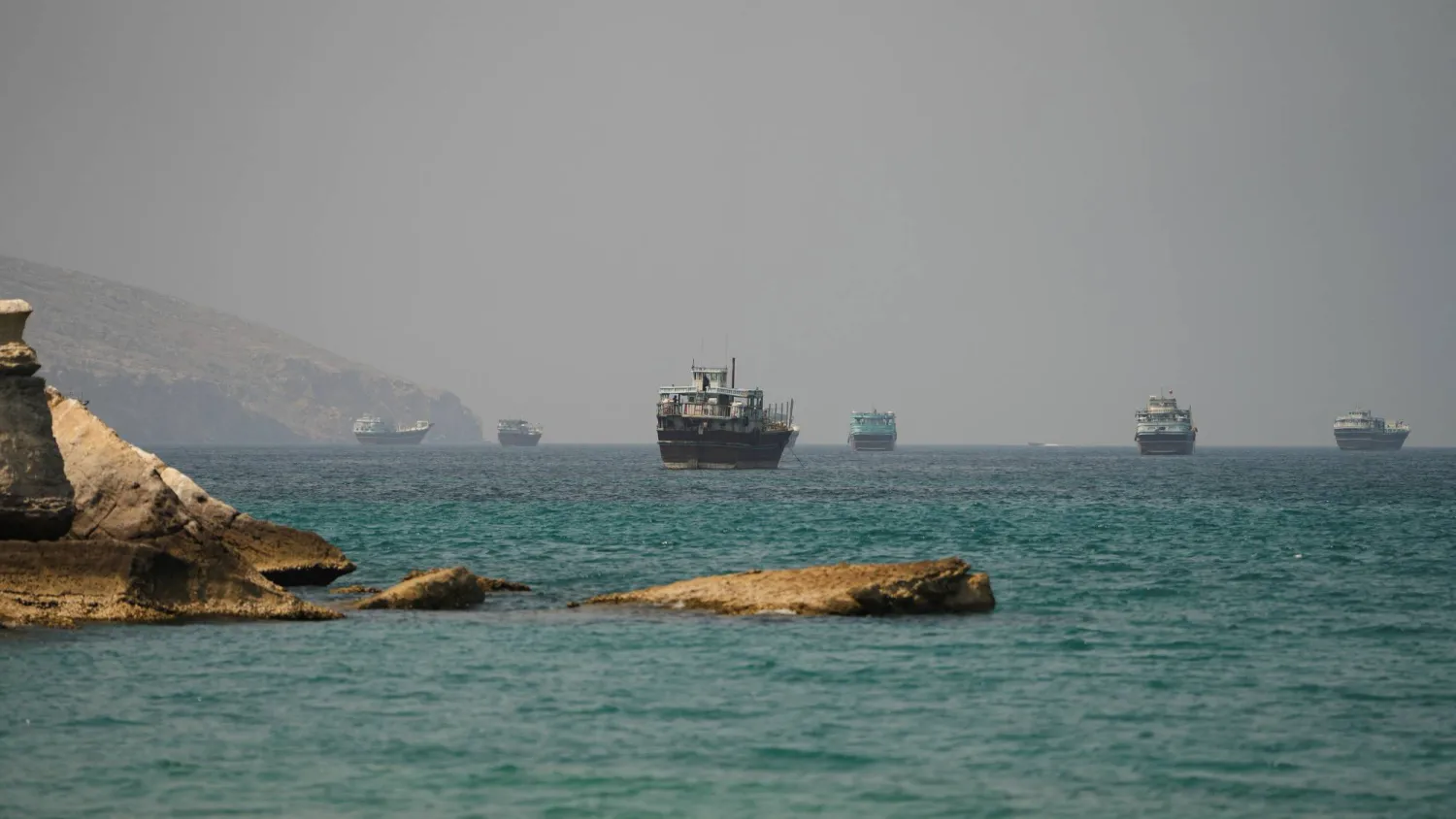
Vessels at the Strait of Hormuz, as seen from Musandam, Oman, September 6, 2026. REUTERS/Stringer
TT

Iran Says to Announce New Restricted Zone in the Gulf in the Coming Days

Vessels at the Strait of Hormuz, as seen from Musandam, Oman, September 6, 2026. REUTERS/Stringer

Iran said it will announce a new restricted zone in the Gulf in the coming days, along with maps of a new shipping corridor through the Strait of Hormuz, as a weekend exchange of strikes on shipping sent oil prices higher on Monday.

The new restricted zone will begin from where the US blockade of Iran begins and extend into areas of the Gulf, Mohsen Rezaei, the secretary of Iran's Supreme National Security Council, said on Sunday in an interview with state TV.

Few details were provided on the plan, but Rezaei said any ship entering the new zone would be added to a sanctions list, reported Reuters.

In addition, maps detailing passage routes for the Strait of Hormuz, a vital energy conduit largely closed to tanker traffic, would also be approved soon, Rezaei said.

"The maps of a new international corridor which lies in Iranian and Omani waters and in which Iran will have management have been agreed and should be signed in the coming days," he said.

"We will only commit to the Strait of Hormuz being ‌open when they (the Americans) ‌stop the sabotage, threats and attacks on Iran," Rezaei added.

Six months after US-Israeli strikes on Iran sparked ‌the war, the ⁠conflict appears to ⁠be at a stalemate. A preliminary ceasefire accord reached in June has unraveled, and little progress has been made in diplomatic efforts to get the peace process back on track.

After a pause in military action for much of August, tit-for-tat strikes have resumed. US forces struck three Iranian oil tankers on Saturday, US Central Command said, including one off Kharg Island, Iran's key oil export hub, following attacks by Iran's Revolutionary Guard Corps on US warships in the region.

Tehran has shown it retains the capability to attack US interests in neighboring countries and to shut down oil flows through the Strait of Hormuz, through which about a fifth of global oil supplies flowed prior to the conflict.

An average of 10 commodity ships transited the Strait per day in the past 10 days, the lowest since May, according to shipping ⁠data on Monday. That helped oil prices extend last week's big gains, with Brent crude up 0.8% ‌above $97 a barrel.

SANCTIONS, OIL BLOCKADE SQUEEZE ECONOMY 

Iran has said it will step up efforts to ‌tackle problems created by US sanctions that are crippling its economy. 

However, the US campaign to throttle Iran's economy by blockading its oil exports and stopping sanctions evasion is growing ‌increasingly difficult to withstand, three senior Iranian sources have said. 

Iran's Parliament Speaker Mohammad Baqer Qalibaf said on Sunday that the US should understand that the ‌rules of the game have changed "before it is too late". 

"From now on, any attack against Iran’s interests and security will receive a faster, heavier and more painful response,” he said in a speech published on his Telegram channel. 

Qalibaf said that alongside the military front, Iran’s main battle was now over production and people’s livelihoods. 

He cited sharp currency fluctuations, inflation, unemployment and market management as major challenges, adding Iranians could tolerate hardship but not mismanagement or inaction and expected the government to act quickly. 

Iran's Economy Minister Ali Madanizadeh said ‌Tehran planned to respond to US economic pressure with reforms and rejected the notion that sanctions would cause it to change course, according to state media on Sunday. 

“They speak of economic pressure and isolation, of ⁠breaking off financial ties and they think ⁠that by pressuring the economy of a country they can change the decisions of its people,” Madanizadeh said. 

“I have to clarify one point: The responsibility of reforming Iran’s economy is with its government and people, not with the US Treasury." 

KHARG ISLAND HIT 550 TIMES IN PRIOR MONTHS, IRAN SAYS 

Iran is the third-largest producer in the Organization of the Petroleum Exporting Countries and exported 90% of its crude via its Kharg Island export hub before the war. Flows have been disrupted since a US blockade of Iranian oil exports began in mid-April. 

US Central Command said on X that as of Sunday it had redirected 92 commercial vessels, disabled three and boarded two to ensure strict compliance with its blockade. 

On August 31, US President Donald Trump issued a one-line social media post accompanied by an AI-generated video depicting Kharg Island being "blown to smithereens." Iranian authorities have vowed a strong response if Kharg is attacked. 

In an interview aired on state TV on Sunday, Iran's Oil Minister Mohsen Paknejad said the island had been hit around 550 times in previous months but continued to operate. 

Iran's blockade of the Strait of Hormuz has pushed up fuel prices, weighing on Trump's popularity as his Republican Party heads into elections in November when control of Congress is at stake. 

However, US Energy Secretary Chris Wright said oil was getting through the waterway. 

"Our transits through the Strait are averaging over 9 million barrels a day now, and with the access pipelines that go around the strait, we're probably two-thirds or more of pre-conflict flows. So Iranians are still causing trouble, but the United States Navy is winning that battle," he told CNN. 


Belgium Arrests Suspected Spy Who Sold Chip Secrets to China

The flags of Germany and China are seen in Berlin, Germany, June 19, 2023. (Reuters)
TT

Belgium Arrests Suspected Spy Who Sold Chip Secrets to China

The flags of Germany and China are seen in Berlin, Germany, June 19, 2023. (Reuters)

Authorities in Belgium said on Monday they had arrested a suspected spy who allegedly sold a local chip-maker's trade secrets to a Chinese rival.

Prosecutors said the Chinese-Belgian national, who worked at Belgan, a now bankrupt Belgian producer of gallium nitride semiconductors, was arrested at Brussels airport in May as he was about to board a flight to Beijing.

"There are indications that the person concerned, who held a senior research position within the Belgian company, was simultaneously acting as a director of a Chinese company engaged in a similar manufacturing activity," the federal prosecutor's office said.

The Chinese firm was set up just a few months after the 52-year-old suspect had joined Belgan and was financed by a Chinese investment fund.

"The investigation may point to the unlawful transfer abroad of specialized intellectual property and trade secrets relating to the production of gallium nitride chips -- technology which has applications in sectors including electric vehicles, aerospace and the military," the prosecutor's office said.

This is the second espionage case related to China to emerge in Belgium in the space of a few months.

In July, authorities said they had arrested a Canadian citizen of Chinese origin suspected of carrying out "espionage on behalf of a third country" while on an internship at NATO.

The Belgan case stems from the company's bankruptcy in 2024, which affected more than 400 workers.

The suspect is being held in pre-trial detention on accusations of espionage, participation in a criminal organization, misuse of company assets and the unlawful disclosure of company secrets.

Prosecutors said they were still looking for a second suspect, also a Chinese national, who local media reported to be the firm's last CEO.

In its latest annual report, Belgium's state security agency highlighted several methods allegedly employed by China to acquire strategic Western know-how, including creating so-called "copy-to-China" companies.

It described how "Chinese firms invest in Belgian companies, research centers or spin-offs -- preferably small entities developing promising technologies but facing funding challenges -- to gain access to specific technologies".

They then established a firm in China to produce the same technology on a larger scale, before the original parent company is sold off, the report said.


Avalanche Kills 11 Climbers in Southern Russia

Rescuers received reports of the avalanche on Mount Mizhirgi, around 5,000 meters tall, at around on Sunday. (Getty Images)
TT

Avalanche Kills 11 Climbers in Southern Russia

Rescuers received reports of the avalanche on Mount Mizhirgi, around 5,000 meters tall, at around on Sunday. (Getty Images)

An avalanche on one of Russia's highest mountains has killed 11 climbers and left six others missing, rescue services said Monday.

Rescuers received reports of the avalanche on Mount Mizhirgi, around 5,000 meters (16,400 ft) tall, at around 5 pm (1400 GMT) on Sunday.

Unverified video on social media showed what appeared to be a mound of snow and ice crashing down a mountainside in the area, as people in the background could be heard swearing.

"Tragically, 11 people were killed. The fate of six climbers remains unknown," the local branch of Russia's emergency ministry said in a statement.

"Search and rescue operations are being complicated by difficult terrain and the risk of avalanches," it added.

A group of 33 climbers were in the area at the time.

Ten managed to evacuate on their own, while six had to be transported out by rescue services, according to the local branch of Russia's emergency ministry.

Prosecutors have opened a case into criminal negligence.

Mount Mizhirgi, near the Georgian border, is Russia's eighth-tallest mountain.

Surrounded by pristine forest and glaciers, the area is popular with hikers.
