Israel Increases Pressure, Widens Ambitions in Lebanon by Carrying Strikes Beyond Litani

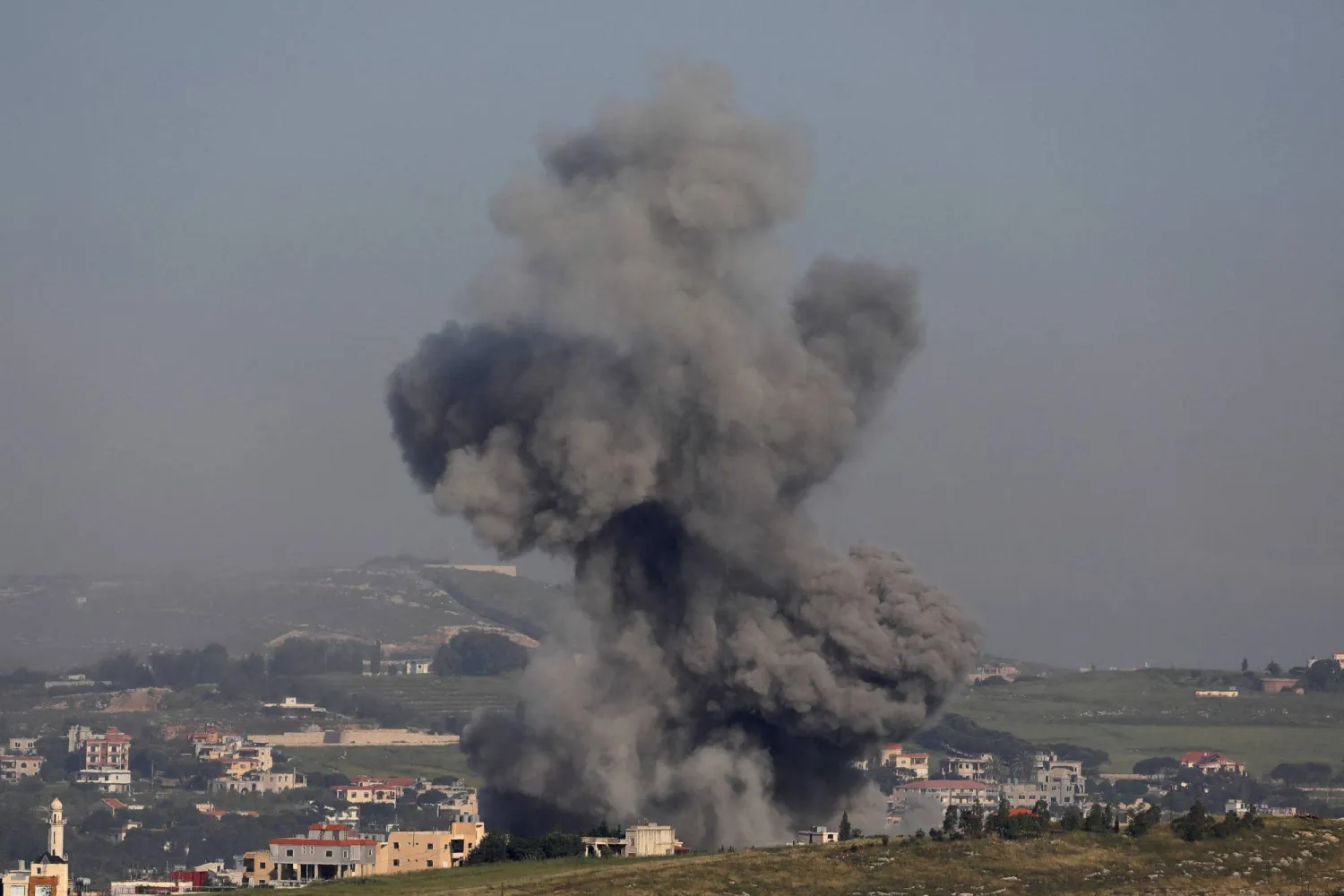
Smoke rises following an Israeli strike in southern Lebanon as seen from Marjeyoun, May 11, 2026. (Reuters)
TT

Israel Increases Pressure, Widens Ambitions in Lebanon by Carrying Strikes Beyond Litani

Smoke rises following an Israeli strike in southern Lebanon as seen from Marjeyoun, May 11, 2026. (Reuters)

The ceasefire in southern Lebanon has not really ended the fighting between Israel and Hezbollah. Israel has continued its raids on southern villages and the Iran-backed party continues to launch attacks against Israeli forces.

The ceasefire has effectively turned into open combat that is gradually expanding from border areas towards Lebanon’s interior as Israel widens the scope of its attacks and warnings to include regions north of the Litani River. The latest warnings covered Mashghara and Qlaia in the western Bekaa.

It appears that Israel is shifting the battle from “containing the southern front” to reshaping maps across the south and western Bekaa.

Israeli media, meanwhile, reported that the military was planning “a wide ground operation in Lebanon to address Hezbollah’s ongoing violations of the ceasefire.”

A local source told Asharq Al-Awsat that Israel is effectively fully occupying 35 Lebanese towns and villages, seven others are until total siege and 82 have received evacuation warnings since the ceasefire took effect.

Retired general Naji Malaeb told Asharq Al-Awsat that the developments on the ground in Lebanon “cannot be separated from the geopolitical conflict, meaning geography is being used to serve Israel’s political and military goals.”

Israeli Prime Minister Benjamin Netanyahu wants to extend the yellow line from the Naqoura to Jabal al-Sheikh, increasing Israeli military pressure beyond the areas covered by United Nations resolution 1701 that only covers regions south of the Litani, he added.

The repeated attacks on the western Bekaa and the destruction of bridges along the Litani aim to empty these regions of inhabitants and control how the displaced return to them later, he explained.

Attacks on the towns of Mashgara, Zlaya and Sohmor are also attempts to apply direct pressure on Hezbollah’s support base, he went on to say.

“Israel views the western Bekaa as a source of logistic and human support for Hezbollah,” Malaeb said, noting that the region has long served as a transit point for weapons smuggled from Syria to the Bekaa and then the south.

“So, Tel Aviv wants to sever the link between the Bekaa and south,” he explained.

On the military escalation, he highlighted Israeli Chief of Staff Eyal Zamir’s recent remarks that Israel was not in a truce with Lebanon. “This reflects an Israeli conviction that the confrontation will remain open as long as Hezbollah retains its weapons,” said Malaeb.

“It is unfortunate that the party has not respected the Lebanese state’s decision to cease attacks, because its continued drone or rocket attacks weaken Lebanon’s diplomatic position,” he added.

“Iran is trying to tie the situation in Lebanon to the broader confrontation in the region by demanding that a ceasefire cover all fronts,” he continued. If it is successful, “then Iran would have restored its control over the south and Hezbollah’s role on the border with Israel, destroying Lebanese efforts to separate the Lebanese file from the Iranian negotiations.”

Israeli strikes on a town in southern Lebanon killed six people and wounded seven others, state media said Tuesday, as fighting continued despite a ceasefire agreement.

Lebanon's state-run National News Agency (NNA) reported that Israeli strikes Monday night hit a house in Kfar Dounine, a town about 95 kilometers (59 miles) from capital Beirut.

Israel has intensified its attacks in south Lebanon as it trades fire with Hezbollah despite an April 17 ceasefire between Lebanon and Israel that aimed to halt the fighting.

More than 2,800 people have been killed in Lebanon since the country was dragged into the Middle East war on March 2, according to health authorities.


UN Agency Warns of Gaza Hypothermia Deaths without More Supplies

 Palestinians gather around a fire to keep warm among tents on a cold day in Gaza City, November 17, 2026. (Reuters)
Palestinians gather around a fire to keep warm among tents on a cold day in Gaza City, November 17, 2026. (Reuters)
TT

UN Agency Warns of Gaza Hypothermia Deaths without More Supplies

 Palestinians gather around a fire to keep warm among tents on a cold day in Gaza City, November 17, 2026. (Reuters)
Palestinians gather around a fire to keep warm among tents on a cold day in Gaza City, November 17, 2026. (Reuters)

The UN migration agency warned on Tuesday of further deaths from hypothermia in Gaza and called for more funding and shelter supplies ahead of winter after a baby died from cold.

Heavy rain has already flooded tens of thousands of tents housing displaced Palestinians crammed into encampments after the war between Israel and Hamas ‌reduced much of ‌the Gaza Strip to rubble. Last week, ‌a ⁠9-month-old baby living ⁠in a tent died from suspected hypothermia, UN agencies and Gaza authorities said, and respiratory illnesses are rising.

"Without proper shelter, without critical relief items, then hypothermia deaths will occur," Karl Baker, head of the International Organization for Migration's Gaza program, said on Tuesday, adding that children were particularly vulnerable, since they lose ⁠body heat more quickly. "It's unacceptable to have hypothermia ‌in the modern world."

IOM has ‌a $173 million funding shortfall for its winter shelter programs, he said.

Most ‌of Gaza's population of 2.1 million people is displaced and ‌is being squeezed into a smaller part of the territory, with UN maps showing more than half of Gaza's total area under Israeli restrictions.

Baker said at a UN press briefing in Geneva ‌that some 100,000 tents were currently waiting to enter Gaza – more than in previous years – with ⁠flows hindered ⁠by crossing closures and by lengthy Israeli security checks.

He also called for robust structures such as caravans and prefabricated housing to be funded and allowed in. The UN children's agency has complained that Israel has blocked equipment ahead of winter.

Israel's military agency that coordinates aid, COGAT, says it has a proactive "winterization plan" and that supplies and medicines continue to enter Gaza.

Baker described meeting a drenched family sheltering beneath sagging, worn-out tarpaulins.

"Gaza is turning into one large IDP camp (internally displaced persons). It ranks as one of the worst I've walked through," he said.


Officials Say Israeli Forces Killed Six in Gaza, Including Child

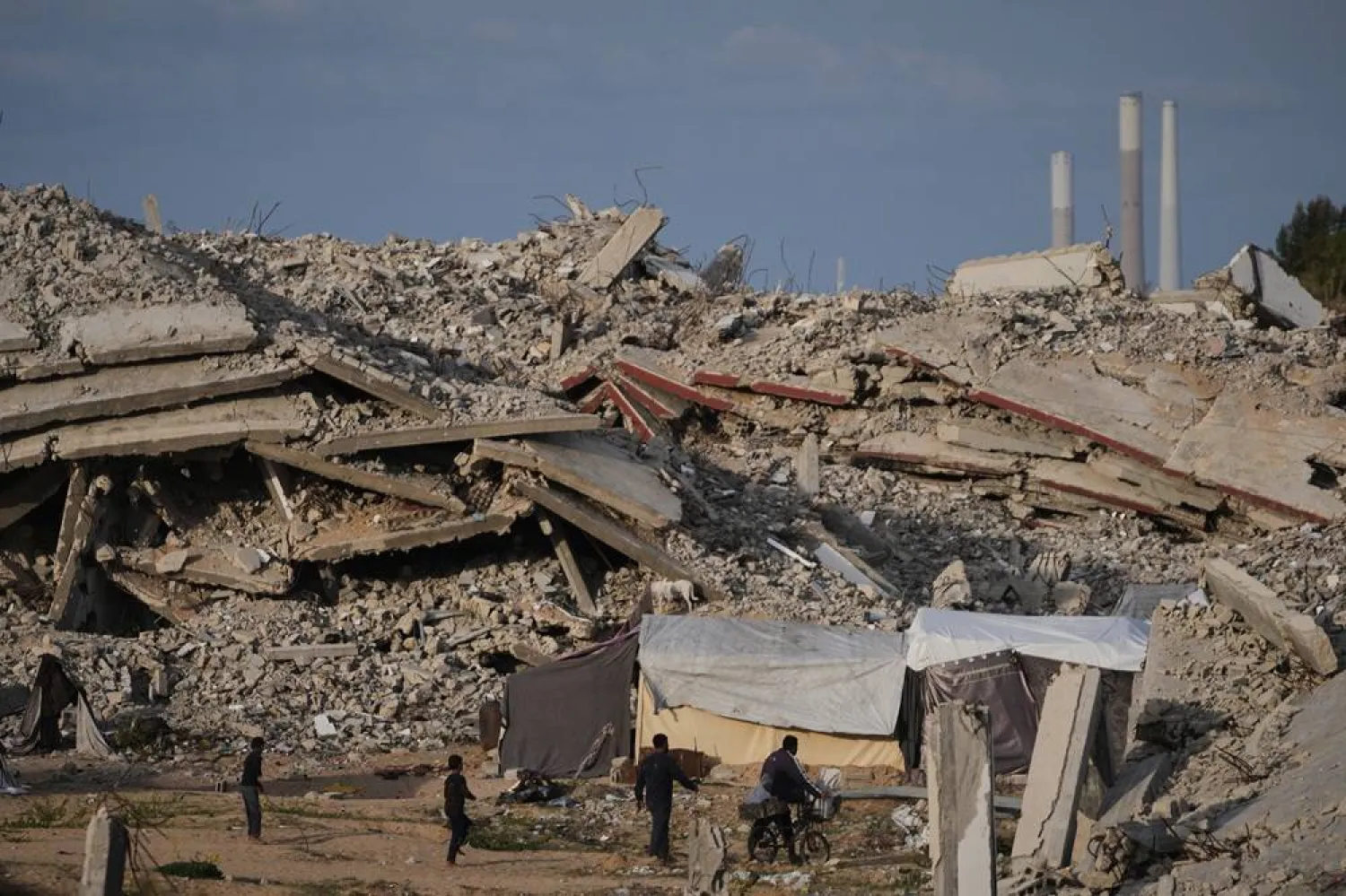
 Palestinians walk through the rubble of buildings destroyed during the Israel-Hamas war in Gaza City, Tuesday, Nov. 17, 2026. (AP)
Palestinians walk through the rubble of buildings destroyed during the Israel-Hamas war in Gaza City, Tuesday, Nov. 17, 2026. (AP)
TT

Officials Say Israeli Forces Killed Six in Gaza, Including Child

 Palestinians walk through the rubble of buildings destroyed during the Israel-Hamas war in Gaza City, Tuesday, Nov. 17, 2026. (AP)
Palestinians walk through the rubble of buildings destroyed during the Israel-Hamas war in Gaza City, Tuesday, Nov. 17, 2026. (AP)

Israeli forces killed six people across the Gaza Strip on Tuesday, including a six-year-old boy, the civil defense agency and hospitals in the war-ravaged Palestinian territory told AFP.

Israel and Hamas regularly accuse each other of violating the ceasefire that came into effect in October 2025, after two years of war triggered by the Palestinian movement's unprecedented attack on Israel on October 7, 2023.

Mahmoud Bassal, spokesman for Gaza's civil defense agency, told AFP that a total of six people were killed and several injured "as a result of Israeli fire" on Tuesday.

Israel's military told AFP it was looking into the reports, adding that it struck "several terrorists" in Gaza on Tuesday, and was "not aware" of any six-year-old killed by its fire.

Bassal said that two people including a 21-year-old and a six-year-old boy were killed by Israeli fire in the central Gaza city of Deir el-Balah.

Nasser Hospital, in Gaza's south, confirmed the two deaths and identified the child as Iyas al-Namnam.

Bassal said that two people were killed in an Israeli drone bombing near northern Gaza's Jabalia camp. Al-Shifa hospital in nearby Gaza City confirmed the two deaths.

Bassal added that one man was killed by bombing and another by Israeli live fire in southern Gaza, with Nasser Hospital confirming both deaths.

More than 1,600 Palestinians have been killed since the start of the ceasefire, according to an AFP tally based on data from the Gaza health ministry, which operates under Hamas authority and whose figures are considered reliable by the United Nations.

During the same period, the Israeli military has reported the loss of seven soldiers, as well as one civilian contractor.


Kataib Hezbollah Warns Iraqi Forces Against Entering Jurf al-Sakhar

 A fighter with the Iran-backed Kataib Hezbollah carries a rocket-propelled grenade launcher in Jurf al-Sakhar, in Iraq's Babil province, south of Baghdad, Tuesday, Nov. 17, 2026. (AP)
A fighter with the Iran-backed Kataib Hezbollah carries a rocket-propelled grenade launcher in Jurf al-Sakhar, in Iraq's Babil province, south of Baghdad, Tuesday, Nov. 17, 2026. (AP)
TT

Kataib Hezbollah Warns Iraqi Forces Against Entering Jurf al-Sakhar

 A fighter with the Iran-backed Kataib Hezbollah carries a rocket-propelled grenade launcher in Jurf al-Sakhar, in Iraq's Babil province, south of Baghdad, Tuesday, Nov. 17, 2026. (AP)
A fighter with the Iran-backed Kataib Hezbollah carries a rocket-propelled grenade launcher in Jurf al-Sakhar, in Iraq's Babil province, south of Baghdad, Tuesday, Nov. 17, 2026. (AP)

The Iran-backed Kataib Hezbollah in Iraq vowed on Tuesday to confront government forces if they try to enter its main stronghold near Baghdad, denying allegations that it is smuggling oil from the area.

The standoff between Kataib Hezbollah and Iraqi authorities is shaping up to be the first major test of the new government’s resolve to disarm nonstate armed groups.

Abu Taleb al-Saidi of Kataib Hezbollah made the comments a day after Iraqi Prime Minister Ali al-Zaidi said security forces would enter Jurf al-Sakhar, south of Baghdad in Babil province, later this week. Local media reported that the group had until Friday to leave.

Kataib Hezbollah, one of Iraq’s most powerful armed groups, wields considerable influence in Jurf al-Sakhar and has maintained an armed presence there for more than a decade.

The planned move by al-Zaidi is part of his push to disarm Iran-backed groups by mid-2027. The move by both rival sides raises alarms of internal fighting that has been mostly avoided since the 2003 US-led invasion that removed Saddam Hussein from power.

Two officials from Kataib Hezbollah told The Associated Press that Gen. Esmail Qaani, who heads the foreign wing of Iran’s Revolutionary Guard, arrived in Baghdad on Monday to take part in mediation to end the tension. The officials, who spoke on condition of anonymity because they were not authorized to comment publicly, gave no further details.

The United States backs efforts to disarm Iran-backed groups in Iraq as part of its push to reduce Tehran’s influence in the region, including in Iraq and Lebanon. Washington has described Kataib Hezbollah as an “Iran-backed terrorist organization.”

Lebanese authorities will likely be watching the standoff in Jurf al-Sakhar closely. They have made little progress in carrying out their own plan to disarm Lebanon’s Hezbollah, which is allied with but separate from Kataib Hezbollah.

Also Tuesday, an Iraqi judicial committee inspected Jurf al-Sakhar following allegations by authorities that Kataib Hezbollah had used the area to smuggle oil worth tens of millions of dollars.

The state news agency quoted an unnamed senior official as saying the judicial committee was accompanied by a government committee. The inspection aimed to examine the circumstances of the alleged smuggling and identify sites where violations had occurred.

The agency quoted al-Zaidi as saying that all suspects involved in the oil smuggling operations will be referred to the judiciary and that legal measures will be taken against them. He also ordered the dismissal of nine security and administrative officials in Babil governorate, including the Babil police chief, commanders and directors of security and intelligence agencies, and the director of the State Company for Oil Pipelines.

Ali al-Nheir, a member of the parliament’s investigative committee, told the state news agency that the investigation that included thermal imaging showed 25 tanker trucks each carrying 36,000 liters.

“The reports reviewed by the committee were shocking, and included evidence and documents proving the existence of smuggling operations,” al-Nheir said about Jurf al-Sakhar.

Another Kataib Hezbollah official, who spoke on condition of anonymity, told journalists touring Jurf al-Sakhar on Tuesday that two facilities in the area refine oil. He said the fuel was used only to run the group’s vehicles and power generators and denied allegations of smuggling.

The official said Jurf al-Sakhar had been hit more than 35 times since the US and Israel began attacking Iran in late February.

He warned that if “a war is imposed on us we will fight.”