



EU to Invite Taliban Officials to Brussels for Migrant Return Talks

Around 20 EU countries are exploring how to return migrants -- particularly those with court convictions -- to Afghanistan. NICOLAS TUCAT / AFP
TT

EU to Invite Taliban Officials to Brussels for Migrant Return Talks

Around 20 EU countries are exploring how to return migrants -- particularly those with court convictions -- to Afghanistan. NICOLAS TUCAT / AFP

The European Commission told AFP Monday it plans to invite Taliban officials to Brussels in the near future for talks on returning migrants to Afghanistan.

According to sources close to the matter, a letter is to be sent "imminently" to Kabul to arrange a date for a meeting in the Belgian capital.

The visit, coordinated with Sweden, would follow two trips by European officials to Afghanistan on the same issue.

Officials are now "working on a potential follow-up meeting at technical level in Brussels with the de-facto authorities in Afghanistan," a spokesperson for the EU executive said.

No specific date has yet been raised for the visit.

- Letter from 20 countries -

As part of a broader tightening of immigration policies, around 20 EU countries are exploring how to return migrants -- particularly those with criminal convictions -- to Afghanistan.

In an October letter, several urged the EU to find diplomatic and practical ways to move the issue forward.

"In this context a technical meeting took place in Kabul in January 2026," the commission spokesperson said, adding that the EU was now working jointly with Sweden to "pursue these discussions" in Brussels.

Such visits raise a host of practical and ethical questions, not least because they involve engaging with Taliban authorities, which are not formally recognized by the European Union.

To enter Belgium, which hosts the EU institutions, Taliban officials would need to be granted exemptions -- something Belgian authorities appear, in theory, prepared to do.

Beyond the practicalities, the European push on returns comes as Afghanistan confronts a severe humanitarian crisis.

Since 2023, more than five million Afghans have returned from Iran and Pakistan, often forcibly. According to international organizations, most of them live in extreme hardship, without stable housing or employment.

- Germany leads charge -

EU countries received about a million asylum applications filed by Afghans between 2013 and 2024, according to the bloc's data agency. About half as many were approved over the period.

In 2025, Afghans still -- by far -- accounted for the largest share of asylum applicants in the EU.

But as the public mood has soured on migration, Europe has looked to scale back its welcome -- and started discussing how to send Afghan migrants back home.

Some countries have pushed ahead, with Germany deporting more than 100 Afghans with criminal convictions since 2024, via charter flights facilitated by Qatar.

Attitudes in the country have been hardened by a string of deadly attacks by Afghans in recent years, including a car-ramming in Munich last year.

Austria has followed suit, receiving a delegation of Taliban representatives in Vienna in mid-September.

A number of other EU member states, including Belgium and Sweden, are looking to emulate their example, with enthusiastic backing from migration hawks.

The returns drive has drawn sharp criticism from NGOs and the political left.

"Deporting Afghans back to a country where almost half of the population cannot feed themselves is not a migration policy; it is a decision that could cost lives," says Lisa Owen, the International Rescue Committee's country director for Afghanistan.

Other migrant rights groups fear that a visit to Brussels could allow Taliban officials to identify individuals they want returned to Afghanistan, potentially putting their fundamental rights at risk.

Several diplomatic sources contacted by AFP counter that the visit is first and foremost intended to resolve practical issues -- such as how to issue passports to people whose embassies in Europe are not recognized by the Taliban authorities.

During their trips to Afghanistan, European officials similarly looked into the handling capacity of Kabul airport and other technical details, according to sources close to the talks.



Brazilian Flotilla Activist Returns Home, Alleges Torture During Israel Detention

 Brazilian activist Thiago Avila, a member of the Global Sumud flotilla, arrives at Guarulhos International Airport in Sao Paulo, Brazil, on May 11, 2026. (AFP)
Brazilian activist Thiago Avila, a member of the Global Sumud flotilla, arrives at Guarulhos International Airport in Sao Paulo, Brazil, on May 11, 2026. (AFP)
TT

Brazilian Flotilla Activist Returns Home, Alleges Torture During Israel Detention

 Brazilian activist Thiago Avila, a member of the Global Sumud flotilla, arrives at Guarulhos International Airport in Sao Paulo, Brazil, on May 11, 2026. (AFP)
Brazilian activist Thiago Avila, a member of the Global Sumud flotilla, arrives at Guarulhos International Airport in Sao Paulo, Brazil, on May 11, 2026. (AFP)

Brazilian activist Thiago Avila returned to Sao Paulo on Monday following his detention and deportation from Israel, where he alleged he was tortured and witnessed abuses of Palestinian prisoners during 10 days in custody.

Avila and Spanish national Abu Keshek were part of the second Global Sumud Flotilla that launched from Spain on April 12 attempting to break Israel's blockade of Gaza ‌by delivering aid. The ‌two men were arrested and taken ‌to ⁠Israel after Israeli forces ⁠intercepted the flotilla, while more than 100 other pro-Palestinian activists were taken to Crete.

They were held under suspicion of offences including aiding the enemy and contact with a terrorist group. Both denied the allegations. They were released on Saturday and handed to immigration authorities for deportation.

"My return was simply a correction of a ⁠serious violation. I was kidnapped by Israel, I ‌wasn't imprisoned," Avila told reporters ‌after his arrival at Sao Paulo-Guarulhos International Airport.

Avila claimed that he and ‌Abu Keshek suffered "all kinds of violations" during their detention, ‌adding that Palestinian prisoners in nearby cells experienced worse treatment.

Israel dismissed claims by human rights group Adalah, which represented the men in a court hearing in Israel, that the men had been tortured ‌in custody, and said all measures taken were in accordance with the law.

The governments of ⁠Spain and ⁠Brazil have said the detention was unlawful.

"We need to defeat (Israeli Prime Minister) Netanyahu and (US President) Donald Trump, we need to defeat the war criminals," Avila said as supporters held signs calling for Brazil to cut ties with Israel.

Gaza is largely run by Palestinian group Hamas, which is designated as a terrorist group by Israel and much of the West.

The group's October 7, 2023, attack on Israel started the Gaza war that has left much of the enclave's population homeless and dependent on aid - that humanitarian agencies say is arriving too slowly.


Trump Is Getting Another Medical Checkup at the End of May, the White House Says

 11 May 2026, US, Washington: US President Donald Trump, listens to a question during a maternal healthcare event at the Oval Office of the White House. (Daniel Torok/White House/Planet Pix via ZUMA Press Wire/dpa)
11 May 2026, US, Washington: US President Donald Trump, listens to a question during a maternal healthcare event at the Oval Office of the White House. (Daniel Torok/White House/Planet Pix via ZUMA Press Wire/dpa)
TT

Trump Is Getting Another Medical Checkup at the End of May, the White House Says

 11 May 2026, US, Washington: US President Donald Trump, listens to a question during a maternal healthcare event at the Oval Office of the White House. (Daniel Torok/White House/Planet Pix via ZUMA Press Wire/dpa)
11 May 2026, US, Washington: US President Donald Trump, listens to a question during a maternal healthcare event at the Oval Office of the White House. (Daniel Torok/White House/Planet Pix via ZUMA Press Wire/dpa)

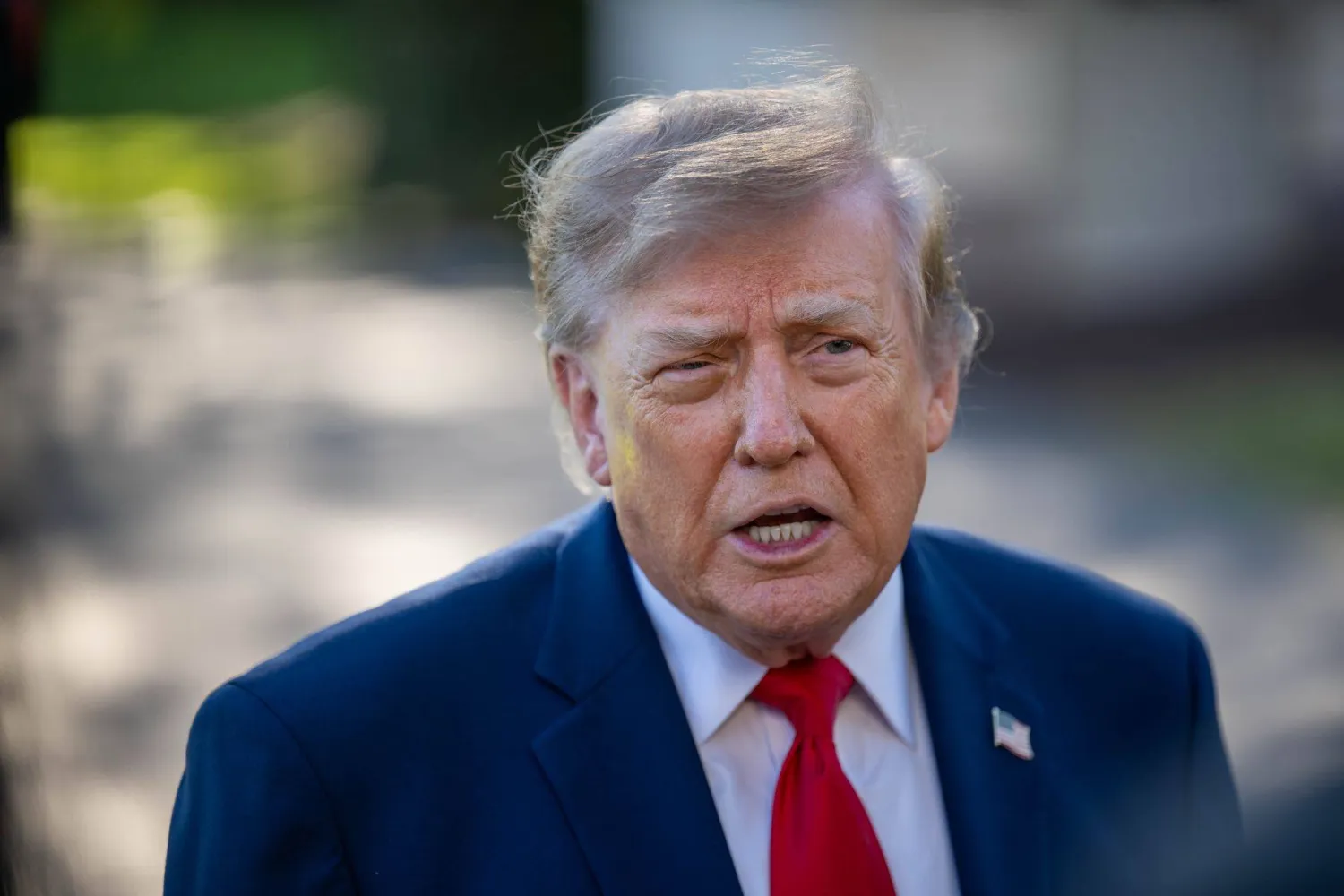
President Donald Trump is scheduled to see doctors for a medical and dental checkup this month — his fourth publicized visit to medical experts since returning to office — in what the White House describes as an annual physical and regular preventive care.

Trump, who turns 80 next month and was the oldest person elected US president, will see his doctors at the Walter Reed National Military Medical Center on May 26, the White House said in a brief statement Monday evening.

The president's health has been the subject of tremendous scrutiny, so much so that Trump said he regretted getting imaging on his heart and abdomen last year because it raised public questions about his health.

Trump, who has been frequently critical of former President Joe Biden for age-related health and fitness issues, has recently remarked how good he feels despite his years.

Earlier Monday, Trump that he feels the same as he did 50 years ago. “I feel literally the same,” he said at an Oval Office event. “I don’t know why. It’s not because I eat the best foods.”

Last week, he joked about his exercise regimen, saying that he works out “like about one minute a day, max.”

Presidents have wide discretion over what health information they choose to release to the public. Trump's doctor reported after an annual physical exam in April 2025 that the president was “fully fit” to serve as commander in chief.

His physician, Navy Capt. Sean Barbabella, said Trump was 20 pounds lighter since a 2020 checkup that showed him bordering on obesity.

Months after the visit reported last April, Trump had a checkup after noticing what the White House described as “mild swelling” in his lower legs. Tests by the White House medical unit found that Trump had chronic venous insufficiency, a condition common in older adults that causes blood to pool in his veins.

At the time, White House press secretary Karoline Leavitt also addressed bruising on the back of Trump's hands that has sometimes been covered by makeup. Leavitt said it was the result of irritation from frequent handshaking and aspirin use. Trump takes aspirin to reduce the risk of heart attack and stroke.

Trump went on to have an October medical exam that the White House called a “semiannual physical,” where he also got his yearly flu shot and a COVID-19 booster vaccine. He later told The Wall Street Journal that he underwent advanced imaging on his heart and abdomen in October as preventive screening.

In his first term, Trump had at least four medical exams in office, aside from a stay at Walter Reed when he got COVID-19 in October 2020.

His upcoming dental evaluation follows two other recent visits to a local dentist near his estate in Florida, where Trump often spends his weekends.

The checkup is scheduled to take place about 10 days after Trump is expected to return from a summit in Beijing with Chinese leader Xi Jinping.


UN: Over 370 Afghan Civilians Killed in Pakistan Conflict in Three Months

Victims of a strike on a drug rehab center in Kabul are burried in a mass grave on Badam Bagh Hilltop on March 26. Wakil KOHSAR / AFP/File
TT

UN: Over 370 Afghan Civilians Killed in Pakistan Conflict in Three Months

Victims of a strike on a drug rehab center in Kabul are burried in a mass grave on Badam Bagh Hilltop on March 26. Wakil KOHSAR / AFP/File

At least 372 Afghan civilians were killed in conflict between government forces and Pakistan in the first three months of the year, the United Nations reported on Tuesday, with more than half the deaths attributed to airstrikes on a drug rehab facility in Kabul.

Relations between Islamabad and Kabul have been fraught since the Taliban returned to power in 2021, and exploded into what Pakistan's defense minister called "open war" in February.

Islamabad accuses the Afghan Taliban government of sheltering militants behind a surge in attacks -- particularly the Pakistan Taliban, who have waged a violent campaign for years.

Afghan officials deny the charge and counter that Pakistan harbors hostile groups and does not respect its sovereignty.

"Between 1 January and 31 March 2026, UNAMA documented a total of 372 civilians killed and 397 injured as a result of cross-border armed violence" between Afghanistan's security forces and Pakistani military forces, the United Nations Assistance Mission in Afghanistan (UNAMA) said.

In a written response to the report, Islamabad said 130 Pakistani civilians and security personnel were killed since the beginning of this year.

On Monday, Pakistan's foreign ministry summoned Kabul's top envoy to Islamabad, saying a suicide attack that killed 15 people, mostly police officers, at the weekend was "masterminded by terrorists residing in Afghanistan".

Long-running cross-border clashes between Afghanistan and Pakistan escalated in October last year, leaving dozens dead, but after subsiding, they resumed at the end of February.

The UN mission, which has a mandate to monitor civilian casualties only in Afghanistan, said its report was based on checks with three independent sources.

The latest three-month figure is higher than any toll for the period recorded by UNAMA since 2011.

According to the report, 13 women, 46 children (31 boys and 16 girls) and 313 men were killed in Afghanistan between January 1 and March 31.

- NGO worker killed -

"The leading cause of civilian casualties was airstrikes (64 percent) with the remaining caused by indirect cross-border firing" and one "targeted killing" of an NGO worker, the UN said.

The high proportion of men was attributed to the March 16 strikes on a Kabul drug treatment hospital which admitted only male patients. At least 269 people were killed and 122 wounded.

Many bodies "could not be identified because they were reduced to dismembered body parts", while others were unrecognizable "due to extensive burns", the report said.

"The real figure may be significantly higher," the UN added.

The Taliban government reported more than 400 civilians killed in that incident.

In a written response included in the report, Pakistan insisted "no hospital, drug rehabilitation center, or civilian facility was targeted".

"Pakistan's actions were directed solely against terrorist and military infrastructure," Islamabad said.

The UN mission urged Afghan authorities to "compile a record of the missing" from the hospital strike to help their relatives find answers about their fate.

UNAMA also called on the warring parties to respect international law by refraining from targeting health facilities or from firing shells or grenades into areas populated by civilians.

The report recounted the death of a female Afghan employee of an NGO in Nuristan on March 19 during the Eid al-Fitr holiday -- even though a ceasefire had been agreed a day earlier.

As she tried to return home with her husband and three children, "Pakistani military forces began firing at their vehicle", the UN said.

They stepped out of the car to cross the river and reach a safer area when "the NGO worker was shot in her right side and fell into the water and drowned with her three-year-old son".

Since talks in early April in China, Pakistan and Afghanistan have committed to avoiding any escalation, according to Beijing.

Incidents have decreased without stopping entirely.

On April 27, seven civilians were killed and 85 wounded by shelling that hit, among other places, a university in Asadabad, according to Afghan authorities.