


EU Plans New Rules Targeting Addictive Design on TikTok, Meta, to Protect Children

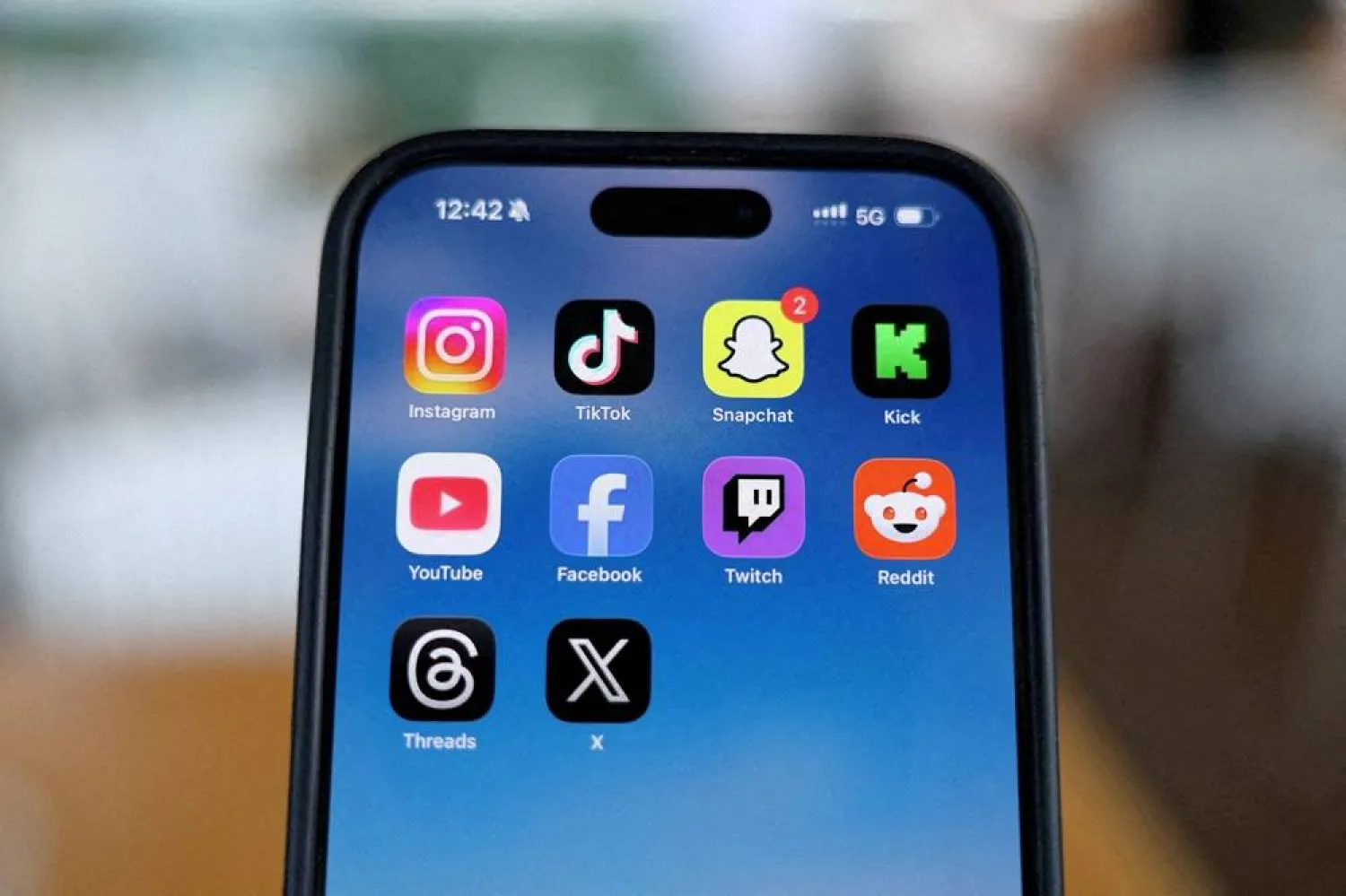
 Instagram, TikTok, Snapchat, Kick, YouTube, Facebook, Twitch, Reddit, Threads and X applications are displayed on a mobile phone ahead of new law banning social media for users under 16 in Australia, in this picture illustration taken on December 9, 2025. (Reuters)
Instagram, TikTok, Snapchat, Kick, YouTube, Facebook, Twitch, Reddit, Threads and X applications are displayed on a mobile phone ahead of new law banning social media for users under 16 in Australia, in this picture illustration taken on December 9, 2025. (Reuters)
TT

EU Plans New Rules Targeting Addictive Design on TikTok, Meta, to Protect Children

 Instagram, TikTok, Snapchat, Kick, YouTube, Facebook, Twitch, Reddit, Threads and X applications are displayed on a mobile phone ahead of new law banning social media for users under 16 in Australia, in this picture illustration taken on December 9, 2025. (Reuters)
Instagram, TikTok, Snapchat, Kick, YouTube, Facebook, Twitch, Reddit, Threads and X applications are displayed on a mobile phone ahead of new law banning social media for users under 16 in Australia, in this picture illustration taken on December 9, 2025. (Reuters)

The European Union is working on new rules to protect children against the addictive designs of social media platforms like TikTok, Meta and X, the EU chief said on Tuesday, as the bloc toughened its stance on Big Tech.

"Sleep deprivation, depression, anxiety, self-harm, addictive behaviour, cyberbullying, grooming, exploitation, suicide. Risks are multiplying fast," European Commission President Ursula Von der Leyen said in Copenhagen.

"The question is not whether young people should have access to social media, the question is whether social media should have access to young people," Von der Leyen said, Reuters reported.

Reflecting Europe's broadside against US tech firms, Von der Leyen said the Commission would target "addictive and harmful design practices" in its Digital Fairness Act (DFA), to be proposed towards the end of the year.

BANNING MANIPULATIVE, ADDICTIVE FEATURES

The Act would ban manipulative practices, addictive features and misleading influencer marketing on digital platforms.

The risks in the digital world are "the result of business models that treat our children's attention as a commodity," she said, calling for strict limits on AI use in social media.

"The question is not whether young people should have access to social media, the question is whether social media should have access to young people," Von der Leyen said.

The Commission may propose a minimum age for platform access this summer, Von der Leyen said, adding: "We are taking action against TikTok and its addictive design, endless scrolling, autoplay and push notifications."

"The same applies to Meta, because we believe Instagram and Facebook are failing to enforce their own minimum age of 13."

Spokespeople at the three companies did not immediately respond to requests for comment.

CRACKING DOWN ON TEEN SOCIAL MEDIA USE

The new regulation will strengthen and expand the EU's Digital Services Act (DSA), which requires large platforms to do more to tackle illegal and harmful content, Von der Leyen said.

Under the DSA rules, the Commission is already investigating TikTok, X and Meta Platforms' Instagram and Facebook.

It has been investigating X over possible risks from deploying Grok in the EU, including the spread of manipulated sexualised images.

On Tuesday, Europe's top court sided with Italy's telecoms watchdog against Meta saying it should compensate publishers for using snippets of their articles.

TikTok, meanwhile, made a last-ditch attempt to scrap its designation as a "gatekeeper" under EU rules, which require it to meet tougher standards.

Europe is hardening its stance more broadly against social media, with nations from Norway and France to Turkey and Britain debating or rolling out legislation to ban or limit teenage social media use.



Apple Closes in on Nvidia in Race for World's Most Valuable Company

Apple logo (Reuters)
TT

Apple Closes in on Nvidia in Race for World's Most Valuable Company

Apple logo (Reuters)

Apple is within striking distance of overtaking Nvidia as the world's most valuable company, a milestone that would reshuffle the ranks of tech heavyweights as investors reassess the outlook for AI.

Apple was last valued at $4.90 trillion as its shares rose marginally in premarket trading on Friday, while Nvidia was roughly at the same level, following a 2.4% decline.

If Apple overtakes Nvidia, it would reclaim the top spot for the first time since April last year. The close race shows that investors are broadening their focus beyond the obvious beneficiaries of the AI boom, such as Nvidia, which has been at the helm for nearly a year.

"Apple was seen as a laggard in the AI race because it wasn't spending to develop models, but now sentiment has changed," said Toni Meadows, head of investment at BRI Wealth Management, Reuters reported.

"Apple is less exposed to capex intensity and better positioned to monetize AI via services, ecosystem lock-in, and hardware upgrades. The re-rating reflects confidence in earnings durability rather than speculative AI upside."

For a company that was often seen trailing in the AI race, the narrowing gap with Nvidia reflects Apple's efforts to establish itself more firmly among the sector's leading players, and could shape how CEO Tim Cook's final months at the helm are viewed.

Cook is preparing to cede his role to hardware veteran John Ternus in September.

Last month, the company rolled out a long-delayed overhaul of Siri, betting the upgraded assistant would help close the gap with Big Tech rivals and new-age startups in the crucial AI race.

Some analysts say Apple is sitting on an AI gold mine in the form of the personal data that lives on every iPhone. The data could make Siri's answers more useful and the assistant more capable.

The challenge is that such data is locked away in operating systems in the name of privacy and the company would have to find a way to unlock its value.

Nvidia became the first company in the world to surpass a $5 trillion market valuation in October, a landmark that propelled it into a rarefied territory that was far beyond the reach of its rivals.

Even if Nvidia is superseded by Apple, it would not necessarily signal a lasting change in the companies' relative standing. The chipmaker remains a major beneficiary of AI-related spending, and its graphics processors are powering much of the generative AI frenzy.

Nvidia could also reclaim the top spot if sentiment shifts.

Besides, Apple is in a delicate position itself, having raised prices to offset rising costs -- a strategy that could hurt demand.

"I don't see any meaningful distinction should Nvidia lose its crown. It's likely to be a significant participant in whatever happens going forward," said Benjamin Hall, vice president, alpha research at Segal Marco Advisors.

However, the AI enthusiasm has spread to other corners of the semiconductor industry. The bigger winners this year have been memory chipmakers such as Micron, which crossed $1 trillion in market value in May as investors embraced the significance of memory chips in AI infrastructure.

South Korea's SK Hynix also listed on the Nasdaq earlier this month, adding another player to the race for investor attention.

"The new entrants to the market could spread out the focus away from the pure Magnificent Seven names into a wider number of names," Hall said.

The eye-watering chips rally ran into turbulence in July as investors reassessed the sustainability of the artificial intelligence trade, knocking the Philadelphia SE Semiconductor index down almost 19% from its all-time highs.

Despite the steep fall, the index has performed better than Nvidia so far this year.


South Korea-US Team Unveils Robotic Technology That Dresses the Wearer

 Hwang Jae Yun, a graduate student of Civil and Environmental Engineering at the Korea Advanced Institute of Science and Technology (KAIST), demonstrates wearing a self-dressing robot at KAIST in Daejeon, South Korea, July 14, 2026. (Reuters)
Hwang Jae Yun, a graduate student of Civil and Environmental Engineering at the Korea Advanced Institute of Science and Technology (KAIST), demonstrates wearing a self-dressing robot at KAIST in Daejeon, South Korea, July 14, 2026. (Reuters)
TT

South Korea-US Team Unveils Robotic Technology That Dresses the Wearer

 Hwang Jae Yun, a graduate student of Civil and Environmental Engineering at the Korea Advanced Institute of Science and Technology (KAIST), demonstrates wearing a self-dressing robot at KAIST in Daejeon, South Korea, July 14, 2026. (Reuters)
Hwang Jae Yun, a graduate student of Civil and Environmental Engineering at the Korea Advanced Institute of Science and Technology (KAIST), demonstrates wearing a self-dressing robot at KAIST in Daejeon, South Korea, July 14, 2026. (Reuters)

A team of South Korean and US researchers has unveiled a robotic technology that allows a person to suit up without using their hands or aid from others, with potential for applications in chip cleanrooms and emergency services.

The technology developed by researchers at South Korea's KAIST and Stanford University uses soft and flexible "vines" powered by air pressure embedded in clothing. When pressurized, the vines glide the fabric up close to the wearer's body like an ivy plant climbing on a structure, even if the person does not remain standing ‌still.

"When I was ‌riding a bicycle, it started to ‌rain ... ⁠and I thought it ⁠would be helpful if a raincoat could be put on automatically (as I ride)," said KAIST postdoctoral researcher Kim Nam Gyun, the lead author of a paper on the technology.

"The vine robot stays close to the person and dresses them by turning the clothing inside out as it moves, allowing it to climb stably along ⁠the shape of the body,” Kim said, adding ‌it takes about 10 seconds to ‌put on a full suit.

A key to the technology's potential is ‌it does not require the wearer to stand motionless and ‌it works without a complex control algorithm, the researchers said.

Inspired by climbing ivy, the robot advances by growing at its tip rather than shifting its whole body, enabling stable movement along curved surfaces, said Ryu Jee-Hwan, ‌a professor of civil and environmental engineering at KAIST.

“It can pass through narrow gaps, grow while ⁠adapting to ⁠the shape of its surrounding environment, and move regardless of whether the surface is slippery, sticky, or sloped,” he said.

Beyond immediate applications for helping the elderly and disabled, the team sees potential for use where the user needs to suit up and off quickly and without using the hands, including in semiconductor cleanrooms and by emergency workers requiring personal protective equipment.

Ryu said given the explosive growth of AI, there was usually much attention on the software powering systems, but the team's self-dressing robot was an example of how mechanical engineering could complement software.

The study was published in IEEE Robotics and Automation Letters, a peer-reviewed journal.


China's Xi Calls for Step Up of Global Effort in AI, as US Curbs Squeeze China’s Tech Access

 Chinese President Xi Jinping speaks at the opening ceremony for the World AI Conference in Shanghai, China, July 17, 2026. (Reuters)
Chinese President Xi Jinping speaks at the opening ceremony for the World AI Conference in Shanghai, China, July 17, 2026. (Reuters)
TT

China's Xi Calls for Step Up of Global Effort in AI, as US Curbs Squeeze China’s Tech Access

 Chinese President Xi Jinping speaks at the opening ceremony for the World AI Conference in Shanghai, China, July 17, 2026. (Reuters)
Chinese President Xi Jinping speaks at the opening ceremony for the World AI Conference in Shanghai, China, July 17, 2026. (Reuters)

Development and governance of artificial intelligence should be a global effort, Chinese President Xi Jinping said Friday, while reiterating China’s objections to what he called the “overstretching” of national security concerns.

Speaking at a conference in Shanghai, Xi said AI should not be dominated by any single nation.

American-led restrictions have blocked China from accessing some of the world's most advanced technologies, spurring China's efforts to build its own know-how and intensifying the tech race between the world’s two biggest economies.

“The development of artificial intelligence should not be a solo performance by any single country but rather a symphony of global cooperation,” Xi said at China's annual World Artificial Intelligence Conference in Shanghai. Others attending included the leaders of Kazakhstan, Cambodia and Thailand and UN Secretary-General António Guterres.

“We should together oppose the practice of overstretching the concept of national security in the field of artificial intelligence, and of placing one’s own security above that of other countries,” he said, repeating a longstanding Chinese complaint.

Over the next five years, he said China will provide 5,000 training opportunities on artificial intelligence to developing countries.

China will expand AI cooperation with the Association of Southeast Asian Nations, the League of Arab States, the African Union, the Community of Latin American and Caribbean States, the Shanghai Cooperation Organization and the BRICS countries, Xi said.

He promised to provide access for 30 countries to a Chinese-developed AI meteorological system that provides early warning systems.

A day earlier, 29 countries including Pakistan, Russia and Kazakhstan signed an agreement with China to establish a World Artificial Intelligence Cooperation Organization. State media described it as an intergovernmental organization headquartered in Shanghai promoting global AI governance.

More than 1,100 companies and 1,400 guests are participating in the annual AI conference this year, state media said.

During the conference, tech giant Huawei will be showcasing its powerful AI computing system, the Atlas 950 SuperPoD,.

Some technology analysts now believe China has become an innovator in AI and is no longer just catching up with the US. China’s five-year plan until 2030 has prioritized progress in frontiers of science and technology including AI.

China’s open-source AI models, like DeepSeek, have been seen as appealing and often times more affordable alternatives globally to US AI models, which are largely closed-source, and especially across the developing world.