




Since US President Donald Trump’s barrage of threats to seize Greenland, authorities on the frozen island have been seeking help from a northern ally: Canada.
A reserve unit of the Canadian armed forces called the Rangers has long maintained a year-round presence in mostly inaccessible Arctic communities. For three years, authorities in Greenland and Denmark have consulted with Canadian officials on how to set up their own version of the Rangers — conversations that grew more urgent with Trump’s threats and growing fears of Russian hostility in the Arctic, said Reuters.
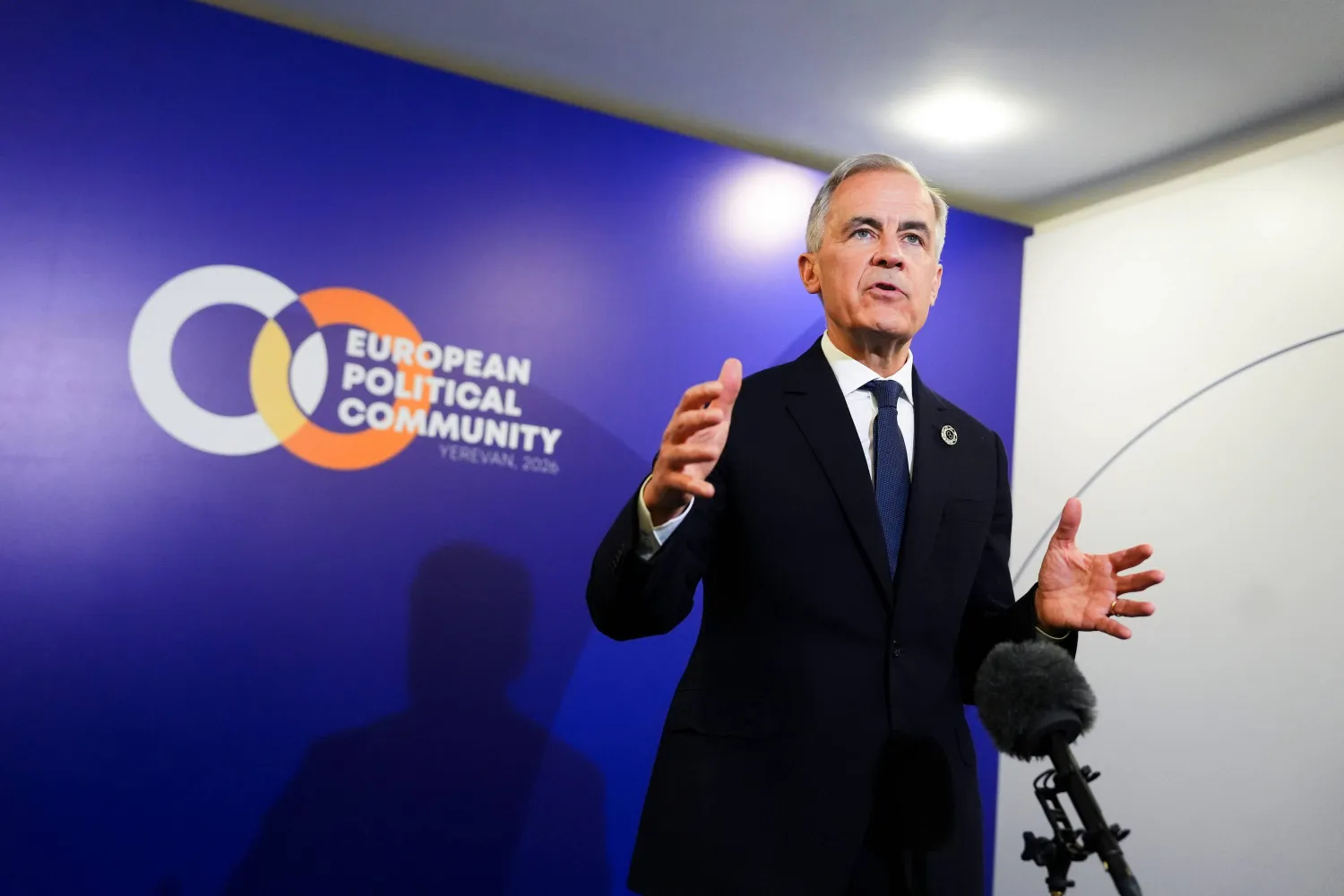
“The rhetoric coming out of the White House has sped up efforts to rebuff the idea that Arctic communities need the US to come in and save them,” said Whitney Lackenbauer, an honorary lieutenant-colonel Canadian Ranger involved in the talks, who spoke with Reuters during a recent 5,000-kilometer Arctic snowmobile trek by the Rangers. “The Nordic countries and Canada, we’re increasingly realizing we can come together in military and diplomatic ways to send a message that carries moral weight.” As Canada attempts to pivot away from relying on the US to protect its vast Arctic, Prime Minister Mark Carney is strengthening ties and exchanging security tips with the Nordic countries, which he describes as trusted partners. Canada's increased defense collaboration with the Nordics is part of Carney's effort to strengthen alliances between what he calls “middle powers” in a world where the United States is considered a less reliable partner.
The White House said Trump’s leadership has prompted allies “to recognize the need to meaningfully contribute to their own defense” and that the Arctic is a critical region for US national security and the economy.
“The administration is participating in diplomatic high-level technical talks with the governments of Greenland and Denmark to address the United States’ national security interests in Greenland,” a White House spokesperson said in an email.
Alliances are shifting in the Arctic as climate change makes it more accessible. Russia has far more military bases than any other nation there and in recent years China has started to increase its presence in the mineral-rich area, mostly in partnership with Russia. While Carney says Canada will no longer rely on any other nation to protect its own territory, he says the Arctic’s greatest threat is from Russia – and the Nordics have been boosting their own defenses since Russia invaded Ukraine.
In March, Canada and the five Nordic countries — Denmark, Finland, Iceland, Norway and Sweden — agreed to deepen their cooperation in military procurement and ramp up defense production to deal with security threats, including cyberattacks. A plan for how Greenland might adapt the Canadian Rangers is expected by the end of this year, according to government policy documents. Canadian Foreign Affairs Minister Anita Anand told Reuters she meets regularly with Nordic officials to work on collective defense and Arctic security. Canada’s partnership with the United States through NORAD, the North American Aerospace Defense Command, remains critical, she said. But Canada is focused on bolstering new alliances. That includes the opening of a Canadian consulate in Nuuk in February and an invitation to her Nordic counterparts to visit Canada’s Arctic this year.
“We have to build something new, and it has to be a world order that is built on the values that we represent,” Danish Prime Minister Mette Frederiksen told Carney during the Nordic-Canadian summit in Oslo in March. In April, Alexander Stubb became the first Finnish president to visit Canada in a dozen years and signed several agreements on Arctic cooperation. Stubb and Carney took to the ice in Ottawa for a hockey practice, and afterward Stubb said he and Carney message each other almost every day.
The two national leaders sometimes chat about hockey or baseball, Stubb told reporters, but “most of the time it's about NATO or Ukraine or Iran."
NO MORE ‘FREE PASS IN THE ARCTIC’ FOR HOSTILE NATIONS
Lackenbauer, the honorary Canadian Ranger lieutenant-colonel, is also an Arctic expert at Trent University in Peterborough, Ontario. He said Canada should overhaul its approach to Arctic security just as Nordic countries did after Russian troops marched into Ukraine in 2022.
“The more we can go and help Canada’s allies in northern Europe, the more hostile nations will get the message that they do not get a free pass in the Arctic,” he said. Among the eight countries that share the Arctic, Canada’s investment in defending the territory has consistently been near the bottom, trailing Russia, the US, Norway, Sweden, Denmark and Finland, according to the Arctic Business Index, a network of far north research institutions and analysts. Along with Greenland, Canada has historically spent the least. Last year, Canada hit the NATO target of spending 2% of its GDP on defense, around CA$63 billion, after repeated complaints from Trump. That compared to a low point of just 1% in 2014.
Neil O’Rourke, Director General at Canada’s Coast Guard for Fleet and Maritime Services, said he and a Danish defense colleague realized years ago that if either country had a serious incident in the Arctic, their first phone call should be to each other.
“Up north, we’re just across the water and it makes much more sense to share resources than to get help from down south,” O’Rourke said in an interview. He said Canada is also trying to learn more from Norway about how its maritime services handle emergency towing of vessels.
Rob Huebert, an Arctic expert at the University of Calgary, said working with the US remains critical, noting that the country produces arguably the most advanced military weaponry and that Canada’s military remains highly dependent on the US for protecting its northernmost regions.
“If we are talking about war-fighting capability, that means working with the US military,” he said. Huebert said Carney’s March trip to observe a Norwegian-led NATO exercise in Bardufoss is perhaps an indication the country’s approach is changing.
“Until very recently, Canada’s participation in NATO’s Arctic exercises in the Nordics has been very token,” he said. “But then all of a sudden because of Trump, we decide we’d better do something with the Nordics.”


