


Four Takeaways from Musk vs OpenAI Trial

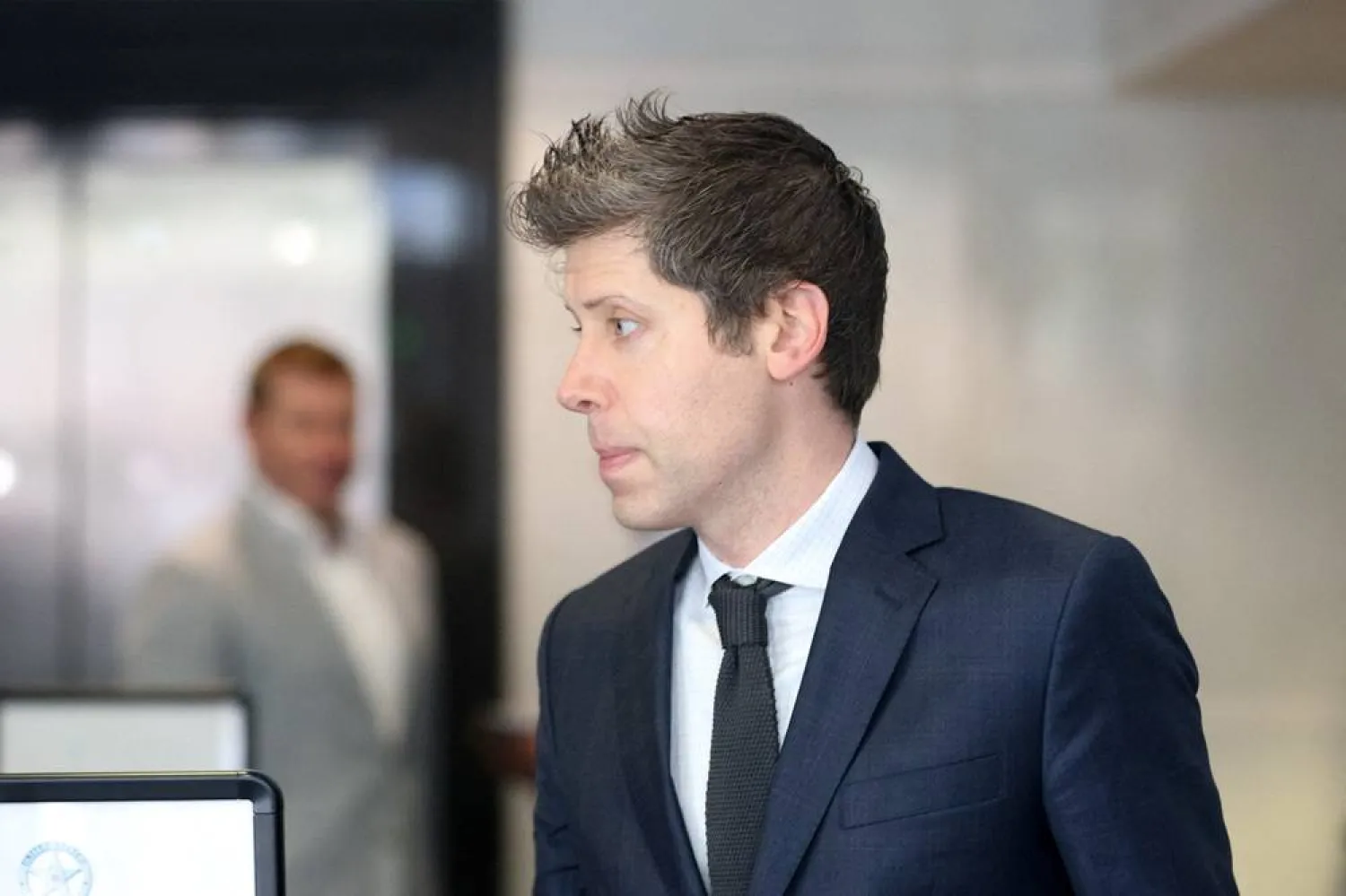
 OpenAI CEO Sam Altman arrives at the federal courthouse, as the trial in Elon Musk's lawsuit over OpenAI's for-profit conversion continues, in Oakland, California, US, May 14, 2026. (Reuters)
OpenAI CEO Sam Altman arrives at the federal courthouse, as the trial in Elon Musk's lawsuit over OpenAI's for-profit conversion continues, in Oakland, California, US, May 14, 2026. (Reuters)
TT

Four Takeaways from Musk vs OpenAI Trial

 OpenAI CEO Sam Altman arrives at the federal courthouse, as the trial in Elon Musk's lawsuit over OpenAI's for-profit conversion continues, in Oakland, California, US, May 14, 2026. (Reuters)
OpenAI CEO Sam Altman arrives at the federal courthouse, as the trial in Elon Musk's lawsuit over OpenAI's for-profit conversion continues, in Oakland, California, US, May 14, 2026. (Reuters)

After three weeks of intense hearings, Silicon Valley's first major AI trial -- over the lawsuit filed by Elon Musk against the co-founders of OpenAI -- is nearing an end. It is expected to go to the jury on Monday.

Here are four scenes that defined the trial:

Musk blames his own naivety

At the opening of the trial on April 28, Musk portrayed himself as a selfless benefactor and Good Samaritan concerned with protecting humanity from an AI that, if left in the wrong hands, could "kill us all."

"I came up with the idea, the name, recruited the key people, taught them everything I know, provided all of the initial funding," the SpaceX CEO said regarding OpenAI's founding in 2015.

"I gave $38 million essentially for nothing, which they used to build a company worth $800 billion. I was literally an idiot," he said, blaming his own naivety.

Musk was visibly annoyed during the trial as he called out OpenAI's lawyer for asking questions "designed to trap me."

"Mr. Musk, you are a brilliant man," said OpenAI's lawyer William Savitt, as he doubled down on his attacks, disguised with a show of courtesy.

Altman strikes back

Swapping his usual T-shirt, jeans and sneakers for a dark suit and tie, OpenAI CEO and co-founder Sam Altman sat stone-faced in the front row of the Oakland courtroom for most of the proceedings.

But on May 12, it was finally his turn. Musk's lawyer, Steven Molo, was waiting for him, asking if he had always told the truth.

Altman responded: "I'm sure there have been times in my life when I didn't."

But then, with a blank expression and wide eyes, he struck back, saying Musk in 2017 had demanded "90 percent of the equity" and "refused to commit in writing" to sharing power.

Altman said he had no choice as "we did not think that artificial general intelligence should be under the control of a single person."

Brockman's notebook

Every day in the courtroom, Greg Brockman, the president and co-founder of OpenAI, took extensive notes on yellow notepads.

During his questioning on May 4, old journals he kept from years ago took center stage, with Musk's lawyer highlighting some of the most embarrassing excerpts.

Brockman wanted to make money, writing, "financially, what will take me to $1B?" He also wanted "to convert to a b-corp without him (Musk)," a reference to a private company with social and environmental standards.

The journal recorded his concerns about a plan to "steal the non-profit from him (Musk)" as "pretty morally bankrupt."

"There's nothing in there I'm ashamed of," Brockman hit back, claiming that the journal did not include details of an outburst from Musk in 2017.

"I really thought he was going to hit me," Brockman said of the incident. Musk did not touch him, but took a painting of a Tesla, a gift from one of the co-founders, down from the wall and left the room, he said.

Brockman's shares in the company are now worth $30 billion.

The secret go-between

Shivon Zilis -- the mother of four of Musk's children -- is a woman in the shadows, rarely appearing in public.

So her May 6 appearance in the courtroom attracted intense curiosity.

Zilis, who was appointed to the OpenAI board from 2020 to 2023, was asked about her awkward role as both Musk's colleague at Neuralink and Altman's friend.

At the time, her mysterious relationship with Musk was secret. Their children were conceived through in vitro fertilization.

OpenAI accuses her of working as a mole for Musk.

Zilis responded to questions briefly and, at times, sarcastically.

"Relationship is a relative term," she said when asked about her relationship with Musk, before conceding, "there have been romantic moments."

But ultimately, her testimony may matter less than the content of her messages to Musk and Altman.

Those could lead the jury to conclude that Musk, having been sufficiently informed by Zilis, knew of OpenAI's direction long before 2023. If so, his lawsuit could be thrown out before the jury even starts deliberating the merits of the case.



Pocket-size AI: Powerful Phones Star at China Show

Chinese firms showed off phones that would be run by artificial intelligence. CN-STR/AFP
TT

Pocket-size AI: Powerful Phones Star at China Show

Chinese firms showed off phones that would be run by artificial intelligence. CN-STR/AFP

Tech firms are racing to roll out advanced smartphones that use artificial intelligence to do everything from ordering food to composing messages upon a simple voice command.

Wide adoption of phones running on so-called AI agents would be a revolution, but would also take control away from major apps, which aren't always happy about it, said AFP.

At least three firms were showcasing so-called agentic phones at the World Artificial Intelligence Conference in Shanghai this weekend -- heralding what may be to come.

Smartphone maker Nubia unveiled its NaviX Ultra, a phone powered by Doubao, China's massively popular AI chatbot tool run by TikTok creator ByteDance.

"A new era of AI agent smartphones begins," Nubia said, sharing images of the handsets online.

A limited run of a prototype dubbed the "Doubao Phone" sold out fast in December.

Initially, the prototype could follow simple voice commands to execute tasks across apps, including ordering food and comparing shopping prices.

However, days after it was released, tech giants including Alibaba, Tencent and JD.com restricted the built-in assistant's access to their platforms.

The move effectively disabled the phone's AI agent, so ByteDance turned off the powerful tool in certain circumstances, including when payments were involved.

- 'Lose control' -

Gaining broad access to apps owned by other companies is a sticking point for AI agent devices, said Kiranjeet Kaur, associate research director at US market intelligence firm IDC.

Platforms want to keep direct contact with their users, otherwise "they lose control to another party", she added.

"Agenting is everyone's dream, but we haven't reached there yet," as the performance of AI agent tools is still often patchy, Kaur said.

According to Chinese tech media, the NaviX Ultra does not attempt to force its way into apps, but rather seeks to collaborate with them.

The first-generation Doubao phone had been hobbled when major apps blocked unauthorized access.

AFP has contacted Nubia for comment.

Another manufacturer, Honor, showcased an AI system for its "Robot Phone", whose interactive camera flips up on a small robotic arm.

The company says its "companion-centric" device can interpret human gestures and bop to musical rhythms, as well as take selfies and steady videos.

An agent using several AI models, some co-developed with Alibaba, will be embedded in the robot phone when it goes on sale later this year, Honor told AFP.

- 'No clear winner' -

Shanghai-based AI startup StepFun also unveiled an "AI agent-native smartphone", the STEPX Neo, ahead of the World Artificial Intelligence Conference.

StepFun's chairman Yin Qi said "deep partnerships" had been established with several major Chinese platforms, including Alipay and ride-hailing giant Didi, according to a sponsored article in state news agency Xinhua.

"Leveraging these services, the smartphone can provide one-stop support for travel bookings, everyday purchases, local services, office productivity and video editing," it said.

Outside China, big tech companies such as Google are busy infusing smartphones with increasingly advanced AI features such as the ability to book appointments.

US startup Brain Technologies launched an agentic "Natural AI Phone" which went on sale in Japan in April in partnership with mobile giant SoftBank Corp.

At a demonstration given to AFP in April, Brain Technologies' phone -- which connects with a handful of apps including social network LINE -- messaged a contact to apologize for being late on just an audio command, although it also often failed to carry out requests.

"There is no clear winner in this race yet, which is why it is currently quite a hot topic," said Marc Einstein of Counterpoint Research.

But in five or 10 years time, we won't be using apps on our phones "like we do today", he predicted.

"This will fundamentally change the digital economy and disrupt business models."


Apple Closes in on Nvidia in Race for World's Most Valuable Company

Apple logo (Reuters)
TT

Apple Closes in on Nvidia in Race for World's Most Valuable Company

Apple logo (Reuters)

Apple is within striking distance of overtaking Nvidia as the world's most valuable company, a milestone that would reshuffle the ranks of tech heavyweights as investors reassess the outlook for AI.

Apple was last valued at $4.90 trillion as its shares rose marginally in premarket trading on Friday, while Nvidia was roughly at the same level, following a 2.4% decline.

If Apple overtakes Nvidia, it would reclaim the top spot for the first time since April last year. The close race shows that investors are broadening their focus beyond the obvious beneficiaries of the AI boom, such as Nvidia, which has been at the helm for nearly a year.

"Apple was seen as a laggard in the AI race because it wasn't spending to develop models, but now sentiment has changed," said Toni Meadows, head of investment at BRI Wealth Management, Reuters reported.

"Apple is less exposed to capex intensity and better positioned to monetize AI via services, ecosystem lock-in, and hardware upgrades. The re-rating reflects confidence in earnings durability rather than speculative AI upside."

For a company that was often seen trailing in the AI race, the narrowing gap with Nvidia reflects Apple's efforts to establish itself more firmly among the sector's leading players, and could shape how CEO Tim Cook's final months at the helm are viewed.

Cook is preparing to cede his role to hardware veteran John Ternus in September.

Last month, the company rolled out a long-delayed overhaul of Siri, betting the upgraded assistant would help close the gap with Big Tech rivals and new-age startups in the crucial AI race.

Some analysts say Apple is sitting on an AI gold mine in the form of the personal data that lives on every iPhone. The data could make Siri's answers more useful and the assistant more capable.

The challenge is that such data is locked away in operating systems in the name of privacy and the company would have to find a way to unlock its value.

Nvidia became the first company in the world to surpass a $5 trillion market valuation in October, a landmark that propelled it into a rarefied territory that was far beyond the reach of its rivals.

Even if Nvidia is superseded by Apple, it would not necessarily signal a lasting change in the companies' relative standing. The chipmaker remains a major beneficiary of AI-related spending, and its graphics processors are powering much of the generative AI frenzy.

Nvidia could also reclaim the top spot if sentiment shifts.

Besides, Apple is in a delicate position itself, having raised prices to offset rising costs -- a strategy that could hurt demand.

"I don't see any meaningful distinction should Nvidia lose its crown. It's likely to be a significant participant in whatever happens going forward," said Benjamin Hall, vice president, alpha research at Segal Marco Advisors.

However, the AI enthusiasm has spread to other corners of the semiconductor industry. The bigger winners this year have been memory chipmakers such as Micron, which crossed $1 trillion in market value in May as investors embraced the significance of memory chips in AI infrastructure.

South Korea's SK Hynix also listed on the Nasdaq earlier this month, adding another player to the race for investor attention.

"The new entrants to the market could spread out the focus away from the pure Magnificent Seven names into a wider number of names," Hall said.

The eye-watering chips rally ran into turbulence in July as investors reassessed the sustainability of the artificial intelligence trade, knocking the Philadelphia SE Semiconductor index down almost 19% from its all-time highs.

Despite the steep fall, the index has performed better than Nvidia so far this year.


South Korea-US Team Unveils Robotic Technology That Dresses the Wearer

 Hwang Jae Yun, a graduate student of Civil and Environmental Engineering at the Korea Advanced Institute of Science and Technology (KAIST), demonstrates wearing a self-dressing robot at KAIST in Daejeon, South Korea, July 14, 2026. (Reuters)
Hwang Jae Yun, a graduate student of Civil and Environmental Engineering at the Korea Advanced Institute of Science and Technology (KAIST), demonstrates wearing a self-dressing robot at KAIST in Daejeon, South Korea, July 14, 2026. (Reuters)
TT

South Korea-US Team Unveils Robotic Technology That Dresses the Wearer

 Hwang Jae Yun, a graduate student of Civil and Environmental Engineering at the Korea Advanced Institute of Science and Technology (KAIST), demonstrates wearing a self-dressing robot at KAIST in Daejeon, South Korea, July 14, 2026. (Reuters)
Hwang Jae Yun, a graduate student of Civil and Environmental Engineering at the Korea Advanced Institute of Science and Technology (KAIST), demonstrates wearing a self-dressing robot at KAIST in Daejeon, South Korea, July 14, 2026. (Reuters)

A team of South Korean and US researchers has unveiled a robotic technology that allows a person to suit up without using their hands or aid from others, with potential for applications in chip cleanrooms and emergency services.

The technology developed by researchers at South Korea's KAIST and Stanford University uses soft and flexible "vines" powered by air pressure embedded in clothing. When pressurized, the vines glide the fabric up close to the wearer's body like an ivy plant climbing on a structure, even if the person does not remain standing ‌still.

"When I was ‌riding a bicycle, it started to ‌rain ... ⁠and I thought it ⁠would be helpful if a raincoat could be put on automatically (as I ride)," said KAIST postdoctoral researcher Kim Nam Gyun, the lead author of a paper on the technology.

"The vine robot stays close to the person and dresses them by turning the clothing inside out as it moves, allowing it to climb stably along ⁠the shape of the body,” Kim said, adding ‌it takes about 10 seconds to ‌put on a full suit.

A key to the technology's potential is ‌it does not require the wearer to stand motionless and ‌it works without a complex control algorithm, the researchers said.

Inspired by climbing ivy, the robot advances by growing at its tip rather than shifting its whole body, enabling stable movement along curved surfaces, said Ryu Jee-Hwan, ‌a professor of civil and environmental engineering at KAIST.

“It can pass through narrow gaps, grow while ⁠adapting to ⁠the shape of its surrounding environment, and move regardless of whether the surface is slippery, sticky, or sloped,” he said.

Beyond immediate applications for helping the elderly and disabled, the team sees potential for use where the user needs to suit up and off quickly and without using the hands, including in semiconductor cleanrooms and by emergency workers requiring personal protective equipment.

Ryu said given the explosive growth of AI, there was usually much attention on the software powering systems, but the team's self-dressing robot was an example of how mechanical engineering could complement software.

The study was published in IEEE Robotics and Automation Letters, a peer-reviewed journal.