


Lebanon Between Two Truces: More Than 100 Evacuation Warnings, 970 Homes Destroyed

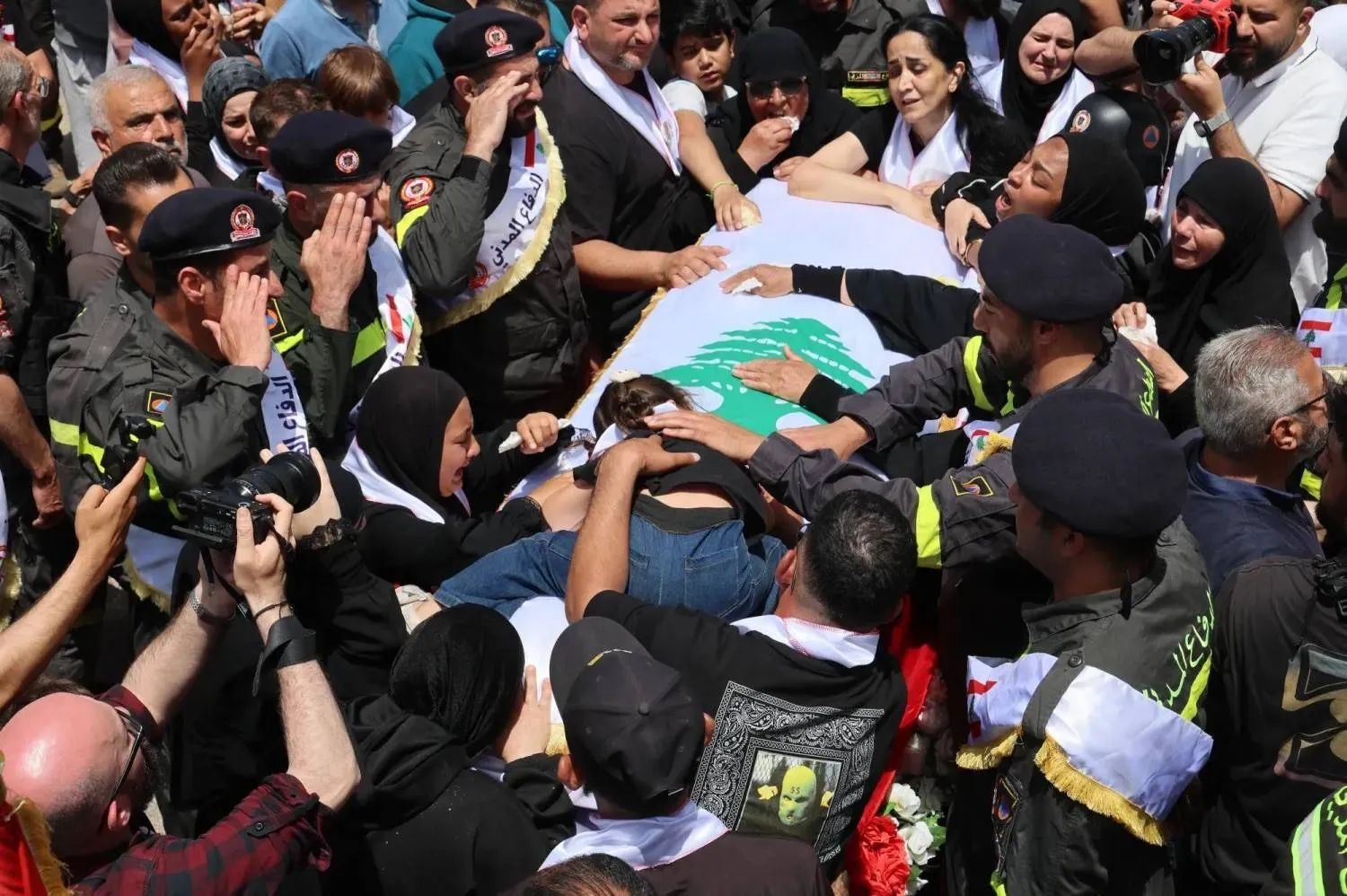
Mourners attend the funeral of two Lebanese Civil Defense members killed in an Israeli strike on the city of Nabatieh on May 13, 2026. (Reuters) 
TT

Lebanon Between Two Truces: More Than 100 Evacuation Warnings, 970 Homes Destroyed

Mourners attend the funeral of two Lebanese Civil Defense members killed in an Israeli strike on the city of Nabatieh on May 13, 2026. (Reuters) 

Field data gathered since the Lebanon-Israel ceasefire took effect on April 17 shows the truce has brought little calm on the ground. Southern areas have remained under strikes, evacuation warnings and continued destruction, reinforcing the view that the military operations have shifted from broad confrontation to sustained military and security pressure.

Asharq Al-Awsat documented around 41 villages and border points that Israel still controls, occupies or maintains positions in or around since the latest war and the ensuing field arrangements. More than 100 evacuation warnings were issued during the period, including 104 alerts targeting villages and towns across the South, Nabatieh and Bekaa governorates.

The warnings extended beyond southern border areas into the western Bekaa, including Sohmor, Yohmor, Mashghara, Zellaya and Eliya, reflecting the widening geographic scope of military pressure.

Researcher and writer Mohammad Shamseddine said field data recorded between April 17 and May 13 pointed to a continuing heavy toll in southern Lebanon despite the declared truce.

Shamseddine told Asharq Al-Awsat that 970 homes were completely destroyed during the period, while 545 sustained severe damage and around 3,400 suffered minor damage.

The figures underscore not only the scale of material losses, but also the continuing impact of the war despite the ceasefire, with direct consequences on residents, returns and reconstruction efforts.

The human toll has also continued to rise. According to Lebanon’s Ministry of Public Health operations room, 694 people were killed and 1,666 wounded between midnight on April 16 and May 17.

Fears of a New Security Belt

Retired Brig. Gen. Naji Malaeb said recent Israeli movements point to an attempt to establish new security realities inside Lebanese territory rather than carry out limited military operations.

“Recent developments in southern Lebanon suggest Israel is pursuing an approach that goes beyond localized operations toward imposing a new security reality through control of hills and strategic high ground inside Lebanese territory,” Malaeb told Asharq Al-Awsat.

He stressed that developments following the truce, particularly in recent days in areas stretching between Deir Siryan, Deir Aames and villages opposite the Shaqif area, showed a clear focus on strategically important terrain.

“There appears to be an effort to recreate the model Israel adopted in late November 2024, when it advanced toward several hills and highlands and established positions and defensive lines inside Lebanese territory,” he remarked.

Malaeb warned of Israeli attempts to shift the defensive line to new locations along a chain of hills and natural elevations, potentially creating a security belt or buffer zone that would provide strategic military advantages.

He said a key issue after the ceasefire announcement was the differing interpretations of the agreement itself. A statement issued by the US State Department after meetings with envoys, he noted, treated Israel’s actions as self-defense rather than direct hostile acts.

“Israel relies on this interpretation in its approach on the ground, presenting its operations as preemptive measures to prevent future threats rather than conventional offensive operations,” he said. “This is highly sensitive because it leaves the door open to continued military operations under different labels.”


Bashir Moved to Khartoum Hospital amid Reports He Will Be Flown Abroad

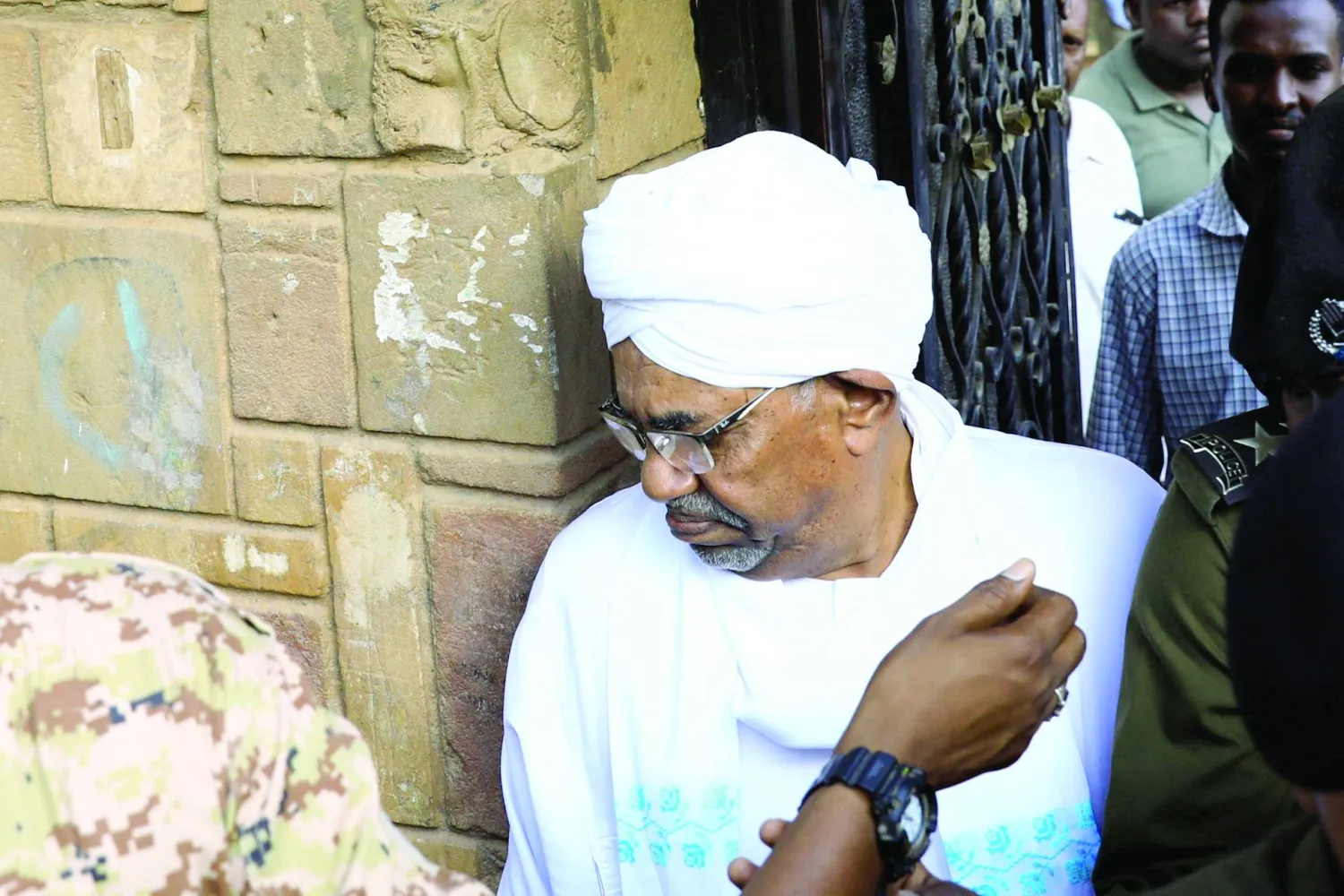
Sudan's ex-president Omar al-Bashir leaves the office of the anti-corruption prosecutor in Khartoum, Sudan, June 16, 2019. (Reuters)
TT

Bashir Moved to Khartoum Hospital amid Reports He Will Be Flown Abroad

Sudan's ex-president Omar al-Bashir leaves the office of the anti-corruption prosecutor in Khartoum, Sudan, June 16, 2019. (Reuters)

Sudanese former President Omar al-Bashir, 80, has been transferred from the northern city of Merowe to a hospital in the capital Khartoum for continued treatment and tests after he developed symptoms of an “unknown” medical case.

His lawyer, Mohamed El-Hassan El-Amin told Asharq Al-Awsat on Wednesday that his client was transferred to Khartoum two weeks ago for routine medical examinations, confirming that "there is no change in his health status."

However, he noted the emergence of certain symptoms of "unknown cause," which may require travel abroad to undergo testing using advanced medical equipment.

El-Amin declined to provide further details about Bashir’s condition.

However, he noted that the former president suffers from recurrent low blood pressure and infections, adding: "This is all we can disclose at this stage."

On reports about the Sudanese authorities approving Bashir's travel abroad, El-Amin stated: "There is no official decision so far."

However, he revealed that certain government officials expressed no objection.

"This request was raised more than a year ago, but no progress has been made in its implementation," he added.

Bashir's lawyer Mohamed El-Hassan El-Amin. (Asharq Al-Awsat)

El-Amin confirmed that the same official authorities facilitated the travel of the former Vice President, Bakri Hassan Saleh, to the Turkish capital, Ankara, for medical treatment, revealing for the first time his presence outside the country.

The International Criminal Court has accused Bashir of committing war crimes and crimes against humanity in the Darfur region during his rule. He was also convicted on charges of corruption and illicit financing and faced other trials before the outbreak of the war in April 2023. At that time, he was held at a military base in Omdurman, prior to his transfer to Merowe in northern Sudan.

Sudanese media reports had said that the former president's health had deteriorated significantly over the past few days, necessitating his transfer to Khartoum.

However, high-level sources refuted to Asharq Al-Awsat claims regarding the deterioration of his health, saying that recent measures aim to pave the way for his travel abroad in anticipation of domestic political shifts or regional developments.

The sources said Islamists are seeking to preempt potential rapid shifts in the political landscape that could place the authorities, led by the President of the Sovereignty Council, Abdel Fattah al-Burhan, in extreme embarrassment before the International Criminal Court if Bashir remains in the country.

According to the sources, who preferred to remain anonymous, prominent Islamist leaders in the ousted National Congress Party had previously made contacts to arrange Bashir's transfer abroad, after obtaining approval to host him.

The sources added that the ousted president had previously been offered a transfer to Eritrea but refused, despite Eritrean President Isaias Afwerki having expressed his willingness to host him.


Hezbollah Denies Any Link to Cell Dismantled in Syria

A man waves Hezbollah flag at the Tahrir Square in Baghdad on September 26, 2026, to mark the second anniversary of killing of Hezbollah's former chief Hassan Nasrallah, in a major strike by Israel on Beirut's southern suburbs in Lebanon. (AFP)
TT

Hezbollah Denies Any Link to Cell Dismantled in Syria

A man waves Hezbollah flag at the Tahrir Square in Baghdad on September 26, 2026, to mark the second anniversary of killing of Hezbollah's former chief Hassan Nasrallah, in a major strike by Israel on Beirut's southern suburbs in Lebanon. (AFP)

Hezbollah denied on Wednesday any connection to a cell that Syrian authorities said they had dismantled in the country's south and which they accused of being affiliated with the Lebanese group.

A statement from the Iran-backed movement's media office said it "categorically denies any relationship or connection between Hezbollah and the alleged cell" and emphasized that "it has no presence whatsoever on Syrian territory and has no involvement in any security or military activity there".

On Tuesday, Syria said intelligence services and security forces "thwarted a sabotage plot in the Yarmuk basin in Daraa (province) and arrested a Hezbollah-affiliated cell composed of three individuals".

Authorities said the cell attempted "to prepare rocket launch platforms with the aim of carrying out attacks to destabilize security and stability", without specifying the target.

The Yarmuk basin area, where state media has previously reported Israeli incursions and shelling, borders the Israeli-occupied Syrian Golan Heights, as well as Jordan.

Earlier on Tuesday, Israeli Prime Minister Benjamin Netanyahu had said there were "indications" that Israel's enemies could try to attack ahead of elections scheduled for late October.

Syria's new authorities, who ousted longtime ruler Bashar al-Assad in 2024, are hostile to Hezbollah, which is a sworn enemy of Israel and fought on Assad's side during the Syrian civil war.

Authorities have previously said they dismantled several Hezbollah-linked cells preparing attacks in Syria, accusations the group has denied.

In Wednesday's statement, Hezbollah accused Israel of seeking to disrupt ties between Lebanon and Syria.

It called on Syrian authorities "to identify the real beneficiary of escalating tensions between the two countries, namely the Israeli enemy".

Last month, Hezbollah's chief Naim Qassem said he had no objection to meeting openly with Syria's leadership.

In June, responding to a question about whether he would sit at the table with Hezbollah, Syrian President Ahmad al-Sharaa said that "if this serves Lebanon's interests and safeguards Syria's interests, why not".


US Removes Syria from Arms Export Ban

A large Syrian flag flutters above Tishreen Park in Damascus on June 4, 2025. (AFP)
TT

US Removes Syria from Arms Export Ban

A large Syrian flag flutters above Tishreen Park in Damascus on June 4, 2025. (AFP)

The Trump administration is removing Syria from a list of countries that are not allowed to purchase or import US weaponry, a step that is part of a monthslong process of easing sanctions on the new government in Damascus and its leaders.

In a notice published Wednesday in the Federal Register, the State Department said it was amending its International Traffic in Arms Regulations, or ITAR, so that Syria no longer was among the nations subject to a policy of denial for licenses and other approvals needed for the sale of US weapons and munitions.

The change effective Thursday means that arms sales requests from Syria will now be considered on a case-by-case basis.

President Donald Trump acted last year to ease economic sanctions on Syria that had been in place for decades during now-ousted President Bashar al-Assad’s rule. In August, Secretary of State Marco Rubio rescinded Syria’s designation as a state sponsor of terrorism, helping paving the way for the latest step in drawing closer to the current government.

The State Department has also announced plans to reopen the US Embassy in Damascus. It has been closed for 14 years.

With Syria’s removal from the ITAR blacklist, only seven countries remain subject to the policy of denial for licenses for US arms exports: Belarus, China, Cuba, Iran, Myanmar, North Korea and Venezuela.

Syria’s interim President Ahmad al-Sharaa overthrew the Assad government nearly two years ago and has embarked on a policy of change that has impressed the Trump administration. His moves have led to hopes of eventual stability in a country that was wracked by civil war and the ISIS insurgency that engulfed northeast and western Iraq for years.

Wednesday’s withdrawal of US forces from Iraq may mean that the Syrian government plays a greater role in preventing an ISIS resurgence.
