
Hormuz Crisis Saddles Global Companies with $25 Billion Bill

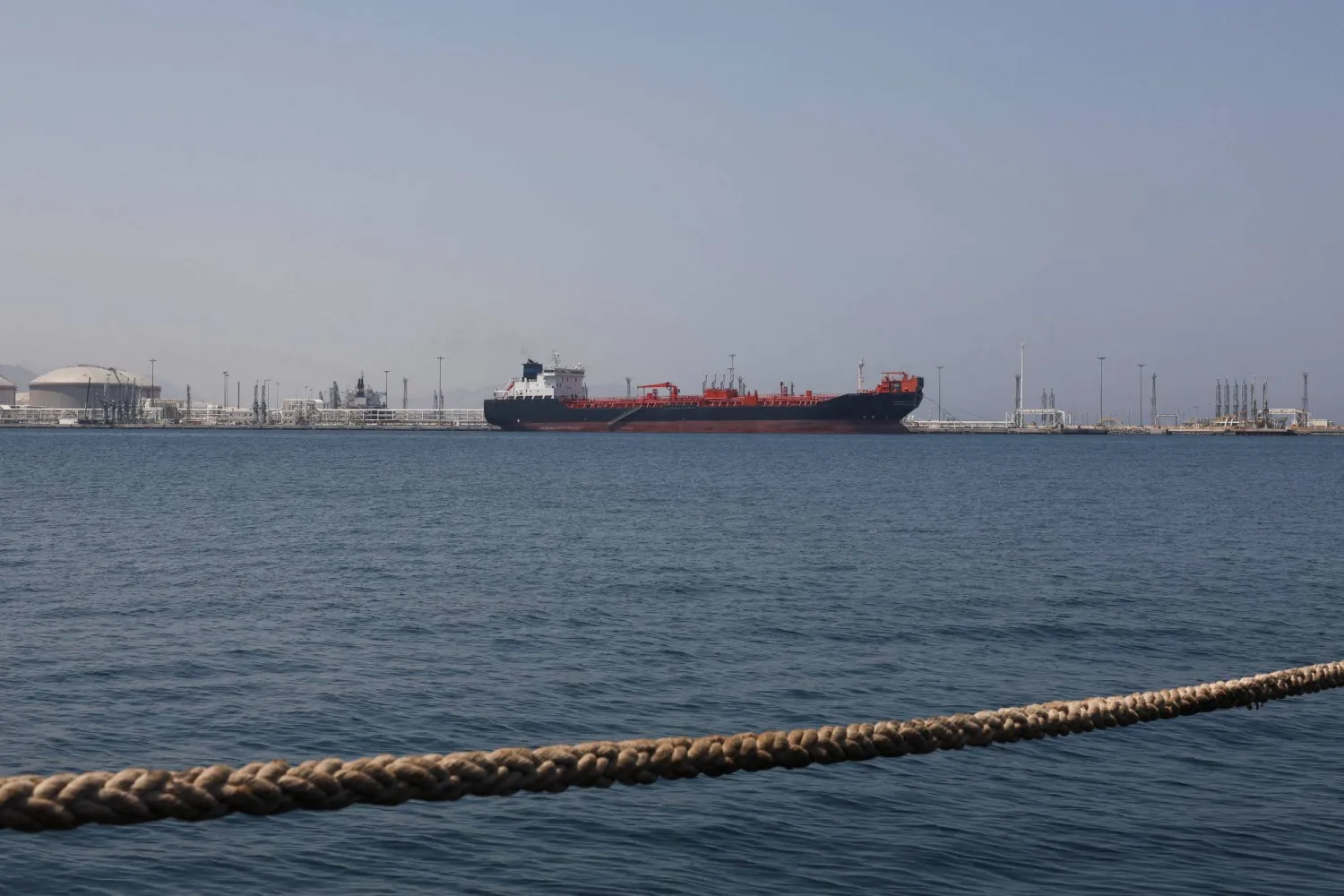
Oil/Chemical Tanker "Bald Man" at the Port of Fujairah, as the US-Israel conflict with Iran limits marine traffic in the Strait of Hormuz, in Fujairah, United Arab Emirates, May 6, 2026. (Reuters)
TT

Hormuz Crisis Saddles Global Companies with $25 Billion Bill

Oil/Chemical Tanker "Bald Man" at the Port of Fujairah, as the US-Israel conflict with Iran limits marine traffic in the Strait of Hormuz, in Fujairah, United Arab Emirates, May 6, 2026. (Reuters)

The US-Israeli war with Iran has already cost companies around the world at least $25 billion - and the bill is climbing, according to a Reuters analysis.

A review of corporate statements since the start of the conflict by companies listed in the United States, Europe and Asia offers a sobering look at the fallout.

Businesses are grappling with soaring energy prices, fractured supply ‌chains and trade routes severed by Iran's chokehold on the Strait of Hormuz.

At least 279 companies have cited the war as a trigger for defensive actions to blunt the financial hit, including price increases and production cuts, the analysis shows.

Others have suspended dividends or buybacks, furloughed staff, added fuel surcharges, or sought emergency government assistance.

“This level of industry decline is similar to what we have observed during the global financial crisis in 2008, and even higher than during other recessionary periods,” Whirlpool CEO Marc Bitzer told analysts after it slashed its full-year forecast in half and suspended its dividend.

As growth slows, pricing power will weaken and fixed costs will become harder to absorb, analysts say, threatening profit margins ⁠in the second quarter and beyond. Sustained price hikes are likely to fuel inflation, hurting already-fragile consumer confidence.

“Consumers are holding back on replacing products and rather repairing them,” Bitzer said.

The appliance maker is not alone. Companies including Procter & Gamble, Malaysia’s Karex company and Toyota have warned of the mounting toll as the conflict enters its third month.

Iran's blockade of the Strait of Hormuz - the world's most critical energy chokepoint - has pushed oil prices above $100 a barrel, more than 50% higher than before the war.

The closure has driven up shipping costs, squeezed supplies of raw materials and cut off trade routes vital to the flow of goods. Supplies of fertilizers, helium, aluminum, polyethylene and other key inputs have been hit.

One-fifth of companies in the review, which make everything from cosmetics to tires and detergent, to cruise operators and airlines, have flagged a financial hit due to the war.

A majority were based in the UK and Europe, where energy costs were already elevated, while almost a third were from Asia, reflecting those regions' deep reliance on Middle Eastern oil and fuel products.

To put the tally into context, hundreds of companies by October last year had flagged more than $35 billion in costs from US President Donald Trump’s 2025 tariffs.

Airlines account for the biggest share of quantified war-related costs, representing nearly $15 billion, with jet fuel prices having nearly doubled.

Sounding the alarm

As the bottleneck drags on, more companies from other industries are sounding the alarm. Japan's Toyota warned of a $4.3 billion hit while P&G estimated a $1 billion ‌post-tax profit ⁠blow.

Fast-food giant McDonald's said earlier this month it expected higher long-term cost inflation from ongoing supply-chain disruptions, the kind of assessment that until recently had been confined to industrial earnings calls.

The surge in fuel prices is hurting lower-income consumer demand, CEO Chris Kempczinski said, adding that “elevated gas prices are the core issue we're seeing right now.”

Nearly 40 companies in the industrials, chemicals, and materials industries have said they would raise prices due to their exposure to Middle Eastern petrochemical supply.

Newell Brands Chief Financial Officer Mark Erceg said earlier this month that every $5 rise in per-barrel oil prices adds about $5 million in costs.

German tiremaker Continental expects a hit of at least 100 million euros ($117 million) from the second quarter due to surging oil prices making raw materials more expensive.

Continental executive Roland Welzbacher said earlier this month that it would take three to ⁠four months before affecting the company's profit-and-loss statement. “It probably hits us late in Q2, and then it will come in full-blown in the second half,” he said.

Corporate profits have been buoyant through the first quarter, part of why major indexes like the S&P 500 have managed to scale new highs even as energy costs bite and bond yields rise on inflation-led worries.

Since March 31, second-quarter net profit margin forecasts have been cut by 0.38 percentage points for S&P 500 industrials, 0.14 percentage points for consumer discretionary companies and 0.08 ⁠percentage points for consumer staples, FactSet data show.

European STOXX 600-listed companies will face margin pressure beginning in the second quarter, as it will become harder to pass through extra costs and as protection from hedging expires, Goldman Sachs analysts said.

Consumer-facing sectors including autos, telecoms, and household products are seeing negative revisions of more than 5% for the next 12 months, Gerry Fowler, UBS head of European equity strategy, said.

In Japan, analysts have halved estimates for second-quarter earnings growth to 11.8% since the end of March.

“The ⁠true earnings hit has not yet materialized in most companies' results,” said Rami Sarafa, CEO of Cordoba Advisory Partners.


Red Sea Global Announces Reopening of Al Wajh International Airport

The airport’s architectural design draws inspiration from the historic urban character of Al Wajh - SPA
TT

Red Sea Global Announces Reopening of Al Wajh International Airport

The airport’s architectural design draws inspiration from the historic urban character of Al Wajh - SPA

Red Sea Global (RSG) has announced the reopening of Al Wajh International Airport (EJH) in northwestern Saudi Arabia following a comprehensive two-year redevelopment and modernization program, culminating in the official resumption of commercial flight operations on May 24, 2026.

According to a press release issued by the RSG on Monday, commercial services commenced with five scheduled weekly flights operated by Saudia, including three flights from Riyadh and two from Jeddah, meeting current connectivity requirements for the region while paving the way for future international services, SPA reported.

This milestone reinforces Red Sea Global’s role as a key contributor to national infrastructure development beyond its tourism projects, reflecting its growing commitment to strengthening regional connectivity, enhancing public services, and supporting economic growth.

CEO of Red Sea Global Group John Pagano said: "This project goes far beyond upgrading an existing airport. It represents an investment in connecting communities, supporting economic development, and creating new opportunities for local residents. Today, Tabuk Region has an airport capable of receiving international flights, strengthening links with the rest of the Kingdom and the world."

Following the upgrade, Al Wajh International Airport is now capable of accommodating and operating most narrow-body commercial aircraft, including the Airbus A320 and Boeing 737, as well as seaplanes, providing operational flexibility to support future aviation growth.

The release added that passenger terminal capacity has increased from 100,000 to 500,000 passengers annually, with the airport capable of handling 330 passengers per hour during peak periods through four arrival and departure gates.

The airport’s architectural design draws inspiration from the historic urban character of Al Wajh and the coastline of Tabuk Region, reflecting local identity and celebrating the area’s cultural heritage.

The modernization program also included significant upgrades to passenger facilities, featuring expanded parking facilities. In addition, the airport is equipped to support seaplane and helicopter operations, further enhancing the integrated mobility ecosystem serving AMAALA.


Saudi Insurers’ Profits Jump to $251 Million on Investment Boom

Two employees of Bupa Arabia pose beside one of the company’s office buildings. (Bupa Arabia website)
TT

Saudi Insurers’ Profits Jump to $251 Million on Investment Boom

Two employees of Bupa Arabia pose beside one of the company’s office buildings. (Bupa Arabia website)

Saudi Arabia’s insurance sector is enjoying a period of strong recovery and growing operational stability, driven by the economic momentum generated by Vision 2030 projects and a tightening regulatory framework.

Reflecting this maturity, the combined net profits of 26 insurance companies listed on the Saudi Exchange (Tadawul) rose 34 percent in the first quarter of 2026 to SAR 943 million ($251.2 million), up from SAR 701 million ($186.8 million) a year earlier.

The sharp increase was fueled by a dual engine: continued growth in mandatory and health insurance business and a significant rise in investment income from insurers’ portfolios.

Industry profits were supported by expanding insurance activity, rising enrollment in health and motor insurance programs, stronger investment returns among leading companies, operational expansion, improved underwriting quality, and more effective risk management and reinsurance strategies.

Market Leaders Dominate Growth

Quarterly results highlighted an increasing concentration of profits among the sector’s largest players, widening the gap between market leaders and smaller insurers.

Seventeen companies reported profits, including 11 that recorded year-on-year earnings growth, while nine companies posted quarterly losses. Analysts say the divergence could accelerate mergers and acquisitions as smaller firms face mounting solvency requirements.

Bupa Arabia emerged as the sector’s dominant performer, accounting for roughly 41 percent of total industry profits. The company reported net earnings of SAR 387.3 million, supported by lower retained reinsurance contract expenses and stronger investment performance.

The Company for Cooperative Insurance (Tawuniya) ranked second with net profit of SAR 288.1 million, up 10 percent from a year earlier. The increase was driven by higher recoveries from reinsurance companies and growth in its investment portfolio.

Al Rajhi Takaful placed third, posting a 25 percent increase in profit to SAR 113.5 million, benefiting from operational expansion and stable investment returns.

Risk Management and Investment Gains

Commenting on the results, Dr. Suleiman Al-Humaid Al-Khalidi, a financial markets analyst and member of the Saudi Economic Association, said the first-quarter performance reflects the sustained operational momentum the sector has enjoyed in recent years.

“The sector continues to benefit from growth in health and motor insurance, along with improved risk-management and investment practices among major insurers,” Al-Khalidi told Asharq Al-Awsat.

He added that continued expansion in health insurance and strong investment returns should provide further support through 2026, particularly if interest rates remain favorable and Vision 2030-related economic activity continues.

According to Al-Khalidi, most of the sector’s earnings growth came from leading companies such as Bupa Arabia, Tawuniya, and Al Rajhi Takaful, which possess large insurance portfolios and broad customer bases. Their scale gives them a greater ability to generate sustainable growth and capitalize on operational efficiencies.

He also cited improved reinsurance outcomes, stronger investment returns, more disciplined underwriting, enhanced pricing practices, and better claims management as key contributors to profitability.

Consolidation on the Horizon

Mohamed Hamdy Omar, chief executive of G World, said the results indicate that the sector has entered a phase of strong recovery and operational stability.

He noted that market concentration has become increasingly apparent, with the largest companies capturing most of the industry’s earnings. The trend highlights the competitive gap between leading insurers and smaller firms.

Omar attributed the record profits to a combination of strategic and operational factors, particularly improvements in risk management and reinsurance. Disclosures from major insurers showed declining net retained reinsurance costs and higher recoveries from reinsurers, suggesting more effective contract structuring and risk transfer.

Omar expects the sector’s upward trajectory to continue, accompanied by a wave of mergers and acquisitions. With nine companies still reporting losses, pressure is likely to increase on smaller insurers to consolidate into financially stronger entities capable of meeting regulatory and competitive demands.

He also pointed to expanding opportunities in health and motor insurance, as well as newer products such as latent-defect insurance, travel insurance, and property-related coverage. However, he warned that aggressive price competition remains one of the industry’s main challenges, emphasizing the need for risk-based pricing to prevent profit erosion.

New Capital Framework

The sector’s outlook is also being shaped by regulatory reform. In April, the Saudi Insurance Authority announced the mandatory adoption of a Risk-Based Capital (RBC) Framework beginning Jan. 1, 2027. The framework will replace the current solvency regime for insurance and reinsurance companies.

The authority said the move is part of the National Insurance Sector Strategy and aims to strengthen efficiency, sustainability, and the sector’s contribution to Vision 2030 goals.

Under the new framework, insurers will be required to maintain capital levels that correspond to the nature and scale of the risks they assume, enhancing confidence in the sector and improving risk-management standards. The authority also said the framework would provide insurers with greater flexibility in investment allocation and allow them to raise capital through subordinated debt instruments.

The reform will help increase risk-based capital in Saudi Arabia’s insurance sector from SAR 25 billion to SAR 50 billion by 2030, broadly aligning the Kingdom’s solvency standards with international models while adapting them to the Saudi market.


Eni and Petronas Launch Gas Joint Venture in Southeast Asia

FILE PHOTO: The logo of Malaysian energy group National Petroleum Limited, commonly known as PETRONAS, is displayed at their booth during the LNG 2023 energy trade show in Vancouver, British Columbia, Canada, July 12, 2023. REUTERS/Chris Helgren/File Photo
TT

Eni and Petronas Launch Gas Joint Venture in Southeast Asia

FILE PHOTO: The logo of Malaysian energy group National Petroleum Limited, commonly known as PETRONAS, is displayed at their booth during the LNG 2023 energy trade show in Vancouver, British Columbia, Canada, July 12, 2023. REUTERS/Chris Helgren/File Photo

Italy's Eni and Malaysia's Petronas have established Searah, a 50-50 joint venture combining key energy businesses across Indonesia and Malaysia, the two companies said on Monday.

The move is part of Eni's so called 'satellite strategy' ⁠to spin off specific ⁠assets and develop them separately with the help of a partner, Reuters reported.

The new company will start from an initial production base of over 300,000 ⁠barrels of oil equivalent per day (boe/d), aiming to exceed 500,000 boe/d of sustainable production within the next three years, a joint statement said.

It will hold a portfolio of 19 gas-producing and development assets, 14 in Indonesia and five in Malaysia.

"Searah ⁠is ⁠a strong new entity in Southeast Asia, combining our expertise with that of Petronas to support the development of energy resources in Indonesia and Malaysia, with a strong commitment to environmental protection and local growth," Eni CEO Claudio Descalzi said.