


Blank Ballots Impede Vote for New Hamas Leader

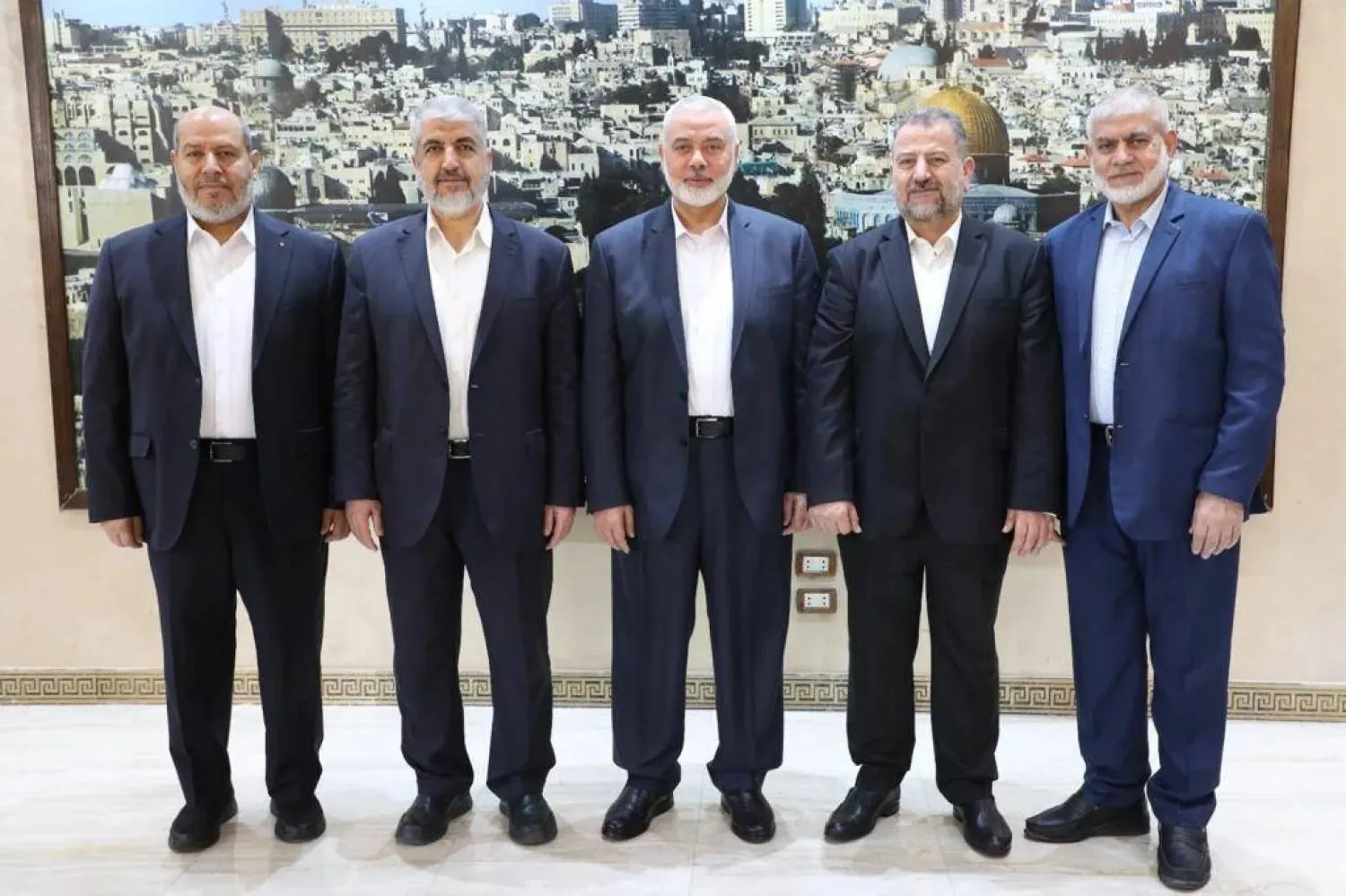
Hamas leaders, from right: Rawhi Mushtaha, Saleh al-Arouri and Ismail Haniyeh, all of whom were assassinated, Khaled Meshaal and Khalil al-Hayya. Hamas media)
TT

Blank Ballots Impede Vote for New Hamas Leader

Hamas leaders, from right: Rawhi Mushtaha, Saleh al-Arouri and Ismail Haniyeh, all of whom were assassinated, Khaled Meshaal and Khalil al-Hayya. Hamas media)

While many were waiting to learn who would become the new head of Hamas’s political bureau, the movement issued a rare and surprising statement last Saturday saying the result could not be decided in the first round and that a second would be held.

Asharq Al-Awsat asked Hamas sources inside and outside Gaza why the process of electing a new leader had stalled.

Speaking separately, they cited several factors, including “blank ballots” cast by some voters to show they were not backing either of the two contenders, Khalil al-Hayya, head of Hamas’s office in Gaza, and Khaled Meshaal, his counterpart abroad.

Hamas is facing its worst crisis since it was founded in 1987. Israeli strikes that began after the October 7, 2023, attack have hit its various wings and leaderships.

Israel assassinated its political bureau chief Ismail Haniyeh in Tehran in July 2024. He was succeeded by Yahya al-Sinwar in Gaza in October of the same year.

For about a year and a half, a “leadership council” has been running Hamas’s affairs. At the start of this year, a new push began to elect a chief to lead the movement for the remaining period of the current political bureau’s term. The term had been due to end in 2025 but was extended by one year, pending general elections at the end of this year or the beginning of next year.

Two options

Three Hamas sources, including two outside Gaza, told Asharq Al-Awsat that since the result was not decided in favor of either al-Hayya or Meshaal, the movement’s internal regulations offer “two options: either the candidate with fewer votes withdraws in favor of the one with more, or a second round is held within 20 days of the first.”

The vote to elect the head of the political bureau is conducted through the 71-member Shura Council.

The two sources outside Gaza said many voters submitted blank votes, meaning they did not name any candidate. This prevented either contender from winning the first round.

Both sources, who are senior leaders in the movement, said this was “the first time” they had seen such a situation in a vote for the head of the bureau.

One source said the situation suggested “dissatisfaction with the two competing figures, and perhaps a protest against the movement’s policies and an attempt to push toward a younger leadership.”

The other source said: “This is not necessarily a protest against the contenders, as much as it indicates that there is real rejection of some policies on several files, or a desire to postpone the idea of electing an interim chief, wait until comprehensive elections are held, and keep the current leadership council in place.”

Hard-fought contest

Assessments inside and outside Hamas suggest that the competition between al-Hayya and Meshaal reflects diverging trends between two camps within the movement.

Al-Hayya is believed to be closer to support from the Qassam Brigades, Hamas’s military wing, and to advocates of closer ties with Iran.

Meshaal is seen as representing a current that is more independent from tying the movement’s path to Tehran, as reflected in his dispute over the events of the Syrian revolution and in distancing the movement from involvement in it.

One source outside Gaza described the election as a very tight contest between Meshaal and al-Hayya, saying Hamas’s leadership in Gaza had controlled the movement’s most important files over the past two election cycles.

The source inside Gaza said only that “decisions within the movement are made by consensus, regardless of the standing or historical role of whoever leads Hamas.”

Previous elections

In previous years, elections for the head of Hamas’s political bureau were held as part of broader elections for the entire bureau and its various bodies.

In the last comprehensive elections, held in 2021, Haniyeh secured the leadership of the political bureau for a second term. His closest rivals were Saleh al-Arouri and Mohammed Nazzal, respectively.

In his first term as head of the movement in 2017, Haniyeh ran for the leadership with relative ease after Meshaal, who led Hamas’s political bureau between 2013 and 2017, was unable to run.

In the last election, held in Gaza, there was a fierce contest between Sinwar and Nizar Awadallah. It was heading for a second round before Awadallah withdrew in favor of Sinwar.

Zaidi Urges Sharaa to Boost Baghdad-Damascus Coordination

Iraqi Prime Minister Ali al-Zaidi (Iraqi Prime Minister’s Office)
TT

Zaidi Urges Sharaa to Boost Baghdad-Damascus Coordination

Iraqi Prime Minister Ali al-Zaidi (Iraqi Prime Minister’s Office)

Iraqi Prime Minister Ali al-Zaidi has sent a message to Syrian President Ahmed al-Sharaa calling for stronger ties and closer security and economic coordination.

The move reflects Baghdad’s push to rebuild regional relations while, at home, working to bring weapons under state control and prepare for a planned visit to the United States.

The message was delivered by Hamid al-Shatri, head of Iraq’s National Intelligence Service.

The Iraqi prime minister’s media office said late Wednesday that Zaidi’s message stressed the need to develop relations between Baghdad and Damascus and step up coordination to confront regional challenges and crises, particularly in security and economic affairs, in line with the two countries’ shared interests.

The statement said Sharaa thanked Zaidi and the Iraqi government, and affirmed Syria’s commitment to working with Iraq to address common challenges arising from recent regional developments.

He also stressed the importance of strengthening bilateral cooperation, especially on security and the economy.

The message comes as Iraq seeks to repair ties with its Arab neighbors under a broader approach built around three tracks: asserting state authority by “confining weapons to the hands of the state,” expanding regional outreach, and diversifying the economy by drawing foreign investment.

Zaidi to Washington

Baghdad has yet to set a date for Zaidi’s visit to the United States, which follows an invitation from US President Donald Trump. Iraqi officials say the visit is tied to a set of files the government has begun pursuing under fixed timelines, led by the effort to bring weapons under state control.

Government spokesman Haider al-Aboudi told a news conference that the deadline for carrying out the weapons-control plan expires next September, coinciding with the scheduled withdrawal of international coalition forces from Iraq.

The timing is significant. It would complete arrangements agreed by the previous government, including ending the mission of the coalition formed to fight ISIS, moving Baghdad’s relationship with Washington into a bilateral framework based on the 2009 Strategic Framework Agreement, and ending the work of the United Nations Assistance Mission for Iraq, known as UNAMI.

The Iraqi government hopes to make tangible progress on the weapons file before the Washington visit. But positions taken by some Iran-backed armed factions have added pressure.

Kataib Hezbollah and Harakat al-Nujaba, two of Iraq’s most prominent armed factions, have issued statements that raised questions over the future of the government’s weapons-control measures.

The Shiite Coordination Framework had granted the prime minister a mandate over the mechanisms and procedures for confining weapons to the state. The move was seen as a withdrawal of the political cover long enjoyed by some armed factions, potentially putting them on a direct collision course with the government.

At the same time, influential forces within the Coordination Framework, which holds about 80 parliamentary seats, are seeking to expand their presence in government and secure ministerial posts after earlier US reservations about their participation eased.

The government says its handling of these files is based on a “national vision” backed by parliament. Aboudi said the government remains fully committed to confining weapons to the state according to the timelines set in its program.

Gas flares burn at the Rumaila oil field during an armed patrol by Iraqi Energy Police in Basra, Iraq, June 8, 2026. REUTERS/Essam Al-Sudani

Regional outreach for development

On the economic front, Baghdad is betting on major investment projects to reinforce long-term stability.

Aboudi said the “Development Fund” is an investment vehicle separate from the state budget, funded by international contributions from friendly countries, with guarantees ranging from $100 billion to $150 billion, to support development and sustainable stability.

Observers say the three files, security, regional outreach, and economic development, form the broad framework for Iraq’s current domestic and foreign moves.

Political science professor Talib Mohammed Karim told Asharq Al-Awsat that Zaidi’s expected visit to Washington cannot be separated from the changes underway in Iraq and the wider region.

He said Baghdad is working on three parallel tracks: strengthening state authority by confining weapons to the state, opening up regionally, including through improved ties with Syria, and diversifying the economy by reducing dependence on oil and attracting investment.

Karim said the visit matters because of its timing, as the balance of power in the Middle East is being reshaped after years of conflict. Iraq, he said, has a chance to move from being shaped by regional developments to helping shape stability, drawing on its geography and balanced relations with different sides.

Relations with Washington

Former prime minister Adil Abdul Mahdi also called for stronger Iraqi-US ties while preserving the agreements signed between the two countries.

Abdul Mahdi said he hoped Zaidi would succeed in his mission, adding that it was too early to judge the current government, which remains at the start of its four-year term.

He said Iraq needs friendly relations with the US and other countries while honoring existing agreements between Baghdad and Washington. He said the end of next September would mark a decisive point with the completion of the international coalition’s withdrawal from Iraqi territory.

Abdul Mahdi said stronger political and economic ties between Iraq and the US would serve mutual interests, citing the importance of Washington’s international role and Baghdad’s regional standing, as well as the shared benefits that closer relations could bring.


Israel Releases Hamas Co-founder After 2 Years of Detention

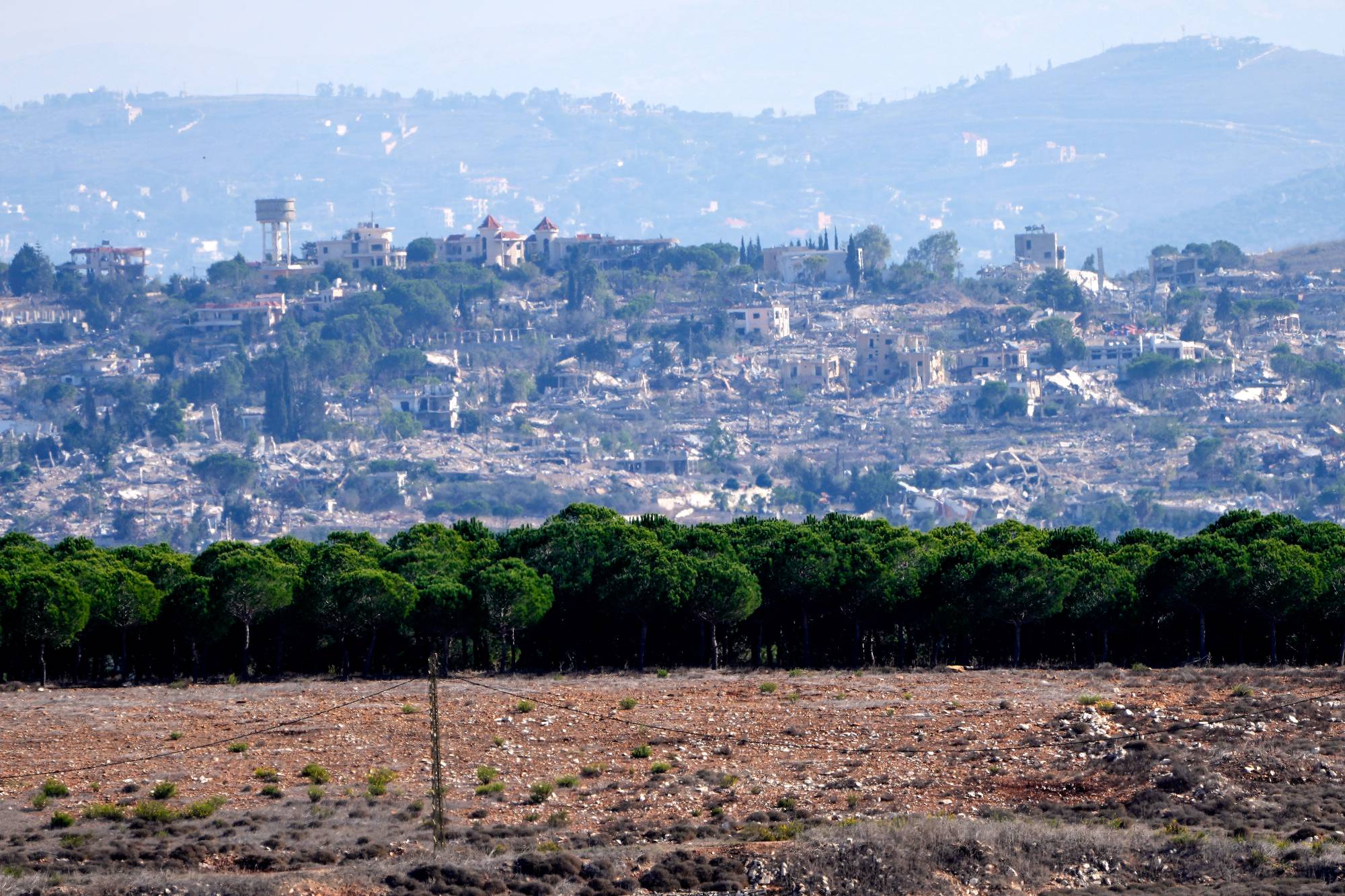
This picture taken from a position on the Israeli border with the Gaza Strip, shows the sun setting behind destroyed buildings in the besieged Palestinian territory on June 10, 2026. (Photo by Jack GUEZ / AFP)
TT

Israel Releases Hamas Co-founder After 2 Years of Detention

This picture taken from a position on the Israeli border with the Gaza Strip, shows the sun setting behind destroyed buildings in the besieged Palestinian territory on June 10, 2026. (Photo by Jack GUEZ / AFP)

The son of a Hamas co-founder said that Israeli authorities released his father in the occupied West Bank on Thursday after holding him without trial for more than two years.

Hassan Yousef, 71, was "freed near the southern West Bank city of Hebron" and taken to a hospital in Ramallah where he resides, his son Owais Yousef said.

Yousef is a senior leader of Hamas in the West Bank, having co-founded the group in the 1980s along with Sheikh Ahmad Yassine and other Palestinian members of the Muslim Brotherhood.

Israeli police did not immediately respond to an AFP request for confirmation.

Yousef had been held in Israeli administrative detention since October 2023, shortly after the Hamas attack on Israel that sparked the war in Gaza.

Israel has increased its use of administrative detention against Palestinians since the war. The system allows it to detain individuals for renewable six-month periods without charge.

Israel says the procedure allows authorities to hold suspects and prevent attacks while continuing to gather evidence, but critics and rights groups say the system is abused.

Israel has arrested Yousef several times over the years. He was last released in July 2020 from 16 months of administrative detention.

A member of the now-defunct Palestinian parliament, Yousef is estranged from his eldest son Mosab Hassan Yousef, who for 10 years spied against his father's movement.

From 1997 to 2007, Mosab Hassan Yousef worked for Israel's internal security agency Shin Bet, before relocating to the United States, where he lives under a new identity and wrote the book "Son of Hamas".


Israel to Allocate $338 Million for West Bank Settlement Expansion, Rights Group Says

FILE PHOTO: A general view picture shows the Israeli settlement of Efrat in the Gush Etzion settlement block as Bethlehem is seen in the background, in the Israeli-occupied West Bank January 28, 2020. REUTERS/Ronen Zvulun/File Photo
TT

Israel to Allocate $338 Million for West Bank Settlement Expansion, Rights Group Says

FILE PHOTO: A general view picture shows the Israeli settlement of Efrat in the Gush Etzion settlement block as Bethlehem is seen in the background, in the Israeli-occupied West Bank January 28, 2020. REUTERS/Ronen Zvulun/File Photo

Israel is expected to approve on ‌Thursday the allocation of 1 billion shekels ($337.8 million) to build new settlements and connect them to infrastructure in the occupied West Bank, Israeli anti-settlement group Peace Now said.

The plan is being promoted by Israel's far-right finance minister Bezalel Smotrich, a proponent of Israeli settlement expansion who has said he wants to bury the idea of Palestinian statehood, reported Reuters.

According to Israeli Prime Minister Benjamin Netanyahu's cabinet schedule, ministers are expected to discuss the establishment of temporary sites that have already been approved in the West Bank.

The schedule did not say whether ‌the ministers would ‌approve new funding. Netanyahu's office did not immediately ‌respond ⁠to a request for ⁠comment.

FUNDING FOR ROADS, WATER, RIGHTS GROUP SAYS

About 700,000 Israeli settlers live among 2.7 million Palestinians in the West Bank and East Jerusalem. Israel annexed East Jerusalem in 1980, a move not recognized by most countries, but has not formally extended sovereignty over the West Bank.

UN bodies and most countries view the West Bank settlements as ⁠illegal, citing international conventions. Israel disputes this, saying ‌a Jewish presence has existed ‌in the West Bank for thousands of years.

In a statement, Peace Now said ‌the cabinet vote would bypass the standard settlement planning process. ‌It said the settlements in question had been approved by Netanyahu's government over the past three years.

Both Peace Now and the news website Axios, citing a draft resolution, said the allocation of funds would include construction of ‌infrastructure such as access roads, land preparation, sewage systems, water connections and related works, as well as ⁠temporary residential ⁠compounds.

A spokesperson for Smotrich, the finance minister, did not provide specifics but said the cabinet vote would strengthen Israeli settlements and that these are not new settlements, but rather existing sites. Smotrich last week announced a major expansion by more than 2,000 homes of three Jewish settlements in the West Bank.

Palestinians and many countries view the settlements as a primary obstacle to peace, saying they eat into West Bank land that could make up a potential State of Palestine. The expansion of settlements and smaller settler outposts has been accompanied in recent years by a rise in Israeli settler violence, with settlers staging sometimes deadly attacks on Palestinians.
