


WHO Says Ebola Risk High Regionally, Low Worldwide

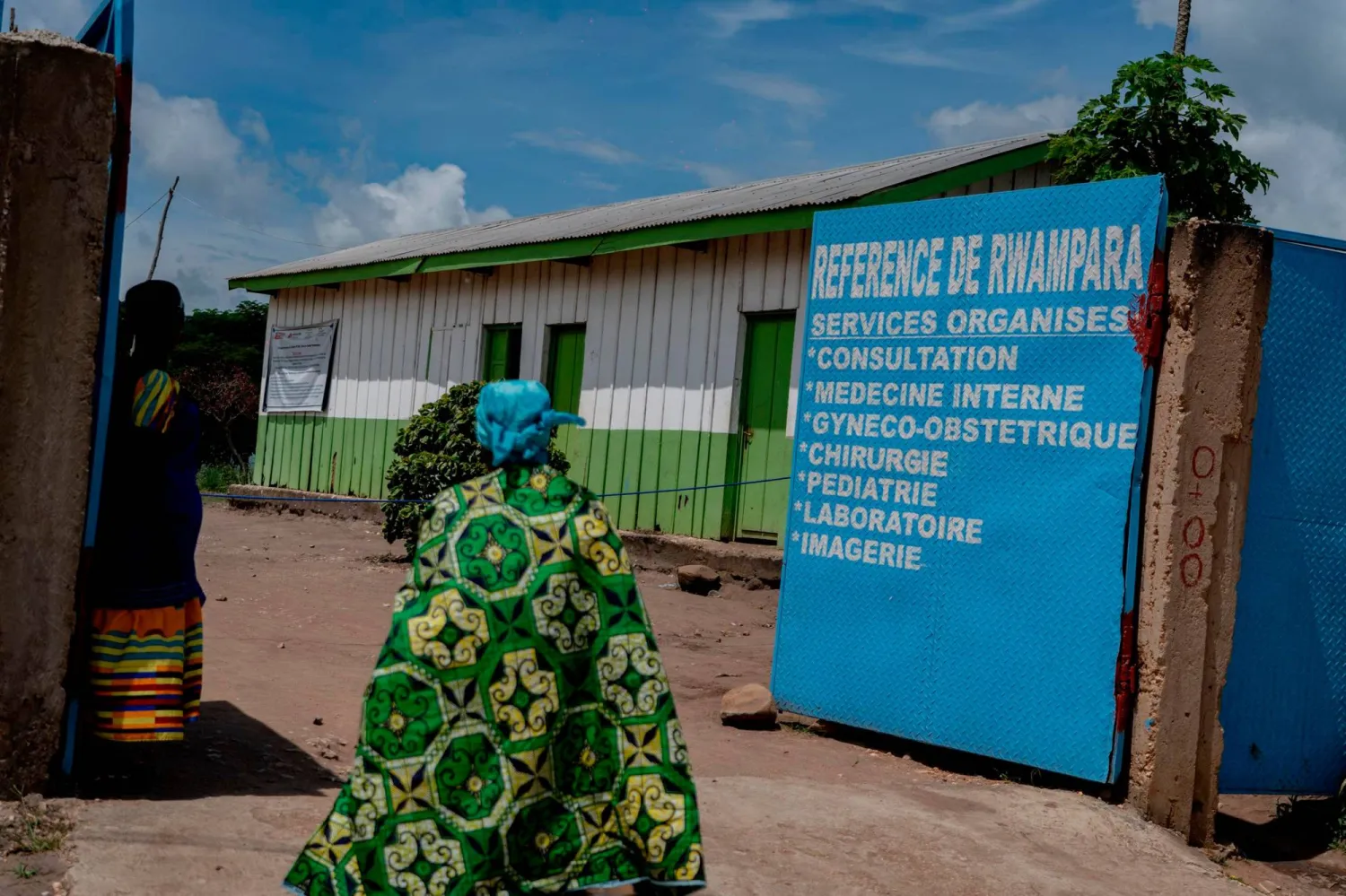
A visitor walks at the entrance of a hospital in Rwampara on May 19, 2026. (AFP)
TT

WHO Says Ebola Risk High Regionally, Low Worldwide

A visitor walks at the entrance of a hospital in Rwampara on May 19, 2026. (AFP)

The World Health Organization on Wednesday said the risk of the Democratic Republic of Congo's deadly Ebola outbreak was currently high at the national and regional levels but low worldwide.

WHO experts said that while investigations into its origins were ongoing, given the scale of the situation in the eastern DRC, the outbreak probably began a couple of months ago.

But the UN health agency's emergency committee said it did not currently meet the pandemic emergency threshold.

"WHO assesses the risk of the epidemic as high at the national and regional levels, and low at the global level," said the organization's chief Tedros Adhanom Ghebreyesus.

So far, 51 cases have been confirmed in the DRC, in the eastern provinces of Ituri and North Kivu, "although we know the scale of the epidemic in DRC is much larger", he told a press conference at the WHO's headquarters in Geneva.

He said Uganda had also reported two confirmed cases in the capital Kampala, including one death, while a US national working in the DRC has been confirmed positive and transferred to Germany.

"There are several factors that warrant serious concern about the potential for further spread and further deaths," said Tedros.

"Beyond the confirmed cases, there are almost 600 suspected cases and 139 suspected deaths.

"We expect those numbers to keep increasing, given the amount of time the virus was circulating before the outbreak was detected."

- Not a pandemic -

On Sunday, Tedros declared the situation to be a public health emergency of international concern -- the second-highest level of alarm under the legally binding International Health Regulations (IHR) -- triggering emergency responses in countries worldwide.

The WHO emergency committee convened to assess the outbreak met on Tuesday.

"The current situation and criteria for a public health emergency of international concern have been met, and we agree that the current situation does not satisfy the criteria for a pandemic emergency," the committee's chair, Lucille Blumberg, told reporters from South Africa.

Anais Legand, WHO technical officer on viral hemorrhagic fevers, said investigations were under way to pinpoint how long Ebola has been spreading in the eastern DRC.

"Given the scale, we are thinking that it has started probably a couple of months ago, but investigations are ongoing and our priority is really to cut the transmission chain by implementing contact tracing, isolating and caring for all suspect and confirmed cases," she said.

US Secretary of State Marco Rubio on Tuesday said the WHO was "a little late" in identifying a deadly outbreak.

President Donald Trump, in one of his first acts on returning to office last year, set in motion a US withdrawal from the WHO, which he attacked bitterly over its response to the Covid-19 pandemic.

Asked about Rubio's criticism, Tedros said that "maybe what the secretary said... could be from lack of understanding of how IHR work, and the responsibilities of WHO and other entities", he said, explaining that the agency acted in support of countries rather than replacing them in outbreak responses.



Ten Injured in Australia as Car Crashes into Crowd North of Sydney

Police officers work at a crime scene at Waite Road in Paddington, Sydney, Australia February 23, 2024. AAP Image/Dean Lewins via REUTERS
TT

Ten Injured in Australia as Car Crashes into Crowd North of Sydney

Police officers work at a crime scene at Waite Road in Paddington, Sydney, Australia February 23, 2024. AAP Image/Dean Lewins via REUTERS

Ten people were injured when a man drove into a crowd in the Australian city of Newcastle on Saturday after appearing to lose control of the car, authorities said.

The 18-year-old driver was ‌arrested at ‌the scene in ‌the suburb ⁠of Wallsend about ⁠110 km (70 miles) north of the New South Wales state capital, Sydney.

When the incident occurred, fans had lined local streets to send ⁠off the Newcastle ‌Knights rugby ‌league team, due to compete in ‌the country's National Rugby ‌League grand final in Sydney on Sunday.

Two of those hospitalized, a 5-year-old girl and a 67-year-old man, ‌were in a critical condition, authorities said.

Newcastle Mayor ⁠Gavin ⁠Morris said the driver seemed to have lost control of the car. "It appears that he was revving the car in some form," Morris said in televised remarks.

Police said initial indications suggested the incident was not terrorism-related.


Russia Strikes Another Major Bridge in Ukraine Capital

Traffic headed to the left bank of the city  after Russian drone strikes on Kyiv's bridges caused disruptions, amid Russia's attack on Ukraine, in Kyiv, Ukraine October 2, 2026. REUTERS/Thomas Peter
Traffic headed to the left bank of the city after Russian drone strikes on Kyiv's bridges caused disruptions, amid Russia's attack on Ukraine, in Kyiv, Ukraine October 2, 2026. REUTERS/Thomas Peter
TT

Russia Strikes Another Major Bridge in Ukraine Capital

Traffic headed to the left bank of the city  after Russian drone strikes on Kyiv's bridges caused disruptions, amid Russia's attack on Ukraine, in Kyiv, Ukraine October 2, 2026. REUTERS/Thomas Peter
Traffic headed to the left bank of the city after Russian drone strikes on Kyiv's bridges caused disruptions, amid Russia's attack on Ukraine, in Kyiv, Ukraine October 2, 2026. REUTERS/Thomas Peter

A Russian strike targeted a major bridge in Kyiv, its mayor said Saturday, in another attack on Ukrainian infrastructure that has brought traffic chaos to the capital.

The attack on the Northern Bridge, which followed a drone alert, came a day after the Southern Bridge was hit in a wave of strikes that city officials say is "tearing Kyiv apart".

The grinding conflict, which began with Russia's full-scale invasion in February 2022, has largely focused on ground fighting in the east, with Kyiv mostly spared from the devastation wrought near the frontline, AFP said.

"Northern Bridge has been hit," Kyiv Mayor Vitali Klitschko said on Telegram on Saturday. "Emergency services are heading to the scene."

In another update, Klitschko said the attack had damaged the road surface and trolleybus wires on the bridge.

"Traffic across the bridge from the left bank to the right bank is currently blocked," Klitschko said.

The latest strike follows multiple attacks on crossings over the Dnipro river that link the eastern and western parts of the capital.

On Friday, authorities shut the Southern Bridge -- one of Kyiv's main bridges -- and restricted movement on another after a wave of strikes by fast-moving, jet-powered drones, causing severe traffic congestion across the capital.

Long lines of stationary cars and buses clogged major roads as commuters sought alternate routes, with some forced to continue their journeys on foot.

The Southern Bridge is one of eight crossings connecting the two sides of Kyiv.

The cable-stayed structure had already been hit several times since Thursday, according to city officials.

Klitschko warned Friday the capital should now be on a war footing.


Iran Executes Man Linked to Anti-government Protests

This photograph shows portraits of Iranian protesters allegedly executed by the Iranian regime during protests in Iran are displayed during a demonstration at the Ergife Palace Hotel to condemn the silence of Western governments in the face of the growing wave of Iranian political executions, in Rome on July 16, 2026. (AFP)
TT

Iran Executes Man Linked to Anti-government Protests

This photograph shows portraits of Iranian protesters allegedly executed by the Iranian regime during protests in Iran are displayed during a demonstration at the Ergife Palace Hotel to condemn the silence of Western governments in the face of the growing wave of Iranian political executions, in Rome on July 16, 2026. (AFP)

Iran said Saturday it had executed a man convicted of a raft of charges including firing a military-grade weapon at police officers during anti-government protests earlier this year.

Siavash Jamshidi was accused of targeting security personnel during mass demonstrations that peaked in January in which thousands of people were killed, said AFP.

Since that time, Iranian authorities have stepped up executions of convicts linked to the unrest.

"Jamshidi was sentenced to death on charges of moharebeh through brandishing and firing a firearm, as well as conspiracy and collusion against national security," Iran's judiciary said, using the legal term moharebeh to mean "waging war against God".

The judiciary's Mizan Online website said he was also found guilty of offences not related to the protests, including "fraud, making threats, theft, possession and carrying of an illegal military-grade weapon".

Other charges included "complicity in kidnapping, brandishing a weapon to intimidate, and intentional infliction of bodily harm".

Mizan said Jamshidi was "active" during the demonstrations, which were sparked in December last year by grievances over living costs in Iran, but peaked on January 8 and 9 with huge rallies.

Iranian authorities reported more than 3,000 deaths in the unrest, attributing the violence to "terrorist acts" orchestrated by the United States and Israel.

Foreign-based NGOs however maintain that Iranian security forces fired on protesters.

US President Donald Trump threatened at the time to intervene militarily in Iran. Weeks later in late February, the United States and Israel launched a joint attack on the Iranian republic, triggering the Middle East war.

Since then, arrests and executions have multiplied in Iran, linked both to the war and the protests.

In 2025, Iran executed at least 1,639 people, the largest number in any year since 1989, according to the NGOs Iran Human Rights and Together Against the Death Penalty.