


UK Offers Cheaper Chocolate, Tickets to the Zoo to Ease Cost of Living Squeeze

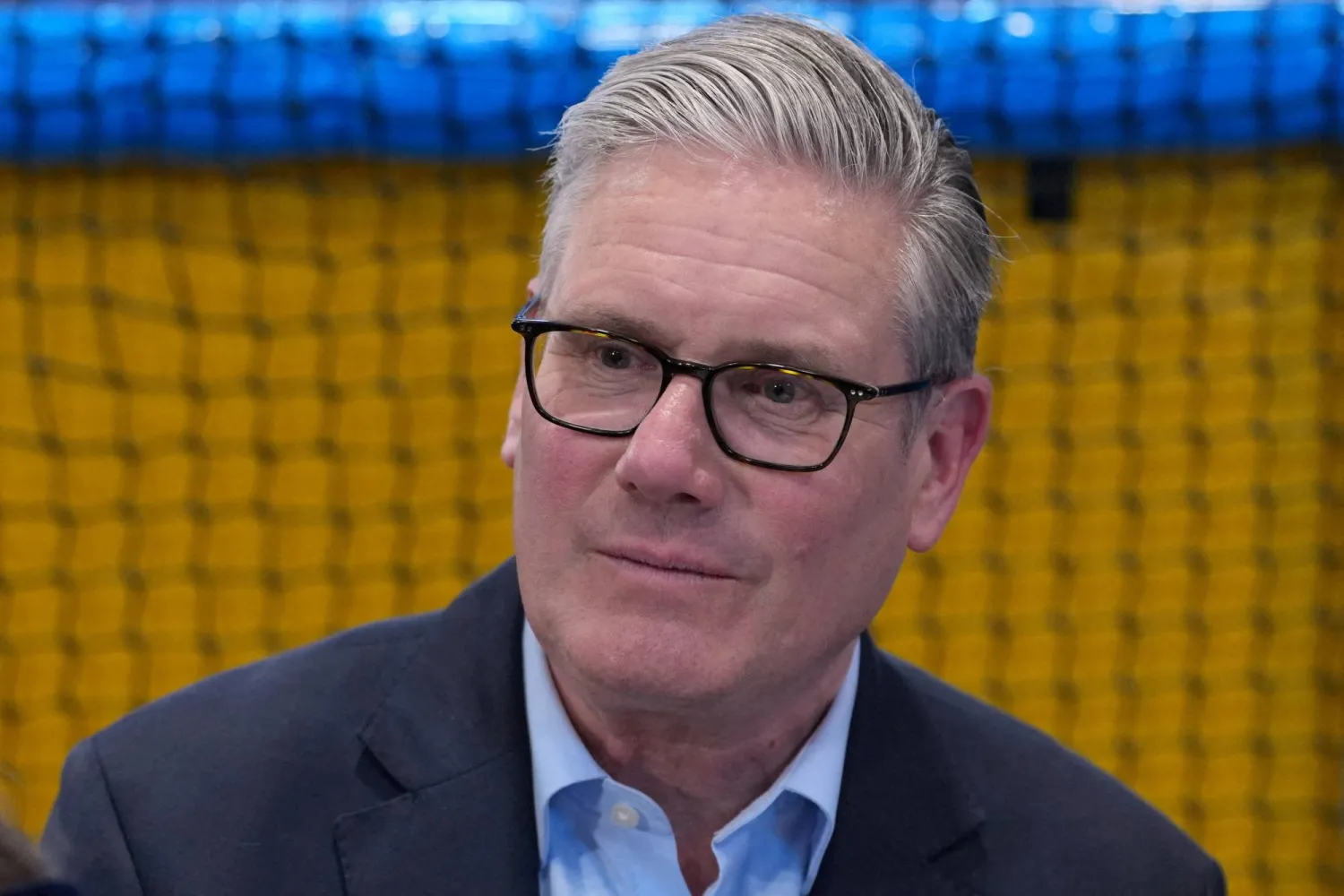
Britain’s Prime Minister Keir Starmer visits a children’s activity center in Essex, Britain, Thursday, May 21, 2026. Kin Cheung/Pool via REUTERS
TT

UK Offers Cheaper Chocolate, Tickets to the Zoo to Ease Cost of Living Squeeze

Britain’s Prime Minister Keir Starmer visits a children’s activity center in Essex, Britain, Thursday, May 21, 2026. Kin Cheung/Pool via REUTERS

The British government is offering cheaper chocolate and discounted entry to theme parks as it seeks to ease a cost-of-living squeeze and win back voters.

Treasury chief Rachel Reeves on Thursday announced modest handouts to help alleviate rising costs sparked by the Iran war, including a reduction in import tax on cookies, chocolate and about 100 other supermarket products.

UK inflation fell to 2.8% in April, down from 3.3% in March, but is expected to spike again on the back of higher prices for fuel, heating gas and electricity.

To ease the impact, the government has postponed a planned increase in fuel duty and given truckers a yearlong reprieve from road tax to help offset soaring gasoline prices due to the effective closure of the Strait of Hormuz, a key oil transit route.

But Reeves did not commit to broader support for household heating bills, The Associated Press reported.

She announced measures designed to boost the summertime economy, including free bus travel for children in August. During the summer, tax on tickets for attractions including zoos, theme parks and museums will be slashed from 20% to 5%.

Reeves said she would pay for the cost-of-living support by closing tax loopholes for oil and gas companies with overseas operations.

“This summer I want every family to be able to enjoy themselves,” Reeves said. “As the war in Iran pushes prices up at home, my economic plan is the right one. I will continue to make the right choices, to protect households and businesses, and build a stronger and more secure Britain.”

The announcements came as Prime Minister Keir Starmer tries to keep calm and carry on while rivals in the governing Labour Party seek to oust him after a set of disastrous local election results.

The last two weeks have been devastating for Starmer, who led the party to a landslide victory less than two years ago. Scores of Labour lawmakers have called for him to resign, and he is widely expected to face a leadership challenge. Greater Manchester mayor Andy Burnham is aiming to win a seat in Parliament in a June 18 special election, and then challenge Starmer for the prime minister’s job.

Starmer insists he will not resign and will fight for his job. Under UK political rules, whoever took over from Starmer as party leader would also become prime minister, without the need for a national election.



Swiss and Chinese Reach Agreement on Updated Free Trade Deal

FILE PHOTO: A China yuan banknote featuring late Chinese chairman Mao Zedong and a computer keyboard are seen reflected on an image of Chinese flag in this illustration picture taken November 1, 2019.  REUTERS/Florence Lo/Illustration/File Photo
FILE PHOTO: A China yuan banknote featuring late Chinese chairman Mao Zedong and a computer keyboard are seen reflected on an image of Chinese flag in this illustration picture taken November 1, 2019. REUTERS/Florence Lo/Illustration/File Photo
TT

Swiss and Chinese Reach Agreement on Updated Free Trade Deal

FILE PHOTO: A China yuan banknote featuring late Chinese chairman Mao Zedong and a computer keyboard are seen reflected on an image of Chinese flag in this illustration picture taken November 1, 2019.  REUTERS/Florence Lo/Illustration/File Photo
FILE PHOTO: A China yuan banknote featuring late Chinese chairman Mao Zedong and a computer keyboard are seen reflected on an image of Chinese flag in this illustration picture taken November 1, 2019. REUTERS/Florence Lo/Illustration/File Photo

Switzerland and China have completed negotiations on an updated free trade deal which will increase Swiss access to its third biggest trading partner, Swiss officials said on Thursday.

Swiss president Guy Parmelin and China's Commerce Minister Wang Wentao announced the conclusion of the talks after a meeting in Bern.

Under the agreement, 99.8% of Swiss exports can enter the Chinese market duty free, upgrading an existing deal where the terms applied to only around half of Swiss shipments, Reuters reported.

Almost all Chinese exports to Switzerland are duty free under the existing 2014 free trade agreement between the two countries, Beijing's first such deal with an economy in continental Europe.

Other areas covered in the new agreement include rules of origin and trade facilitation, trade in services, digital trade, competition, and economic and technical cooperation.

China is Switzerland's third biggest trade partner after Germany and the United States, with bilateral trade amounting to 46 billion Swiss francs ($57.6 billion) so far in 2026.

Trade between the two countries has expanded from 31.7 billion francs in 2015 to 51.2 billion francs last year, according to figures from the Swiss customs office, with China a big market for Swiss chemicals, pharmaceuticals, precision instruments and watches.

Once the legal review has been completed, a signing of the deal is expected later this year, before the domestic approval processes in each country take place.


US Unemployment Claims Dropped to 206,000 Last Week with Layoffs Still Sparse

A "now hiring" sign is displayed on a local business after, US employment growth slowed more than expected in July, in Encinitas, California, US August 1, 2025. REUTERS/Mike Blake
TT

US Unemployment Claims Dropped to 206,000 Last Week with Layoffs Still Sparse

A "now hiring" sign is displayed on a local business after, US employment growth slowed more than expected in July, in Encinitas, California, US August 1, 2025. REUTERS/Mike Blake

Fewer people applied for US unemployment benefits last week, another sign that layoffs remain low and that most Americans enjoy job security.

The Labor Department reported Thursday that jobless claims dropped to 206,000 last week from a revised 212,000 the week before. The four-week average of claims, which smooths out week-to-week ups and downs, ticked up to 204,000 last week from 199,750.

Claims for jobless benefits are a proxy for layoffs, and economists watch them because they can be a harbinger for where the job market is headed. For the past year, claims have been at a historically low range of around 200,000 to 230,000 a week.

“The labor market has yet to show any sign of wear and tear from the surge in oil prices since the start of the war with Iran and the global energy supply shock,” Carl Weinberg, chief economist at High Frequency Economics, wrote in a commentary, The AP news reported.

The number of people collecting unemployment benefits the week that ended Aug. 8 rose to 1.8 million from 1.78 million the week before.

The US unemployment rate is low at 4.1%, partly because the economy has proved resilient in the face of higher energy prices. But it’s also because President Donald Trump’s immigration crackdown and the ongoing retirement of baby boomers mean that fewer people are competing for jobs: More than 1.3 million people have dropped out of the US labor force over the past year.

The job market is tough for those looking for their first job and for those who lost their jobs and are looking for new work. At the same time, companies, remembering the worker shortages that followed the end of COVID-19 lockups, are still reluctant to let go of staff; but they aren’t eager to take on new workers. Economists regularly refer to a “no hire, no fire″ job market.

In July, companies, government agencies and nonprofits together cut 23,000 jobs. So far this year, employers are adding 61,000 jobs a month. That is an improvement on the 9,700 they averaged last year — the weakest hiring outside a recession since 2002. The lingering effects of high interest rates and Trump’s erratic trade policies discouraged companies from hiring in 2025.

Hiring this year remains well below the 166,00 monthly jobs created, on average, in 2023 and 2024, let alone the 491,000 a month recorded during the 2021-2022 hiring boom that followed pandemic lockdowns.


IMF Welcomes Lebanon Bank Law Changes as 'Major Step' 

Lebanese Central Bank headquarters in Beirut (Reuters)
TT

IMF Welcomes Lebanon Bank Law Changes as 'Major Step' 

Lebanese Central Bank headquarters in Beirut (Reuters)

The International Monetary Fund has welcomed the Lebanese parliament's passing of amendments to a bank resolution law as a major step, but challenges to implementing the law could further delay recovery for an economy battered by years of financial collapse and the conflict with Israel.

The reforms are among the IMF's requirements for Lebanon to access funding to bring government debt out of default after decades of profligate spending by the country's ruling elite, sending the economy into a tailspin in late 2019. Banks imposed sweeping capital controls, locking depositors out of their savings, and stopped issuing loans.

In January the IMF had demanded changes to the draft rescue law, Lebanon's Prime Minister Nawaf Salam told Reuters at the time.

Now, the bank resolution law aims to address vast funding shortfalls in the financial system and is among a set of measures that ultimately aim to fix the banking sector and allow depositors who have been frozen out of their savings to gradually recover their money.

“We met 99% of what they wanted,” legislator Alain Aoun, who sits on Parliament’s Finance and Budget Committee, told Reuters.

The most notable amendments to the law include changes to the Central Bank’s governance procedures. The makeup of the Higher Banking Commission – a governing body within the Central Bank — will be altered, Aoun said. The amendments empower the body to “decide the fate of Lebanon’s banks,” and would determine if a bank requires restructuring or liquidation and any further steps to rehabilitate it.

Federico Lima, the IMF representative in Lebanon, said on Wednesday that the "effective implementation of this new bank resolution framework is critical."

"In addition, we are continuing discussions with the Lebanese authorities on the improvements needed to align the draft Financial Stabilization and Depositor Recovery (FSDR) law with international principles," he added.

In 2022, the government put losses from the financial crisis at about $70 billion, a figure that analysts and economists forecast is now likely to be higher.

Last week, the parliament passed amendments to the law, but it would still be pending approval by the Lebanese president.

The possibility of members challenging the law before the Constitutional Council — which has precedent for annulling provisions of earlier financial legislation — could also bring further delays.

The draft had already undergone several rewrites because of competing demands from different financial institutions; the IMF called on Lebanon to improve the law to bring it in line with international standards and consider tax reforms to spark public spending on reconstruction efforts.

The World Bank ranks the Lebanese economic crisis among the worst globally since the mid-19th century. Depositors were frozen out of dollar accounts and the Lebanese pound fell by more than 90%. Additionally, the war with Israel was estimated to have caused $7 billion in damages.

"This is the only country in the world that has had a banking crises for seven years and has not tried to find a solution," a senior Lebanese official told Reuters. "Staying where we are shouldn't be an option."