


Saudi Oil Pipeline Boosts Exports 37.4%, Trade Surplus Hits Highest Since 2022

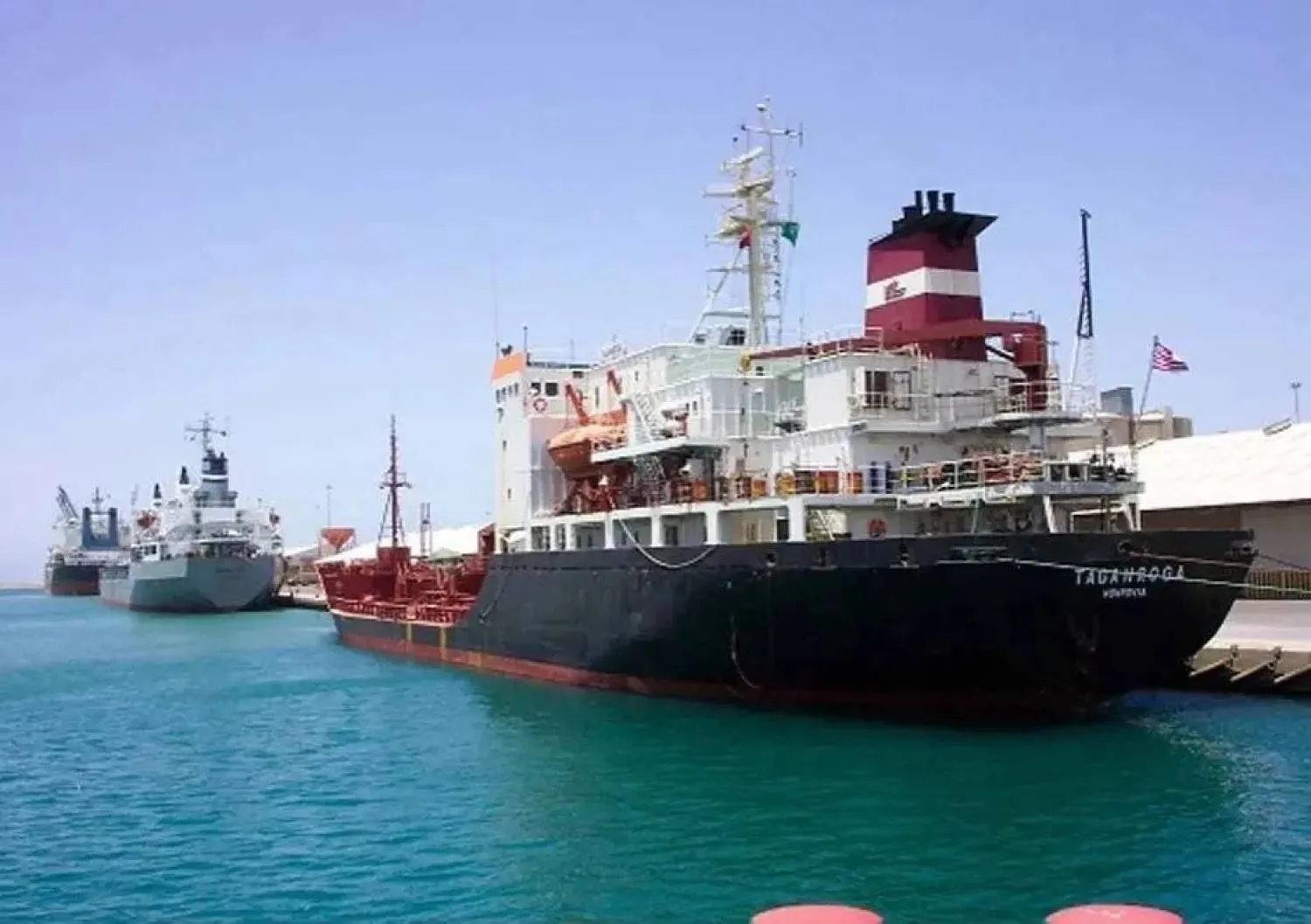
Naval vessels at Yanbu port on the Red Sea (SPA) 
TT

Saudi Oil Pipeline Boosts Exports 37.4%, Trade Surplus Hits Highest Since 2022

Naval vessels at Yanbu port on the Red Sea (SPA) 

Saudi Arabia’s merchandise trade surplus surged to its highest level since 2022 in March, driven by strong momentum in oil exports, which rose 37.4%, while the East-West pipeline played a central role in improving the flexibility of crude flows to Red Sea ports, according to official data and an industry expert.

Strategic energy infrastructure helped the Kingdom improve export efficiency and diversify access points to global markets, the General Authority for Statistics said in its international merchandise trade bulletin published on Thursday.

The authority reported that the merchandise trade surplus jumped 218.9% year-on-year in March, marking its highest level since 2022, supported by robust growth in oil exports.

Mohammad al-Sabban, a former senior adviser to the Saudi oil minister, told Asharq Al-Awsat that the rise in the Kingdom’s oil exports in March demonstrated the success of long-term planning through the construction and rehabilitation of the East-West pipeline, which transports crude and petroleum products to the Red Sea port of Yanbu.

He noted that the pipeline had helped Saudi Arabia bypass risks linked to the Strait of Hormuz after remaining closed for extended periods in the past.

Al-Sabban added that the government built the pipeline in the mid-1980s in what proved to be a sound strategic decision, explaining that its current capacity has reached 7 million barrels per day.

He said the infrastructure had contributed to the 37.4% rise in oil exports, equivalent to around SAR100 billion ($26.66 billion), increasing the share of oil in total merchandise exports.

“Many countries have seen their exports shrink after the recent crisis, but with the East-West pipeline in place, the Kingdom was able to raise total merchandise exports,” he stated.

According to the statistics authority, the total value of Saudi merchandise exports reached about SAR115 billion ($30.66 billion) in March, up 21.5% from the same month in 2025.

The increase was driven mainly by a sharp rise in oil exports, which climbed 37.4% to SAR92.5 billion, raising their share of total exports to 80.3% from 71.0% a year earlier.

Non-oil exports, including re-exports, fell 17.3%, while national non-oil exports excluding re-exports declined 27.0% to SAR14 billion ($3.73 billion).

Re-exported goods rose 2.5%, supported by a 51.1% jump in exports of “machinery, electrical equipment and parts thereof,” which accounted for 62.4% of total re-exported goods.

Imports fell 24.8% year-on-year in March to SAR58 billion ($15.46 billion), the report showed.

The sharp decline in imports, combined with higher exports, increased the ratio of non-oil exports to imports to 39.3%, compared with 35.8% a year earlier.

The report indicated that “machinery, electrical equipment and parts thereof” remained the most influential category in non-oil exports, accounting for 27.4% of the total after rising 46.2%. The same category also ranked first among imports at 30.4%, despite an 11.9% decline.

China remained Saudi Arabia’s top trading partner, accounting for 14.1% of Saudi exports, followed by India at 13.7% and Japan at 9.5%. Exports to the Kingdom’s top 10 destinations represented 69.8% of total exports.

China also remained the Kingdom’s largest source of imports, accounting for 26.7% of the total, followed by the United States at 8.4% and the United Arab Emirates at 7.1%.

Jeddah Islamic Port remained the main entry point for imports into the Kingdom, handling 29.8% of total imports.

For non-oil exports, King Abdulaziz International Airport in Jeddah ranked as the leading export gateway with a 23.4% share, followed by Jeddah Islamic Port at 21.2% and the Al-Batha land crossing at 8.2% of Saudi non-oil merchandise exports.


Morocco Farmers Saw Hope in Rain, but Mideast War Inflates Production Costs

A farmer works in his wheat field in the Sebt Meghchouch region of Morocco, on April 28, 2026. (Photo by Abdel Majid BZIOUAT / AFP)
TT

Morocco Farmers Saw Hope in Rain, but Mideast War Inflates Production Costs

A farmer works in his wheat field in the Sebt Meghchouch region of Morocco, on April 28, 2026. (Photo by Abdel Majid BZIOUAT / AFP)

Like many Moroccan farmers, Mehdi el-Maazi was hopeful that rare heavy rains would yield an abundant harvest this year -- but those hopes were quickly shattered as the Middle East war sent fuel and fertilizer costs soaring.

Morocco, where agriculture employs about a quarter of the working population and where drought had persisted for seven consecutive years, recorded massive rainfalls last February and December.

Across the rural region of Marchouch, about 70 kilometres (43 miles) south of Rabat, landscapes that had long been parched have turned green again, and farmers have taken back to working their fields.

Following the rains this winter, the country expected a strong cereal harvest, with output estimated to reach nearly nine million tonnes -- more than double last year's. Overall agricultural output was also set to rise by about 15 percent from last season.

But the war in the Middle East, which began in late February, has disrupted maritime traffic through the Strait of Hormuz, not only sending global energy markets into a tailspin but also choking fertilizer supplies.

Prior to the war, Maazi would normally spend around 1,200 dirhams ($130) per hectare on diesel to run his tractor. Now, he said, the cost has climbed to 1,800 dirhams.

"We were happy at first about the arrival of the rain," said the 32-year-old lentil farmer. "But with the increase in diesel prices, everything changed."

Farmers also say higher fuel prices are driving up the cost of nearly everything needed to produce crops.

Abdelkader Toukati, another farmer in the area, said he hoped "the price of diesel will fall before the beginning of the harvest season".

High prices have meant that workers' wages have also risen and even "the cost of renting harvesting machines doubled", Toukati added.

Abdelaziz Drissi, who rents out agricultural machinery, also complained that there was little to no financial reward.

"There is no longer any profit," he said. "We are only working to pay for fuel."

Rising energy costs have had a direct impact on key farming supplies, driving up prices for seeds, fertilizers, pesticides and animal feed.

Livestock breeder Abdessadaq el-Fayd said grain feed prices had sharply risen in recent months.

"We used to buy it for 90 dirhams" per sack, he said. "Today, it costs 110 to 120 dirhams."

A recent report by the kingdom's High Commission for Planning projected economic growth of five percent in the first quarter of 2026, up from 4.1 percent in the previous quarter, driven in part by agricultural activity.

In an effort to alleviate rising costs, the Moroccan government in March announced aid for transport operators.

And last month, Prime Minister Aziz Akhannouch pledged to "improve distribution chains so that prices remain at a reasonable level".

But farmers interviewed by AFP said the measures have yet to rein in prices.

Rachid Benali, president of the Moroccan Confederation of Agriculture and Rural Development, said the price hikes "mainly concern fuels and nitrogen fertilizers".

But while the high costs "will have no impact on either volume or quality" of harvests, they "will automatically be reflected" in produce prices at markets, he added.


Dollar Nears Six-week High; Mixed Signals on US-Iran Deal Feed Uncertainty

US dollar banknotes (Reuters)
TT

Dollar Nears Six-week High; Mixed Signals on US-Iran Deal Feed Uncertainty

US dollar banknotes (Reuters)

The dollar traded near six-week highs on Friday, after conflicting signals over a US-Iran peace deal whipped up volatility across financial markets, though investors latched on to hopes of some progress. Washington and Tehran stuck to opposing stances over the latter's uranium stockpile and control of the Strait of Hormuz, although US Secretary of State Marco Rubio said there had been "some good signs" in talks. The dollar rose 0.17% against a basket of six major currencies to 99.37, just shy of six-week highs.

The euro, which was headed for a second weekly loss, was down 0.2% on the day at $1.1594, while the pound was slightly lower at $1.342, having shrugged off data earlier that showed retail sales dropped by the most in nearly a year in April, as consumers felt the pinch of the inflationary effects of the Iran war. The dollar found additional support from US data, which showed weekly jobless claims fell last week while manufacturing activity rose to a four-year high in May, underscoring resilience in the world's largest economy.

"We're coming to the end of week 12, we're six weeks in the ceasefire, and I'm just not really that convinced we're any closer to a resolution between the US and Iran," Tony Sycamore, a market analyst at IG, said of the Middle East war.

"I still feel like the risks are for the US dollar to go higher, because I really just don't see a way out of this situation in the Middle East without them sort of needing to be more forceful."

The US dollar's strength and persistently high oil prices have spelled pain for the yen, which on Friday struggled on the weaker side of 159 per dollar. It was 0.1% lower at 159.09 per dollar. The yen is teetering even after likely intervention from Tokyo just weeks ago to support it. It has given up nearly 75% of its gains from the presumed intervention, which has left traders on alert for further moves by Japanese authorities.

"It's just buying time, really. What they need is a change in fundamentals, and I think the best thing that could happen is a quick deal to end the Iran conflict," said Lee Hardman, a currency strategist at MUFG.

"I don't think you'd see dollar/yen drop too sharply from here, but even if it just got back down into the mid 150s, taking some of the selling pressure off the yen, that would probably be the best they can hope for right now."

The Bank of Japan is only expected to raise borrowing costs gradually while other central banks, including the European Central Bank, are likely to deliver hikes far more quickly, which puts the yen at a disadvantage with investors who seek out extra returns from higher domestic interest rates.

On a trade-weighted basis, the yen is at record lows, which favours its exporters but compounds the energy-price shock, given Japan's reliance on imported goods. Data on Friday showed Japan's core inflation slowed to a four-year low in April, complicating the outlook for BOJ policy.

Currencies in emerging Asia have also come under immense pressure owing to the surge in global oil prices, forcing policymakers to take increasingly urgent and unusual steps to shore up their economies. The Turkish lira hit record lows against the dollar on Friday after a court ruling went against the main opposition party.


Gold Set for Weekly Loss as Oil-driven Inflation Fears Boost Rate-hike Bets

A gold bar inside a jewelry shop in the Gold Market on Al-Moez Street in Old Cairo (Reuters)
TT

Gold Set for Weekly Loss as Oil-driven Inflation Fears Boost Rate-hike Bets

A gold bar inside a jewelry shop in the Gold Market on Al-Moez Street in Old Cairo (Reuters)

Gold edged lower on Friday and was headed for a second consecutive weekly drop, as elevated oil prices fueled fears of inflation and boosted expectations of a US interest rate hike this year. Spot gold was down 0.4% at $4,523.42 per ounce, as of 1148 GMT. The metal has shed about 0.4% so far in the week. US gold futures for June delivery lost 0.4% to $4,524.30. Brent crude oil prices held above $105 a barrel as investors doubted the prospects of a breakthrough in US-Iran peace talks, even as Iranian media reported that Iran's foreign minister met Pakistan's interior minister on Friday to discuss proposals to end the war.

"Given the current high negative correlation to oil, dollar, and yields, these – especially oil - will set the tone for gold in the upcoming sessions," said Ole Hansen, head of commodity strategy at Saxo Bank. Higher oil prices stoke inflation risks, increasing chances of higher-for-longer interest rates. While gold is traditionally seen as a hedge against inflation, higher interest rates tend to weigh on the non-yielding metal. Markets are now pricing in a Federal Reserve rate hike before year-end, with a 58% chance of at least one 25 basis-point hike by December, according to CME Group's FedWatch tool.

The dollar held near a six-week high, making greenback-priced bullion more expensive for holders of other currencies.

"Technically, the 200-day moving average at $4,372 and the 50-day at $4,667 continue to define the outer boundaries, with gold likely retaining a slight negative bias until the Middle East crisis is resolved," Hansen said. Elsewhere, US President Donald Trump will swear in Kevin Warsh as Fed chair later in the day at the White House, the administration said. Spot silver fell 1% to $75.92 per ounce, platinum lost 1.5% to $1,936.45 and palladium fell 0.8% to $1,367.70. All the metals were on course for weekly losses.
