French Investigators Searched Presidential Palace in Graft Probe

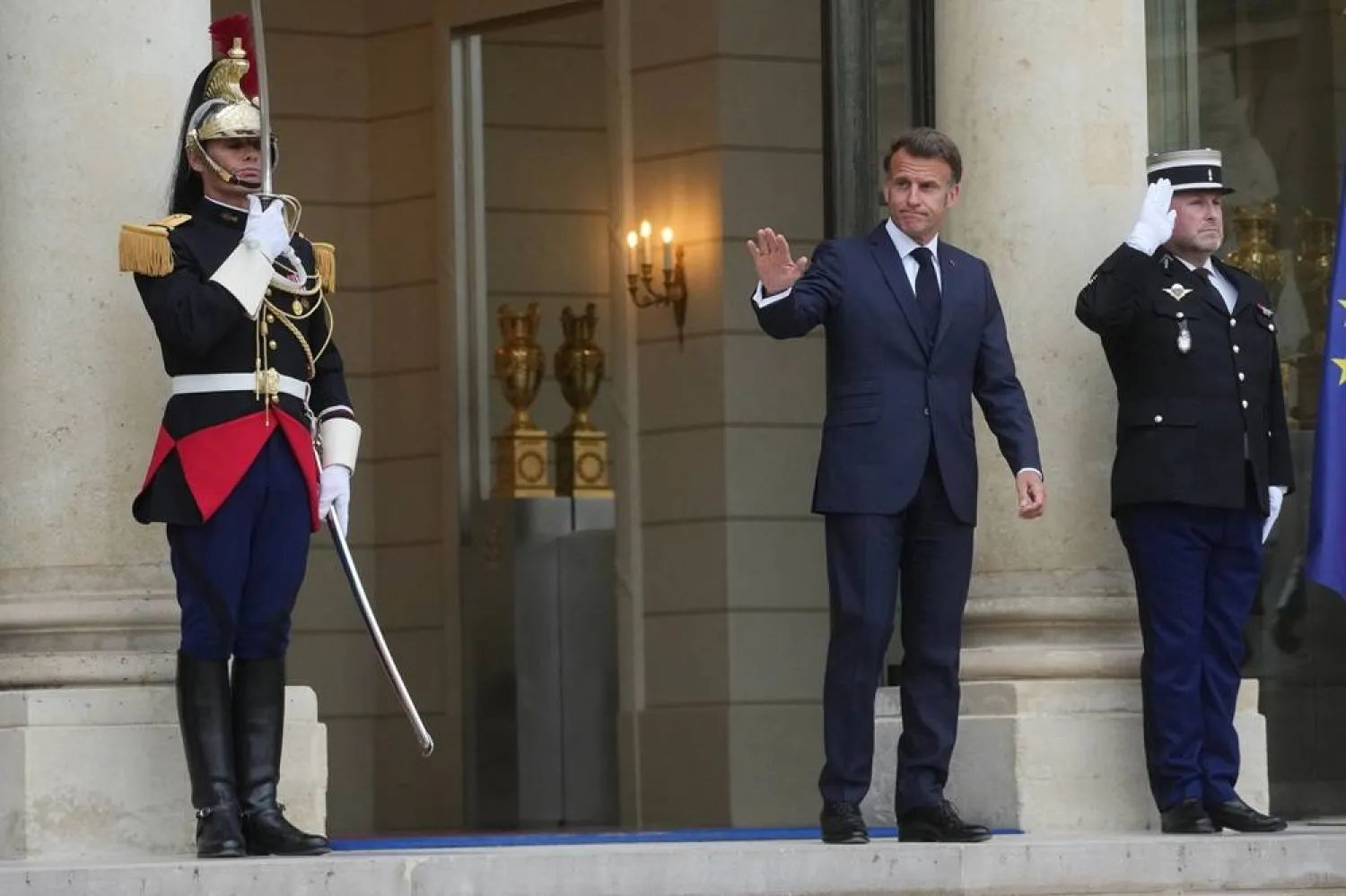
 French President Emmanuel Macron waves as he waits Quebec Premier Christine Frechette before a meeting at the Elysee Palace in Paris, Monday, May 18, 2026. (AP)
French President Emmanuel Macron waves as he waits Quebec Premier Christine Frechette before a meeting at the Elysee Palace in Paris, Monday, May 18, 2026. (AP)
TT

French Investigators Searched Presidential Palace in Graft Probe

 French President Emmanuel Macron waves as he waits Quebec Premier Christine Frechette before a meeting at the Elysee Palace in Paris, Monday, May 18, 2026. (AP)
French President Emmanuel Macron waves as he waits Quebec Premier Christine Frechette before a meeting at the Elysee Palace in Paris, Monday, May 18, 2026. (AP)

French investigators have searched the Elysee presidential palace as part of a probe into alleged favoritism and corruption, prosecutors said Friday, after a previous attempt was refused.

The search at the official residence of President Emmanuel Macron, carried out on Thursday, is linked to a probe into the repeated selection over several years of the same company to organize induction ceremonies at the Pantheon mausoleum, where prominent French figures are buried.

"Search operations took place on May 21 on the premises of the Elysee Palace, as part of the judicial inquiry focusing notably on the conditions under which certain public contracts relating to the organization of Pantheon ceremonies were awarded," the financial public prosecutor's office said.

Thursday's operation was "preceded by institutional consultations to ensure they could proceed," it said.

A representative of the Elysee told AFP that the presidency had authorized the search as the procedure "does not target" Macron and that "the necessary safeguards" were in place concerning the constitution and "the secrecy of national defense".

In April, investigators had tried to search the palace but were denied access on the grounds that the constitution guarantees the "inviolability of premises attached to the presidency", financial public prosecutor Pascal Prache said at the time.

The searches are part of an investigation opened in October 2025 into suspected favoritism, corruption and influence peddling.

French weekly Le Canard Enchaine has said investigators were looking into why the events company, Shortcut Events, had for over two decades until 2024 been picked to host the induction into the Pantheon mausoleum, estimating each ceremony to cost "around 2 million euros".

The last ceremony the events company organized, according to Le Canard Enchaine, was one in 2024 to honor Missak Manouchian, a stateless Armenian poet who died fighting the Nazi occupation of France during World War II.

Before that, French-American dancer, singer, Resistance member and rights activist Josephine Baker became the first black woman to enter the Pantheon in 2021.


Scores Dead after Boat Capsizes in Nigeria

Bodies of victims of a boat accident lie in the forecourt of a community mosque ahead of their burial in Gorau, Sokoto State, Nigeria, August 20, 2026. Picture taken with a mobile phone. REUTERS/Abubakar Imam
TT

Scores Dead after Boat Capsizes in Nigeria

Bodies of victims of a boat accident lie in the forecourt of a community mosque ahead of their burial in Gorau, Sokoto State, Nigeria, August 20, 2026. Picture taken with a mobile phone. REUTERS/Abubakar Imam

At least 51 people have died after a boat sank in northwest Nigeria's Sokoto state Thursday, a local resident told AFP, as authorities said rescue operations were ongoing.

Such accidents are common on Nigeria's busy rivers and waterways, often caused by overloaded boats, poor maintenance or failure to comply with safety regulations.

Scores drown each year.

"The situation is bad," said Ibrahim Musa, a former councilor of Gorau village, in Goronyo district, where the accident occurred.

"We already buried 46 bodies, and five others have just been brought out of the river."

Dahir Kure, spokesman for the National Emergency Management Agency in the state, told AFP, said rescue operations were underway.

"We are now at the scene of the boat accident and have begun rescue work," Kure said.

Kure said he could not immediately give a toll, saying authorities were still "collecting necessary information on the incident.”

At least five people drowned when a boat capsized in Jigawa state last month.

In January, at least 26 people drowned when a boat carrying farmers and fishermen from Jigawa to Yobe state capsized.


Iran Executes Afghan National over 2026 Protests

Iran's Evin Prison (File photo: Reuters)
TT

Iran Executes Afghan National over 2026 Protests

Iran's Evin Prison (File photo: Reuters)

Iran on Thursday executed an Afghan national convicted over the killing of police officers during anti-government demonstrations, the 30th in a wave of hangings since the start of the Middle East war, a rights group said.

Ghaem Hosseini was executed after being convicted of involvement in the deaths of four police officers, the Iranian judiciary's Mizan Online website reported.

It said he was a foreign national, without providing further details. But, the Norway-based Iran Human Rights (IHR) group said the 21-year-old was from Afghanistan and was hanged at Isfahan central prison.

Mizan Online said Hosseini was convicted "of drawing a weapon and causing fear and terror, creating widespread insecurity, acting against people's physical integrity and national security in a manner that seriously disrupted public order".

But according to IHR, Hosseini was accused of kicking one of the policemen and the "authorities have presented no evidence proving that his actions led to the death of any of the policemen".

The case "is a stark example of collective punishment and the arbitrary use of the death penalty by the Islamic Republic," said IHR director Mahmood Amiry-Moghaddam.

He is the fifth person to be hanged over the case involving the death in Isfahan of four policemen during the nationwide protests that peaked in January.

He is also the second Afghan national to be executed over the protests, after Gol Mohammad Mohammadi was hanged in the same case in July.

At least 12 defendants in the case have been sentenced to death, said IHR.

IHR said that since wartime executions resumed on March 19, at least 30 protesters have been executed -- 28 in connection with the January protests and two in connection with the "Woman. Life. Freedom." protests that erupted in 2022.

"That is an average of more than one protester execution per week," it said.

IHR says hundreds of other protesters have been sentenced to death or are facing charges which could carry the death penalty, including over 70 in Isfahan, the main city of central Iran which saw intense protests in January.

Iran's escalating use of the death penalty has triggered international concern, with rights groups and governments accusing Tehran of using executions to instil fear into society and prevent further protests.

According to Amnesty International, Iran executed at least 2,159 people in 2025. But authorities now appear to be intensifying executions of protesters and others deemed political prisoners during the conflict.

More than 30 nations, including France, Britain and Canada, last week condemned Iran's use of capital punishment, saying the Islamic republic was executing protesters to "silence dissent".


UN Aid Chief Warns Russian Drones Threaten Civilians and Aid Work in Ukraine

UN Under-Secretary-General for Humanitarian Affairs and Emergency Relief Coordinator Tom Fletcher briefs the media about the humanitarian crisis in the Gaza Strip during a press conference at the European headquarters of the United Nations (UNOG), Geneva, Switzerland, Aug. 22, 2025. (EPA)
TT

UN Aid Chief Warns Russian Drones Threaten Civilians and Aid Work in Ukraine

UN Under-Secretary-General for Humanitarian Affairs and Emergency Relief Coordinator Tom Fletcher briefs the media about the humanitarian crisis in the Gaza Strip during a press conference at the European headquarters of the United Nations (UNOG), Geneva, Switzerland, Aug. 22, 2025. (EPA)

The intensifying use of drones against civilians and humanitarian workers is a dangerous obstacle for aid operations in Ukraine, the UN's humanitarian chief, Tom Fletcher, said on Wednesday.

Fletcher spoke to The Associated Press in an interview after a visit to the southern city of Kherson, where he witnessed how communities there are coping while living under the constant threat of Russian drones. Fletcher described the visit to Kherson, split by the Dnipro River, which acts as an active front line, as “quite chilling."

Russian forces occupy the eastern bank, while Ukrainian forces hold the western bank. From across the water, kamikaze and surveillance drones routinely hunt and attack civilians, vehicles and public transit.

“It really gives us an insight into the dangers ahead of us,” he said.

The threat is also making it harder for humanitarian organizations to reach people who need assistance.

Fletcher spoke after attending a commemoration for two humanitarian workers who had died while doing their jobs.

“Drones are a real threat to not just civilians but the humanitarians who are here to protect them,” Fletcher said.

He said that aid workers are protected under international humanitarian law and yet marked humanitarian vehicles have still been hit. “So that does restrict what we can do," he said.

Local organizations are particularly exposed. More than two-thirds of operations funded through Ukraine's humanitarian fund are carried out by local organizations, according to Fletcher.

“They’re the ones who are saying most loudly to us, we’re not protected,” he said.

Fletcher said the UN needs more than $2 billion for its prioritized humanitarian response in Ukraine this year, with winter among his biggest concerns. Damage to civilian infrastructure, including electricity, water and gas systems, could once again leave millions vulnerable during the harsh winter months, raising fears of a repeat of last winter’s severe conditions.

The UN has sharply narrowed its humanitarian priorities all over the world as donor funding has fallen. Fletcher said the organization initially identified 87 million people facing the most severe humanitarian needs, but that figure has since risen to about 92 million with the onslaught of Ebola in Africa, the earthquake in Venezuela and other conflicts.

The UN is seeking $23 billion to provide life-saving assistance to those people and had raised about $11 billion, said Fletcher.

Ukraine is relatively well funded compared with many other crises, he added, with roughly 70–75% of its hyper-prioritized funding requirement covered. But even full funding of the humanitarian plan would address only part of Ukraine’s needs.

Fletcher also admitted that raising money for humanitarian operations has become more difficult as governments have increasingly redirected spending toward defense and domestic priorities.

“We’re in a more transactional world, I would say a more selfish world,” he said.

Fletcher said the UN now has to demonstrate that it is using limited taxpayer money efficiently and strategically.

“We have to show governments that we are spending their taxpayers’ money sensibly, wisely, in a prioritized way,” he said.

In a stark new assessment released on Wednesday, the UN warned that 907 aid workers were victims of violence last year and over 1,000 have been killed in three years. Fletcher said he could not reassure colleagues that those responsible would be held accountable based on how the international community has reacted.

He said accountability should extend beyond identifying the person who physically carried out an attack.

“I want to see investigations into the people who fired the weapon or flew the drone,” he said.