


Hajj Pilgrims Head to Muzdalifah after Arafat, as Mina Prepares for Their Return

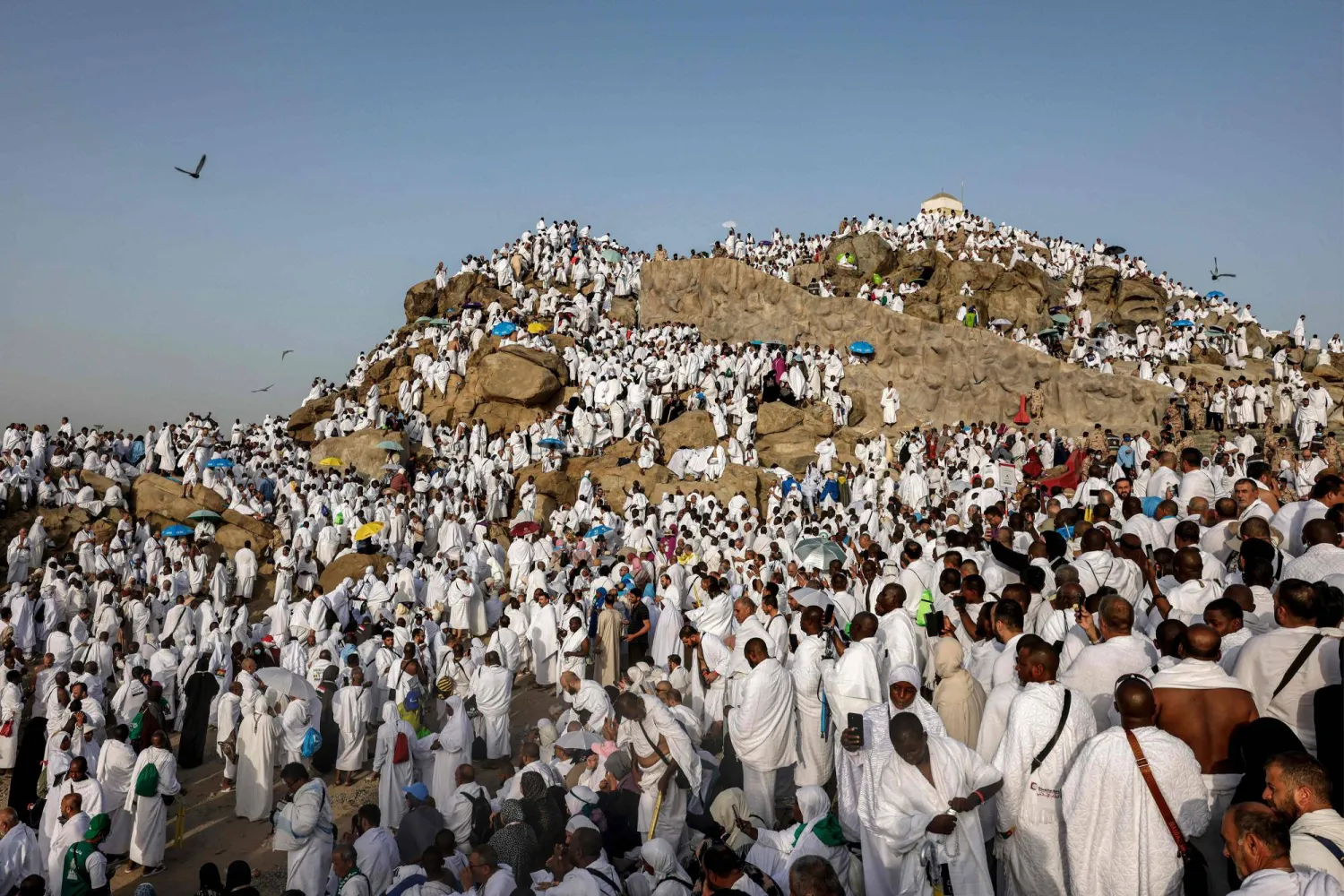
Muslim pilgrims pray on Saudi Arabia's Mount Arafat, also known as Jabal al-Rahma or Mount of Mercy, during the climax of the Hajj pilgrimage early on May 26, 2026. (AFP)
TT

Hajj Pilgrims Head to Muzdalifah after Arafat, as Mina Prepares for Their Return

Muslim pilgrims pray on Saudi Arabia's Mount Arafat, also known as Jabal al-Rahma or Mount of Mercy, during the climax of the Hajj pilgrimage early on May 26, 2026. (AFP)

Hajj pilgrims began heading to Muzdalifah at sunset on Tuesday, the ninth day of Dhu al-Hijjah, to spend the night there after standing on the plain of Arafat and completing the greatest pillar of the Hajj.

The move came after pilgrims spent the Day of Tarwiyah in Mina, following the Sunnah of the Prophet Mohammed.

Saudi security and service teams were deployed across the holy sites to manage the movement from Arafat to Muzdalifah, where pilgrims will remain until dawn on Wednesday, the first day of Eid al-Adha.

They will then head to Mina to stone Jamarat al-Aqaba, sacrifice their animals, shave or shorten their hair, and stay there for the remaining days of the pilgrimage.

In a solemn scene, about 1.7 million pilgrims, according to the General Authority for Statistics, poured into Arafat from the early morning hours of the ninth day of Dhu al-Hijjah to perform Hajj’s central rite.

Dressed in white, they chanted the talbiyah and prayed for forgiveness and mercy on one of the most solemn days of the Hajj.
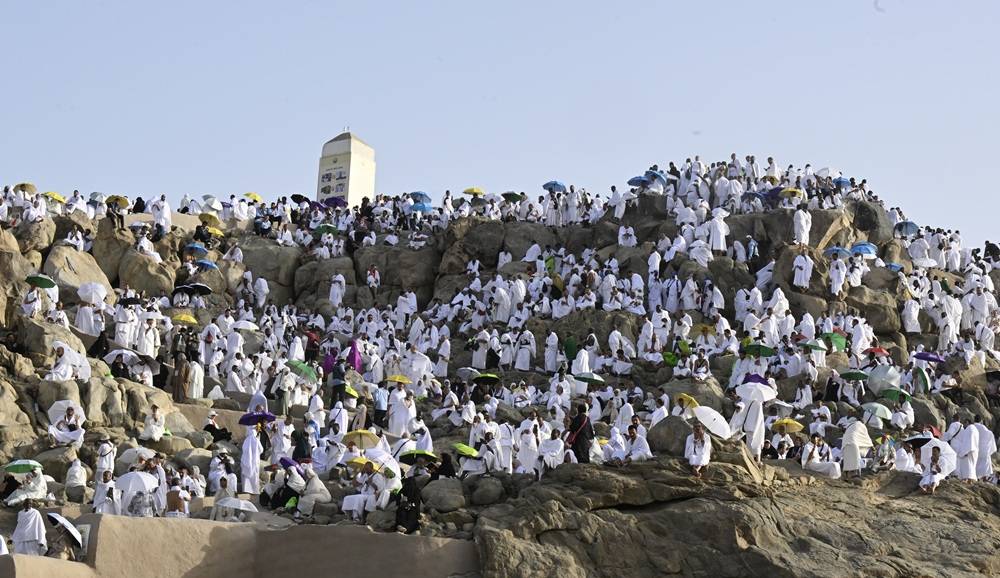
Muslim pilgrims gather at Jabal al-Rahmah (Mount of Mercy) in the Arafat region near Makkah, Saudi Arabia, 26 May 2026. (EPA)

Their hearts were united by one purpose, seeking pardon, forgiveness, and spiritual renewal. Their colors, nationalities, and languages differed, but their prayers rose as one, pleading for mercy and deliverance from hellfire.

The pilgrims performed the noon and afternoon prayers combined and shortened, with one call to prayer and two iqamahs, at Al-Namirah Mosque in Arafat, in keeping with the Sunnah of the Prophet.

They listened to the Arafat sermon, delivered this year by Sheikh Dr. Ali Al-Hudhaifi, imam and preacher.

Prince Saud bin Mishal bin Abdulaziz, deputy governor of the Makkah Region and deputy chairman of Saudi Arabia’s Permanent Committee for Hajj and Umrah, said at Arafat that the Kingdom’s leadership gives great attention to serving pilgrims and harnessing all technical and human resources so they can perform their rituals safely and smoothly from arrival to departure.

He said Saudi Arabia had been honored with the responsibility of serving the Grand Mosque and its visitors, and had made serving pilgrims a deeply rooted mission passed down through generations and supported by the care of its leadership.

Speaking on behalf of Custodian of the Two Holy Mosques King Salman bin Abdulaziz and Prince Mohammed bin Salman, Crown Prince and Prime Minister, Prince Saud welcomed the pilgrims and said the Day of Arafat embodies the highest meanings of unity and equality.

Saudi Arabia had mobilized all its capabilities and resources to develop projects, prepare facilities, deploy modern technologies, and harness national talent and human expertise to help pilgrims perform their rituals with ease, he stressed.

He said the Kingdom would continue developing the Hajj system and improving services for pilgrims, guided by its noble mission toward Islam and Muslims.

Prince Saud praised pilgrims for their cooperation and adherence to instructions, urging them to maintain awareness and discipline to help ensure the best services and complete their spiritual journey in comfort and calm.

He also commended workers from various sectors serving pilgrims, saying their sincere efforts reflect the noble values and humanitarian principles of Saudi citizens, as well as the honor of serving pilgrims in pursuit of divine reward.
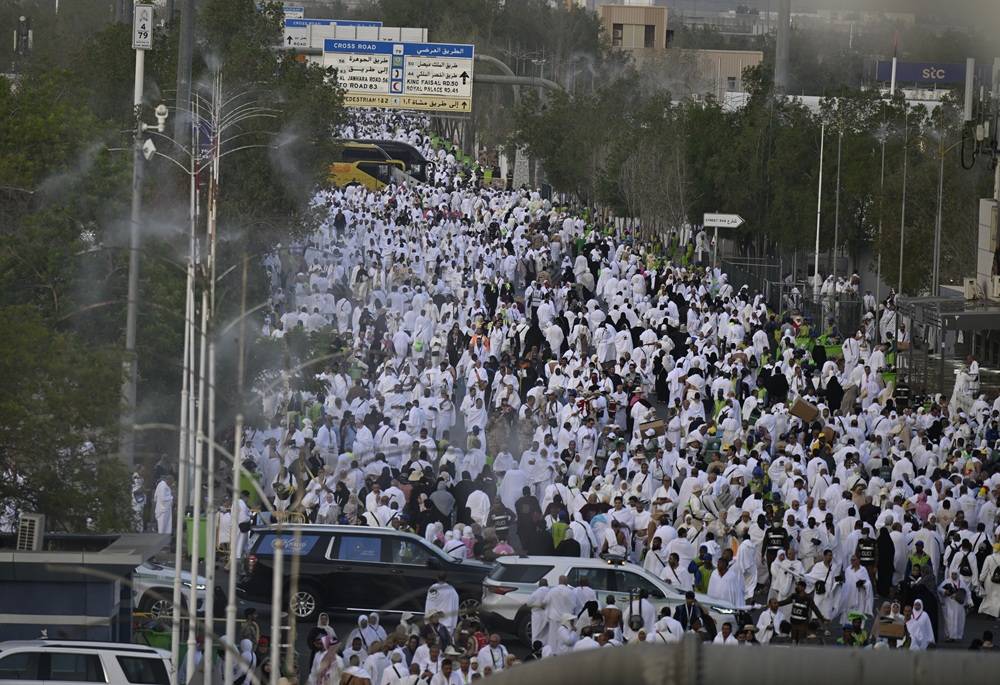
Muslim pilgrims make their way to Jabal al-Rahmah (Mount of Mercy) in the Arafat region near Makkah, Saudi Arabia, 26 May 2026. (EPA)

Carefully planned security operation

The movement of pilgrims from Arafat to Muzdalifah was smooth and flexible, with convoys monitored directly by security teams to organize them according to movement and grouping plans, guide them, and ensure their safety.

The security plan was designed to ease the flow of crowds through the Al-Mashaaer Al-Mugaddassah Metro line, buses, and pedestrian routes, as part of an integrated service system for pilgrims.

Saudi Arabia’s Interior Ministry is tracking pilgrim movements across the holy sites through an advanced digital system that has improved field decision-making, crowd management, service efficiency, and pilgrim safety.

The system uses advanced technologies and smart operating systems to monitor crowd density, pedestrian movement, and transport in key locations. It analyzes live operational indicators using artificial intelligence to improve movement and respond to field developments.

Security operations and control centers linked to the digital system strengthen coordination among security, service, and health agencies at the holy sites through real-time monitoring.

They also help improve performance, maintain services during the Hajj season, forecast crowd density, and manage pilgrim movement.


Saudi Arabia and Canada: Questions and Answers on Joint Action and Coordination Council

Part of the memorandum signing ceremony attended by the Saudi Crown Prince and the Canadian Prime Minister in Jeddah on Thursday. (SPA)
TT

Saudi Arabia and Canada: Questions and Answers on Joint Action and Coordination Council

Part of the memorandum signing ceremony attended by the Saudi Crown Prince and the Canadian Prime Minister in Jeddah on Thursday. (SPA)

Saudi Arabia and Canada announced a series of agreements and memorandums of understanding signed in the presence of Saudi Crown Prince and Prime Minister Mohammed bin Salman and Canadian Prime Minister Mark Carney in Jeddah on Thursday.

The signing followed talks between the two sides and an official reception for Carney, the first Canadian prime minister to visit Saudi Arabia in 25 years.

The following questions, answers and background explain the Joint Action Document and the establishment of the Saudi-Canadian Coordination Council, both referenced in the joint statement issued after the leaders’ meeting, based on explanations provided to Asharq Al-Awsat by informed sources.

What is the Joint Action Document?

According to the sources, the Joint Action Document will serve as the overarching framework for bilateral cooperation.

It is intended to bring together the priority areas of cooperation for the next phase, with its provisions to be institutionalized and implemented through the establishment of the Saudi-Canadian Coordination Council.

What does the document aim to achieve?

The document seeks to strengthen the partnership in line with both countries’ national priorities in relevant fields, reflecting their shared commitment to expanding cooperation, deepening consultation and reinforcing ties in areas of mutual interest.

It also aims to establish a comprehensive framework for cooperation based on a shared understanding of global challenges, including enhancing security and stability, supporting economic growth and empowering communities.

What areas of cooperation are envisaged?

• Political affairs
• Security and defense
• Economic, trade and investment cooperation
• Cultural, educational and scientific cooperation
• Consular affairs

What is the Saudi-Canadian Coordination Council?

As part of their commitment to strengthening and deepening friendly relations, the two governments are working to establish a Saudi-Canadian Coordination Council at the level of the two countries’ foreign ministers.

The council will operate under a governance framework, organizational structure and clear implementation mechanisms for the relevant authorities on both sides. The objective is to ensure the council fulfills its mandate by developing strategic initiatives jointly agreed upon in the areas covered by the Joint Action Document.

Each initiative will be supported by a clear implementation timetable and defined performance indicators, with progress monitored under the council’s approved governance framework.

What are the council’s objectives?

• Establish an institutional framework for cooperation between the two countries.
• Strengthen bilateral cooperation through continuous consultation and coordination across all fields.
• Serve as a unified platform encompassing all existing areas of cooperation between Saudi Arabia and Canada.
• Advance bilateral relations at all levels.
• Promote shared interests and mutual benefit.

What are the council’s main pillars?

• Develop the council’s governance framework, including its organizational structure, responsibilities, procedures, operating models and subsidiary committees, in coordination with the relevant authorities.
• Prepare an annual schedule for meetings of the council and its subsidiary committees, to be approved as part of the council’s official meeting minutes.
• Implement joint initiatives across the full spectrum of bilateral cooperation.


Saudi Arabia Condemns Repeated Iranian Attacks on Kuwait, Bahrain, and Jordan

File photo of the Saudi flag/AAWSAT
TT

Saudi Arabia Condemns Repeated Iranian Attacks on Kuwait, Bahrain, and Jordan

File photo of the Saudi flag/AAWSAT

Saudi Arabia condemned in the strongest terms the repeated heinous Iranian attacks on Kuwait, Bahrain, and Jordan. The ministry renewed the Kingdom’s categorical rejection of Iran’s violation of the sovereignty of brotherly countries and its continued threat to the security and stability of the region, the Saudi Press Agency reported on Thursday.

The Kingdom reaffirmed that these attacks violate UN Security Council Resolution 2817 (2026), regarding the immediate cessation of all attacks launched by Iran against countries of the region.

It stressed the importance of respecting the sovereignty of brotherly countries and adhering to international resolutions and laws. The Kingdom also reaffirmed that these violations undermine international efforts to restore security and stability in the region.


Saudi FM Receives Phone Call from Qatari Premier and Foreign Minister

Saudi Minister of Foreign Affairs Prince Faisal bin Farhan bin Abdullah. (SPA file)
TT

Saudi FM Receives Phone Call from Qatari Premier and Foreign Minister

Saudi Minister of Foreign Affairs Prince Faisal bin Farhan bin Abdullah. (SPA file)

Saudi Minister of Foreign Affairs Prince Faisal bin Farhan bin Abdullah received a phone call on Thursday from Prime Minister and Minister of Foreign Affairs of Qatar Sheikh Mohammed bin Abdulrahman Al Thani, the Saudi Press Agency said.

During the call, the two sides discussed the latest regional developments and condemned the Iranian attacks on Kuwait, Bahrain and Jordan, as well as the continued threats to maritime navigation in the Strait of Hormuz.

They also reviewed the efforts being made to restore security and stability, emphasizing the importance of continued coordination and joint action to de-escalate tensions and mitigate the negative repercussions of the crisis at both the regional and international levels.