

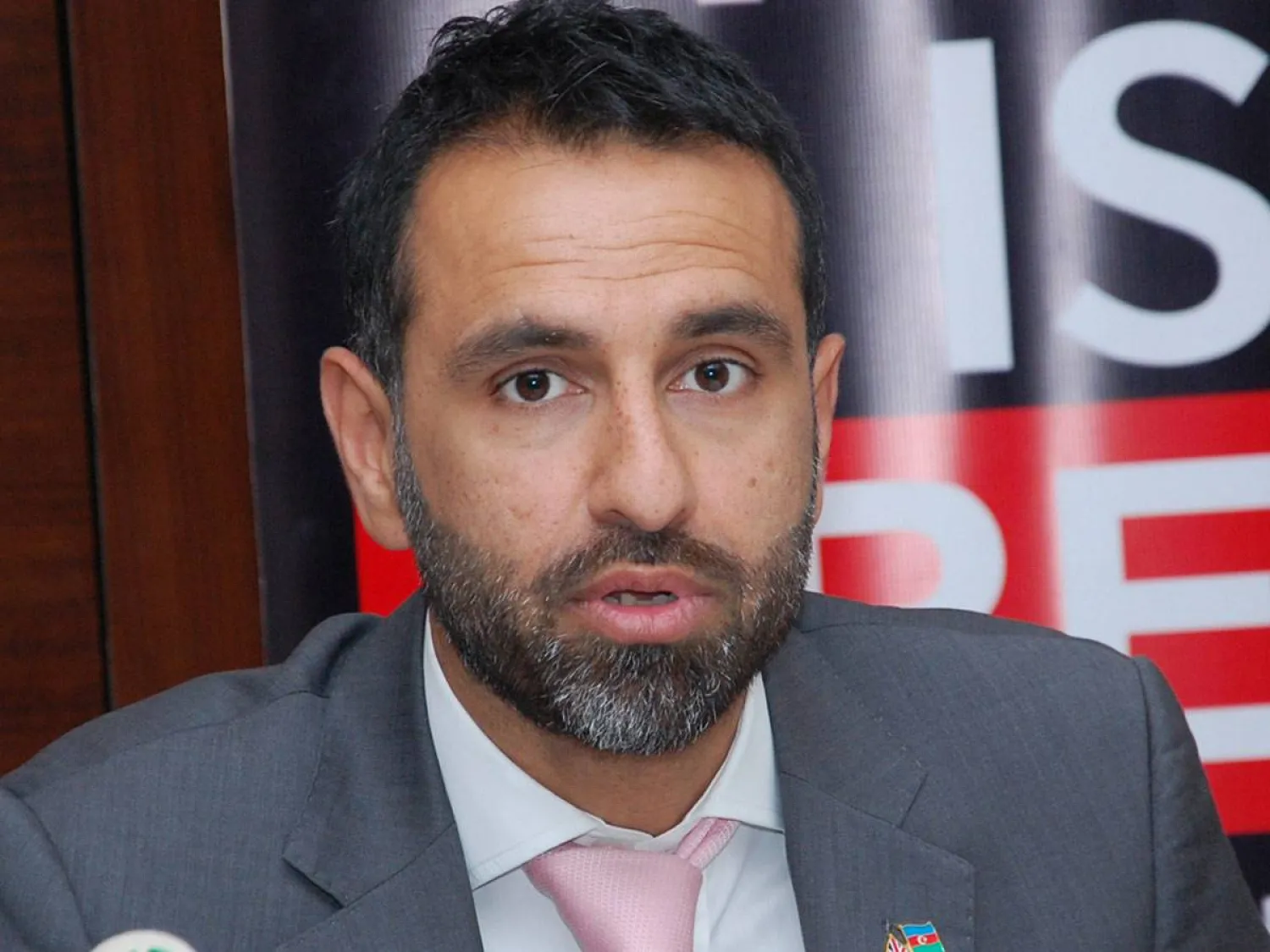

British Ambassador to Baghdad: Iranian Interference is Extensive, Illegitimate

British Ambassador to Iraq Irfan Siddiq (X)
TT

British Ambassador to Baghdad: Iranian Interference is Extensive, Illegitimate

British Ambassador to Iraq Irfan Siddiq (X)

British Ambassador to Iraq Irfan Siddiq sharply criticized Iran-backed armed factions, accusing them of operating through intimidation and extortion in a mafia-like manner. He also revealed that one such group had taken control of a contract originally awarded to a British company operating in Iraq.

Siddiq’s connection to Iraq dates back to the aftermath of the 2003 US-led invasion, when he served as a political affairs official with the Coalition Provisional Authority in Baghdad. During that time, he was involved in rebuilding Iraqi institutions and participated in the constitutional drafting process.

He later returned to Baghdad as Britain’s deputy ambassador between 2010 and 2011, during the drawdown of US forces. In 2025, he was appointed British ambassador to Iraq, with a focus on political and economic cooperation and regional stability.

British Company Loses Contract

In a televised interview aired Monday evening, Siddiq said an armed faction had pressured authorities and ultimately taken over a project from a British company holding a government services contract. He added that the Iraqi government’s silence over the incident had enabled armed groups to tighten their grip on the country’s economy.

The ambassador did not identify the British company involved. However, several major British firms have operated in Iraq in recent years, particularly in security and aviation services linked to Baghdad International Airport.

British security company G4S was responsible for airport protection and security services from 2010 until its contract expired in late 2022.

In December 2020, Tehran’s prosecutor accused G4S of involvement in the killing of Qassem Soleimani, the former commander of the Iranian Revolutionary Guard Corps’ Quds Force. Iranian authorities claimed the company had provided the US military in Iraq with information regarding the arrival time of the aircraft carrying Soleimani to Baghdad in January of that year.

Distinguishing the PMF from Armed Factions

The British diplomat sought to distinguish between the Popular Mobilization Forces (PMF) as a formal state institution and certain affiliated factions that, according to him, have not fully complied with directives issued by the PMF leadership and Iraq’s commander-in-chief.

He referred in particular to recent months, during which hundreds of rocket attacks targeted Iraqi, Gulf, and American sites.

Speaking about his discussions with PMF chairman Falih al-Fayadh, Siddiq said he told him the organization faced serious internal problems requiring reform and accountability. According to the ambassador, al-Fayadh agreed on the need to distance the PMF from armed factions operating within it.

There are rising concerns in Iraq that the PMF’s official structure effectively provides cover for factions engaged in violent activities under the umbrella of the so-called “Axis of Resistance.”

Siddiq said the United Kingdom has no objection to dealing with the PMF as a legitimate security institution, provided it remains fully under government control. He added that London would be willing to support reforms within the organization if requested, drawing on Britain’s experience in Northern Ireland.

At the same time, the ambassador argued that the original justification for maintaining the PMF in its current form had largely vanished following the defeat of ISIS. He questioned why international coalition forces that fought alongside the PMF against terrorism are now being portrayed as occupation forces, describing such claims as illogical.

He stressed that decisions concerning war and peace should remain exclusively in the hands of legitimate state institutions, emphasizing that only Iraq’s elected government has the authority to manage such matters.

“No Relations with Armed Factions”

During the interview, Siddiq repeatedly criticized armed factions and rejected describing them as the “Iraqi resistance.” He questioned whom these groups were resisting, who controlled the territories where they operated, and why they continued to exist.

Regarding the participation of militia-linked groups in government, Siddiq said Britain does not engage with what he described as “militia parties.” However, he noted that London respects Iraq’s political decisions regarding government formation and could reconsider its position in the future if those groups abandon their weapons and transition fully into political activity.

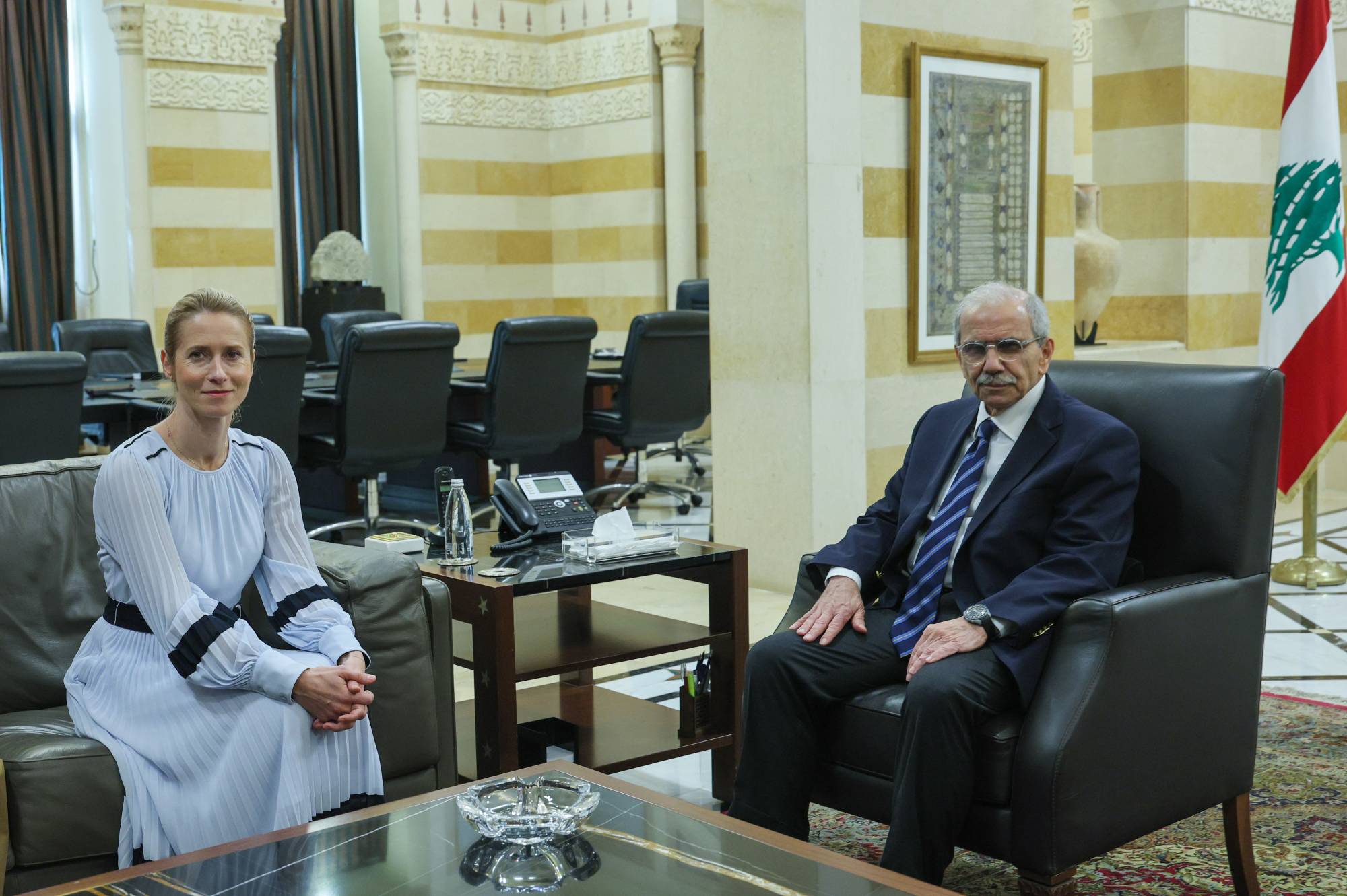
The ambassador also criticized what he described as extensive and illegitimate Iranian interference in Iraqi affairs. He called on the new government, led by Ali al-Zaidi, to strengthen state sovereignty and ensure that all weapons remain under state control.

Siddiq said Iran exerts significant influence over Iraqi affairs and accused Tehran of failing to respect Iraq’s sovereignty, describing the interference as both inappropriate and unlawful. He expressed hope that Iraq’s new government would address the issue.

Tunisia, Libya, and Algeria Discuss Ways to Secure Shared Borders

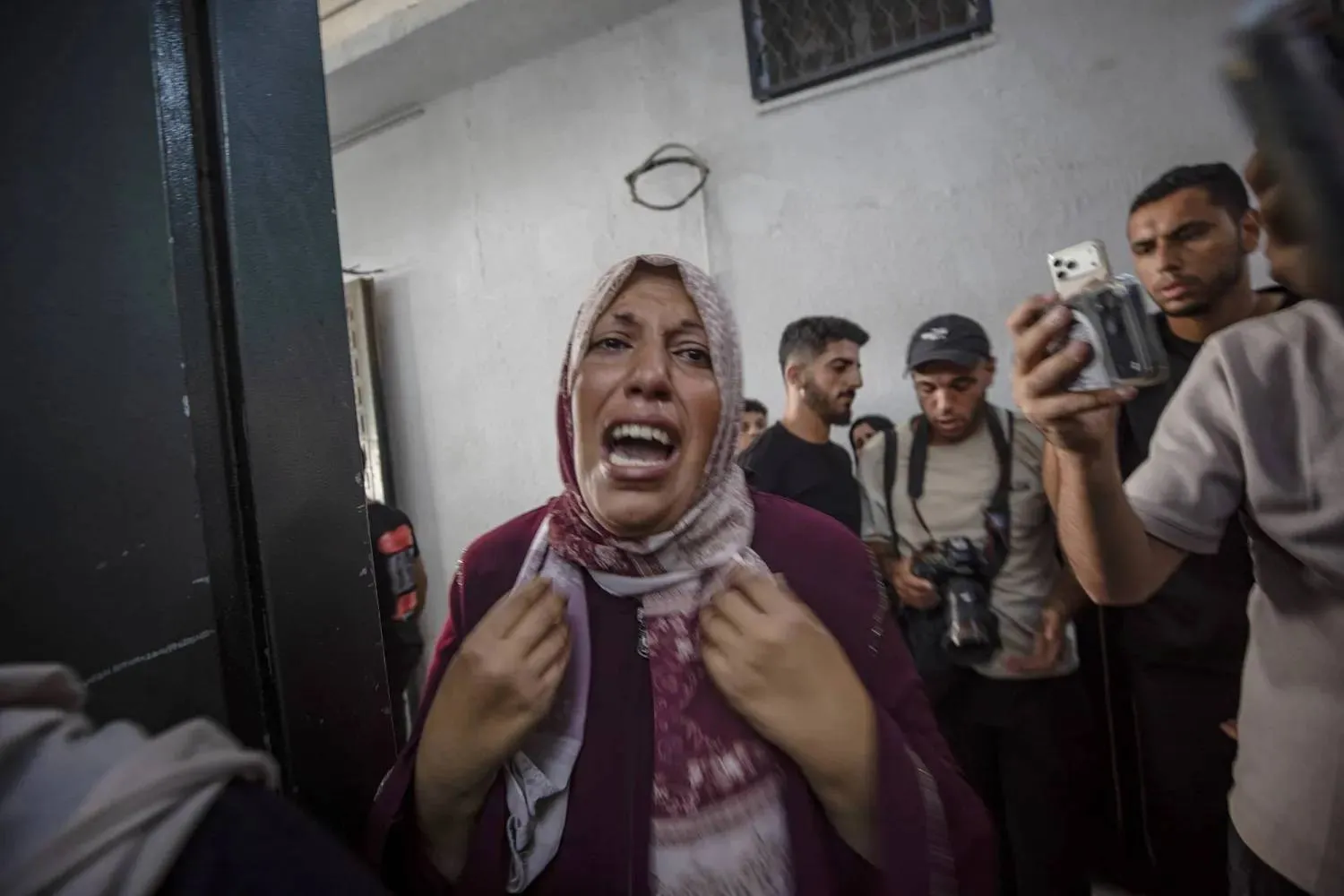
Libyans from various regions, along with organizations and activists, gather in front of the International Organization for Migration (IOM) to demand that they take action to resettle irregular migrants and refugees, in the capital Tripoli on June 16, 2026. (Photo by Mahmud Turkia / AFP)
TT

Tunisia, Libya, and Algeria Discuss Ways to Secure Shared Borders

Libyans from various regions, along with organizations and activists, gather in front of the International Organization for Migration (IOM) to demand that they take action to resettle irregular migrants and refugees, in the capital Tripoli on June 16, 2026. (Photo by Mahmud Turkia / AFP)

Security officials from Tunisia, Libya, and Algeria have held talks in Tripoli on strengthening cooperation to secure their shared borders.

According to Libya’s Interior Ministry of the Tripoli-based government, Tuesday’s meeting discussed ways to enhance cooperation in border security, combat cross-border organized crime, tackle terrorism, and curb illegal migration.

Security authorities in the three countries are working along their shared borders to counter irregular migration from sub-Saharan African countries, as well as smuggling operations and the risks of militant infiltration.

The Libyan ministry said in a statement that the three countries are keen to strengthen joint security cooperation and to develop operational mechanisms to be highly ready in confronting cross-border security threats and challenges, thus contributing to enhanced security and stability and protecting the shared interests of the region’s peoples.

The ministry explained on its Facebook page that the meeting “addressed ways to enhance cooperation among the three countries in securing borders and combating cross-border organized crime, in a way that strengthens security and stability in the region.”

It stressed that the meeting comes within the framework of ongoing efforts by the three countries to consolidate security and stability, strengthen partnership and security integration, and help protect shared borders while combating various forms of organized crime.

The joint Libyan-Algerian-Tunisian task force responsible for securing the shared borders was established in January 2025.

Its formation came as part of an agreement between the interior ministers of the three states to raise the level of security coordination, unify efforts to control the borders, combat cross-border organized crime, and address illegal migration.


Egyptian Program to Develop Abrams Tanks Alarms Israel

The M1A1 Abrams tank. (Egyptian Ministry of Military Production)
TT

Egyptian Program to Develop Abrams Tanks Alarms Israel

The M1A1 Abrams tank. (Egyptian Ministry of Military Production)

Former military officers have confirmed that Egypt is working with the United States to boost its armored forces by introducing technological upgrades and modern combat specifications to a large number of M1A1 Abrams tanks, raising alarm in Israel.

According to Israel’s Nziv.net platform, there are major Israeli concerns about a shift in the regional balance of power after Washington recently approved a huge deal to upgrade 555 Abrams tanks out of 1,130 American tanks in the Egyptian army.

The military factory in the Abu Zaabal area north of Cairo, the only facility authorized outside the United States to produce components of this model, will oversee the development project at a cost of around $4.69 billion.

The M1A1 Abrams tank is the Egyptian army’s main battle tank, with a top speed of 20 miles, according to data from the Egyptian Ministry of Military Production.

National security expert Mohamed Abdel Wahed told Asharq Al-Awsat that this was not the first time Egypt develops these tanks. It did so in the 1980s through a joint military production agreement with the United States.

The latest agreement to develop the tanks was signed in 2024. It called for refurbishing the existing vehicles instead of replacing them with new ones that would have come at a higher cost.

“Egypt is developing this tank and capitalizing on its global reputation. The development involves incorporating modern technology to boost its capabilities,” Abdel Wahed explained.

Former Egyptian intelligence official Gen. Mohammed Rashad told Asharq Al-Awsat: “The upgrades include installing a higher-caliber gun to increase the firing range to 105 mm, upgrading the aiming and targeting systems to use lasers, reinforcing the tank’s armor against close-quarters combat and anti-tank weapons, installing a recoil suppressor on the tank’s gun to maintain stability and aiming accuracy, and fitting the tank with a high-powered engine to boost speed and maneuverability.”

“These capabilities make the Egyptian Armored Corps one of the most advanced and lethal armies in the region, with high combat capabilities in all circumstances, which is a direct cause for concern in Tel Aviv,” he explained.

Abdul Wahed added: “Egypt is manufacturing 90 percent of the components for this tank. Localizing military technology and industries in Egypt is very important.”

Israeli media has over the past two years frequently reported about Tel Aviv’s concern over what it described as “the detection of the construction of massive logistical infrastructure and fuel depots in the Sinai Peninsula.”

They alleged that these measures would allow Egyptian forces to move rapidly and extensively eastward, forcing Israel to maintain close and continuous monitoring of the deployment and movement of Egyptian forces despite the peace treaty between them.

Egypt has repeatedly denied the allegations, saying its work in Sinai has development purposes and any deployment of the military aims to protect the border and national security.

Rashad said the Israeli concerns over the Egyptian military’s upgrades and tanks program stem from its “fear that the Egyptian armored forces will become capable of matching Israel’s.”

Tel Aviv constantly boasts about its capabilities that are a result of continuous upgrades to weapons and combat equipment, he added, noting that its military ranks seventh globally in the manufacture and export of weapons and combat equipment.


Several Israeli Strikes Hit South Lebanon

Smoke rises following an Israeli strike on southern Lebanon, as seen from the Israeli side of the border in the Upper Galilee, northern Israel, 16 June 2026, after the announcement of a US-Iran mediated preliminary framework to end regional military hostilities. EPA/ATEF SAFADI
TT

Several Israeli Strikes Hit South Lebanon

Smoke rises following an Israeli strike on southern Lebanon, as seen from the Israeli side of the border in the Upper Galilee, northern Israel, 16 June 2026, after the announcement of a US-Iran mediated preliminary framework to end regional military hostilities. EPA/ATEF SAFADI

Israeli forces on Wednesday carried out airstrikes on several areas in south Lebanon, state media reported, despite a peace deal in the Middle East war that includes Lebanon.

Lebanon's National News Agency said Israeli warplanes launched raids targeting the Nabatieh al-Fawqa area and the eastern outskirts of neighboring town Kfar Tebnit.

The Israelis also launched a drone strike on the town of Ansariyeh in the Zahrani area, NNA reported.

US President Donald Trump on Tuesday issued a rare public rebuke of Israel's military tactics in Lebanon targeting Hezbollah, saying it was unnecessary to bomb entire apartment buildings to hunt militants.

Trump, who in recent days had expressed his displeasure over Israeli attacks in Beirut that he said could have endangered his peace deal with Iran, said Israel has been fighting Hezbollah for "too long.”

"Too many people have been killed. You don't have to knock down an apartment house every time you're looking for somebody, because there are a lot of people in those apartment houses, and they're not all Hezbollah," Trump said at the G7 summit ⁠in France.

His complaint comes ⁠at a moment of rising tensions with Israeli Prime Minister Benjamin Netanyahu, who has remained a key political ally despite occasional ups and downs between the two leaders over the years.
