


Egypt Discovers Rare Reservoirs, Buildings at Ancient Aydhab Port in Halaib

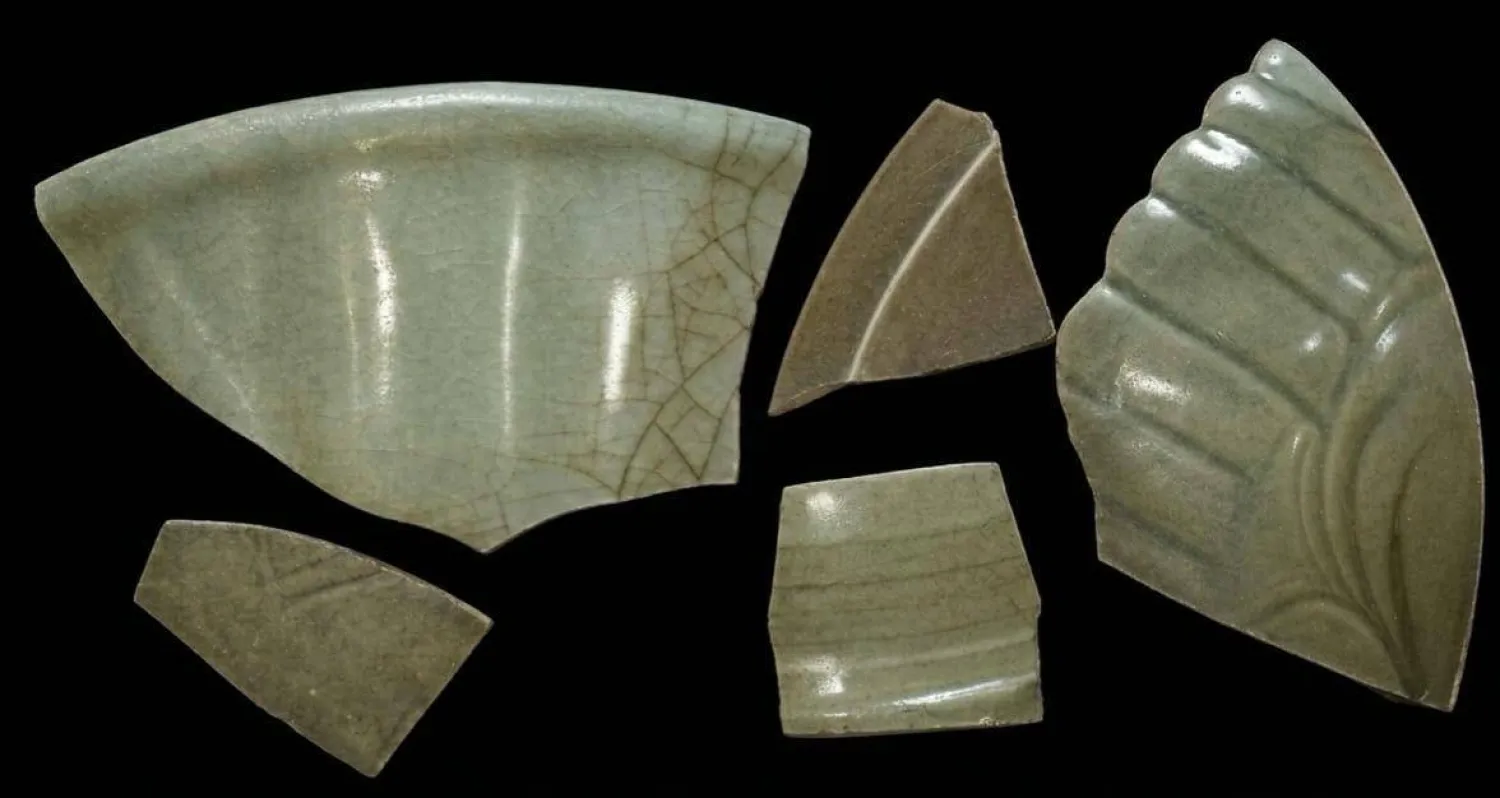
A collection of archaeological finds and fragments of Chinese porcelain (Ministry of Tourism and Antiquities)
TT

Egypt Discovers Rare Reservoirs, Buildings at Ancient Aydhab Port in Halaib

A collection of archaeological finds and fragments of Chinese porcelain (Ministry of Tourism and Antiquities)

Egypt’s Ministry of Tourism and Antiquities announced Thursday the discovery of massive water reservoirs and cisterns, along with rare buildings and service facilities, at the archaeological site of the ancient port of Aydhab on the Red Sea coast in the Halaib region in southern Egypt near the Sudanese border. The port once served as a major transit point for pilgrims.

The discovery was made during excavation work carried out by an Egyptian archaeological mission affiliated with the Supreme Council of Antiquities at the site of the ancient port of Aydhab, which the ministry described as “one of the most prominent and important Egyptian ports during the Islamic period.”
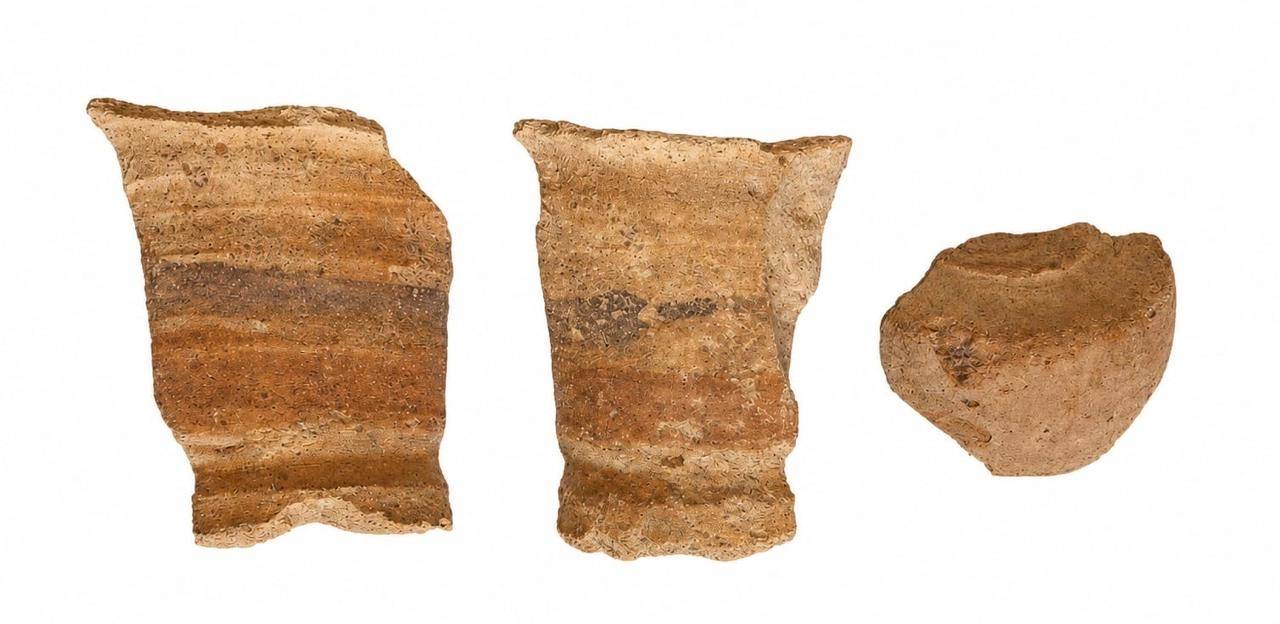
Some of the artifacts discovered at the site (Ministry of Tourism and Antiquities)

Hisham el-Leithy, secretary-general of the Supreme Council of Antiquities, said the discovery highlights an important aspect of the service infrastructure on which the historic port of Aydhab depended. He noted that the water cisterns played a vital role in supporting maritime and trade activity, as well as meeting the needs of pilgrims arriving at the port on their way to the holy lands, according to the ministry’s statement.

Excavation work uncovered a massive main reservoir measuring approximately 15.10 meters in length, 3.15 meters in width and nearly three meters in height. It was constructed using sandstone and local coral stones, then coated with a layer of white lime mortar to insulate the water and prevent leakage. Several additional cisterns were also uncovered in the southern part of the site.

Diaa Zahran, head of the Islamic, Coptic and Jewish Antiquities Sector, said archaeological surveys in the surrounding area also revealed the remains of residential building foundations, watchtowers and service facilities, indicating the existence of an integrated system for managing the port and meeting the needs of pilgrims and merchants who passed through it over many centuries.

The mission also uncovered a collection of artifacts, including pottery fragments dating back to the Fatimid era, some glazed in green, in addition to shards of imported Chinese porcelain. The finds reflect the flourishing commercial activity at the port and the breadth of its maritime trade network with many regions, particularly India, Yemen and East Africa.
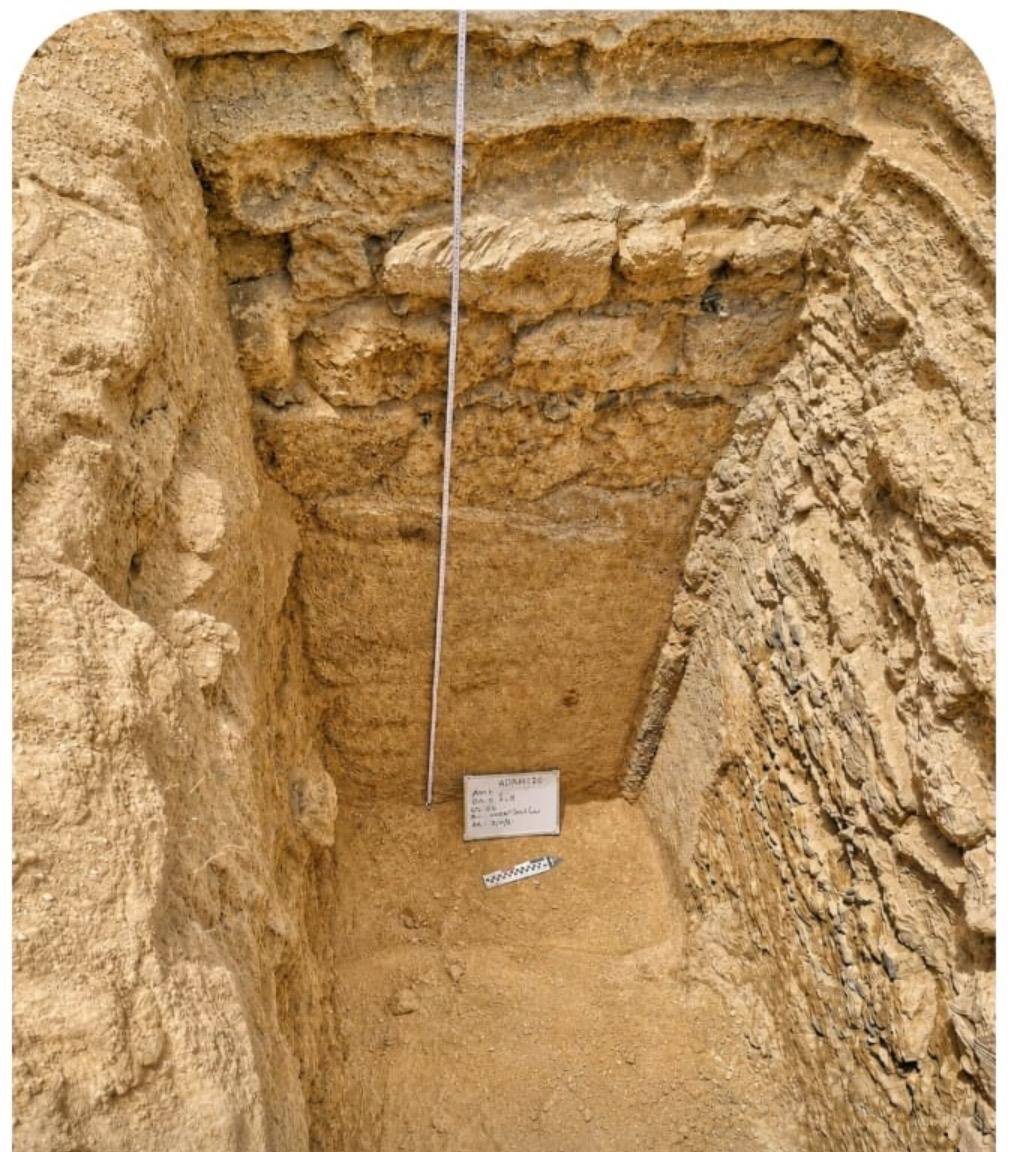
The site includes service buildings used by pilgrims (Ministry of Tourism and Antiquities)

Egyptian Tourism and Antiquities Minister Sherif Fathi described the discovery as “a contribution to highlighting the development witnessed by ancient Egyptian ports and the advanced infrastructure they possessed to serve trade routes and pilgrims.” In a press statement, he said the discovery confirms Egypt’s strategic status as a major civilizational and commercial center throughout history.

Fathi stressed the ministry’s commitment to excavation work and archaeological studies in border and remote areas because of their significant historical and cultural importance.

Historian Bassam el-Shammaa described the discovery as “one of the most important archaeological discoveries of the 21st century,” telling Asharq Al-Awsat that “the importance of archaeological discoveries lies not in their size, but in the extent to which they deepen understanding of history across different periods.”

He said the discovery proves the existence of social and commercial ties linking Asia and Egypt that extended to China and other civilizations. He added that it also carries humanitarian and security dimensions through the discovery of service buildings and water cisterns dedicated to serving pilgrims during that period, as well as watchtowers used to secure the borders.

El-Shammaa proposed organizing tourism trips to Egypt’s ancient ports and making use of archaeological discoveries at several historic ports along the Red Sea and Mediterranean coasts.

The port of Aydhab was among the most prominent Red Sea ports during the Middle Ages, serving as a key station for pilgrims arriving from Egypt and the Maghreb on their way to the holy sites, in addition to playing a central role in maritime trade.


AlUla Royal Commission, National Museum of Asian Art Strengthen Cooperation Through Residence Program

The initiative is part of the commission’s efforts to promote international cultural dialogue and highlight the region’s exceptional cultural heritage. (SPA)
TT

AlUla Royal Commission, National Museum of Asian Art Strengthen Cooperation Through Residence Program

The initiative is part of the commission’s efforts to promote international cultural dialogue and highlight the region’s exceptional cultural heritage. (SPA)

Saudi Arabia’s Royal Commission for AlUla has strengthened its cultural partnership with the National Museum of Asian Art, part of the Smithsonian Institution in Washington DC, by launching the “Rawi in Residence” program, with the participation of storytellers Atif AlBalawi and Wedad Yaseen.

The initiative is part of the commission’s efforts to promote international cultural dialogue and highlight the region’s exceptional cultural heritage, reported the Saudi Press Agency on Sunday.

The program is the first public-facing initiative under the partnership agreement between the commission and the museum. It was delivered through three interactive sessions involving museum visitors, families, curators, guides, and specialists in heritage and culture.

During the program, the two storytellers led a series of talks and interactive experiences highlighting AlUla’s cultural landscape and historical sites. They also highlighted its historical role as a major hub of cultural exchange along the Incense Route, drawing on storytelling and heritage interpretation techniques.

The initiative builds on field visits and the exchange of expertise between the commission and the museum, which contributed to shaping the “Rawi” concept and incorporating it into the museum’s summer program in Washington. This strengthened shared understanding of heritage interpretation methods and enhanced the visitor experience in line with the highest international standards.

The program is aligned with the Royal Commission for AlUla’s objectives of empowering AlUla’s young men and women and showcasing their capabilities at international forums. It builds on previous participation by storytellers at prominent global venues in Beijing, the UNESCO pavilion at the Venice Biennale, and the organization’s headquarters in Paris.

These efforts are in line with the objectives of Saudi Vision 2030 to celebrate Saudi national heritage and strengthen its cultural presence on the international stage.


Athens Is Cleaning Its All-Marble Olympic Stadium for the First Time in More Than a Century

A worker cleans the marble surfaces of the Panathenaic Stadium, also known as "Kallimarmaro," or beautiful marble, which hosted the first modern Olympic Games in 1896, using a high-pressure water hose during renovation work in Athens, Greece, Thursday, Aug. 13, 2026. (AP Photo/Thanassis Stavrakis)
TT

Athens Is Cleaning Its All-Marble Olympic Stadium for the First Time in More Than a Century

A worker cleans the marble surfaces of the Panathenaic Stadium, also known as "Kallimarmaro," or beautiful marble, which hosted the first modern Olympic Games in 1896, using a high-pressure water hose during renovation work in Athens, Greece, Thursday, Aug. 13, 2026. (AP Photo/Thanassis Stavrakis)

It has welcomed marathon runners, rock stars and the first modern Olympic athletes. Now it’s time for a monumental scrub.

Athens’ U-shaped Panathenaic Stadium — made entirely of white marble — is getting its first systematic cleaning in more than a century.

Rebuilt for the first modern Olympics in 1896, the site is the ceremonial send-off point for the Olympic flame, including for Los Angeles 2028.

A fresh look in Athens ahead of LA 2028 The stadium is made of the same glittering marble used on the Acropolis, making the cleanup job delicate.

The work is revealing a monument changed by time, weather and millions of visitors. Cleaners in white and blue overalls move across the stadium’s 47 steep tiers with thin spray lances, using clean water at carefully controlled, low pressure. Machines vacuum up the runoff as they go.

“The goal of cleaning is not to make everything white. It’s to remove the dirt and the first layers of organic material that are deposited on the surface,” said Dimitris Selemis, a senior conservator at the site.

“The idea is to clean all the material that (contains) dirt from the surface, so we have a better understanding of the monument,” he said, noting that there is more weed growth and dirt in areas that receive less direct sunlight.

Crews are also using steam to remove blotches of chewing gum, which have turned black over time. Stadium officials say chewing gum, high heels and soft-drink stains are among the main culprits that stain the marble.

Now slowly being revealed, the original gleaming look of the venue earned it the widely used Greek nickname “Kallimarmaro,” or beautiful marble.

“We call it Kallimarmaro because it is made of the finest marble, the best that was ever produced ... We are very proud of it,” Isidoros Kouvelos, president of the Hellenic Olympic Committee, told The Associated Press in an interview.

“It needed to be cleaned of everything that has accumulated over all these years," he said. "This way the Panathenaic Stadium will show all its brilliance and will once again be the foremost monument of humanity for the Olympic Movement.”

Built into a natural ravine, the stadium’s site was used for ancient Greek athletic contests and later Roman spectacles before falling into centuries of disuse.

An African celebration planned in Athens Since its 1896 revival, it has staged fashion shows, rock concerts, boxing matches and national celebrations — as well as lavish patriotic ceremonies ordered by a military dictatorship in the 1960s.

Today, it’s a popular draw for tourists. Apart from the cleanup, the Kallimarmaro is also getting a new track, upgraded lighting and fresh support facilities. The project is privately funded by a shipping company and overseen by the Hellenic Olympic Committee with guidance from Culture Ministry experts.

The work will continue through 2026 but is currently concentrated on the stadium’s “sling,” or curved end, in time for the next torch-passing ceremony on Sept. 10.

That will be for the Dakar Youth Olympics, scheduled for Oct. 31-Nov. 13 in Senegal, which will be the first Olympic competition ever hosted in Africa.

IOC President Kirsty Coventry, a swimming gold medal winner from Zimbabwe, is due to attend the Sept. 10 ceremony, Kouvelos said.


Italian Police Recover Stolen Renoir, Cezanne and Matisse Worth 9 mn Euros

Carabinieri officers pose with three paintings by Paul Cezanne, Henri Matisse and Pierre-Auguste Renoir recovered after they were stolen from the Magnani Rocca Foundation in Mamiano, Italy, in this handout image released on August 14, 2026. Carabinieri/Handout via REUTERS
TT

Italian Police Recover Stolen Renoir, Cezanne and Matisse Worth 9 mn Euros

Carabinieri officers pose with three paintings by Paul Cezanne, Henri Matisse and Pierre-Auguste Renoir recovered after they were stolen from the Magnani Rocca Foundation in Mamiano, Italy, in this handout image released on August 14, 2026. Carabinieri/Handout via REUTERS

Paintings by Renoir, Cezanne and Matisse worth over nine million euros which were stolen from a museum in Italy in March have been recovered, Italian police said Friday.

The paintings were taken by masked thieves from the villa of the Magnani Rocca Foundation, near Parma in northern Italy, in a heist that lasted under three minutes.

Video footage released by the police showed two thieves wearing headlamps and with their faces covered entering the villa by breaking through a window, Reuters reported.

They headed straight into the room where the three paintings hung and took them off the wall, before heading back to the window and passing them through to an accomplice waiting outside.

They made off with "Fish" by Auguste Renoir, "Still Life with Cherries" by Paul Cezanne, and "Odalisque on the Terrace" by Henri Matisse.

The Renoir is worth six million euros, the Cezanne three million and the Matisse some 20,000 euros, police said.

The Magnani Rocca Foundation -- 20 kilometres (12 miles) from Parma -- houses the collection of art historian Luigi Magnani, which also includes works by Durer, Rubens, Van Dyck, Goya and Monet.

The theft is the latest in a series of robberies targeting major museums in Europe.

Last October, thieves broke into the Louvre in Paris -- the most visited museum in the world -- in broad daylight, escaping in less than eight minutes with jewellery worth $102 million.