Pilgrims Complete First Tashreeq Rites, Some Prepare to Leave

Pilgrims perform the rites of the first day of Tashreeq by stoning the three Jamarat (Photo Credit: Adnan Mahdali)
TT

Pilgrims Complete First Tashreeq Rites, Some Prepare to Leave

Pilgrims perform the rites of the first day of Tashreeq by stoning the three Jamarat (Photo Credit: Adnan Mahdali)

Pilgrims completed the rites of the first day of Tashreeq, on Thursday, stoning the three Jamarat in Mina as those in a hurry prepared to leave the holy site after noon on Friday.

They threw pebbles at the small Jamarat, then the middle one, and finally the large Jamarat Al Aqaba, following the example of the Prophet Mohammed, peace be upon him.
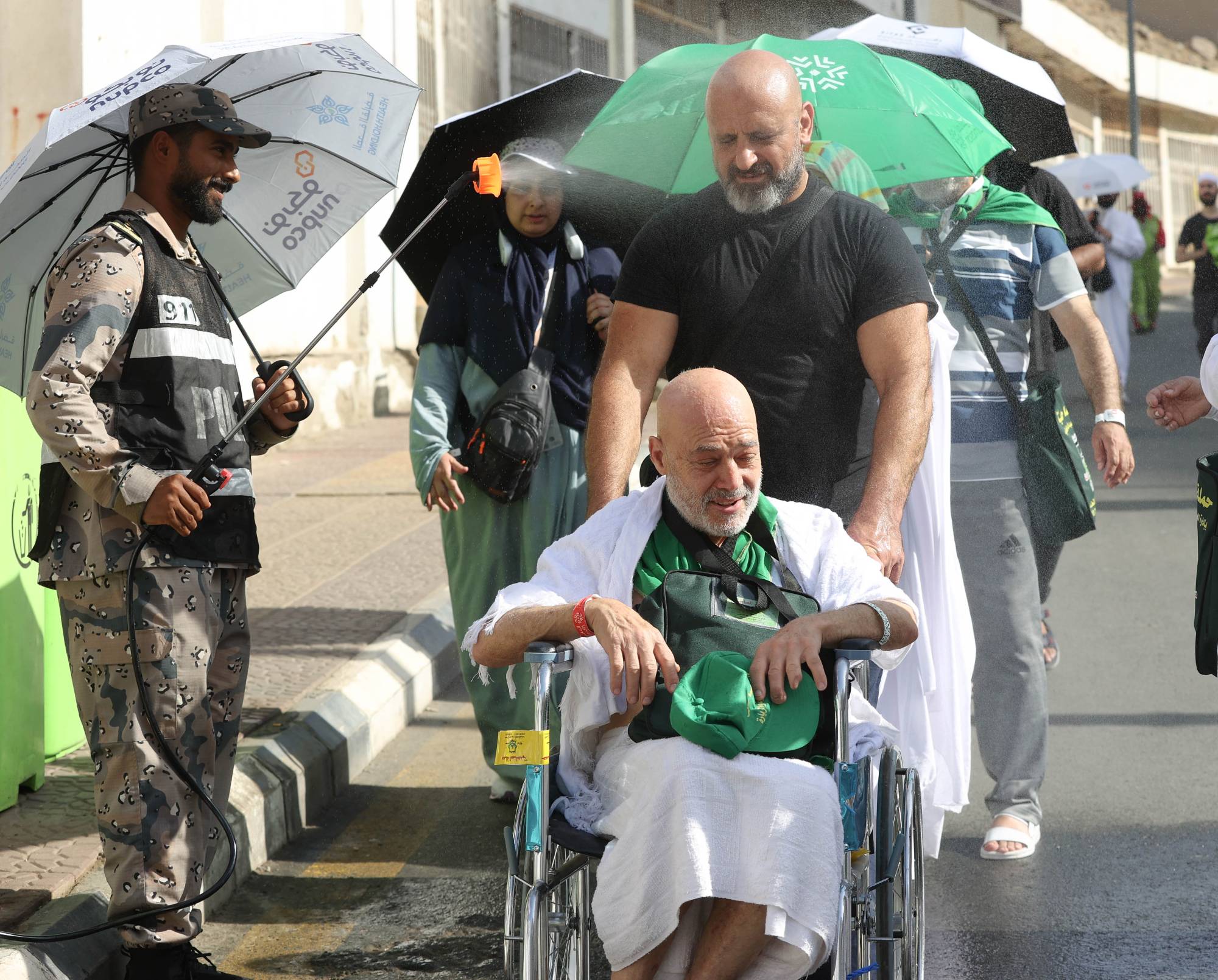
Security, organizational and humanitarian efforts help pilgrims perform the stoning ritual at the Jamarat (Photo: Adnan Mahdali)

The guests of God had settled in Mina after performing the rituals of the Day of Sacrifice, which include stoning the Jamarat, shaving or trimming the hair, slaughtering sacrificial animals for those required to do so, and performing Tawaf Al Ifadah.

They performed the rites in a calm spiritual atmosphere, supported by services provided by the Saudi government to help pilgrims complete Hajj with ease and reassurance.

The Jamarat Bridge in Mina saw smooth movement, with pilgrims arriving through designated routes under preplanned crowd management procedures designed to protect their safety, security and comfort.

Plans implemented by security and service agencies helped ensure discipline and organization. They relied on modern technology and studied operating models to manage crowd flows and movement smoothly and safely.

The Saudi Ministry of Health said the general health condition of pilgrims was stable and reassuring. No outbreaks or significant health threats were recorded, it said, citing an efficient healthcare system.

Pilgrims in a hurry will leave Mina after noon on Friday, the 12th day of Dhu Al Hijjah, after stoning the three Jamarat, the small, the middle, and the large, with seven pebbles each.

They will then head to the Grand Mosque in Makkah to perform the Farewell Tawaf, the final ritual of Hajj.

The Saudi Ministry of Hajj and Umrah said it had provided more than 2,000 electronic and awareness services to help the guests of God access various services.

The ministry said it would continue to work with partner agencies to carry out plans for grouping and moving pilgrims according to precise timetables, ensuring easier movement and more efficient organization and services.

It urged pilgrims to follow official instructions and contact the unified call center at 1966 for round-the-clock support, guidance, and assistance, saying this would help ensure a safe, organized, and smooth Hajj experience.

The General Authority for the Care of the Affairs of the Grand Mosque and the Prophet’s Mosque said it had prepared designated routes for pilgrims entering the Grand Mosque, in accordance with preplanned crowd management procedures aimed at ensuring their safety and comfort, in coordination with and in constant communication with relevant authorities.

The National Water Company said water pumping continued around the clock through networks serving the holy sites and the Grand Mosque's facilities. It said distribution in recent days had run efficiently, with no significant interruptions.

The company said its operating system is based on water networks extending over 5,700 kilometers and environmental services networks totaling more than 4,000 kilometers, supporting efficient supply and sustainable services for pilgrims.
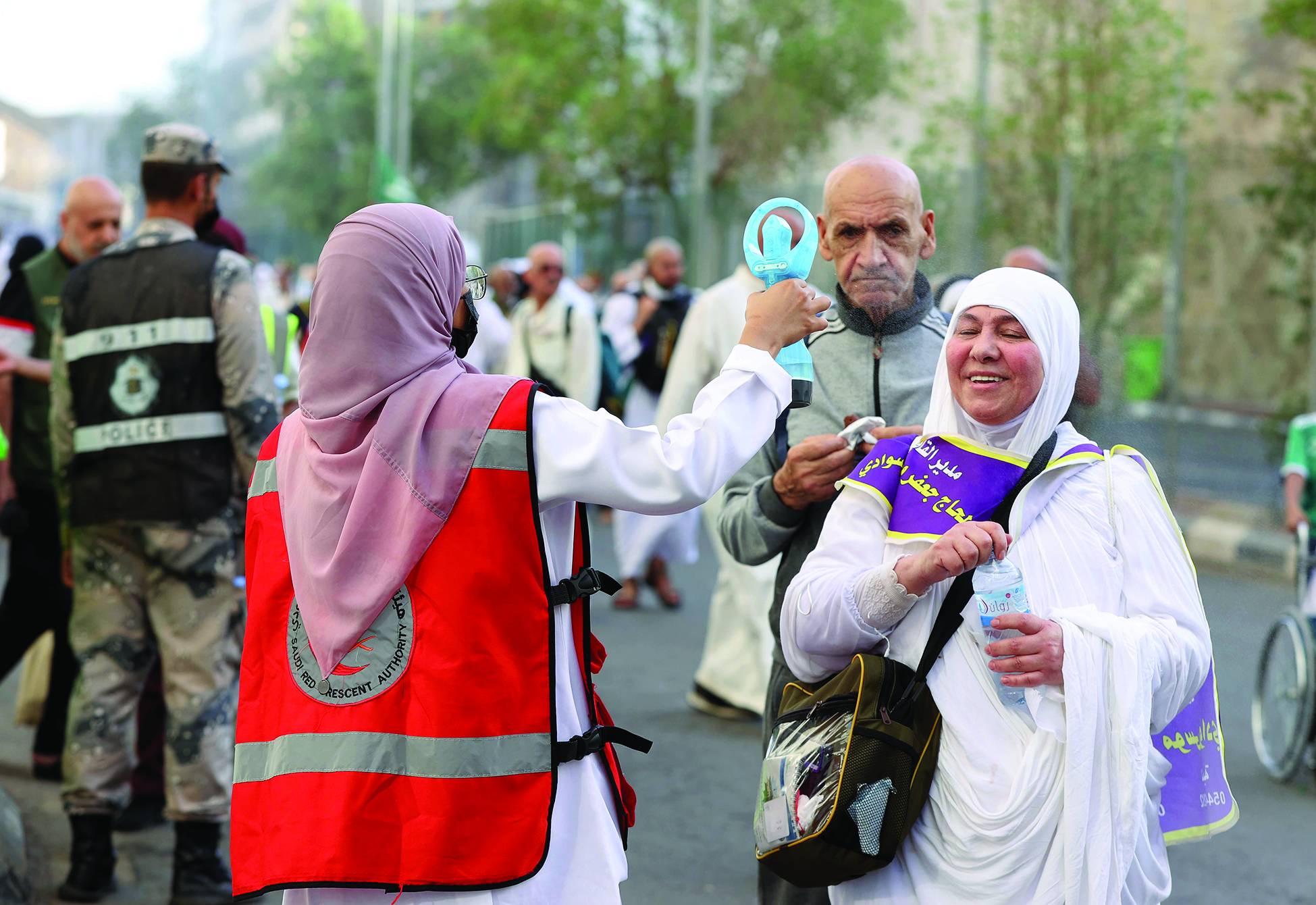
A volunteer from the Saudi Red Crescent Authority helps keep pilgrims cool (Photo: Adnan Mahdali)

In Madinah, government agencies completed preparations to receive the first groups of pilgrims in a hurry, who were due to begin arriving this evening by bus and the Haramain High Speed Railway after completing their rituals.

Their arrival at the Prophet’s Mosque will be accompanied by guidance and organizational services to facilitate the entry of visitors and worshippers to Al Rawdah Al Sharifah, in accordance with prior bookings through approved applications and within the site’s capacity.

Relevant agencies have begun implementing post-Hajj operational plans and stepped up field efforts to keep traffic flowing smoothly and maintain the highest levels of security on the main roads used by pilgrims heading to Madinah.


Bahrain Crown Prince Receives Saudi and GCC Interior Ministers

Bahrain’s Crown Prince, Deputy Supreme Commander of the Armed Forces and Prime Minister Prince Salman bin Hamad Al Khalifa receives the Gulf ministers in Manama on Wednesday. (SPA)
TT

Bahrain Crown Prince Receives Saudi and GCC Interior Ministers

Bahrain’s Crown Prince, Deputy Supreme Commander of the Armed Forces and Prime Minister Prince Salman bin Hamad Al Khalifa receives the Gulf ministers in Manama on Wednesday. (SPA)

Bahrain’s Crown Prince, Deputy Supreme Commander of the Armed Forces and Prime Minister Prince Salman bin Hamad Al Khalifa received in Manama on Wednesday Saudi Minister of Interior Prince Abdulaziz bin Saud bin Naif bin Abdulaziz and the interior ministers of the Gulf Cooperation Council (GCC) member states.

Prince Abdulaziz bin Saud conveyed the greetings of Prince Mohammed bin Salman bin Abdulaziz Al Saud, Crown Prince and Prime Minister, to Prince Salman bin Hamad, along with his wishes for continued progress and prosperity for Bahrain and its people.

Prince Salman bin Hamad commended the efforts of the interior ministers during their meeting and the outcomes achieved in strengthening the security and stability of GCC member states.

The meeting also addressed security cooperation among GCC countries and ongoing efforts to boost coordination and integration in security-related fields.

GCC Secretary-General Jasem Albudaiwi attended the talks.


Coalition: Air Defenses Destroy 3 Cruise Missiles Launched by Houthis Toward Riyadh Region

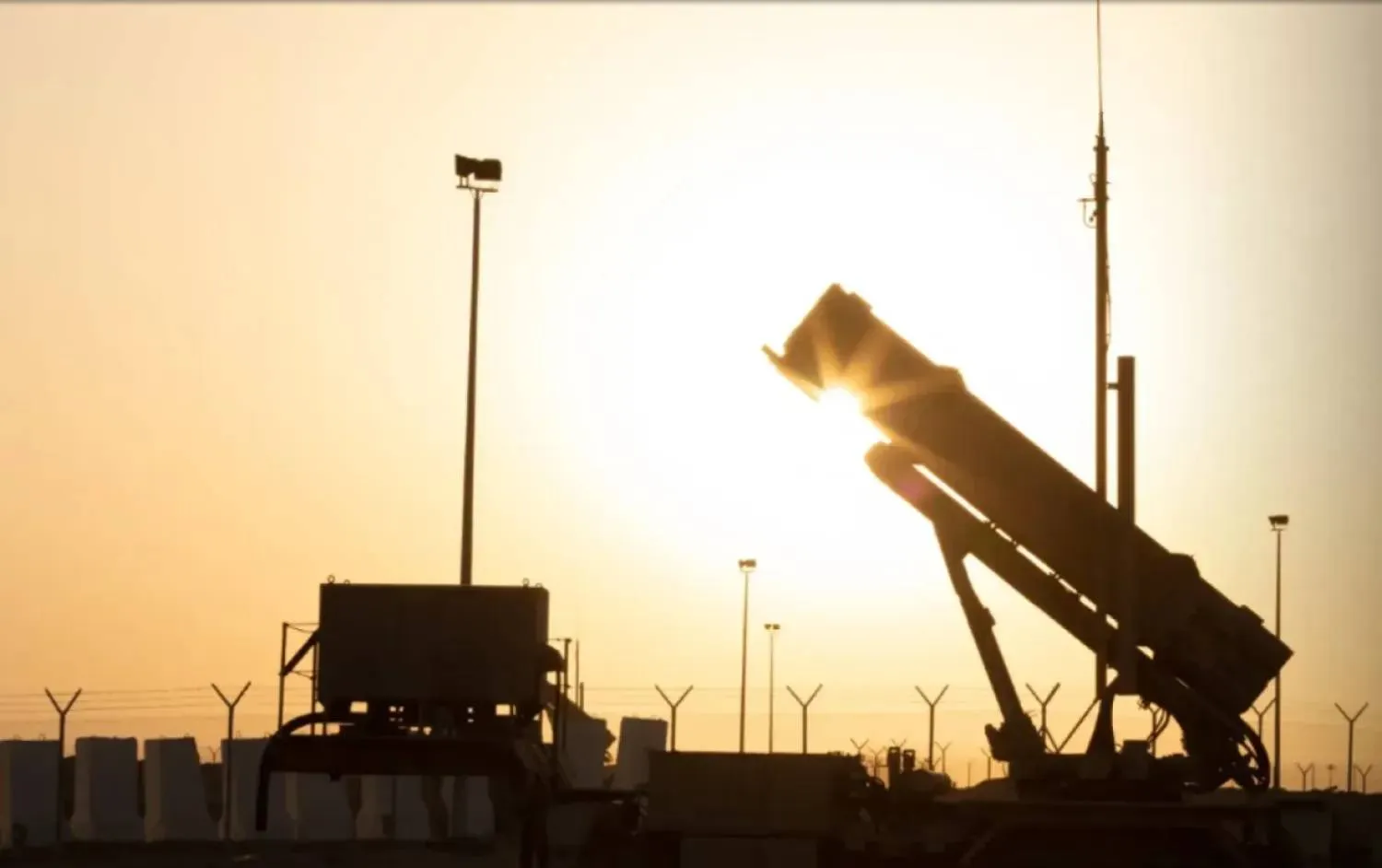
Air defenses intercepted and destroyed three cruise missiles launched by the terrorist Houthi militia toward the Riyadh Region. (Saudi Defense Ministry)
TT

Coalition: Air Defenses Destroy 3 Cruise Missiles Launched by Houthis Toward Riyadh Region

Air defenses intercepted and destroyed three cruise missiles launched by the terrorist Houthi militia toward the Riyadh Region. (Saudi Defense Ministry)

Official Spokesperson of the Coalition to Restore Legitimacy in Yemen Major General Turki Al-Malki said on Wednesday that air defenses intercepted and destroyed three cruise missiles launched by the terrorist Houthi militia toward the Riyadh Region.

On Tuesday, Al-Maliki said air defenses destroyed a Houthi ballistic missile fired at Riyadh.

They also downed a drone in the Eastern Region.


Pakistani Military to Asharq Al-Awsat: Our Commitment to Saudi Security Is Non-Negotiable

Pakistani military spokesperson Lieutenant General Ahmed Sharif Chaudhry. (Reuters)
TT

Pakistani Military to Asharq Al-Awsat: Our Commitment to Saudi Security Is Non-Negotiable

Pakistani military spokesperson Lieutenant General Ahmed Sharif Chaudhry. (Reuters)

Pakistani military spokesperson Lieutenant General Ahmed Sharif Chaudhry stressed that the transition of the Makkah Joint Defense Alliance into the practical implementation phase of its collective defense commitments entails adopting measures to enable the rapid deployment of agreed-upon forces and military capabilities inside Saudi Arabia. These steps include elevating readiness levels, bolstering military integration, sharing intelligence, and coordinating to conduct exclusively defensive operations.

In an interview with Asharq Al-Awsat, the spokesperson stressed his country's readiness, in light of current circumstances and based on the Joint Strategic Defense Agreement between Saudi Arabia and Pakistan and the Makkah Alliance, to take all necessary defensive measures to defend the Kingdom.

Islamabad's commitment to the Kingdom's security, sovereignty, and territorial integrity is "absolute and non-negotiable", he added.

Capabilities and forces

Regarding Pakistani forces and military capabilities in Saudi Arabia, Chaudhry revealed that Pakistani troops are already present in the Kingdom, operating in various capacities with their primary missions consisting of providing defensive support, exercises, and maneuvers.

Islamabad will continue to provide any required support for defensive purposes, whether in terms of military personnel, military capabilities, training, or logistical assistance, he said.

In response to a question regarding reinforcing the military presence or providing additional capabilities, including air and missile defense and intelligence sharing, he said that the necessary support will continue to be provided without specifying exact details, explaining that military alliances do not disclose troop numbers, deployment locations, or operational specifics.

Joint defense measures

Regarding the military measures to implement the alliance's commitments, Chaudhry explained that the transition to practical implementation of the Makkah Alliance obligations follows the recent attacks targeting Saudi Arabia.

He reiterated Pakistan's strong condemnation of the strikes on airports, cities, and civilian and economic infrastructure, describing them as a direct threat to Saudi Arabia's sovereignty, security, and territorial integrity, as well as a danger to regional stability and civilian safety.

Chaudhry said that those attacks raise deep concern in Pakistan, stressing that "the security of Saudi Arabia and the Two Holy Mosques is a top, non-negotiable priority,"

He also urged the need for restraint, de-escalation, and resorting to diplomatic solutions, as any further escalation serves the interest of no party.

Talks with Iran

On the diplomatic level, he explained that the meeting between representatives of the Makkah Joint Defense Alliance and Iran, held in Tehran on October 26, aimed to establish a framework for de-escalation and enhance regional cooperation.

He noted that the participation of Chief of Defense Forces Field Marshal Asim Munir in the meeting, along with his visit to Tehran days earlier, underscores Pakistan's commitment to promoting dialogue and the peaceful settlement of regional disputes.

The participants agreed to "continue dialogue to enhance cooperation among the four countries and contribute to achieving peace and stability in the region," without disclosing any other specific agreements.

Makkah Alliance and strategic defense agreement with Saudi Arabia

In explaining the differences between the "Joint Strategic Defense Agreement” between Saudi Arabia and Pakistan, announced in September of last year, and the Makkah Joint Defense Alliance between Saudi Arabia, Pakistan, and Türkiye, announced in August, Chaudhry noted that the bilateral agreement establishes a framework for defense cooperation between Pakistan and Saudi Arabia.

He added that it reflects the two countries' deep historical partnership and provides a structure for mutual support in the face of any aggression.

He added that under the bilateral Joint Strategic Defense Agreement, Saudi Arabia and Pakistan seek to deepen their longstanding strategic partnership, ensure mutual security, and continue practical defense cooperation to protect each country's sovereignty and vital interests.

The Makkah Joint Defense Alliance, meanwhile, is a trilateral framework bringing together Pakistan, Saudi Arabia, and Türkiye, establishing mechanisms for collective defense, joint readiness, and coordination, he explained.

Both are purely defensive in nature, and neither entails offensive intentions against any country, he stressed.

Chaudhry added that, looking to the future, the three countries aim to strengthen collective deterrence, deepen military integration, and consolidate regional stability.